Executive Overview
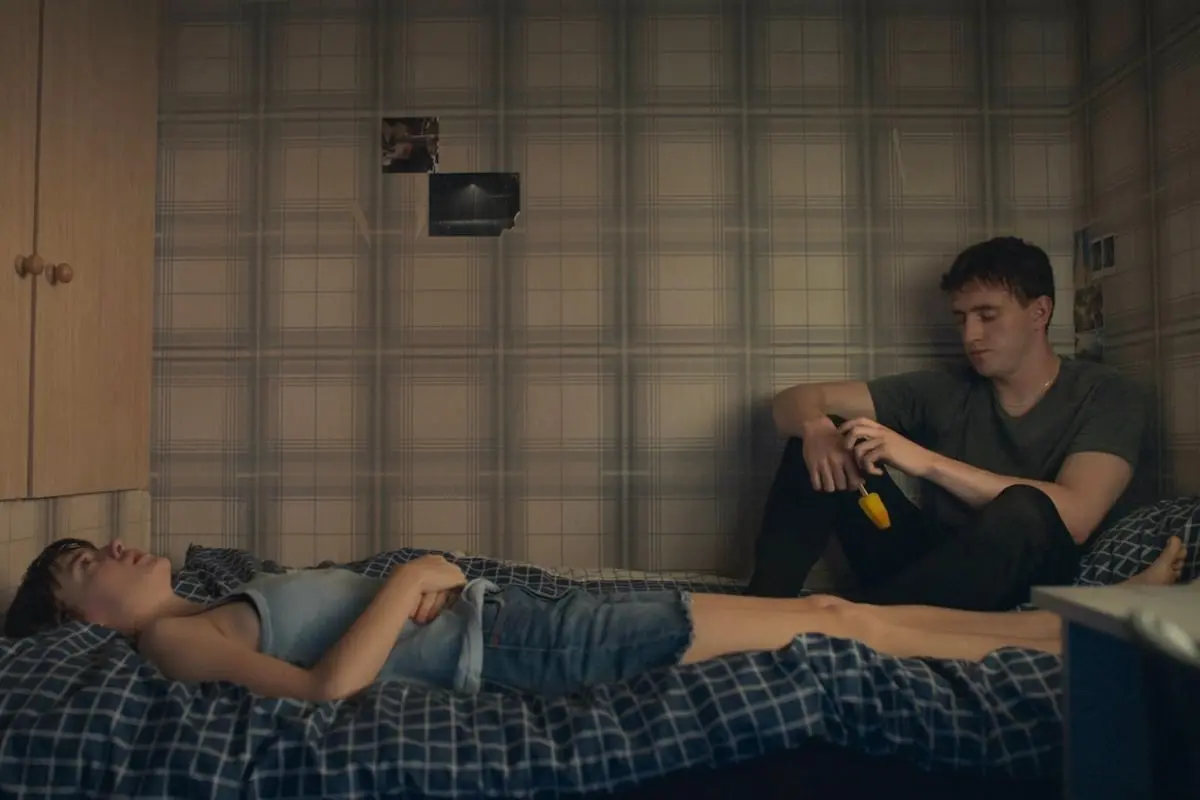
Picture the scene: you and your partner have finally secured the holy grail of modern adulthood—the house to yourselves. The bedroom door is firmly shut, the locks checked, and the ambient noise of the outside world muffled. You can stop holding your breath, stop worrying about who might overhear your most vulnerable moments, and simply exist together.
Then, the front door slams. Your housemate is home early, or—worse still—your mother has returned from her errands. Instantly, the psychological architecture of the moment collapses. The mood evaporates, replaced by the rigid, hyper-vigilant posture of people caught trespassing in their own private lives.
For generations past, plotting intimacy around a "free house" was a fleeting hurdle associated strictly with the hormonal trials of adolescence. Today, however, structural economic realities have stretched this teenage rite of passage deep into adulthood. Driven by skyrocketing rents, a severe shortage of affordable housing, and a historic cost-of-living crunch, young adults across the globe are remaining in the family home or sharing cramped multi-tenant properties well into their late twenties and thirties.
The consequences of this prolonged spatial compression extend far beyond mere domestic irritation. While cultural commentators and op-ed columnists endlessly dissect the so-called "Gen Z sex recession"—painting a caricature of a puritanical, screen-addicted generation that supposedly has little interest in romance, drinking, or physical intimacy—the reality on the ground is starkly different. Young people want to have sex. The barrier is not a cultural aversion to pleasure; it is a paper-thin partition wall separating them from a judgmental housemate, a disapproving parent, or the crushing weight of domestic surveillance.
As housing affordability hits historic lows, the bedroom has become an economic casualty. This investigative report examines how the modern housing crisis is actively reshaping contemporary intimacy, fueling a pervasive culture of shame, disrupting sleep, and forcing a generation to negotiate their most primal needs against the backdrop of an unforgiving housing market.
Detailed Chronology: The Evolution of the Co-Living Bottleneck
To understand how modern intimacy reached this breaking point, one must trace the systemic shifts in youth housing over the past two decades.
The Post-College Transition (The 2000s–2010s)
Historically, the trajectory for young adults leaving university or entering the workforce followed a relatively predictable, if increasingly expensive, path. Shared living in one’s early twenties was viewed as a temporary, transitional phase—a bohemian crucible of chaotic flats, mismatched furniture, and makeshift social lives. While privacy was scarce, it was accepted as a brief toll paid on the road to financial independence and eventual solo renting or homeownership. Back in 2015, roughly 25 per cent of young people aged 20 to 34 lived with their parents. While compromises on privacy were common, the light at the end of the tunnel—a future defined by a stable mortgage or an affordable one-bedroom apartment—remained visible.
The Great Squeeze (2015–2020)
As the decade progressed, urban rental markets began to hyper-inflate. Cities like London, New York, Toronto, and Sydney transformed into hyper-competitive economic zones where solo renting became an elite luxury privilege. Young professionals found themselves squeezed into increasingly dense living arrangements: converting living rooms into makeshift bedrooms, stacking double-bunk beds into converted industrial warehouses, and tolerating increasingly eccentric living conditions just to maintain a foothold in urban job markets. Concurrently, the age at which individuals could realistically save for a housing deposit drifted further out of reach.
The Contemporary Reality (2020–2026)
By the mid-2020s, the economic foundation of youth housing had fundamentally fractured. According to recent data from the Office for National Statistics (ONS), a staggering 29 per cent of young people aged 20 to 34 now live with their parents—a notable leap from previous decades. For those who do manage to fly the coop, living with housemates is no longer a brief preamble to adulthood; it has metastasized into a permanent lifestyle. Data from Nationwide reveals that the average age of a house-sharer in the UK has now climbed to 35.
What was once a launchpad has become a permanent holding pen. And as the duration of shared living extends into mature adulthood, the psychological toll on personal relationships has transitioned from a minor nuisance into a profound crisis of domestic privacy.
Supporting Context & Metrics: The Anatomy of the Intimacy Drought
The intersection of economics and romance is starkly illuminated by empirical research. Intimacy does not occur in a vacuum; it requires physical space, psychological safety, and temporal freedom—all of which are currently rationed commodities.
- The LELO Economics of Orgasm Report (2026): A comprehensive study by global sex toy manufacturer LELO revealed that nearly three-quarters (75%) of young adults agree that their current living situation makes pursuing and maintaining romantic relationships significantly more challenging.
- The Parents’ Roof (ONS, 2025): Nearly one-third (29%) of young adults aged 20–34 remain anchored to their childhood bedrooms, fundamentally altering the developmental timeline of romantic autonomy and sexual exploration.
- The House-Share Crisis (OneFamily, 2025): Among adults aged 18 to 40 locked into shared tenancies, one-third explicitly state they do not enjoy their living arrangements. The single most common driver of psychological distress and domestic friction? A total lack of privacy.
- The SpareRoom Census (2026): Noise pollution ranks as a primary source of tension in shared housing, outstripped only by disputes over kitchen cleanliness. Four out of five renters report having their sleep disrupted by housemates at least once a week, with 24 per cent specifically citing housemates engaging in sexual activity as a major disruptor of their rest.
These metrics paint a vivid picture of a demographic trapped in a perpetual state of surveillance. When your domestic environment is defined by thin drywall and shared corridors, the simple act of pursuing a sex life becomes an exercise in logistical gymnastics.
Official Statements & Lived Experiences
To grasp the human cost of these statistics, one must listen to those navigating the front lines of the co-living crisis.
Take, for instance, 29-year-old Ella*. Locked in a long-distance relationship, Ella sees her partner in person only once every few months. The vast majority of their relational maintenance happens digitally. Yet, even virtual intimacy is poisoned by spatial anxiety.
"One second we’ll be sending each other risqué messages, and the next my housemates will turn on Game of Thrones and the mood is dead," Ella recalls, highlighting how the porous boundaries of modern housing puncture the suspension of disbelief required for sexual desire. "When my boyfriend is visiting, I’ve found myself pausing one of the rare moments we actually get to be with each other to listen to the footsteps in the house, to hear if someone else is listening in."
This hyper-vigilance is not one-sided. While the fear of being heard kills desire for the participants, it simultaneously breeds resentment among those on the receiving end of the acoustic fallout. Amelia*, 28, lives in a flatshare with three women who maintain rigorous, early-to-bed schedules. While Amelia is personally unfazed by the sounds of intimacy, she lives in fear of the reciprocal fallout.
"If they hear any noises after a certain time, they throw their toys out the pram, so I’m super conscious of even having friends over, let alone having sex," Amelia explains.
This domestic policing creates a bizarre paradox where the absence of sound becomes more psychologically oppressive than its presence. Amelia notes the peculiar tension of listening to her housemate attempt acrobatic feats of absolute silence:
"When one of the girls has sex, I still hear the bed creaking and that they’re trying to be quiet, and I just think, ‘You may as well moan, babe! I’d prefer that to imagining your boyfriend silently humping you!’ I just want her to be happy. Her not making much noise makes me feel awkward about my own sex, to be honest."
Housing expert Alice Wilkinson, author of How to Stay Sane in a House Share, views this dynamic as an inevitable structural failure.
"Houses just aren’t designed for four or five adults to live side by side and live full, sexually active lives in," Wilkinson observes. "People get annoyed at being kept up by their housemate having sex, or don’t feel relaxed enough to have the type of sex they’d like to because they’re embarrassed about their housemates hearing. No one’s winning."
Reflecting on her own years in shared accommodation, Wilkinson admits that the cultural stigma surrounding conversations about sex and noise often prevents tenants from establishing healthy baseline agreements.
"I wanted to seem laidback and cool about everything," she reflects. "I think if I’d been brave enough to have conversations about it with potential housemates, I would have found a more suitable house share faster."
Yet, negotiating these boundaries with flatmates is arguably easier than doing so under the roof of one’s parents. Annie*, 29, experienced this firsthand when she was forced to move back home during a long-term relationship.
"I couldn’t kiss or cuddle on the couch because it made my mum uncomfortable, and sex had to be on the floor to avoid the bed creaking," Annie shares. "It can make sex feel quite sterile and transactional because you can’t take your time or express yourself as you naturally would otherwise."
Ultimately, experts note that the primary deterrent to healthy adult sexuality in these environments is not physical noise itself, but the internalized shame of being perceived.
"When I’m in the moment and I hear someone in the house, it’s that feeling of shame that kicks in and takes me out of it, more than any actual judgments that my housemates have ever expressed," Ella confesses.
Future Outlook: Reclaiming Intimacy in an Unaffordable World
As the structural pillars of the housing market remain skewed against young people, the collision between real estate economics and personal intimacy shows no signs of abating. The "gen Z sex recession" is not a psychological aberration of a desexualized youth; it is a rational, predictable adaptation to a material environment that systematically denies privacy, autonomy, and space.
If the trajectory of the housing crisis continues unchecked, society risks normalizing a prolonged infantilization of young adults, where the fundamental milestones of emotional and physical development are indefinitely deferred until financial stability is achieved—a milestone that, for many, now arrives well into their mid-thirties or forties.
Addressing this silent crisis requires a cultural shift and a re-evaluation of how we talk about domestic space. Landlords, architects, and urban planners must begin designing multi-tenant dwellings with acoustic isolation and spatial dignity in mind, moving away from the glorified rabbit-hutch model of contemporary high-density leasing. Simultaneously, roommates and families must dismantle the Victorian prudishness that surrounds domestic intimacy, fostering environments where adult residents can inhabit their bodies without cowering behind thin drywall.
Until systemic housing reform makes privacy accessible to all rather than a luxury for the few, young adults will continue to navigate the precarious tightrope between economic survival and basic human expression—pausing, listening for footsteps, and waiting for the house to empty out.