Executive Overview
In the rapidly evolving landscape of generative artificial intelligence, a distinct creative divide has long frustrated solopreneurs, lean content teams, and digital agencies. While tools like Midjourney, ChatGPT, and Stable Diffusion excel at generating striking raw imagery from simple text prompts, they traditionally lack an understanding of page composition, structural hierarchy, and rigorous visual brand guidelines. Creators have been left with a fragmented workflow: generating compelling graphic assets on one platform, manually adjusting fonts, color codes, and spacing in complex desktop software, and struggling to maintain cross-platform visual consistency.
Enter Claude Design—Anthropic’s purpose-built layout and front-end design platform. Rather than acting as a traditional image generator, Claude Design functions as an on-demand virtual front-end designer and digital layout architect. It addresses the precise bottleneck that creators face daily: transforming raw visual assets, text, and data into polished, professional-grade slide decks, landing pages, software mockups, and motion graphics.
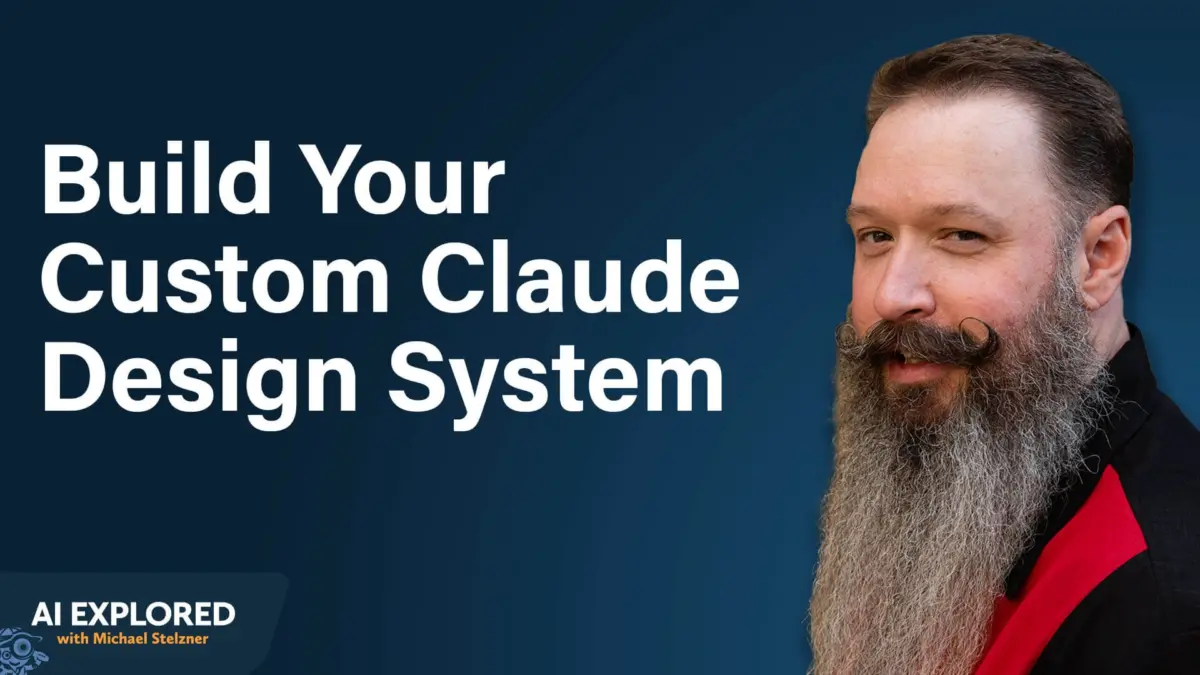
Co-created by digital marketing experts Jeff Sieh and Michael Stelzner, the methodology behind leveraging Claude Design introduces a paradigm shift in content creation. By anchoring all visual and textual outputs in a portable, code-based design system (operationalized via a simple design.md file), creators can automate entire production lifecycles. From generating multi-step podcast show notes and social media carousels to producing on-brand video assets and software UI mockups, this ecosystem bridges the gap between raw AI capability and professional enterprise execution. This report explores the core mechanics of Claude Design, the strategic execution of custom design systems, and the advanced automation workflows redefining modern digital publishing.
Detailed Chronology: The Evolution of AI-Assisted Front-End Design
Understanding the Shift from Image Generation to Structural Layout
To fully grasp the utility of Claude Design, one must first dismantle common misconceptions regarding AI design tools. When digital creators hear terms like "AI" and "design" used in tandem, they instinctively think of text-to-image engines. Claude Design intentionally diverges from this approach. It does not synthesize raw pixels into standalone pictures; instead, it manages the composition, spacing, typography, palette harmony, and whitespace that elevate raw elements into professional deliverables.
Operating similarly to an intelligent version of Adobe InDesign mixed with a front-end web development suite, Claude Design acts as a digital layout engine. For small teams, freelancers, and independent creators lacking access to dedicated art directors, the platform serves as an on-demand front-end specialist. It dictates the look and feel of websites, PDF lead magnets, presentation decks, and user interfaces, ensuring that every element adheres to intentional aesthetic choices rather than haphazard, default templates.
Platform Integration and Accessibility
Originally introduced as an experimental tool within Anthropic’s labs, Claude Design has progressively matured into a core feature set accessible directly through claude.ai via a dedicated design button in the interface’s lower-left quadrant. Early iterations of the platform operated under isolated usage quotas, frequently resulting in session timeouts and fragmented workflows. Today, Claude Design seamlessly integrates into standard user credit pools, eliminating the need to monitor separate meters and lowering the barrier to entry for daily creative operations.
Supporting Context & Metrics: Building the Portable Design System
The cornerstone of any professional workflow within Claude Design is the establishment of a comprehensive design system. In traditional design environments, creators rely on brand kits (such as those found in Canva) to store static logos and typeface selections. Claude Design transforms this static repository into an active, contextual intelligence engine that dictates how brand assets adapt across wildly different mediums—whether rendering a responsive mobile landing page, a high-contrast slide presentation, or a client-facing executive report.
The Power of the design.md File
What elevates Claude Design above proprietary, locked-in design platforms is its architectural foundation: portability. Every design system constructed within the environment can be exported into a Markdown file, formally designated as design.md.
Because this file stores typography rules, hex codes, spacing algorithms, logo usage parameters, and animation styles as clean, standardized code, it is entirely platform-agnostic. If the generative AI landscape shifts or alternative development environments become dominant, the creator’s foundational brand identity can be transferred instantly without requiring a ground-up rebuild. Furthermore, a single user account can host multiple distinct design systems, allowing agencies and multi-brand creators to cleanly compartmentalize client identities or separate show formats.
The 10-Minute Initialization Process
Building a robust design system requires an investment of roughly ten minutes of structured onboarding. Creators begin by feeding reference materials directly into the interface—including vector logos, color swatches curated from Pinterest, screenshots of competitor websites, or legacy podcast artwork.
Rather than relying solely on simplistic, one-click preset buttons, expert practitioners recommend utilizing open text fields alongside voice-to-text dictation tools (such as Wispr Flow). Natural, conversational dictation provides the AI with the nuanced context required to capture subtle aesthetic directions. Additionally, providing live website URLs during setup allows Claude Design to automatically scrape digital properties, ingesting not only visual cues but also the underlying written brand voice.
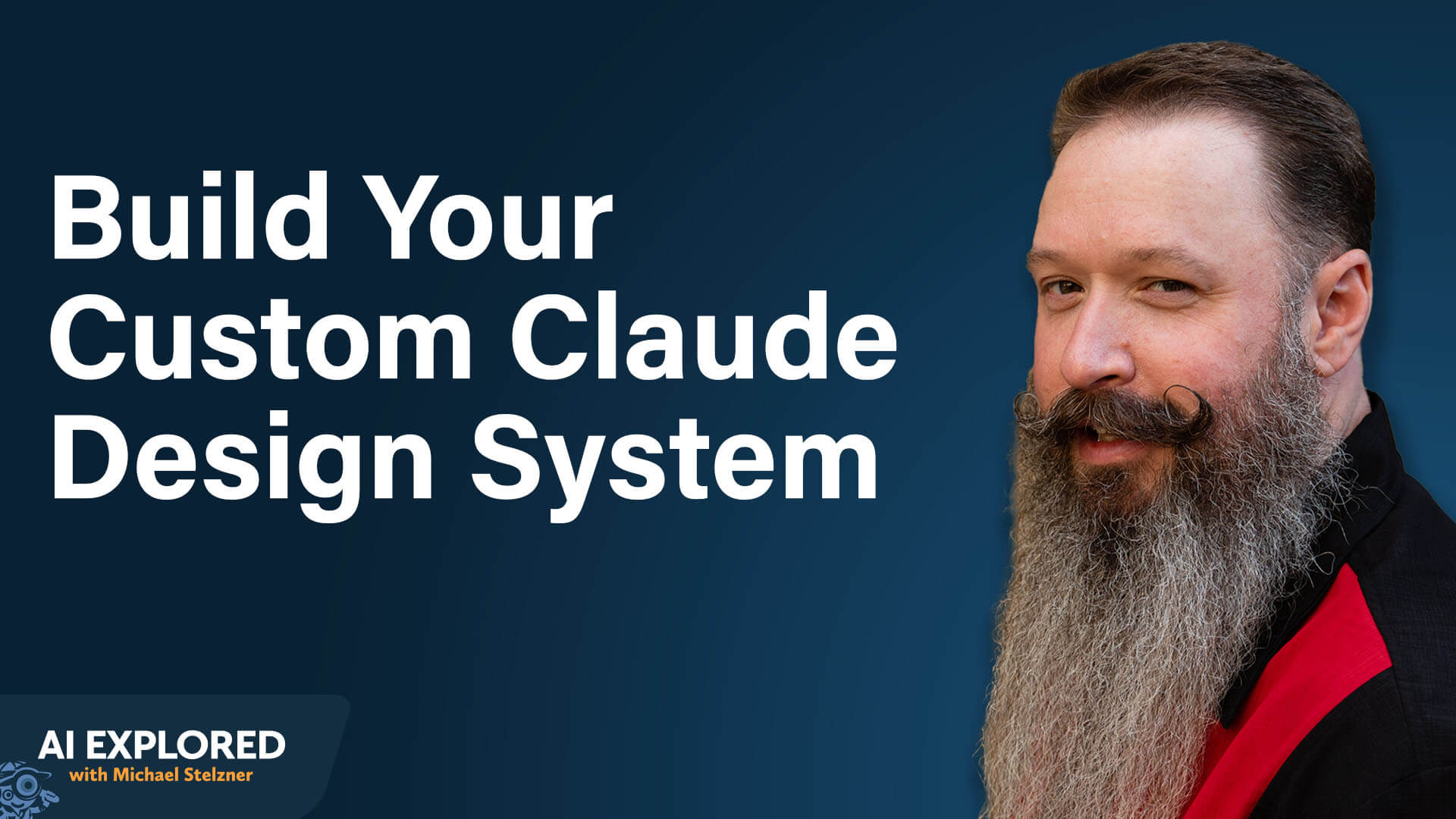
To illustrate the depth of this contextual ingestion, consider the journey of digital creator Jeff Sieh. Seeking to encapsulate a mid-20th-century retro-futuristic aesthetic reminiscent of classic architecture and pop culture, Sieh workshopped his vision back and forth with the platform. Claude Design successfully identified the exact stylistic taxonomy—Googie architecture—and permanently integrated the design philosophy into his system architecture. From that point forward, every layout, background element, and generated image prompt intrinsically reflected the sophisticated geometric lines and bold optimism of the Googie style.
Official Guidelines & Interaction Methodologies
Maximizing the output quality of Claude Design requires abandoning traditional keyboard-and-mouse workflows in favor of conversational direction and iterative prompting strategies.
1. Voice-Driven Conversational Direction
Because Claude Design functions fundamentally as an intelligent chatbot equipped with layout rendering capabilities, human-to-AI interaction should mirror a conversation with a human art director. Instructions such as "Increase the negative space between the primary header and the body copy" or "Shift this layout to a high-contrast dark-mode palette" yield immediate, precise structural adjustments when dictated naturally via voice transcription tools.
2. Multi-Option Iteration Generation
A critical pitfall for novice users is requesting a single, finalized design iteration and attempting to refine it through micro-adjustments. Industry best practice dictates prompting the system to generate five distinct structural variations simultaneously. By evaluating multiple conceptual directions side-by-side, the creator can select the strongest foundation and direct the subsequent refinement dialogue far more efficiently.
3. Direct Click-and-Drag Manipulation
While generative instructions handle macro-level transformations, Claude Design features direct click-and-drag editing capabilities for fine-tuning text blocks, shifting headline alignments, and manually adjusting padding. Crucially, these direct manual tweaks consume zero usage credits, establishing an exceptionally cost-effective hybrid workflow between automated generation and manual polish.
Advanced Capabilities: Templates, Code-Based Animation, and Cross-Platform Integration
Beyond basic document layout, Claude Design supports an extensive library of specialized templates and functional rendering engines that rival dedicated software suites.
Utilizing Skills and Custom Markdown Modifiers
Claude Design accommodates modular instruction sets known as "skills" that dynamically alter the platform’s behavioral output. For example, implementing an "anti-AI slop" skill purges common generative writing tropes—such as excessive hyphens, predictable sentence structures, and overuse of emojis—ensuring that all integrated copy maintains an authentic human voice. Similarly, pairing the platform with writing-style analysis files ensures that all generated text mirrors the creator’s unique editorial cadence.
Web Mockups and Functional HTML Generation
For digital agencies and web developers, Claude Design serves as a rapid prototyping powerhouse. The system produces fully functional HTML layouts that can be instantly deployed or handed directly to development teams for integration.
In advanced production environments, creators pair Claude Design with development tools like Claude Code. When legacy services or proprietary tools experience downtime or sunset, creators can point the AI ecosystem at their design system to spin up custom software solutions—such as automated WordPress plugins that pull and display live media streams perfectly styled to brand specifications. Furthermore, software development teams utilize Claude Design to build dedicated UI/UX design systems, allowing developers to review visual mockups and catch layout flaws before writing a single line of production code.
Vector-Based Motion Graphics and Code Animation
Traditional motion graphics pipelines in software like Adobe After Effects demand extensive rendering times and produce heavy video files ill-suited for lightweight web delivery. Claude Design solves this by generating code-based, vector animations.
Because these animations are rendered programmatically via code rather than exported as heavy video files, their digital footprint is virtually negligible. Creators can animate complex multi-step infographics, walkthroughs, or transitional UI elements that render smoothly directly inside web browsers and digital documents without impacting page-load speeds.
Harmonic Pairing with Image Generators (ChatGPT and Midjourney)
Because Claude Design intentionally abstains from native pixel image generation, it relies on a symbiotic relationship with dedicated image synthesis engines like ChatGPT and Midjourney.
When establishing a layout, Claude Design generates precision image prompts populated with the exact hexadecimal color codes pulled from the active design system. The creator copies these prompts into ChatGPT or Midjourney, ensuring that the resulting visual assets strictly adhere to the brand’s chromatic identity. Once generated, the images are dragged back into the Claude Design workspace, completing a seamless, brand-compliant visual pipeline.
Enterprise Workflow Automation: Case Studies in Production Scaling
The true enterprise value of Claude Design emerges when the platform is integrated into fully automated content production pipelines. Real-world implementations demonstrate staggering reductions in operational overhead.
Automated Podcast Production and Cheat Sheets
In traditional media production, creating downloadable companion resources, show notes, and promotional assets for a weekly podcast requires hours of dedicated labor from multiple team members. By connecting Claude Design to automated backend scripts, creators have compressed entire show production cycles down to 35-45 minutes.
Upon the conclusion of a recording session, an automated pipeline ingests the raw episode transcript, extracts core conceptual takeaways, formats a downloadable cheat sheet governed by the brand’s design system, generates complementary visual thumbnails, and publishes the finished package as a draft kit ready for distribution.
The Multi-Platform Carousel Automation Engine
For social media marketers, maintaining a consistent presence on platforms like LinkedIn and Instagram requires continuous visual content production. Advanced creators utilize multi-step automation scripts built via Claude Code and Claude Design to transform long-form audio transcripts into high-performing carousel posts.
- Extraction & Structuring: An algorithmic script analyzes the transcript, isolating segments fitting high-engagement structural frameworks (Hook, Build One, Build Two, Payoff, Call-to-Action).
- Prompt Generation: The system formulates dual image-generation prompts embedded with exact brand hex codes for both ChatGPT and Midjourney.
- Automated Composition: Once raw images are rendered and dropped into a designated watch-folder, a Python script evaluates visual composition to determine optimal text overlay placement.
- Multichannel Formatting: The system compiles the final assets into a professional PDF document optimized for LinkedIn document posts, formats individual PNG slides for Instagram, drafts platform-specific copywriting, and delivers the complete package directly to team communication channels like Slack for final editorial review.
Future Outlook: The Horizon of Autonomous Brand Management
As artificial intelligence platforms continue to evolve from isolated chatbot interfaces into deeply integrated operating systems, tools like Claude Design signal a fundamental democratization of professional design. The historical barrier separating brilliant ideas from polished visual execution is rapidly dissolving.
Key industry trajectories indicate several critical developments on the horizon:
- Universal Standardisation of Design.md: As portable Markdown-based design systems gain industry adoption, agencies will begin trading standardized design files alongside traditional brand guidelines books, enabling instant cross-platform brand governance.
- Real-Time Video Editing Integration: Through emerging ecosystems linking Claude Design with AI-native video editing tools like ChatCut, creators will increasingly command entire video post-production workflows—including lower thirds, motion graphics, and color grading—purely through natural voice commands.
- Autonomous Multichannel Publishing: The evolution of script-driven automation pipelines points toward a near-future where recording a single piece of raw media autonomously triggers the generation, styling, formatting, and deployment of a complete omnichannel marketing campaign without requiring manual human intervention in the layout phase.
For solopreneurs, lean agencies, and enterprise marketing teams alike, mastering Claude Design and portable design systems is no longer an experimental luxury. It is the definitive operational blueprint for scaling visual brand authority in the age of intelligent automation.