Executive Overview
In the fast-moving ecosystem of contemporary fashion, true staying power is a rare commodity. Trends accelerate and dissolve within the span of a single TikTok scroll, turning the once-deliberate cycle of style into a breathless, algorithm-driven blur. Yet, against this backdrop of ephemeral digital ephemera, certain figures continue to anchor the industry in physical reality, raw charisma, and uncompromising authenticity. Enter Selena Forrest.
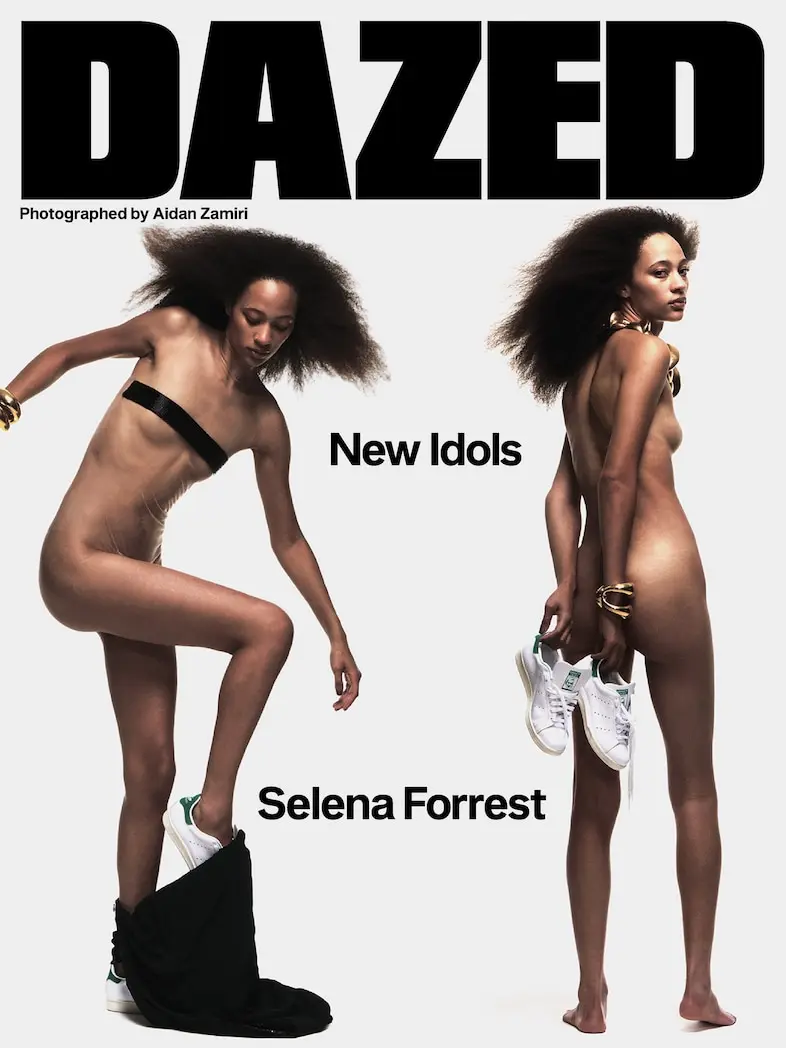
Gracing the cover of Dazed magazine’s highly anticipated Autumn 2026 issue, Forrest does not merely model clothing; she inhabits, challenges, and redefines it. This feature represents more than a standard editorial collaboration. It serves as a cultural touchstone, arriving at a critical juncture where the fashion industry is fiercely debating the soul of its craft versus the dictates of big data.
Captured through the lens of a world-class creative team in Paris, the Autumn 2026 cover story is an exercise in high-stakes visual storytelling. With hair direction by Laurent Philippon, makeup artistry by Leana Ardeleanu, and nail design by Sylvie Vacca, the production reads like a masterclass in modern luxury. Styled by Fábio Mesquita and Nadia Peana, and brought to life through the production prowess of Edouard Risselet and Clémence Delafontaine at Company Paris, the resulting imagery is both timeless and aggressively forward-looking.
As the physical issue prepares for its global newsstand rollout on September 10, the industry is already looking to Forrest’s latest work to gauge where fashion is heading next. This article investigates the cultural weight of the Autumn 2026 issue, examining the rigorous craftsmanship behind the scenes, the mechanics of escaping the algorithmic trap, and the enduring legacy of a supermodel who continues to dictate the terms of her own narrative.
Detailed Chronology: Behind the Lens of the Autumn 2026 Issue
The making of a Dazed cover is rarely a straightforward affair. It is an intricate choreography involving dozens of industry elite, high-stakes logistics, and a singular creative vision that must be executed under intense pressure. The genesis of the Selena Forrest Autumn 2026 project began months prior to the September launch, mapped out in sterile boardrooms before exploding into vibrant life on the studio floor in Paris.
Phase One: Concept and Ideation (Early Spring 2026)
Long before the first camera shutter clicked, the editorial team at Dazed convened to conceptualize an issue that would directly counter what they identified as "aesthetic fatigue." In an era dominated by hyper-processed digital imagery and AI-generated lookbooks, the mandate was clear: return to tactile, uncompromised humanity.
Selena Forrest was unanimously chosen as the anchor for this vision. Having evolved from a runway trailblazer into a cultural polymath, Forrest possesses a rare gravitational pull. The creative directors wanted a narrative that stripped away the noise, focusing instead on structural silhouettes, rich autumnal textures, and an unapologetic attitude that defies easy categorization.
Phase Two: The Paris Production (Late Spring 2026)
The production footprint in Paris was immense, reflecting the high standards expected of a flagship seasonal issue. Company Paris, spearheaded by producers Edouard Risselet and Clémence Delafontaine, managed a tight ship supported by production assistants William Barel, Jules Romero, and Romain Rivière.
The studio environment hummed with a precise, industrious energy. On set, photographic assistants Alex Soroka and Anthony Retournard managed the complex lighting rigs required to capture the deep, moody palettes of the autumn wardrobe. The styling team—Fábio Mesquita and Nadia Peana—curated an archive of looks that merged avant-garde tailoring with subcultural grit, ensuring every ensemble told a distinct story.
+-----------------------------------------------------------------+
|                   PARIS PRODUCTION PIPELINE                     |
+-----------------------------------------------------------------+
|  1. Concept & Direction ---> Editorial team & Creative Leads    |
|  2. Logistics & Setup   ---> Company Paris (Risselet/Delafontaine)
|  3. Glamour & Precision ---> Philippon, Ardeleanu, Vacca        |
|  4. Wardrobe & Build    ---> Mesquita & Peana                   |
|  5. Capture & Lighting  ---> Soroka & Retournard (Ford Models)  |
+-----------------------------------------------------------------+
Phase Three: The Glamour and Fine-Tuning
Hair stylist Laurent Philippon (Bryant Artists) opted for sculptural, gravity-defying shapes that framed Forrest’s striking facial architecture, balancing structure with effortless movement. Meanwhile, makeup artist Leana Ardeleanu (Artlist Paris) chose a minimalist yet high-impact approach, emphasizing natural skin luminosity punctuated by bold, graphic accents. Manicurist Sylvie Vacca (Call My Agent), utilizing products from Manucurist, provided the finishing textural details that tied the head-to-toe looks together.
Model Selena Forrest, represented by Ford Models, moved through the sets with the intuition of a seasoned veteran and the curiosity of an artist stepping onto a canvas for the first time. The resulting frames captured not just clothes, but a psychological state: fierce, independent, and entirely unbothered by external expectations.
Supporting Context & Metrics: The State of Print in an Algorithmic Age
To fully appreciate the cultural impact of the Dazed Autumn 2026 issue, one must examine the broader economic and cultural landscape of modern fashion media. For over a decade, print media has faced existential threats from digital aggregation, social media feeds, and programmatic advertising models. Yet, a counter-movement is quietly gathering steam—one that places a premium on tangibility, permanence, and editorial integrity.
The Rise of "Slow Media" and Physical Collectibility
According to recent industry analytics from media research firms, independent print publications targeting niche, high-intent audiences have seen a steady stabilization in circulation revenue, even as ad-supported digital publications struggle with declining click-through rates. Readers are increasingly fatigued by algorithmic feeds that serve hyper-targeted, homogenized content designed solely to maximize "time on page."
Dazed, known for its counter-cultural roots and uncompromising artistic vision, has leaned heavily into this counter-movement. The initiative encapsulated by their "Escape the algorithm! Get The Drop" campaign speaks directly to a growing consumer demographic—Gen Z and Millennial culture enthusiasts who are actively seeking refuge from digital saturation.
| Metric Indicator | Digital Feed Model | Independent Print (Dazed Model) |
|---|---|---|
| Consumption Pace | Fleeting (Seconds per post) | Deliberate (Hours of immersion) |
| Monetization | Programmatic Ads / Impressions | Direct-to-Consumer / Pre-orders |
| Aesthetic Diversity | Algorithmically homogenized | Curated, risk-taking, bespoke |
| Tangibility | None (Screen-bound) | High (Archival paper stock, physical object) |
The Economics of Pre-Orders
The commercial strategy behind the Autumn 2026 issue relies heavily on direct-to-consumer (DTC) pre-order infrastructure. By driving global audiences to dedicated retail portals months in advance of the September 10 newsstand release, the publication manages supply chain inefficiencies, reduces unsold inventory waste, and secures guaranteed revenue streams. This model mimics the drop-culture mechanics typically associated with streetwear brands rather than traditional publishing houses, proving that print can innovate its business model without sacrificing its soul.
Official Statements and Industry Perspectives
The release of a flagship seasonal issue serves as a moment of reflection and projection for the creative directors, stylists, and talent involved. While full-length interview transcripts from the issue are reserved for the print publication, key insights from the production and styling teams illuminate the philosophy driving the Autumn 2026 project.
On Breaking the Algorithmic Mold
Speaking anonymously on the broader philosophy of the shoot, a senior editorial insider at Dazed noted:
"We are living through a period of immense creative conformity. Every mood board looks like it was generated by the same neural network. With Selena, and with this entire autumn lineup, we wanted to break those guardrails. We wanted something abrasive, beautiful, and fundamentally human—qualities that cannot be optimized by code."
The Styling Philosophy
Stylists Fábio Mesquita and Nadia Peana approached the wardrobe not as a showcase for seasonal trends, but as a narrative of resistance. In a joint statement regarding the visual direction, they emphasized:
"Fashion should challenge the viewer, not comfort them. The pieces chosen for Selena represent a tension between classic tailoring and subversive elements. We weren’t interested in making things look ‘pretty’ for Instagram; we wanted them to resonate on a visceral level when you hold the magazine in your hands."
Selena Forrest: The Modern Archetype
Selena Forrest’s trajectory offers a compelling case study in modern modeling longevity. Having broken into the industry as a teenager and quickly ascending to muse status for major luxury houses worldwide, Forrest has consistently refused to be typecast. Her collaboration with Dazed underscores her status as a cultural force capable of bridging high-fashion editorial polish with authentic, street-level cool.
Industry analysts point to Forrest’s career longevity as evidence of a shifting industry standard—one where models are increasingly valued for their distinct intellect, personal style, and cultural point of view rather than passive compliance.
Future Outlook: Where Fashion Goes From Here
As the fashion calendar turns toward the autumn season and the September 10 global release date approaches, the ripples of the Dazed Autumn 2026 issue will undoubtedly be felt across the broader design landscape. What does this project signal for the future of editorial media, styling, and model-brand relationships?
1. The Reclamation of Tactile Culture
The success of high-concept print campaigns suggests that consumers are hungry for physical objects that anchor them in the real world. We can expect to see more independent publications leaning into premium paper stocks, bespoke typography, and archival-quality packaging to position magazines not as disposable periodicals, but as collectible art books.
2. The Evolution of Talent as Co-Creators
The days of the passive model muse are officially numbered. Figures like Selena Forrest command influence because they bring an entire ecosystem of culture, reference points, and personal identity to a set. Future editorial projects will increasingly rely on deep collaborations where the talent shapes the narrative from conception to final print.
3. Rejecting the Algorithm as a Creative Strategy
Perhaps the most enduring legacy of the Autumn 2026 issue will be its explicit rejection of algorithmic forecasting. As artificial intelligence begins to saturate commercial design and marketing, authentic human friction—flaws, unexpected pairings, raw emotional delivery—will become the ultimate luxury commodity.
By centering an artist of Forrest’s caliber within a meticulously crafted, uncompromised physical format, Dazed has drawn a line in the sand. For those willing to step outside the digital stream, the rewards are rich, tangible, and built to last.
The autumn 2026 issue of Dazed goes on sale internationally on September 10. Readers wishing to secure a physical copy ahead of the general release can pre-order via the official Dazed distribution portal.