In the intricate, high-stakes battlefield of Magic: The Gathering, board wipes—colloquially known as "sweepers"—represent the ultimate geopolitical reset button. Whether a player is backed into a corner by an overwhelming swarm of opponent creatures, or attempting to lock down a sprawling resource architecture by scouring lands from the table, these potent spells alter the thermodynamic state of the game in a single resolution. Since the debut of Alpha in 1993, when foundational spells like Wrath of God established the baseline for mass destruction, sweepers have anchored the strategic taxonomy of control, midrange, and even select aggressive archetypes.
Far from being mere safety valves, modern sweepers have evolved into complex, highly modular instruments of tactical warfare. Designers at Wizards of the Coast have progressively pushed the envelope, moving past simple symmetric destruction toward non-targeting exile effects, mass toughness modifiers, and clever cost-reduction mechanics. This comprehensive review examines the historic evolution of mass removal, evaluating ten of the most defining and mechanically fascinating board wipes that have shaped the landscape of Magic: The Gathering, from unpredictable randomized disruptions to absolute, game-ending resets.
Detailed Chronology & Mechanics of Mass Destruction
The architectural philosophy of mass removal has undergone a dramatic metamorphosis over three decades of card design. Understanding how these spells function requires tracing their evolution from early brute-force mechanics to the sophisticated, asymmetric engines of today’s meta.
10. Austere Command: The Benchmark of Modular Control
First Introduced:Lorwyn (2007)
Mana Cost: $4W$ (Sorcery)
Few board wipes match the tactical elegance and modular flexibility of Austere Command. Instead of enforcing a rigid, one-size-fits-all destruction pattern, this spell allows its caster to choose two distinct options from a menu of four. Players can selectively annihilate small utility creatures (those with mana value 3 or less) while preserving their own high-cost bombs, or eradicate heavy-hitting threats while leaving a token army entirely untouched.
This granular control ensures that Austere Command rarely sits dead in hand. Whether an opponent has flooded the board with aggressive little creatures or built an impenetrable wall of heavy-duty artifacts and enchantments, the caster can tailor the devastation to precisely favor their own board state, making it a timeless inclusion in white-inclusive control strategies.
9. Earthquake: Scalable Incineration
First Introduced:Alpha (1993)
Mana Cost: $XR$ (Sorcery)
Scaling fluidly from the early turns through the late game, Earthquake stands as a pillar of red mass removal. By sinking an adaptable $X$ mana investment alongside a single red pip, the caster deals $X$ damage to each creature without flying and directly to each player at the table.
This dual utility creates multifaceted strategic opportunities. In the early game, casting it for two or three mana efficiently trims away disruptive mana dorks and aggressive token swarms. In the late game, it transitions seamlessly into a terrifying burn spell capable of closing out matches. Furthermore, because it explicitly spares flying creatures, decks heavily invested in Dragons or Angels—such as those helmed by Kaalia of the Vast—can safely incinerate the ground beneath them while their airborne armada swoops in for the win.
8. Living Death: The Graveyard Switcheroo
First Introduced:Tempest (1997)
Mana Cost: $3BB$ (Sorcery)
Equal parts mass removal and lethal game-ender, Living Death is an iconic card that merges board-wiping utility with a radical graveyard swap. The spell forces every player to sacrifice all creatures they control, and then immediately return all creature cards from their graveyard directly to the battlefield.
While technically symmetrical on paper, a deck engineered around Living Death turns this effect into a devastatingly one-sided victory condition. By utilizing self-mill, discard outlets, and tutors to load the graveyard with formidable threats and powerful enter-the-battlefield triggers, a player can clear the entire board of opposing blockers while simultaneously resurrecting an unstoppable army.
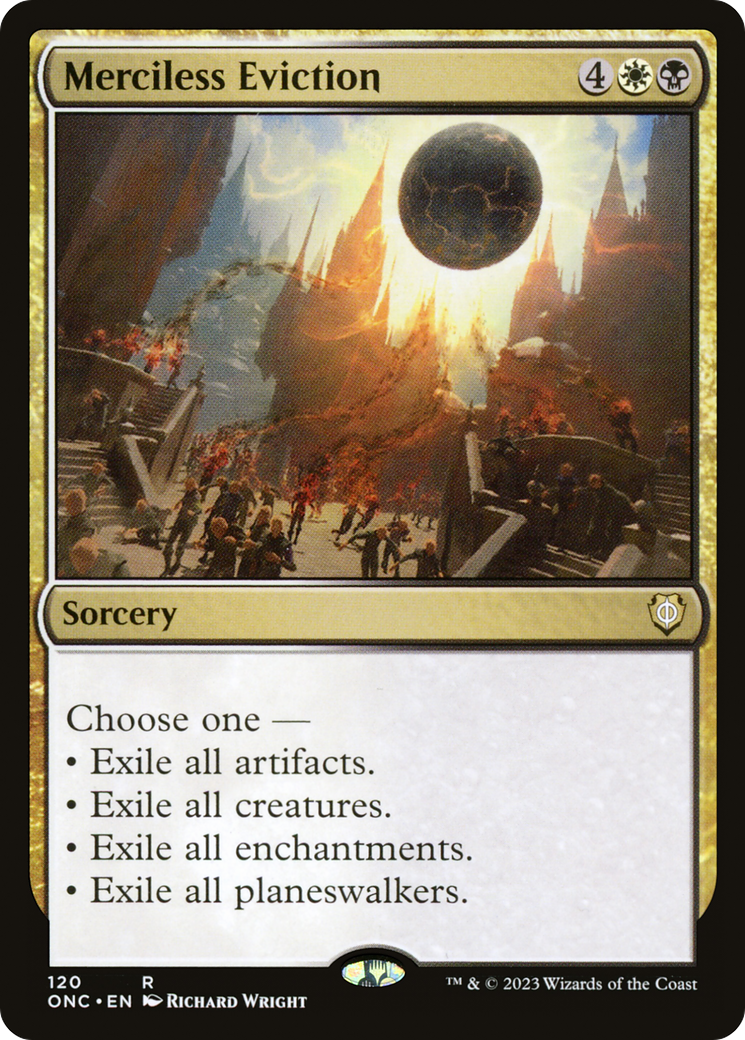
7. Merciless Eviction: Orzhov’s Surgical Exile
First Introduced:Gatecrash (2013)
Mana Cost: $4WB$ (Sorcery)
Absolute exile is universally recognized as the pinnacle of removal in Magic, and Merciless Eviction channels Orzhov’s signature ruthless efficiency to devastating effect. For six mana, the sorcery requires its caster to select a single card type—artifacts, creatures, enchantments, or planeswalkers—and exile every instance of it currently on the battlefield.
By bypassing traditional destruction, Eviction effortlessly neutralizes indestructible threats, death triggers, and recursive graveyard strategies. Its ability to surgically dismantle an opponent’s specialized engine—whether that means wiping out an accumulation of enchantment tokens or scrubbing away a swarm of artifact-based mana rocks—makes it a foundational control pillar in multi-color configurations.
6. Armageddon: The Nuclear Option of Mana Denial
First Introduced:Alpha (1993)
Mana Cost: $3W$ (Sorcery)
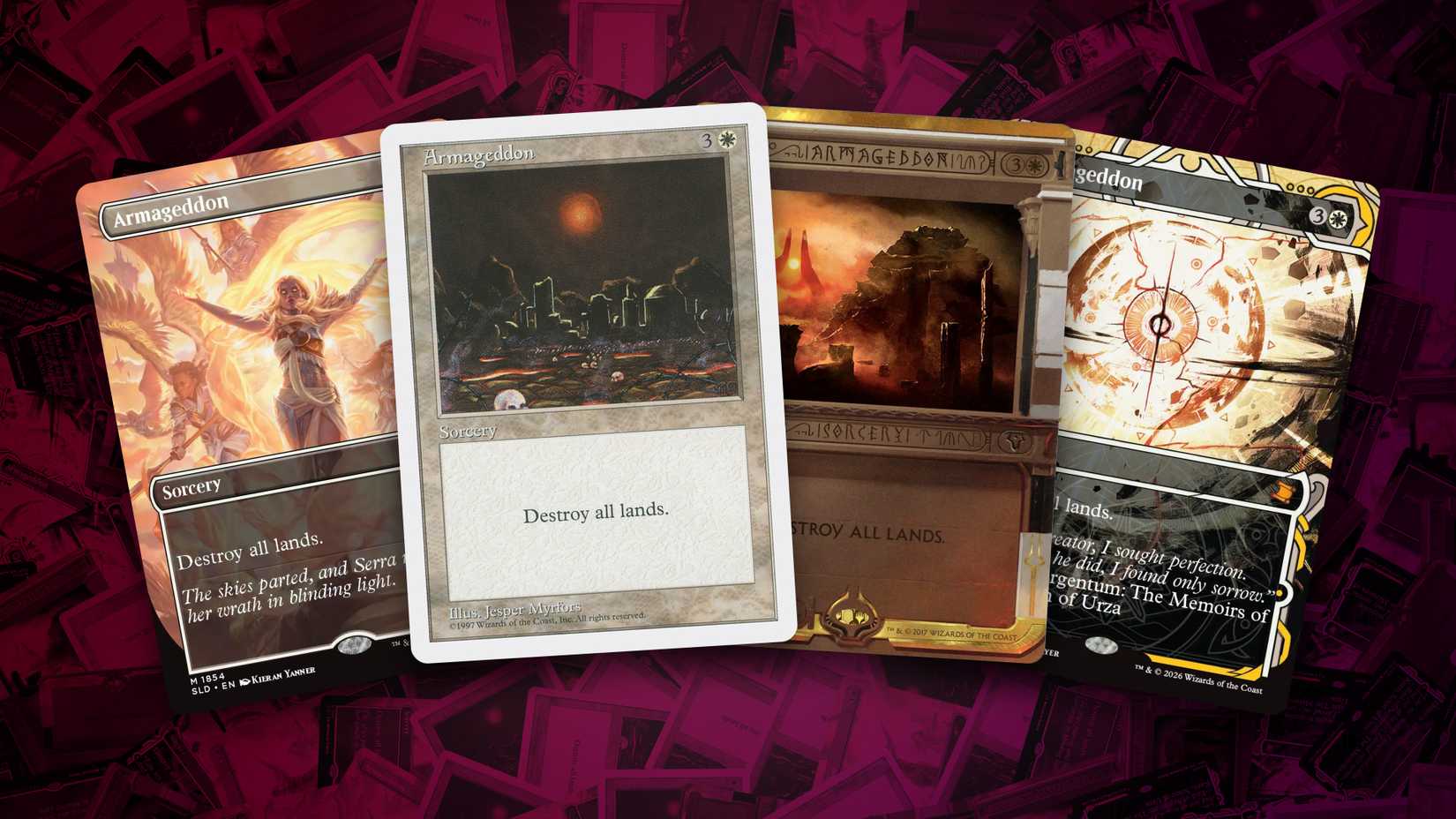
While most sweepers focus their wrath on creatures or artifacts, Armageddon targets the very lifeblood of the game: the land. For four mana, this white sorcery destroys all lands on the battlefield, plunging every player back to square one.
Though mass land destruction carries a notoriously controversial reputation in casual Commander play due to its ability to stall games indefinitely, it remains a razor-sharp, highly effective win condition in competitive environments. Players typically break parity by pairing Armageddon with commanders that manipulate lands from the graveyard or generate alternate resource loops, cementing a total lock on the game state before pulling the trigger.
Supporting Context & Metrics: The Evolution of Sweeper Design
To appreciate why these twenty spells endure, one must evaluate the mathematical and psychological metrics that govern board wipe usage across various formats.
Metric / Category
Standard / Modern 1v1
Commander (Multiplayer)
Average Mana Value
3.0 – 4.0 mana
4.5 – 6.5+ mana
Primary Objective
Tempo recovery, stabilizing against aggro
Political leverage, clearing board stalls
Preferred Mechanic
Exile / Damage (-X/-X)
Asymmetrical / Multi-modal
Pacing Impact
Immediate stabilization
Late-game structural reset
In fast-paced 1v1 formats, efficiency is paramount. Sweepers costing more than four mana rarely see play because the tempo loss is too severe. Conversely, multiplayer formats like Commander reward higher mana investments if the payoff yields asymmetrical advantages or scales with the number of opponents.
Furthermore, data from competitive decklists shows a steady shift away from unconditional destruction toward exile-based effects. As modern card design increasingly incorporates recursive mechanics—such as Escape, Aftermath, and straightforward death triggers—board wipes that send cards to the graveyard can inadvertently fuel an opponent’s secondary strategy. Consequently, spells that exile or clear specific permanent types have risen significantly in competitive adoption.
Official Statements & Design Philosophy
The design philosophy behind board wipes has been a frequent topic of discussion among Wizards of the Coast’s R&D team. Lead game designers have often emphasized that sweepers are necessary safety valves to prevent creature-heavy formats from spiraling out of control.
"A healthy Magic format requires safety valves that allow a player behind on board presence to claw their way back into the game," notes prominent card design commentary from Wizards of the Coast development retrospectives. "However, mass removal must be carefully balanced so that it doesn’t invalidate creature combat entirely. The evolution from symmetric destruction to targeted, modular, and asymmetric sweepers represents our commitment to making board wipes dynamic choices rather than default panic buttons."
This philosophy explains why modern sets frequently experiment with conditional mass removal—such as spells that deal damage based on a creature’s toughness, or effects that spare specific creature types based on tribal themes. These design iterations ensure that board wipes require tactical deckbuilding rather than serving as universal drop-in answers for any color combination.
Future Outlook: The Next Generation of Mass Removal
As Magic: The Gathering continues to expand into new planes, crossover universes, and digital-first play spaces, the architecture of the board wipe will undoubtedly continue to evolve. We are already witnessing an era of experimental design where sweepers double as card draw engines, create tokens upon resolution, or utilize modal thresholds based on the game’s current turn count.
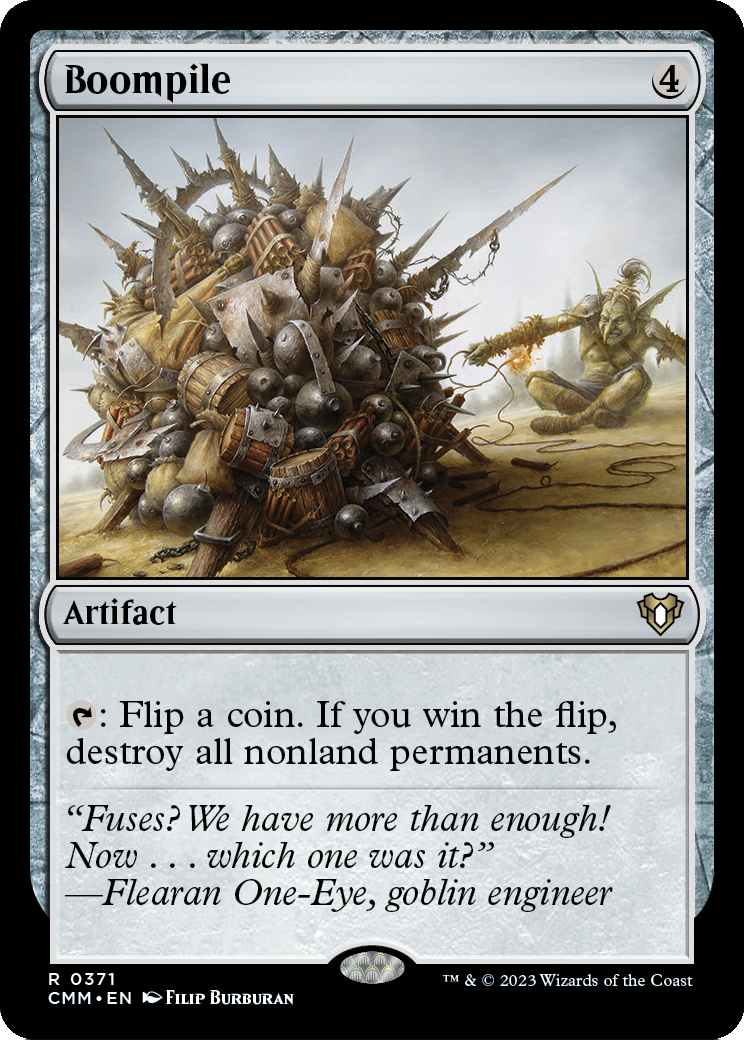
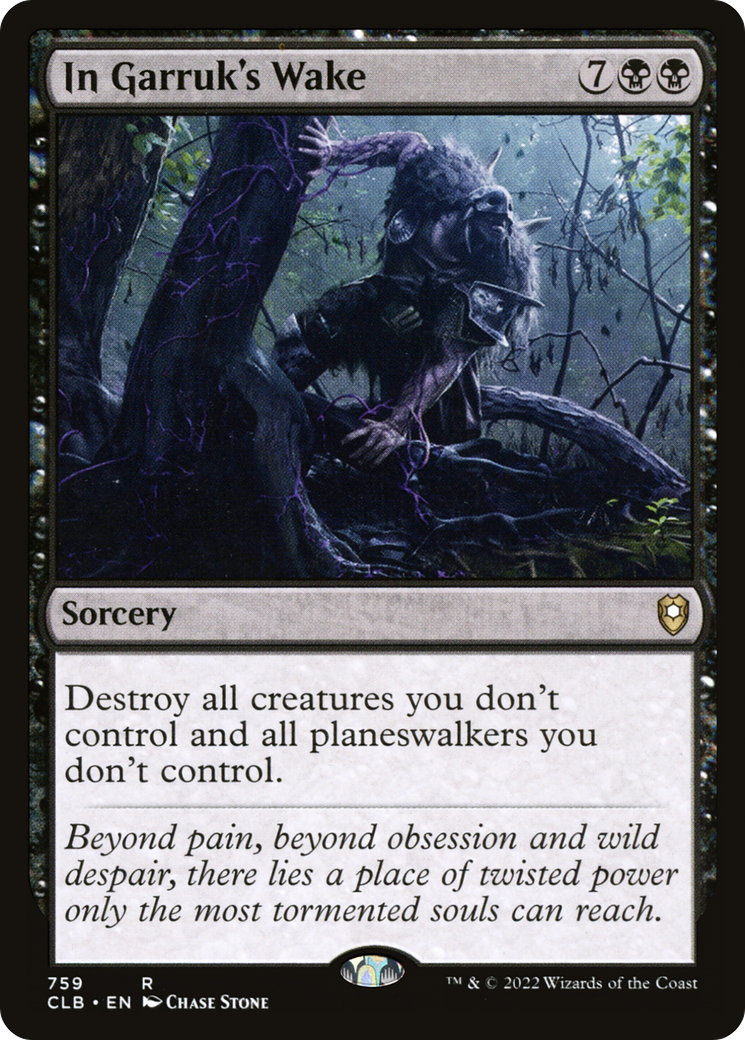
Looking forward, the challenge for developers will lie in maintaining the delicate balance between control and proactive strategies. As creatures become more resilient—boasting ward, indestructible, and recursive safety nets—sweepers must become increasingly sophisticated to remain relevant. Whether through randomized chaos like Boompile, or high-cost, one-sided slaughterhouses like In Garruk’s Wake, the desire to occasionally blow up the entire battlefield and start fresh remains an indelible core pillar of the Magic experience.