Executive Overview
In the high-stakes, multi-billion-dollar ecosystem of modern video game development, few entities command the legal and corporate ferocity of Take-Two Interactive and its crown jewel, Rockstar Games. As the industry counts down the days to the anticipated launch of Grand Theft Auto 6—arguably the most valuable and fiercely guarded intellectual property in entertainment history—security breaches are treated not merely as nuisances, but as existential threats.
Yet, amid an aggressive, five-alarm manhunt spearheaded by Take-Two, involving high-powered legal subpoenas directed at corporate giants like Microsoft and Discord, the primary target of this investigation has chosen a path of breathtaking defiance. Rather than vanishing into the encrypted shadows of the dark web, the notorious Grand Theft Auto 6 leaker known as "Cyberleek" has surfaced with a startling enterprise: selling corporate sponsorships, video watermarks, and custom gameplay clips directly from the eye of the storm.
According to a recently updated "contact" tab on Cyberleek’s website, the leaker is actively raising funds through "community support and strategic partnerships." Eschewing traditional, albeit criminal, extortion models where publishers pay ransoms to suppress leaks, Cyberleek is pitching a bizarre monetization framework. Advertisers are invited to purchase prominent promotional placements on upcoming, highly coveted leaks—complete with options for custom-tailored gameplay footage, including explicit content.
This move has sent shockwaves through the gaming community and legal circles alike. It represents a level of hubris rarely witnessed in cyber-espionage and digital piracy. While Cyberleek may view this as a lucrative capitalization on unprecedented notoriety, legal experts and industry observers agree on one immutable fact: opening commercial communication channels with the public is a high-stakes gamble that could dramatically accelerate the leaker’s downfall. This in-depth report examines the mechanics of Cyberleek’s astonishing pitch, the staggering financial figures involved, the immense legal liabilities facing any brand foolish enough to participate, and the historical precedents that suggest this defiant gambit will likely end in a courtroom.
Detailed Chronology of the Leak and the Hunt
To understand the sheer recklessness of Cyberleek’s latest venture, one must trace the timeline of the Grand Theft Auto 6 security breaches and the relentless corporate counter-offensive that followed.
The Breach and the Rise of Cyberleek
The saga of Grand Theft Auto 6 leaks began years ago with massive, unprecedented early-development footage drops that leaked source code, testing builds, and gameplay mechanics onto public forums. While early arrests were made—most notably involving a teenage member of the notorious Lapsus$ hacking collective who was subsequently sentenced to a secure hospital facility—the leaks did not stop. Instead, fragmented cells and individual operators continued to tease, distribute, and monetize fragments of Rockstar’s sacred code.
Enter Cyberleek. Emerging as a prominent node in the distribution network of leaked GTA 6 assets, Cyberleek managed to evade immediate law enforcement capture while steadily building a brand around insider access. Rather than fading into obscurity as Take-Two mobilized its legal apparatus, Cyberleek leaned into the spotlight, establishing a dedicated web presence that transformed stolen intellectual property into a bizarrely commercialized enterprise.
Take-Two’s Counter-Offensive
Recognizing that containment required cutting off the digital oxygen supply to these leakers, Take-Two Interactive launched an aggressive global manhunt. Legal filings revealed a flurry of judicial subpoenas targeting major technology platforms.
In late 2023 and continuing through subsequent legal maneuvers, Take-Two compelled companies like Microsoft and Discord to hand over user records, chat logs, IP addresses, and transactional metadata associated with accounts suspected of handling or distributing GTA 6 leaks. The message from the publisher was unequivocal: there is no statute of limitations on the protection of Rockstar’s intellectual property, and Take-Two’s legal team possesses both the capital and the tenacity to pursue perpetrators across international jurisdictions.
The Pivot to Commerce
Facing an escalating dragnet of subpoenas, digital forensics investigators, and federal law enforcement interest, most individuals would prioritize operational security. Cyberleek, however, elected to do the exact opposite.
In a move that stunned cybersecurity analysts, Cyberleek updated the website with a commercial storefront. Transforming an illicit leak operation into what looks distressingly like a digital marketing agency, the leaker invited brands, cryptocurrency projects, and individuals to purchase ad space embedded directly within some of the most sought-after video files on the internet.
The Pitch: Monetizing Infringement and the Price of Access
The operational mechanics of Cyberleek’s monetization model are as unconventional as they are brazen. According to explicit instructions published on the leaker’s site, interested parties cannot simply email an address or slide into a social media direct message. Security and anonymity are paramount to the enterprise.
The Session Messenger Protocol
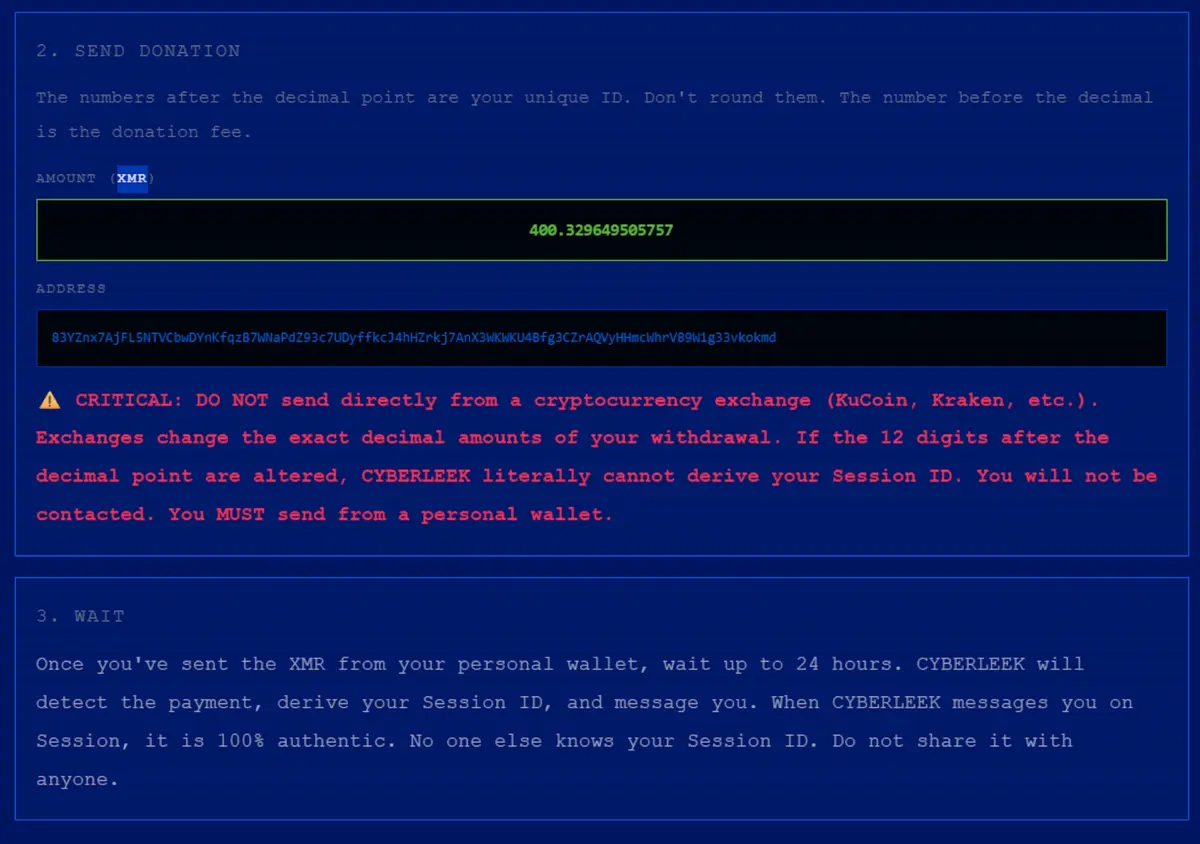
To initiate contact, prospective buyers must utilize the cryptocurrency Monero (XMR)—a privacy-centric coin prized by illicit actors for its obfuscated transaction trails. Transferring the designated fee grants the buyer a cryptographic token of contact, enabling secure, end-to-end encrypted communication via Session, a decentralized messenger that requires no phone number or email address to register.
Once inside the secure chat, the negotiation parameters open up. Cyberleek’s offerings include:
- Video Watermarks: Placing brand names, logos, or promotional tags directly onto leaked Grand Theft Auto 6 gameplay footage, ensuring millions of views across social media aggregate sites carry the sponsor’s mark.
- Custom Gameplay Requests: Buyers can commission specific, tailored gameplay footage showcasing particular mechanics, map locations, or character models. Notably, Cyberleek’s terms explicitly state a willingness to produce custom content containing sexual themes or adult content—pushing the envelope even further into bizarre territory.
- Guaranteed Response: The initial cryptocurrency transfer acts strictly as a "contact fee," guaranteeing that Cyberleek will answer the ping and open a dialogue.
The Staggering Financials
The price of admission alone is enough to alienate casual inquiries, cementing the proposal’s surreal nature. The initial contact fee is set at a staggering 400 Monero (XMR).
At current cryptocurrency conversion rates, 400 XMR equates to approximately $164,730 USD. For nearly $165,000, the buyer does not receive an ad campaign, guaranteed viral reach, or intellectual property rights; they merely purchase the privilege of beginning negotiations with a fugitive hacker.
Industry analysts remain divided on whether this pricing model is a serious attempt to secure venture capital from the criminal underground, a massive troll aimed squarely at Take-Two’s legal department, or a desperate liquidity play by an operator running low on funds. However, even if a single eccentric entity takes the bait, it represents a staggering payday for a cyber-criminal under siege.
Supporting Context & Metrics: The Anatomy of a Toxic Brand Association
From a strategic marketing perspective, aligning a brand with Cyberleek’s Grand Theft Auto 6 leaks is less of an advertising strategy and more of an institutional suicide note.
Legal Culpability and Accessory Liability
While Cyberleek operates behind layers of encryption and cryptocurrency, any company or individual that steps forward to purchase these ad placements enters perilous legal territory. Legal experts specializing in intellectual property and corporate law have highlighted several critical risks:
- Accessory to Copyright Infringement: Knowingly paying a cyber-criminal to feature a corporate logo on stolen, unreleased software could easily be construed by prosecutors as aiding and abetting copyright infringement on a commercial scale.
- The Take-Two Legal Hammer: Take-Two Interactive retains some of the most aggressive litigation teams in the interactive entertainment sector. Engaging in commercial transactions with the very individual they are hunting places a glaring red target on the buyer’s back.
- Reputational Toxicity: In the modern corporate landscape, brand safety is paramount. Associating a legitimate business with the theft and illicit distribution of trade secrets instantly renders that brand toxic to consumers, distribution platforms, and institutional investors.
The Precedent of Corporate Traps
History shows that cyber-criminals who attempt to monetize their exploits publicly often underestimate the patience and ingenuity of major corporations and law enforcement agencies.
A classic historical parallel involves Valve Corporation and the infamous pre-release leak of Half-Life 2 in 2003. When a German hacker named Axel Gembe managed to breach Valve’s internal network and steal the source code for the eagerly awaited sequel, Valve famously set a trap. Rather than launching an immediate kinetic strike, Valve operatives engaged the hacker in dialogue, feigning interest in hiring him as a security consultant and inviting him to Seattle for a job interview.
While the sting operation was ultimately coordinated with the FBI and German law enforcement rather than completed via a job flight, it demonstrated a fundamental truth: leakers who open communication channels expose themselves to immense human error.
By inviting external contact, setting up encrypted messaging relays, and conducting financial transactions, Cyberleek is leaving a digital breadcrumb trail. Every interaction, every negotiated term, and every transaction introduces a variable that specialized cyber-forensic units can exploit.
Official Statements and Industry Reactions
The gaming industry has reacted to Cyberleek’s latest stunt with a mixture of sheer astonishment and dark humor. Major industry outlets, legal commentators, and development communities have universally condemned the move while acknowledging its bizarre theatricality.
Neither Rockstar Games nor Take-Two Interactive has issued a public statement specifically addressing Cyberleek’s advertising storefront. True to form, the publisher prefers to let its legal filings, subpoenas, and investigative teams do the talking in silence. However, sources close to the publisher indicate that the new developments have only intensified the resolve of the internal security and legal task forces assigned to the case.
Prominent figures within the cybersecurity and game journalism communities have been vocal about the sheer recklessness of the endeavor. On forums and social media platforms, commentators have noted that Cyberleek is essentially daring federal agencies and corporate investigators to crack their anonymity cloak.
"If Cyberleek manages to walk away from this scot-free after openly running a commercial enterprise off the back of stolen Rockstar source code, it will go down as one of the most baffling security blunders in gaming history," noted one prominent legal analyst covering the case. "Conversely, if they get busted because an undercover investigator or a disgruntled crypto-broker traces that Monero transfer, nobody in the community will be surprised."
Future Outlook: How This Story Ends
As the gaming world edges closer to the eventual release of Grand Theft Auto 6, the pressure on both Rockstar Games and the underground networks trafficking its secrets will reach a boiling point.
Cyberleek’s decision to launch an advertising agency built on stolen intellectual property marks a dramatic escalation in the cat-and-mouse game between digital pirates and corporate titans. It highlights a dangerous psychological phenomenon among high-profile hackers: the intoxicating pull of notoriety overriding basic self-preservation.
Probable Trajectories
- The Inevitable Crackdown: Cybersecurity experts overwhelmingly predict that opening public communication channels and demanding high-value cryptocurrency transfers will ultimately serve as Cyberleek’s undoing. The digital footprint required to manage inquiries, negotiate deliverables, and launder 400 Monero tokens leaves too many vectors for law enforcement exploitation.
- The Ghost in the Machine: Alternatively, should Cyberleek maintain flawless operational security and evade capture, this episode will be remembered as an audacious, almost mythological middle finger hurled at the corporate establishment—a high-risk stunt that netted a massive payday before vanishing into digital obscurity.
- Corporate Retaliation: Regardless of Cyberleek’s fate, Take-Two Interactive is unlikely to let this public provocation go unanswered. Expect further expanded subpoenas, targeted asset freezes on identified crypto-wallets, and intensified cooperation between international law enforcement agencies to dismantle the infrastructure supporting the leak network.
For now, the digital circus surrounding Grand Theft Auto 6 continues to generate headlines stranger than any fiction Rockstar’s writers could conceive. Whether Cyberleek’s brash gamble ends in a federal indictment or a historic payday, one thing remains certain: the countdown to Los Santos is fraught with more drama off the screen than on it.