Executive Overview
As the gaming industry braces for what is almost universally projected to be the largest entertainment launch in human history, a passionate cultural campaign is brewing across Southeastern Europe and the Middle East. With Grand Theft Auto 6 slated for release in November, anticipation has reached a fever pitch. Yet, for millions of Turkish-speaking players, the excitement is tempered by a persistent, frustrating omission: the continued absence of official Turkish language support in Rockstar Games’ blockbuster catalogue.
Rather than accepting this exclusion quietly, the Turkish gaming community has mobilized with unprecedented speed, creativity, and professional rigor. Following the recent drop of Rockstar’s extended gameplay showcase, a dedicated collective of Turkish actors, sound engineers, and content creators did the seemingly impossible: they produced a fully realized, professionally mixed Turkish dub of the gameplay trailer within a single 24-hour window.
This breathtaking turnaround is just the tip of the iceberg. It forms part of a broader, increasingly organized grassroots movement demanding that major Western publishers recognize the immense economic and cultural value of the Turkish gaming market. Buoyed by recent victories—such as IO Interactive’s decision to integrate Turkish subtitles into 007 First Light following similar community pressure—fans are now turning their sights squarely on Rockstar Games.
Prominent Turkish content creators, such as the influential YouTuber Pintipanda, have stepped forward to spearhead the dialogue, emphasizing that localization is no longer a charitable luxury for triple-A titles, but a commercial necessity. As the clock ticks down to November, the pressure on Rockstar is mounting. This report examines the mechanics of the Turkish community’s extraordinary protest, the broader landscape of localized gaming in Turkey, the economic arguments driving the movement, and what this high-stakes standoff means for the future of global game publishing.
Detailed Chronology: From Digital Frustration to Professional Defiance
The roots of the current GTA 6 localization movement stretch back years, marked by a history of silence from major Western publishers regarding Turkish linguistic inclusion. While sprawling open-world RPGs and narrative-driven epics have increasingly embraced localization, Rockstar Games has traditionally maintained a strict, centralized approach to its releases, rarely offering localized text—let alone full voice acting—outside of a select few dominant European languages.
The Spark: The Extended Gameplay Reveal
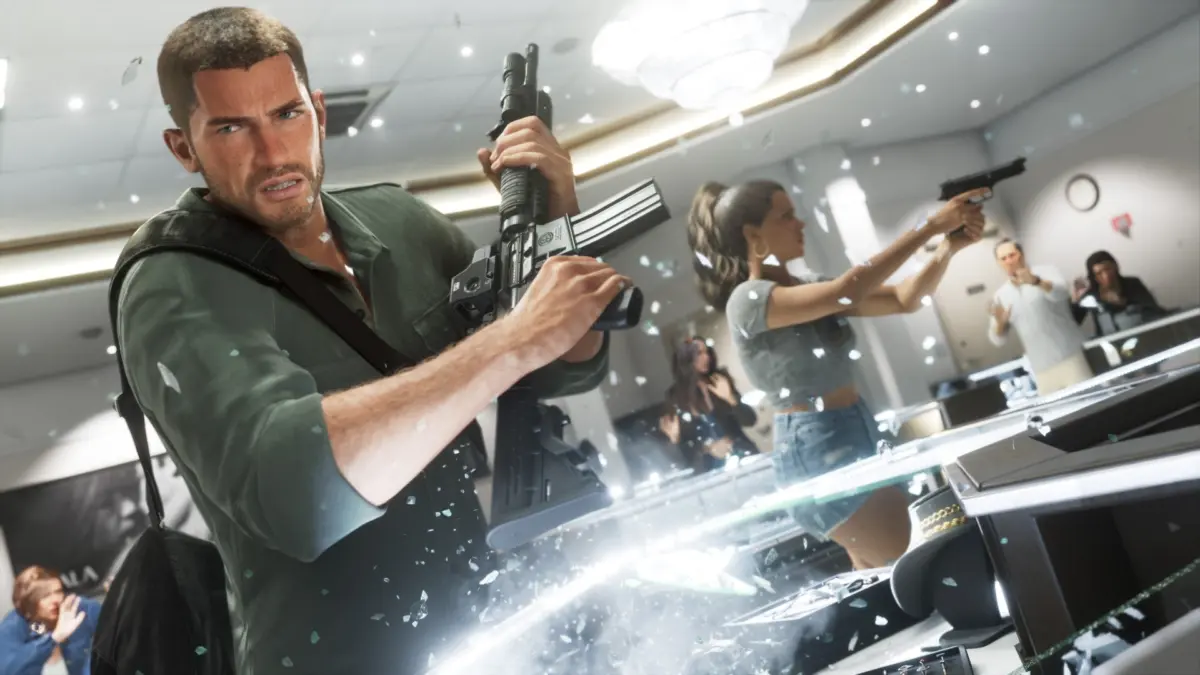
The tension culminated immediately following Rockstar’s deployment of the Grand Theft Auto VI extended gameplay look. The footage, designed to showcase the next-generation fidelity, AI behaviors, and atmospheric density of Leonida and Vice City, captivated audiences worldwide. For Turkish fans, however, the brilliant visuals underscored a recurring barrier: a lack of native accessibility.
Instead of merely flooding comment sections with generic translation requests, the community decided to demonstrate, rather than just ask, what was possible. Within 24 hours of the official trailer’s debut, a fully dubbed Turkish version of the extended gameplay reveal went live on YouTube.
The production value shocked casual observers and industry insiders alike. Eschewing amateur microphone recordings or haphazard translations, the project enlisted a full cast of professional voice actors, experienced audio engineers, and script adapters. The dialogue was meticulously lip-synced and dynamically mixed to match the audio cues, gunfire, and ambient noise of the original trailer. The result was an uncanny valley of legitimacy: a seamless glimpse of GTA 6 running entirely in Turkish, proving definitively that the talent, passion, and infrastructure required for high-end localization already exist natively within Turkey.
Escalation via Influencer Advocacy
Capitalizing on the momentum of the viral dub, prominent Turkish gaming personality Pintipanda released a comprehensive video essay directly addressing Rockstar Games. Moving past simple petitions, the creator laid out a sophisticated, pragmatic roadmap for how a studio of Rockstar’s magnitude could integrate Turkish localization without disrupting internal pipelines.
Pintipanda argued that if building a localization team from scratch proves too logistically burdensome or time-consuming for Rockstar, the corporate giant has ample financial resources to leverage external partnerships. Pointing to the thriving ecosystem of world-class Turkish localization and translation agencies, the creator highlighted a proven track record of massive, text-heavy Western RPGs and strategy games that have launched with pristine Turkish text support—and flourished commercially as a result.
Supporting Context & Metrics: The Economic Power of the Turkish Gaming Market
To understand why the Turkish gaming community is refusing to back down, one must examine the staggering evolution of Turkey as a gaming hub. For decades, Western publishers viewed the region through an outdated economic lens, often ignoring local currency fluctuations and assuming lower baseline purchasing power. Today, those assumptions are thoroughly obsolete.
A Thriving Hub for Text-Heavy Masterpieces
Turkey’s gaming populace is exceptionally literate in digital entertainment, boasting millions of highly engaged players across PC, console, and mobile platforms. Far from shying away from complex, narrative-heavy experiences, Turkish gamers have enthusiastically embraced some of the most intricate titles in modern gaming history.
As Pintipanda pointed out in his direct appeal to Rockstar, Turkish players routinely enjoy massive, dialogue-dense epics fully localized in their native tongue:
- The Witcher 3: Wild Hunt (CD Projekt Red)
- Cyberpunk 2077 (CD Projekt Red)
- Baldur’s Gate 3 (Larian Studios)
- Warhammer franchise titles (Games Workshop / various partners)
The studios behind these titles did not implement Turkish localization out of charity; they did so because comprehensive market analysis proved that the investment would be fully recouped through amplified sales, heightened brand loyalty, and maximized regional engagement. When developers invest in Turkish localization, the community responds in kind, creating a sustainable loop of mutual financial return.
The Precedent: 007 First Light
The GTA 6 campaign does not exist in a vacuum. It is part of an increasingly assertive wave of consumer advocacy across Eastern Europe and the Middle East. Earlier this development cycle, the Turkish gaming community launched a massive, coordinated campaign directed at IO Interactive regarding the upcoming stealth-action title 007 First Light.
Unlike many studios that ignore fan campaigns, IO Interactive listened. Following sustained, constructive community outreach, the studio officially confirmed that 007 First Light would feature native Turkish subtitles at launch. This watershed moment proved to players that coordinated, respectful, yet firm advocacy can alter the production priorities of major developers. It fundamentally transformed the psychological landscape of the Turkish gaming community: localization is no longer viewed as an impossible dream, but as a negotiable standard.
Beyond Borders: The Global Turkish Diaspora
Another critical metric often overlooked by multinational publishers is the geographic spread of Turkish-speaking populations. Localization advocates frequently remind developers that Turkish is not merely spoken within the borders of the Republic of Turkey.
A vast, economically affluent Turkish diaspora spans across Western Europe—notably Germany, the Netherlands, France, and Austria—as well as Central Asia and parts of the Middle East. Millions of bilingual and native Turkish speakers reside in regions with high disposable incomes for entertainment products. By failing to include Turkish language support, publishers are inadvertently alienating a lucrative, transnational demographic that frequently purchases triple-A console hardware and software at standard Western pricing tiers.
Official Statements and Industry Dynamics
As the November release date draws closer, the silence from Rockstar Games and its parent company, Take-Two Interactive, stands in stark contrast to the deafening roar of community mobilization. Historically, Rockstar has operated as an impenetrable corporate fortress, rarely acknowledging fan petitions, open letters, or grassroots campaigns during its tightly scripted marketing windows.
The Rockstar Playbook: Controlled Messaging
Rockstar’s current marketing blitz for Grand Theft Auto 6 is proceeding exactly according to plan. Following the gameplay reveal, the studio permitted select tier-one media outlets—including IGN—to publish exclusive preview impressions, unearthing granular details about the game’s mechanics, dynamic world systems, and the much-discussed morality meter. Furthermore, consumer excitement was supercharged when Rockstar and PlayStation announced a pair of limited-edition, GTA 6-themed PS5 controllers set for pre-order.
Within this meticulously choreographed publicity machine, unexpected fan movements rarely receive direct public commentary. Rockstar prefers to let the sheer gravity of its intellectual property dictate the conversation. However, industry analysts note that behind closed doors, localization requests for titanic releases like GTA 6 are subjected to rigorous cost-benefit analyses.
The Logistics of Localizing Vice City
Localizing a game the scale of Grand Theft Auto 6 presents monumental technical and artistic challenges. Rockstar’s games are famously massive, featuring hundreds of thousands of lines of dialogue, sprawling radio station broadcasts, ambient NPC chatter, satirical commercial advertisements, and deeply layered street slang.
Implementing full voice acting in multiple new languages requires millions of dollars, rigorous audio direction, and years of synchronized recording schedules—which explains why Rockstar has historically restricted native voice acting to English, relying on localized text subtitles for major European markets.
Yet, the Turkish community’s argument is not necessarily demanding a full, multi-million-dollar voice-over overhaul (though their self-made trailer proved they would welcome it). Their primary, immediate demand is far more pragmatic: localized text and subtitle support. Subtitles represent a fraction of the logistical overhead of full voice dubbing, yet they instantly open the door for millions of players who might otherwise struggle to parse rapid-fire American slang, criminal jargon, and complex narrative subtext delivered at breakneck speed during high-octane missions.
Future Outlook: A Watershed Moment for Consumer Relations
With Grand Theft Auto 6 sitting slightly more than two months away from its anticipated launch, time is rapidly running out for Rockstar to alter its localization roadmap for Day One.
What Happens Next?
Even if Rockstar remains publicly silent leading up to launch, the efforts of the Turkish gaming community have already achieved a historic success. By producing a broadcast-quality dub within 24 hours and organizing coherent, economically sound appeals through creators like Pintipanda, the community has elevated the discourse from internet complaining to sophisticated industry lobbying.
- Day One Patches and Post-Launch Support: Even if initial physical discs and digital storefront builds ship without Turkish support, the modern gaming landscape allows for rapid post-launch updates. If community momentum continues to surge, Rockstar could look to implement Turkish subtitles in a title update shortly after launch, mirroring how other major publishers respond to overwhelming regional demand.
- A Paradigm Shift for Future Titles: Whether or not GTA 6 receives official Turkish support on launch day, this movement has permanently rewritten the relationship between Turkish gamers and Western developers. Publishers can no longer assume that this market will quietly accept being sidelined. The success of the 007 First Light campaign proves that persistence pays off.
- The Power of Community Self-Reliance: Should Rockstar ultimately pass on official localization, the rapid creation of the fan dub guarantees that independent modding communities will be ready to bridge the gap. PC players, in particular, will almost certainly look to adapt community-made translation packs, ensuring that language barriers are dismantled by the players, for the players.
Conclusion
As Vice City prepares to open its neon-drenched gates once more, the story of GTA 6 in Turkey is about much more than just a video game. It is a testament to the fierce dedication of a modern gaming community that refuses to be treated as an afterthought. Whether Rockstar Games ultimately extends an olive branch to its Turkish fanbase remains to be seen. But one thing is certain: the Turkish gaming community has made its voice heard loud, clear, and in professional stereo surround sound.