Executive Overview
The intersection of artificial intelligence and human artistic expression has entered a provocative new phase. While much of the global discourse has centered on generative AI’s impact on copyright, digital illustrations, and traditional visual mediums, a more intimate and avant-garde application of the technology is quietly unfolding: algorithmic cosmetics.
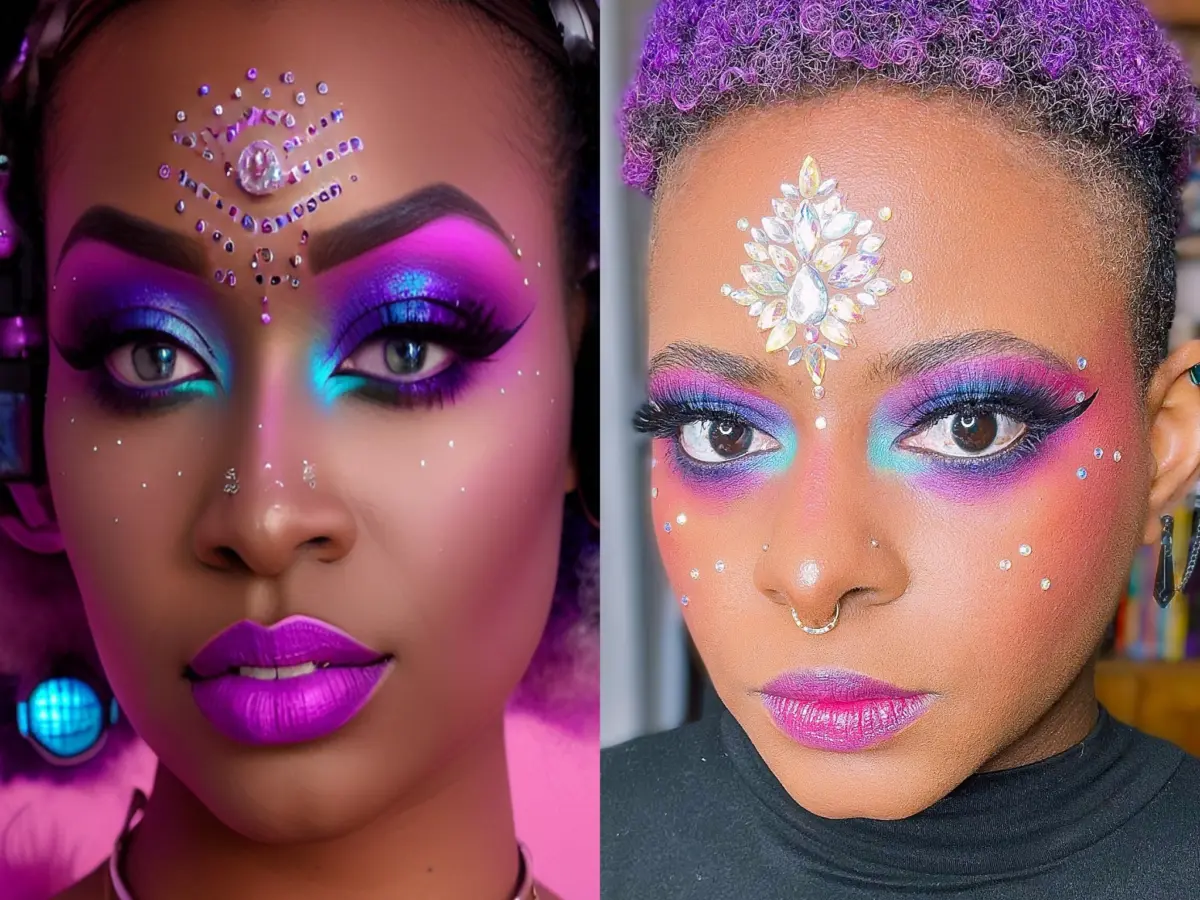
In an ambitious five-day live experiment, visual artist Dela Doll bridged the gap between machine learning and tactile artistry by allowing an artificial intelligence engine to dictate her daily makeup looks. Utilizing the neural network-driven platform Dream by Wombo, the artist subjected her creative agency to algorithmic prompts, translating abstract digital pixels into physical reality using conventional cosmetic tools.
This deep-dive investigative report explores the implications of algorithmic beauty. Beyond the novelty of avant-garde aesthetics, the experiment raises vital questions regarding the nature of human creativity, the limitations of machine interpretation, and the emerging synthesis of artificial intelligence within the multi-billion-dollar beauty and cosmetics industry. As generative tools become increasingly accessible, this project serves as a compelling case study on how human artists negotiate, adapt to, and ultimately subvert machine-generated directives.
Detailed Chronology: Five Days of Algorithmic Aesthetics
To maintain methodological consistency throughout the project, the artist relied strictly on the Dream by Wombo application. The platform imposes a strict 200-character limit per text prompt—a constraint that forced the artist to distill complex stylistic ideas into hyper-concise commands. While the AI generated the foundational visual blueprints, the execution relied on human dexterity, improvisation, and the cosmetics available on hand.
Day 1: The Monolithic Baseline
- The Prompt Strategy: Focused on minimalist structure and stark color contrast.
- The AI Output: A surrealist composition featuring heavy geometric geometry, asymmetrical shadowing, and an unusual distribution of color pigments across the facial structure.
- The Execution: Translating a two-dimensional algorithm into a three-dimensional face proved immediately challenging. The AI’s rendering of depth often disregards human bone structure, treating the face as a flat digital canvas. The artist used heavy cream pigments and precise liquid liners to mimic the machine’s erratic geometry.
- Reflections: Day one established the fundamental friction of the experiment: where the machine sees raw pixel data, the human artist must navigate muscle movement, skin texture, and physical gravity.
Day 2: Organic Distortion and Fluidity
- The Prompt Strategy: Leaning into natural elements mixed with cyberpunk motifs.
- The AI Output: Swirling patterns that resembled molten metallic textures flowing over organic skin tones, suggesting an integration of bio-mechanical design.
- The Execution: Achieving a "molten" look required layering high-shine glosses over matte foundations, utilizing metallic gold leaf, and blending harsh lines into soft gradients. Because the AI lacked anatomical logic, the "flowing" elements frequently landed across unconventional facial features, requiring the artist to improvise adaptations around the eyes and cheekbones.
- Reflections: This day highlighted the AI’s tendency toward abstract expressionism. Unlike human makeup tutorials that prioritize symmetry and enhancement, the machine favored chaos and disruption.
Day 3: High-Contrast Minimalism
- The Prompt Strategy: Testing the software’s boundaries with stark black-and-white parameters and sharp focal points.
- The AI Output: A clean yet eerie juxtaposition of deep charcoal lines intersecting with stark white highlights, evoking traditional Japanese theatrical makeup filtered through a futuristic lens.
- The Execution: Precision was paramount. Using ultra-fine felt-tip liquid eyeliners, the artist mapped out the algorithmic coordinates onto her face. Because the human eye naturally seeks symmetry, resisting the urge to "fix" the AI’s asymmetrical instructions required a conscious mental shift.
- Reflections: The minimalist prompt yielded the most striking wearable art, proving that simpler algorithmic inputs sometimes translate more effectively to the physical realm than overly chaotic ones.
Day 4: Maximalist Chaos
- The Prompt Strategy: Overloading the prompt character limit with conflicting textures, vibrant neon palettes, and surrealist descriptors.
- The AI Output: A chaotic explosion of multi-colored gradients, floating geometric shapes, and distorted facial features that bordered on the grotesque.
- The Execution: This was the most physically demanding day of the experiment. The artist deployed a vast arsenal of neon pigments, water-activated liners, and rhinestones. The challenge lay in translating the AI’s random artifacts—such as floating color blobs—into deliberate makeup placement.
- Reflections: Day four underscored the unpredictability of neural networks when fed maximum sensory data. The resulting look was less about traditional beauty and more about performance art.
Day 5: The Harmonious Synthesis
- The Prompt Strategy: A reflective prompt combining the organic fluidity of Day 2 with the structural precision of Day 3.
- The AI Output: A balanced, ethereal composition featuring soft pastel tones anchored by sharp, dark graphic elements.
- The Execution: Having spent four days learning the "language" of the machine, the artist executed this final look with fluid confidence. The transition from digital prompt to physical application felt almost symbiotic, representing a true collaboration between human intuition and machine calculation.
- Reflections: The project concluded not with a sense of replacement, but of augmentation. The AI did not dictate the artist; rather, it provided an unpredictable muse that forced the artist out of her comfort zone.
Supporting Context & Metrics: The Intersection of AI and Cosmetics
The integration of artificial intelligence into the beauty and cosmetics sector is no longer confined to experimental art projects; it is rapidly becoming a commercial juggernaut. According to recent market analysis, the global AI-in-beauty market size is projected to scale exponentially over the next decade, driven by augmented reality (AR) try-on tools, hyper-personalized skincare formulations, and generative design software.
Key Industry Metrics:
- Market Growth: The AI beauty tech market is anticipated to expand at a Compound Annual Growth Rate (CAGR) exceeding 20% through 2030.
- Consumer Adoption: Over 65% of beauty consumers report using or expressing interest in AI-driven skin analysis and shade-matching tools prior to making a purchase.
- Generative Design: Major cosmetics conglomerates are increasingly utilizing machine learning algorithms to forecast color trends, design packaging, and conceptualize limited-edition product lines.
The Philosophical Debate: Collaboration vs. Replacement
Projects like Dela Doll’s five-day experiment ignite vital conversations within the creative community. Critics argue that relying on generative tools devalues human craftsmanship, bypassing the lived experience and emotional depth that traditional artists bring to their work. Conversely, proponents view AI as a sophisticated brainstorming partner—a digital muse capable of breaking through creative blocks and introducing unexpected perspectives that a human mind might never conceive.
In the realm of makeup art, where historical traditions have long dictated what is considered "flattering" or "beautiful," algorithms offer a radical disruption. By ignoring human beauty standards, facial symmetry, and cultural norms, AI presents an alien perspective on the human face, inviting artists to experiment with forms they might otherwise dismiss.
Official Statements and Industry Perspectives
To contextualize the broader implications of algorithmic art in daily life, industry experts, technologists, and beauty professionals have weighed in on the evolving dynamic between human creators and machine intelligence.
Dr. Elena Vance, Professor of Digital Media and Aesthetics:
"When we look at projects where algorithms dictate physical appearance, we are witnessing a literal embodiment of cyborgian art. The human body becomes the hardware executing software written by an indifferent machine. It challenges our historical obsession with facial symmetry and conventional aesthetics, forcing us to confront the beauty of computational chaos."
Marcus Thorne, Lead UX Designer for Generative AI Platforms:
"People often misunderstand the role of tools like Dream by Wombo. They aren’t autonomous creators; they are statistical mirrors reflecting human training data back to us with a twist of randomness. When artists use these prompts as a baseline, they are participating in a dialogue with collective human culture stored within the model’s weights and biases."
Aesthetic Practitioner and Makeup Historian Chloe Dupont:
"Makeup has always been a technology of transformation. From ancient Egyptian kohl to modern contouring, we use pigments to rewrite our surfaces. Introducing AI into this lineage is simply the next logical step. The machine doesn’t replace the artist’s hand; it acts as an unpredictable director pushing the boundaries of what a face can communicate."
Future Outlook: Where Beauty Meets the Algorithm
As artificial intelligence models become increasingly sophisticated—transitioning from text-to-image generators to real-time augmented reality overlays capable of dynamic environmental mapping—the future of personal presentation is poised for dramatic transformation.
1. Real-Time Algorithmic Adaptation
We are moving toward an era where smart cosmetics and live AR filters could allow individuals to wear dynamic, AI-generated looks in real-time social environments. Imagine attending a digital conference or walking through a smart city where your physical makeup adapts dynamically to your mood, the weather, or the ambient lighting, calculated second-by-second by a localized neural network.
2. Hyper-Personalization in Product Development
Beyond artistic expression, generative AI will revolutionize how cosmetics are manufactured. Future consumers may input personalized aesthetic preferences into an AI engine, which will instantly formulate bespoke pigment palettes, textures, and application guides tailored precisely to their unique facial topology and skin biology.
3. The Redefinition of Avant-Garde Art
As demonstrated by this five-day experiment, the true value of AI in creative fields lies not in automation, but in collaboration. The friction between human limitations and machine imagination creates a fertile ground for unprecedented artistic movements. Artists who learn to harness, critique, and subvert algorithmic directives will pioneer new genres of visual expression that neither human nor machine could achieve independently.
Ultimately, the experiment proves that while artificial intelligence can generate the blueprint, it requires human breath, human skin, and human soul to bring the canvas to life. The future of beauty is not purely digital or strictly physical—it is a symbiotic synthesis of both.