Executive Overview
The global renaissance of anime has elevated the medium from a niche subculture to a dominant global entertainment force. Streaming platforms, massive theatrical distributions, and cross-media adaptations have brought sophisticated storytelling to millions. Yet, this golden age of production has cast a harsh light on a persistent industry friction point: the legacy adaptation.
While contemporary series benefit from reliable multi-cour schedules, pristine digital production pipelines, and direct oversight from creators, many foundational titles from the late 1990s through the early 2010s suffered from structural liabilities. Studios routinely greenlit adaptations of ongoing manga series, inevitably outstripping their source material, inventing uncanon narrative departures, or cutting short prematurely due to shifting production economics.
The resulting landscape is littered with beloved properties that possess extraordinary world-building, iconic character designs, and profound thematic depth, yet lack a definitive, faithful screen adaptation. Fans are frequently left stranded with truncated runs, rushed pacing, or infamous artistic missteps—such as the widely panned 3D CGI experiments of the 2016 Berserk series.
This retrospective examines five iconic anime properties—Tokyo Ghoul, Soul Eater, Claymore, Deadman Wonderland, and Berserk—that demand a comprehensive, high-fidelity reimagining. By marrying modern animation techniques with a steadfast adherence to their respective manga sources, these five narratives could be transformed from flawed nostalgic relics into definitive pillars of contemporary animation.
Detailed Chronology of an Adaptation Crisis
To understand why these five franchises require modern interventions, one must examine the historical production climate of the late 2000s and early 2010s. During this era, the production committee system frequently prioritized rapid commercial turnaround over long-term narrative integrity.
- 2007–2008 (Claymore and Soul Eater): Madhouse’s adaptation of Claymore aired 26 episodes, overtaking Norihiro Yagi’s manga and culminating in an abrupt, non-canon finale. Concurrently, Studio Bones tackled Atsushi Okubo’s Soul Eater, delivering a celebrated gothic-whimsical aesthetic driven by an iconic jazz-hop soundtrack, only to deviate wildly from the manga’s concluding arcs due to an unfinished source text.
- 2011 (Deadman Wonderland): Manglobe adapted Jinsei Kataoka and Kazuma Kondou’s survival thriller into a breathless 12-episode run. By cutting vital characters, accelerating plot development, and terminating the narrative right as the broader conspiracy began to unfold, the adaptation choked off potential sequels before they could enter production.
- 2012–2018 (Tokyo Ghoul): Studio Pierrot took on Sui Ishida’s dark urban fantasy. While the initial season achieved moderate success, subsequent iterations—including the controversial Tokyo Ghoul: Root A and Tokyo Ghoul: Re—omitted crucial psychological frameworks, compressed complex geopolitical factions, and alienated both manga purists and new viewers alike.
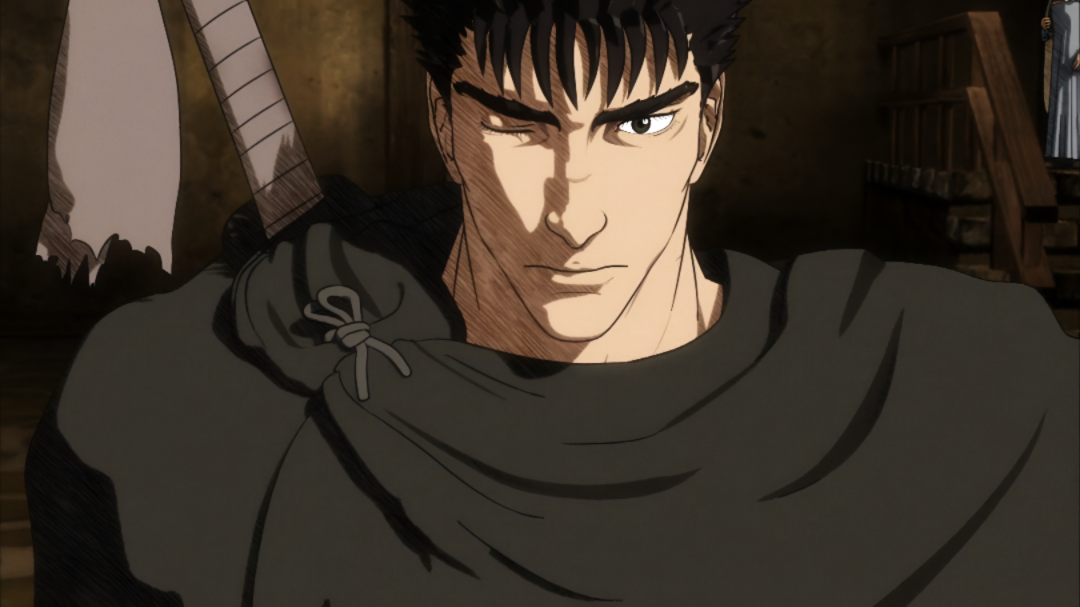
- 1997–2016 (Berserk): Kentaro Miura’s monumental dark fantasy suffered through multiple fractured screen iterations. The revered 1997 Oriental Light and Magic (OLM) series captured the atmospheric dread of the Golden Age arc but omitted foundational characters and supernatural elements. The subsequent Golden Age Arc film trilogy by Studio 4°C refined the visual presentation, yet the infamous 2016–2017 television adaptation by Studio GEMBA and Millepensee relied heavily on stilted CGI that undermined Miura’s meticulously inked, highly detailed panels.
Supporting Context & Metrics: The Manga-to-Anime Disconnect
The disparity between manga sales and television adaptations often dictates the viability of a remake. When a studio deviates from an ongoing masterwork, the narrative impact can be quantified by lost thematic potential, curtailed character arcs, and fan disillusionment.
| Franchise | Original Studio | Adaptation Run | Core Issue | Unadapted/Altered Content |
|---|---|---|---|---|
| Tokyo Ghoul | Studio Pierrot | 2012 – 2018 | Rushed pacing, non-canon divergences | Ignored deep allegories, altered Kaneki’s character arc in Root A. |
| Soul Eater | Studio Bones | 2008 – 2009 | Divergent ending | Invented a power-of-friendship conclusion distinct from Okubo’s manga. |
| Claymore | Madhouse | 2007 | Premature ending | Covered only 11 of 27 manga volumes, inventing a non-canon cinematic finale. |
| Deadman Wonderland | Manglobe | 2011 | Truncated run (12 episodes) | Omitted major characters (e.g., Senji’s backstory depth, the Scarlets). |
| Berserk | OLM / 4°C / Liden Films | 1997, 2012–2017 | Fragmented arcs, poor technical execution | Skipped the Black Swordsman prologue details, Lost Children arc, and more. |
Beyond production metrics, these franchises share common structural traits: complex psychological foundations, intricate world-building, and unflinching explorations of systemic trauma. When adapted with tight budgetary constraints or rushed timeframes, these nuances are invariably flattened into superficial action sequences.
Official Statements and Industry Perspectives
Industry veterans and creators have frequently spoken on the friction between commercial pressures and artistic faithfulness in anime adaptations.
While specific production committees rarely issue post-mortem apologies for narrative divergences, critical retrospectives from directors and industry analysts highlight a shifting paradigm. The unprecedented global success of projects like ufotable’s Demon Slayer: Kimetsu no Yaiba and MAPPA’s Chainsaw Man has established a new benchmark for source material adaptation.
"When you adapt a work that relies on psychological interiority and heavy symbolic world-building, cutting corners on the runtime is no different than excising the heart of the narrative," notes an industry production insider speaking on condition of anonymity. "Modern audiences do not merely want moving pictures of their favorite fight scenes; they demand fidelity to the creator’s philosophical thesis."
The industry consensus has steadily shifted toward the "seasonal continuation" or "definitive complete adaptation" model—exemplified by Fullmetal Alchemist: Brotherhood—proving that honoring a manga from start to finish yields superior long-term commercial value and cultural permanence.
Deep-Dive Analysis: Five Masterpieces for Modern Reimagining
1. Tokyo Ghoul: Beyond the Mask of Ken Kaneki
Sui Ishida’s Tokyo Ghoul is far more than a standard monster-of-the-week urban thriller. At its core, it is a dense, multi-layered allegory concerning systemic corruption, cyclical prejudice, and the agonizing reconstruction of identity under extreme trauma.

The manga’s paneling utilizes expressive, chaotic inkwork that mirrors the fractured psychological state of Ken Kaneki as he transitions from a mild-mannered college student to a tortured half-ghoul. Studio Pierrot’s adaptation famously traded this psychological weight for shock value and flattened action choreography, particularly in the anime-original second season, Root A.
A modern remake would have the opportunity to lean into Ishida’s heavy literary references, unpack the intricate political machinations between the CCG (Commission of Counter Ghoul) and the underground ghoul factions, and restore the haunting philosophical questions regarding what it truly means to be human in a society built on mutual consumption.
2. Soul Eater: Reclaiming the Gothic Whimsy
Atsushi Okubo’s Soul Eater remains a masterclass in stylized, gothic-infused shonen world-building. Studio Bones captured a unique visual atmosphere, combining asymmetrical character designs with a vibrant jazz-and-hip-hop-infused soundtrack.
However, because the anime outpaced the manga’s publication schedule, it veered off into an original narrative trajectory that culminated in a rushed, anticlimactic resolution.
The argument for a Soul Eater remake mirrors the historical trajectory of Fullmetal Alchemist. Just as Brotherhood provided a definitive window into Hiromu Arakawa’s complete vision, a newly minted Soul Eater adaptation could properly introduce the deeper lore of the Great Old Ones, expand upon stagnant character arcs, and deliver the intricate, high-stakes battle choreography that fans of the latter half of the manga have long awaited.
3. Claymore: The Uncompromising Dark Fantasy
Norihiro Yagi’s Claymore stands as one of the most compelling matriarchal dark fantasies in modern manga history. Set on a medieval island terrorized by shape-shifting, human-devouring predators known as Yoma, the story follows the "Claymores"—human-Yoma hybrid warriors engineered and dispatched by a shadowy, secretive Organization.
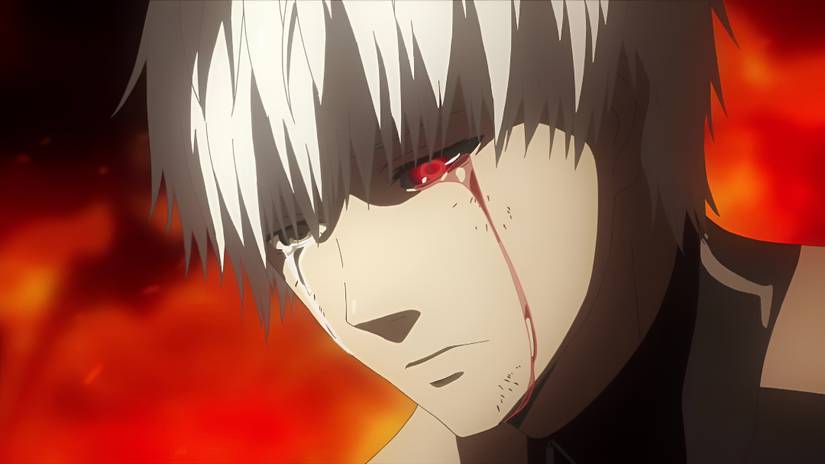
While Madhouse’s 2007 adaptation delivered crisp action and atmospheric dread, its 26-episode ceiling forced a screeching halt at volume 11, resulting in a fabricated conclusion that severed the narrative before its grandest spectacles could manifest.
An ambitious, modern adaptation could finally bring monumental story arcs—such as the grueling Northern Campaign and the dizzying, high-octane confrontations of the climax—to the screen. With state-of-the-art creature design and uncompromising pacing, a Claymore remake would reclaim its rightful place as a benchmark for mature, tactical dark fantasy.
4. Deadman Wonderland: The Brutal Architecture of Guilt
The survival-horror genre has rarely produced a premise as frantic and claustrophobic as Jinsei Kataoka and Kazuma Kondou’s Deadman Wonderland. Following a cataclysmic earthquake that levels Tokyo, teenage protagonist Ganta Igarashi is wrongfully convicted of massacring his entire classroom by a mysterious crimson-armored entity. Sentenced to a privatized prison that doubles as a lethal theme park and tourist attraction, Ganta must navigate a gladiatorial nightmare where inmates wield their own blood as lethal weapons known as the "Branch of Sin."
Manglobe’s 12-episode 2011 adaptation suffered from an abbreviated length that truncated crucial world-building, omitted key characters, and ended mid-stride. A faithful, uncompromised reimagining could lean directly into the raw body-horror and psychological devastation of Ganta’s journey. By maintaining the uncompromising bleakness of the setting while honoring the complex motivations of the secondary inmates, a remake could transform a cult-classic footnote into an elite modern survival epic.
5. Berserk: Honoring Kentaro Miura’s Monumental Legacy
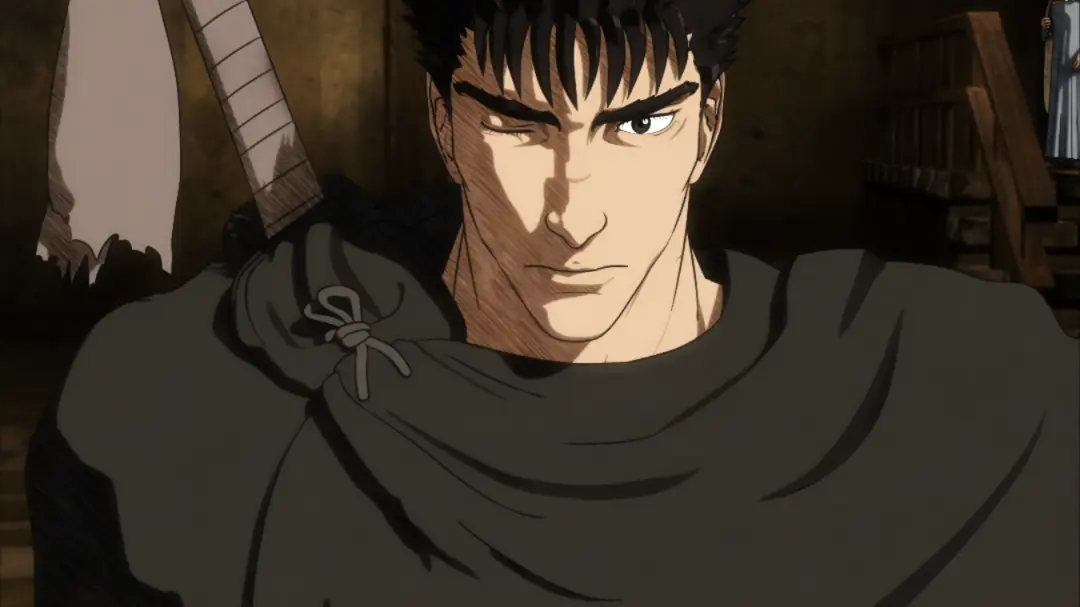
No conversation regarding anime remakes is complete without addressing Kentaro Miura’s Berserk. As a cornerstone of dark fantasy literature, its past screen iterations have all fallen short of perfection. The beloved 1997 series achieved legendary status through its brooding atmosphere and hand-drawn grit, yet omitted foundational arcs like the Black Swordsman prologue and critical supernatural elements. The Golden Age Arc film trilogy offered polished production values for a familiar stretch of the narrative, while the critically lambasted 2016–2017 television series alienated the fandom entirely through poor spatial direction and unrefined CGI.
Massive swathes of Miura’s sweeping epic remain entirely unadapted on screen. A definitive, lovingly crafted multi-cour adaptation that honors the breathtaking detail of Miura’s inked panels could capture the visceral bleakness and profound emotional resonance of Guts’ and Griffith’s intertwined destinies. By treating the secondary cast with the nuance they deserve and faithfully pacing the harrowing journey through the astral world, a true Berserk remake would stand as the ultimate monument to one of manga’s greatest creative minds.
Future Outlook
The demand for high-fidelity anime remakes is not driven by mere nostalgia; it is a creative imperative born from a desire for narrative completion. As production technologies improve and streaming models encourage longer, more deliberate storytelling arcs, the anime industry possesses the tools necessary to correct the missteps of the past.
Whether through standalone studio initiatives or comprehensive multi-season commitments, reimagining titles like Tokyo Ghoul, Soul Eater, Claymore, Deadman Wonderland, and Berserk represents a lucrative and culturally enriching frontier. By respecting the original manga source materials, modern studios have the unprecedented opportunity to turn flawed historical footnotes into definitive, timeless masterpieces for generations of fans to come.