Executive Overview
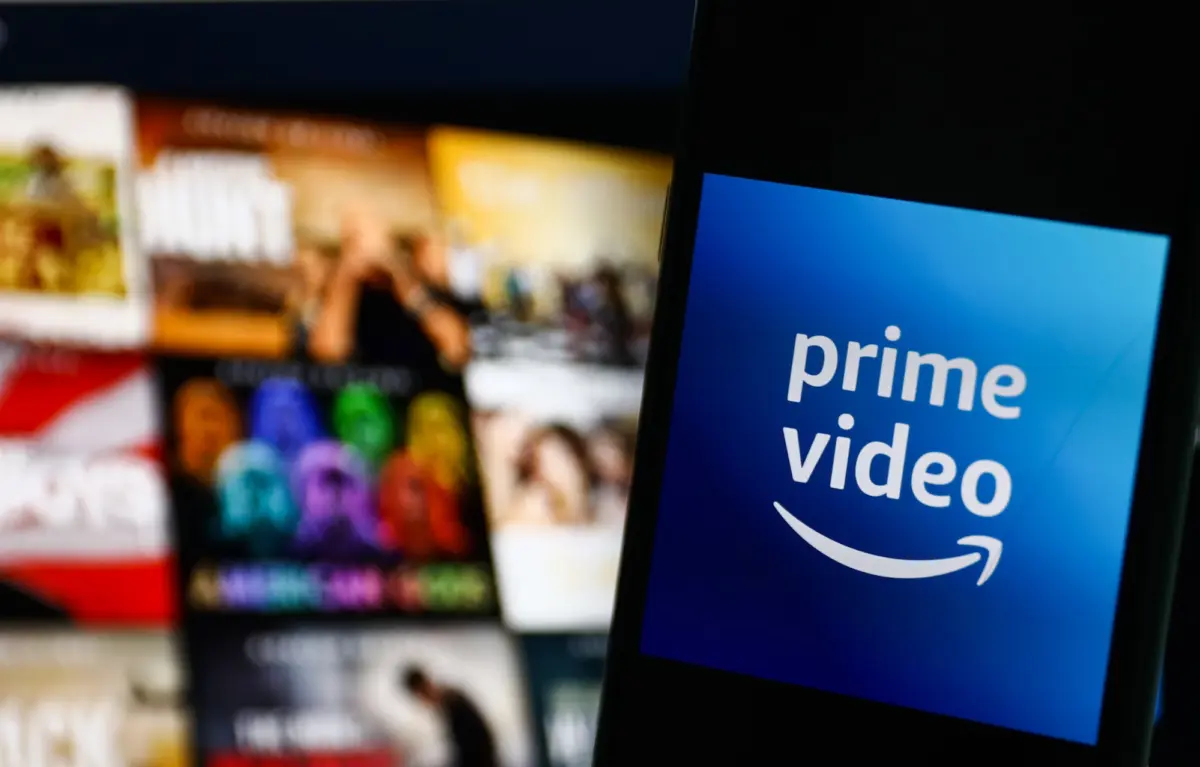
The boundaries separating premium streaming services from algorithmic social media platforms are rapidly dissolving. In a strategic move designed to capture the dwindling attention spans of younger demographics, Amazon announced on Monday a significant expansion of its Prime Video news ecosystem. The retail and technology giant is introducing short-form, on-demand news clips—spanning local, national, and international coverage—directly into its streaming interface.
This initiative represents a direct defensive and offensive maneuver against social media juggernauts like ByteDance’s TikTok and Google’s YouTube Shorts. Historically, subscription video-on-demand (SVOD) platforms and short-form social networks operated in distinct spheres of the attention economy. However, as Gen Z increasingly eschews traditional broadcast television and legacy news outlets in favor of bite-sized, vertically scrolled content, streaming platforms are facing an existential crisis of engagement.
By embedding rapid-fire news clips within Prime Video, Amazon is attempting to transform its living-room-centric platform into an all-in-one digital hub. Crucially, this content will be housed within Prime Video’s existing, ad-supported news destination, which remains accessible to all consumers in the United States regardless of whether they hold a paid Prime subscription. This open-access model highlights Amazon’s broader macroeconomic strategy: leveraging free, high-frequency content to expand its ad-supported streaming footprint and bolster its highly lucrative advertising technology business.
Detailed Chronology
Amazon’s rollout of short-form news content is designed as a multi-phased deployment, prioritizing living room devices before expanding into personal mobile ecosystems.
[Monday Announcement] ──> [Phase 1: Living Room Devices] ──> [Phase 2: Web & Mobile Apps]
                               (Smart TVs, Fire TV, etc.)       (iOS, Android, Browsers)
Phase 1: The Living Room Anchor
The initial deployment brings on-demand short-form news clips to smart TVs, streaming media players (such as Fire TV devices), and other connected living room hardware. By launching on the largest screens first, Amazon is testing the integration within a controlled environment where users are already accustomed to navigating carousels and channel guides.
Phase 2: Mobile and Web Expansion
Following the initial living room rollouts, Amazon plans to deploy the short-form format to web browsers and the Prime Video mobile applications for iOS and Android. This mobile phase is where the direct confrontation with TikTok and Instagram Reels will occur, though technical questions regarding the visual format of these mobile clips remain unresolved.
Phase 3: Integration into the Prime Video Ecosystem
The new short-form clips are being seamlessly integrated into the pre-existing "News" destination within the Prime Video app. Users will encounter these clips in two newly designed sections:
- The "Trending Topics" Carousel: A dynamically updated feed focusing on national and global breaking news, political developments, and cultural events.
- The "Local News" Carousel: A geographically targeted feed delivering localized reporting, weather updates, and regional stories tailored to the viewer’s IP address or account profile.
The Streaming Industry’s Rapid Pivot to Short-Form
Amazon’s move is not an isolated experiment; rather, it is the latest chapter in an industry-wide scramble to mimic the engagement patterns of social media. A chronological look at the competitive landscape reveals a highly coordinated shift throughout the year:
2026 Short-Form Streaming Timeline:
┌───────────┐      ┌───────────┐      ┌───────────┐      ┌───────────┐
│  Peacock  │ ───> │ HBO Max & │ ───> │  Netflix  │ ───> │  Disney+  │
│  (March)  │      │  (July)   │      │  (July)   │      │ (August)  │
└───────────┘ └───────────┘ └───────────┘ └───────────┘- March: Comcast’s Peacock expands its platform architecture to support short-form clips, utilizing AI-driven video curation alongside mobile-first live sports and gaming highlights.
- July: HBO Max introduces a dedicated, vertically oriented "Shorts" feed on its mobile app to drive discovery of its premium catalog. Simultaneously, Netflix partners with prominent entertainment publishers, including Variety, to experiment with shorter, highly shareable promotional and editorial video segments.
- August: Disney+ turns to the creator economy, partnering with prominent TikTok creators to curate and deliver fan-focused short-form content directly within its platform.
- Present Day: Amazon enters the fray, distinguishing itself by focusing heavily on news and information rather than purely promotional or entertainment-driven short-form content.
Supporting Context & Metrics
The decision to inject short-form news into a premium streaming service is deeply rooted in shifting demographic behaviors and consumer psychology.
The Gen Z News Migration
Traditional news broadcasts are facing a demographic cliff. According to data compiled by the Pew Research Center, social media platforms have surpassed legacy television as the primary source of news for younger audiences.
| Platform | Percent of Gen Z Utilizing for News (Approx.) |
|---|---|
| TikTok | 43% |
| 38% | |
| YouTube | 35% |
| Traditional Cable/Broadcast TV | < 15% |
For Gen Z, news is no longer an appointment-viewing activity; it is an ambient, passive experience integrated into their daily digital routines. Legacy media networks that rely on structured 30-minute evening broadcasts are failing to capture this audience, prompting distribution platforms like Amazon to step in as intermediary aggregators.
The "Organic" vs. "Over-Produced" Dilemma
While Amazon is matching the length of TikTok’s content, it faces a cultural hurdle regarding presentation. Pew Research findings indicate that younger consumers do not merely prefer shorter videos; they actively seek out content that feels unpolished, organic, and authentic.
Traditional news clips are typically highly produced, featuring professional studio lighting, teleprompter readings, and rigid journalistic formulas. In contrast, the most successful news creators on TikTok and YouTube Shorts film on smartphones, speak directly to the camera in conversational tones, and inject personal commentary.
Traditional News Broadcast               Gen Z Consumer Preference
┌───────────────────────────┐            ┌───────────────────────────┐
│ • Rigid Studio Sets       │   VS.      │ • Direct-to-Camera Phone  │
│ • Teleprompter Delivery   │            │ • Conversational & Raw    │
│ • Highly Produced Graphics│            │ • Organic, Creator-Led    │
└───────────────────────────┘            └───────────────────────────┘
If Amazon simply chops up traditional, highly produced broadcast segments into two-minute clips, it may fail to achieve the engagement levels of social platforms. To truly compete, Amazon and its content providers will need to adapt their editorial voices to match the raw, peer-to-peer aesthetic that defines modern social-first journalism.
The Macroeconomic Incentive: Ad-Supported Ecosystems
The integration of short-form news is also an ad-inventory play. Prime Video’s news hub is entirely free and ad-supported (FAST/AVOD). Short-form videos provide a highly repeatable, high-density environment for ad insertions.
Because news clips are brief, viewers are highly likely to tolerate short, non-skippable pre-roll or mid-roll advertisements. For Amazon, which has built a dominant global advertising platform, this translates into millions of highly targetable ad impressions, monetizable through Amazon’s sophisticated programmatic advertising DSP (Demand-Side Platform).
Official Statements & Platform Dynamics
Amazon’s official communication regarding the rollout highlights a broad strategic vision, yet leaves key technical and operational questions unanswered.
In its official announcement, Amazon framed the expansion as a natural evolution of its consumer-first distribution model:
"We are expanding our news coverage to include on-demand news clips offering both local and national stories. This update is part of our ongoing commitment to meet viewers where they are, providing them with the content they want, in the formats they prefer, across all of their devices."
The Format Question: Vertical vs. Horizontal
A critical technical detail remains unresolved. When questioned about the mobile experience, Amazon could not yet confirm whether the upcoming mobile clips on iOS and Android would support vertical video orientation (9:16) or remain in traditional landscape (16:9). The company would only state that the updates would be classified as "short-form content."
This distinction is far from trivial:
- The Case for Vertical (9:16): Modern mobile users expect a vertical, swipe-based interface. A horizontal layout forces users to rotate their devices, introducing a point of friction that drastically reduces completion rates and session times.
- The Case for Landscape (16:9): Because Amazon’s news partners (such as major national broadcasters and local affiliates) produce their content in standard widescreen, forcing a vertical crop can slice out critical visual information, graphics, and text overlays.
Amazon’s hesitation to commit to a vertical format highlights the engineering and editorial friction that occurs when legacy television content is adapted for mobile-first consumption patterns.
Future Outlook
The introduction of short-form news to Amazon Prime Video signals a broader convergence of SVOD, AVOD, and social media ecosystems. As the attention economy becomes more fiercely contested, the distinctions between "premium streaming" and "social video" will likely fade entirely.
The Evolution of the Smart TV Interface
As short-form content migrates to the living room, the user interface of the smart TV will undergo a significant redesign. We are likely to see the integration of vertical video feeds directly into TV home screens, allowing users to scroll through TikTok-like feeds using their TV remotes. Amazon’s Fire TV platform is uniquely positioned to pioneer these hybrid interfaces.
A Lifeline for Local Journalism?
Local news stations have spent a decade struggling to monetize their digital presence. By partnering with Amazon’s free, ad-supported platform, local news affiliates gain access to a massive, highly sophisticated ad-distribution network. If Amazon can successfully route local, short-form news to targeted geographic audiences, it could create a sustainable, high-yield revenue stream for local journalism.
The Ultimate Attention Battle
Ultimately, Amazon’s foray into short-form news is a testament to the fact that the battle for consumer attention is no longer about format, but about friction. By housing long-form movies, live sports, premium television, and now, rapid-fire local and national news under a single digital roof, Amazon is building a walled garden designed to ensure that a user never has a reason to close the Prime Video app. Whether Gen Z will accept traditional news packaged in shorter durations, or continue to demand the creator-led authenticity of social platforms, remains the multi-billion-dollar question for the future of digital media.