Executive Overview
In the fast-paced, high-stakes ecosystem of modern B2B startups, a recurring and fatal hiring mistake continues to drain capital, stall growth, and destroy innovation: the hiring of the "pure-play manager."
For decades, conventional wisdom has dictated that as a company scales, founders must step back from daily execution to focus entirely on high-level strategy, capital allocation, and building layers of management. Following this playbook, founders routinely recruit seasoned executives from corporate giants like Salesforce, Oracle, Cloudflare, or Box—leaders whose primary resume highlights are managing large budgets, directing agencies, and overseeing sprawling hierarchies of middle managers.
According to industry veterans and tech investors like SaaStr founder Jason Lemkin, this hiring philosophy is a ticking time bomb. In a business environment fundamentally reshaped by hyper-competition, lean team structures, and the rapid integration of artificial intelligence, a stark reality has emerged: If an executive does not—or cannot—do the foundational work of their discipline themselves, they will fail.
THE EXECUTIVE LITMUS TEST (PRE-$250M ARR)

 ├── CRO  ──> Must close deals, run a territory, & meet customers.
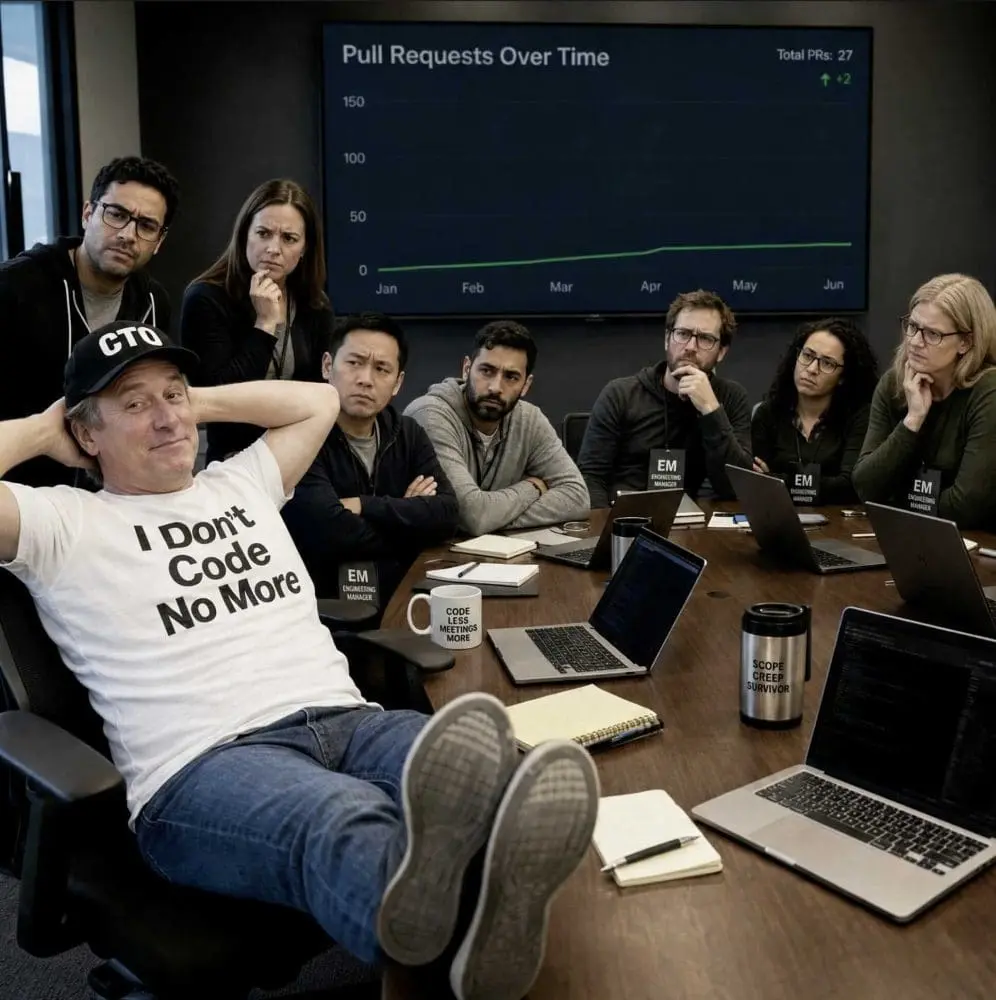
 ├── CTO  ──> Must commit code, review PRs, & master AI dev tools.
 ├── CMO  ──> Must create demand, write copy, & drive campaigns.
 └── CCO  ──> Must visit clients, fix onboarding, & handle escalations.
This mandate is not merely a preference for early-stage scrappiness; it is an absolute operational requirement that holds true well past the $100 million Annual Recurring Revenue (ARR) mark, extending upward toward $250 million and beyond. Executives who rely exclusively on delegation—managing through dashboards, slide decks, and rolled-up forecasts—find themselves completely disconnected from the ground reality of their markets. As a result, sales stall, innovation freezes, customer churn spikes, and top-tier talent heads for the exits.
Detailed Chronology: The Anatomy of an Executive Hiring Mistake
The path to executive failure at a scaling startup usually follows a predictable, highly damaging trajectory. Understanding this lifecycle reveals why traditional corporate pedigrees so often misfire in high-growth environments.
Phase 1: The Halo Effect and the Interview Process
The mistake typically begins with the executive search. Attracted by a candidate’s impressive background at a well-known enterprise software company, the founder or board becomes enamored with polished slide decks, sophisticated organizational charts, and buzzword-heavy methodologies.
During interviews, the candidate speaks eloquently about "scaling operations," "building out go-to-market funnels," and "empowering teams." The founder, eager to delegate operational friction, looks past the candidate’s recent distance from hands-on work. They mistake polished managerial vocabulary for practical, current competence.
Phase 2: The First 90 Days of Abstraction
Once hired, the new executive immediately begins imposing the structural templates of their previous, much larger employer.
- The CRO establishes complex compensation plans and pipeline review cadences, but avoids stepping into active sales cycles or getting on calls with prospective buyers.
- The CTO reorganizes engineering squads and sets up agile tracking boards, but has not written or committed production code in years.
- The CMO outsources content creation, copywriting, and demand generation to a handful of external agencies, reducing their own role to managing agency invoices and reviewing weekly status reports.
- The CCO relies on automated customer health scores and quarterly Zoom check-ins, remaining safely behind a desk rather than visiting clients on-site.
Phase 3: The Divergence of Perception and Reality
By month six, the cracks in the foundation begin to show. Because the executive cannot personally execute or evaluate the work, they become entirely dependent on intermediaries.
- The CRO’s sales forecast becomes a mere roll-up of junior sales reps’ wishful thinking. When a key deal stalls, the CRO cannot step in to rescue it because they lack context and direct engagement with the buyer.
- The CTO cannot accurately size engineering projects or identify padded timelines because they are unfamiliar with modern, AI-accelerated development workflows.
- The CMO’s demand generation engine sputters, leaving the marketing department producing generic collateral while pipeline growth flattens.
Phase 4: Talent Flight and Structural Decay
The best operators on the ground—the high-performing software engineers, the quota-crushing enterprise reps, the product marketing leads—realize almost immediately that their new boss is an empty suit. They notice that the executive cannot help them solve complex, tactical problems.
Frustrated by a lack of mentorship and strategic clarity, top talent begins to resign. To compensate for falling metrics, executive leadership resorts to heavy-handed pressure tactics: squeezing existing customers for renewals, demanding more manual data entry from shrinking teams, and blaming external market conditions. Ultimately, innovation grinds to a halt, and the startup enters a spiral of stagnation.
Supporting Context & Metrics: The Post-2026 Operating Environment
To understand why pure-play managers are failing at unprecedented rates, one must examine the fundamental transformation of the tech landscape. The operating environment of today demands an entirely different class of executive agility.
The Lean Team Revolution
The era of bloated department headcounts is over. Driven by operational efficiency and the integration of autonomous AI agents, modern startups are scaling to incredible heights with a fraction of legacy headcounts. It is increasingly common for high-growth B2B and AI-native startups to cross $10M, $20M, or even $50M in ARR with tiny, highly focused teams.
When a functional department consists of just three or four human specialists augmented by a suite of AI agents, there are no layers of middle management for an executive to oversee. An executive cannot simply sit at the top of a pyramid allocating capital and reviewing reports. If they are not directly driving execution—prompting models, writing code, closing enterprise contracts, or architecting demand campaigns—there is simply no job for them to do.
The AI Imperative in Engineering and Marketing
The velocity of technological change has accelerated exponentially. In software development, the advent of advanced AI coding assistants has completely redefined what a small engineering team can ship in a single week.
A CTO who has not written code recently is functionally blind in this environment:
- They cannot accurately estimate project timelines.
- They cannot evaluate whether an engineer is leveraging modern toolchains effectively.
- They cannot command the technical respect of their engineering staff.
Similarly, in marketing and sales, shifting buyer behaviors and AI-driven outreach mean that traditional playbooks imported from 2018 corporate environments fall flat. Leaders must be in the trenches, testing new channels, interacting with buyers directly, and feeling the market’s friction in real time.
Departmental Breakdown: Spotting the Imposter Executive
| Department | The Pure-Play Manager’s Trademark Behavior | The Required Hands-On Competence |
|---|---|---|
| Sales (CRO) | Reviews pipeline roll-ups in board meetings; answers deal-specific questions with "Let me check with the account executive." | Personally closes key enterprise accounts; maintains direct contact with major buyers; can salvage a stalling deal. |
| Engineering (CTO) | Manages agile boards and attends status meetings; has not committed code or reviewed raw pull requests in years. | Commits code regularly; builds production applications; stays at the bleeding edge of AI coding tools and system architecture. |
| Marketing (CMO) | Manages three external agencies and a budget; delegates messaging, homepage copy, and campaign creation entirely to subordinates. | Writes compelling copy; builds demand generation loops; actively creates content and engages with the market on platforms like LinkedIn. |
| Customer Success (CCO) | Monitors dashboard health scores from a distance; relies on automated QBR Zoom calls with silent participants. | Visits key enterprise clients in person during their first week; actively redesigns onboarding workflows to eliminate churn points. |
Future Outlook: The Reshaping of Executive Compensation and Recruiting
As more founders share the painful lessons of hiring corporate paper-pushers, the venture capital and startup recruiting ecosystems are undergoing a profound cultural correction. The traditional playbook of sourcing executives strictly from Fortune 500 companies or monolithic enterprise giants is facing aggressive pushback.
1. Shift Toward "Player-Coach" Mentalities
Looking ahead, high-growth companies are rewriting executive job descriptions to explicitly mandate hands-on execution. Job postings and board mandates increasingly require technical leaders to maintain active code contributions, sales leaders to own a personal book of business, and marketing leaders to produce core messaging assets. The romanticized notion of the purely strategic executive is being replaced by the pragmatic reality of the "player-coach."
2. Radical Due Diligence in Hiring
Board members and founders are implementing rigorous vetting processes to unmask pure-play managers before an offer is extended. Essential verification steps now include:
- The Tactile Audit: Asking candidates to walk through the exact mechanics of how they built or executed a campaign, codebase, or deal within the last 90 days.
- Reference Deep-Dives: Interviewing direct reports from the candidate’s previous organizations to determine the last time the executive actually rolled up their sleeves and did the foundational work.
- Practical Assessments: Requiring candidates to solve a live, tactical problem relevant to the current stage of the startup’s growth.
3. The New Threshold for Delegation
The consensus among seasoned founders is crystal clear: the luxury of hiring a purely administrative, delegatory executive does not materialize until a company achieves immense scale—typically well past $250M ARR and operating across deep organizational hierarchies. For any company scaling toward that milestone, hiring an executive who refuses to do the work is an invitation to stagnation.
Conclusion
Startup success is notoriously difficult to achieve, and founders face countless external risks ranging from market shifts to macroeconomic turbulence. However, hiring an executive who refuses to execute is an entirely self-inflicted wound.
No amount of polished slide decks, impressive past corporate logos, or theoretical management frameworks can substitute for raw, hands-on operational capability. In the modern B2B landscape, leadership is not about standing at the top of the pyramid giving directions—it is about leading the charge from the front. Founders who internalize this truth, reject the pure-play manager, and insist on operational excellence at every level will build resilient, enduring companies capable of dominating their markets.