Executive Overview
In the modern landscape of digital marketing and technical asset sales, the rules of client acquisition are undergoing a seismic shift. For decades, the standard sales play was predictable: secure a discovery call, run a slide deck highlighting past successes, pitch a theoretical solution, and hope the prospect’s anxiety was outweighed by your persuasive charm.
Today, that paradigm is crumbling.
According to AI consultant and strategist Etan Polinger, who co-created this workflow alongside Michael Stelzner for the AI Explored podcast, modern artificial intelligence has eliminated the need to sell based on promises. By leveraging advanced deep research tools, automated brand style extraction, and natural-language coding environments—a phenomenon increasingly known as "vibe coding"—consultants and agencies can now show up to an introductory meeting with an 80% finished, fully customized, working prototype of the exact tool a prospect requested.
The implications for close rates, deal values, and client selection are profound. When a vendor arrives at a first meeting having already solved the client’s problem in a branded, functional environment, the psychological dynamic of the room flips entirely. The anxiety shifts from the seller hoping to land a client to the buyer worrying whether the vendor even has the bandwidth to take them on. This investigative deep-dive explores the four-step AI workflow Polinger used to close a $12,000 deal in a single meeting, examining how professionals can replicate this strategy to fundamentally transform their sales pipelines.
Detailed Chronology: The Anatomy of a $12K AI-Powered Close
To understand how artificial intelligence can collapse a multi-week sales cycle into a single, high-conversion interaction, one must look at the chronology of how Polinger executed this strategy in the wild.
The Spark: Spotting the Ask
The process did not begin with cold outreach or an elaborate outbound marketing campaign. It started organically within a specialized digital community. A prospective client posted a seemingly routine request: they were searching for a custom digital widget to solve a specific engagement and conversion bottleneck on their platform.
In the past, a vendor might respond with a generic message: "Hi, I run an agency that builds custom widgets. Let’s jump on a 30-minute discovery call next Tuesday."
Instead, Polinger recognized the precise outcome the client needed, replied with a succinct, "I think I can help," and immediately pivoted from a sales mindset to a creation mindset. Rather than scheduling a call to talk about what he could do, he resolved to show up with the finished reality. He invested less than four hours of preparation time—an investment that, prior to modern generative AI tools, would have been completely economically unviable for a speculative first meeting.
Step 1: Nailing the Core Outcome
The initial phase of Polinger’s workflow bypasses technical jargon and focuses purely on intent. When dealing with complex software or digital marketing assets, it is easy for both buyer and seller to get bogged down in tech stacks, frameworks (such as React versus Vue), or backend integrations.
Polinger neutralizes this friction by deploying a simple, highly targeted AI prompt. He takes the prospect’s community post, direct message, or initial inquiry transcript and feeds it into an LLM with an explicit directive:
"I just saw this message. What do they want? Answer in one sentence that anyone can understand."
By forcing the AI to distill the request down to its absolute essence, Polinger ensures his efforts remain outcome-oriented. In this specific case, the AI returned an unequivocal assessment: the prospect needed a customized, interactive chat widget. Once this baseline was established and confirmed via AI analysis, Polinger knew precisely what value needed to be delivered, clearing the path for deep personalization.
Step 2: Executing Three-Pass Deep Research
Rather than running a single, muddy query into an AI search tool, Polinger executes three distinct, highly focused research passes. By segmenting the research into separate categories, he maximizes the computational depth and analytical focus of models like ChatGPT, Claude, or Gemini.
- Profiling the Person: Polinger investigates the key decision-maker. He searches for podcast interviews, conference presentations, and YouTube videos featuring the prospect, feeding transcripts directly into the AI to analyze their vernacular, core philosophies, and expressed pain points. If multimedia transcripts are unavailable, he scrapes their public digital footprint and professional profiles. This ensures that when the proposal is presented, it mirrors the prospect’s own language and worldview.
- Profiling the Company: Next, he analyzes the business model, overarching corporate objectives, and current market positioning. While this is straightforward for mid-to-enterprise corporations with rich digital footprints, smaller local or traditional businesses require examining whatever signals exist—such as active job postings. As Polinger notes, a company’s open hiring roles are a goldmine for revealing what initiatives management is quietly prioritizing, even if those initiatives have not been publicly announced.
- Profiling the Market & Alternatives: Finally, Polinger maps out existing solutions and competitive alternatives in the marketplace. This serves a dual purpose: it informs how to build a superior asset, and it provides a vital safety net. If the prospect ultimately balks at a custom build during the meeting, Polinger can immediately pivot. "No problem," he can state on the spot, "I can configure and set up one of these existing out-of-the-box platforms for you for [cost]."
Step 3: Extracting Branding and Building the Style Guide
A proposal is only as good as its presentation. To bridge the gap between abstract strategy and tangible reality, Polinger leverages automated asset extraction.

While he notes that he is fundamentally a performance marketer rather than a traditional graphic or brand designer, modern tools bridge that gap effortlessly. He uses browser extensions like WhatFont to identify exact font families and ColorZilla to harvest exact brand hex codes from the prospect’s website.
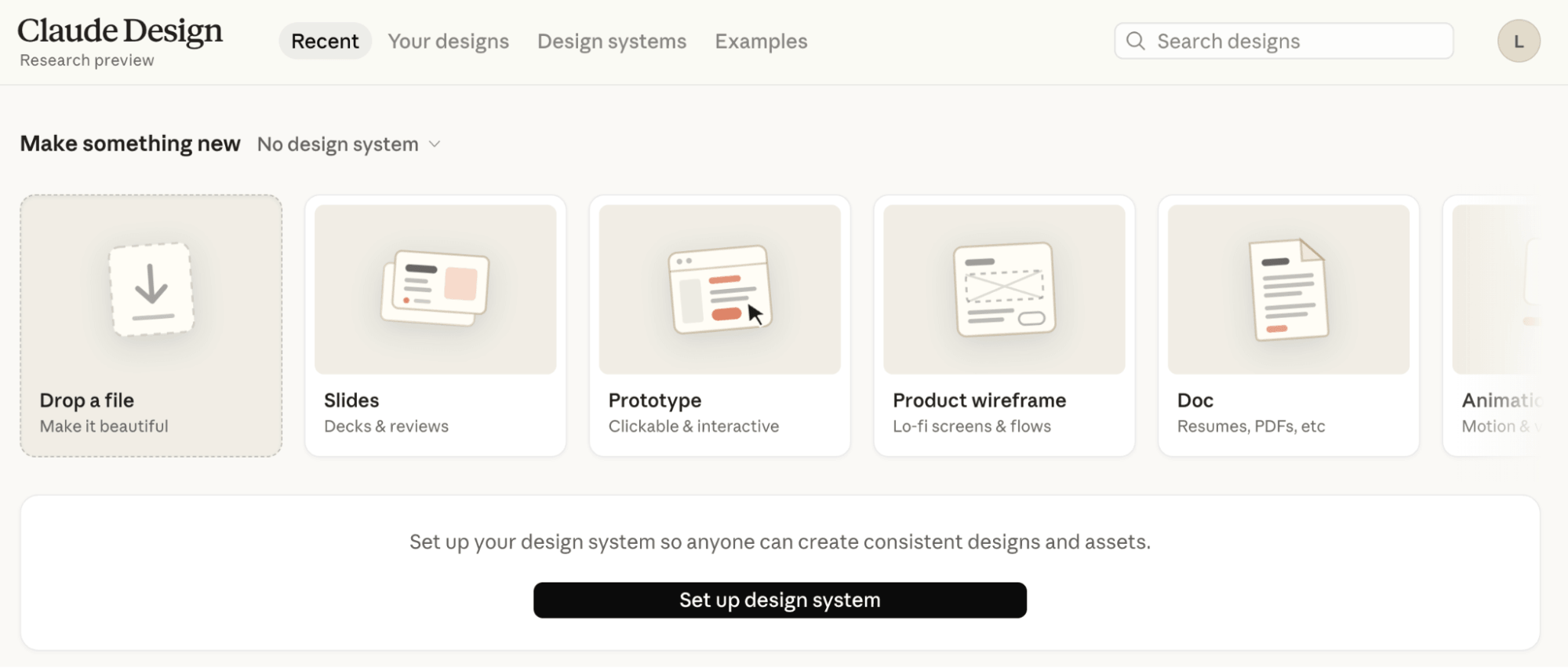
These assets, alongside screenshots of the prospect’s logo and primary web pages, are uploaded directly into Claude Design‘s Design System tab. Alternatively, users can simply upload screenshots; Claude Design is sophisticated enough to autonomously parse color palettes and brand aesthetics.
The output is a robust, portable code folder containing UI and UX style guidelines—complete with custom headers, footers, color schemes, and data visualization elements matched precisely to the prospect’s corporate identity. This "good-enough" system generates on-brand assets that frequently outclass the design work produced by the prospect’s own internal marketing team.
Step 4: Prototyping and Presentation
With the portable style folder established, the final stage is rapid execution. Polinger drops the style directory into an AI-assisted development environment such as Claude Code or Replit. Using natural language instructions—the hallmark of "vibe coding"—he directs the AI:
"Build a chat widget that uses these exact brand buttons."
Because he is no longer writing raw boilerplate code line-by-line, a functional, highly customized working prototype is generated in minutes. He then packages screenshots of this live, branded widget into a tailored proposal deck generated via ChatGPT or Gemini, utilizing the insights gleaned from his earlier market research pass.
When Polinger entered the virtual meeting room with the prospect, he did not share a slide deck outlining what he hoped to build. He shared his screen and clicked through a live, perfectly branded, functional chat widget built specifically for their ecosystem.

The psychological response was instantaneous. The prospect stopped evaluating whether Polinger was qualified and began worrying aloud whether Polinger’s agency had the operational capacity to take them on as a client. The $12,000 deal was secured.
Supporting Context & Metrics: The Economics of AI-Assisted Sales
The workflow outlined by Polinger is not merely an interesting productivity hack; it represents a fundamental recalibration of unit economics in professional services and B2B sales.
The Death of Unpaid Speculative Labor
Historically, the golden rule of agency sales was simple: never do free work. Agencies guarded their intellectual property fiercely, refusing to write code, build mockups, or formulate comprehensive strategies until contracts were signed and retainers were funded. The rationale was sound: speculative work required hours, days, or even weeks of expensive human labor, resulting in catastrophic profit margins if the prospect walked away.
AI has completely inverted this calculus. By compressing tasks that once required a multidisciplinary team—copywriters, UI/UX designers, front-end developers, and market researchers—into a single-operator workflow lasting under four hours, the risk profile of speculative preparation evaporates.
The Metrics of Transformation
While formal longitudinal studies on AI-driven pre-meeting prototyping are still emerging, early adopters utilizing workflows taught by experts in communities like the AI Business Society report dramatic shifts in key sales performance indicators:
- Close Rates: Practitioners report dramatic spikes in conversion efficiency, moving from traditional cold/warm close rates of 15–20% to hyper-qualified closes where more than half of structured, prototype-backed meetings result in signed agreements.
- Client Quality and Agency Power Dynamics: Perhaps the most valuable metric is qualitative. When vendors lead with demonstrated capability, they transition from commodity service providers competing on price to indispensable technological partners. Price resistance diminishes because the return on investment is rendered visible and tactile before money ever changes hands.
- Preparation-to-Output Ratio: Tasks that previously required an estimated 20 to 40 hours of collective team effort can now be executed by a single operator in 2 to 4 hours, lowering the barrier to entry for solo consultants competing against legacy agencies.
Official Insights & Expert Perspectives
The methodology shared by Etan Polinger underscores a broader philosophical shift in how artificial intelligence is altering professional services. Industry experts emphasize that AI is no longer just a productivity tool for writing emails or summarizing documents; it is an execution engine capable of building functional business solutions in real time.
According to Michael Stelzner, host of the AI Explored podcast and founder of Social Media Examiner, the anxiety felt by modern marketers and entrepreneurs stems from an overwhelming surplus of theoretical strategy combined with a profound lack of operational clarity. Programs such as the AI Business Society and specialized training like Polinger’s AI Integrator Certification—Agents, Automation, and Deployment (offered via Chief AI Officer) aim to bridge this exact gap.
The core message from these industry leaders is uniform: the era of talking about what AI can do is over. The market now belongs to practitioners who can demonstrate what AI has already done for a specific client before the ink on a contract is even dry.
Future Outlook: What This Means for the Sales Ecosystem
As generative AI models, agentic workflows, and natural-language coding environments continue to advance at an exponential rate, the sales tactics of yesterday will become actively detrimental.
- Hyper-Personalization Becomes Baseline: As tools like Claude Design, Claude Code, and deep research agents become ubiquitous, bringing a generic slide deck to a sales meeting will signal a lack of seriousness. Prospects will increasingly expect vendors to demonstrate functional understanding of their brand architecture upfront.
- The Rise of the "Super-Consultant": The traditional agency model—bloated with account managers, junior developers, and layers of administrative oversight—will face mounting pressure from agile, AI-empowered solo operators. One person equipped with the right prompt stack and agentic workflows can match the technical output of a five-person team in a fraction of the time.
- The Shift Toward Proactive Problem-Solving: The ultimate evolution of this workflow is predictive sales. Rather than waiting for a prospect to post an inquiry in a digital community, forward-thinking consultants will run automated deep-research and prototyping pipelines on target accounts proactively, reaching out not with a pitch deck, but with a fully realized solution to an inefficiency the prospect did not yet realize could be fixed so quickly.
Ultimately, the $12,000 deal closed by Etan Polinger is not an anomaly; it is a preview of the new standard for high-value sales. In a world where anyone can claim competence, the only competitive advantage left is undeniable proof.