Executive Overview
In the highly competitive corridors of Silicon Valley, the current gold rush is centered on "AI agents"—autonomous software entities engineered to execute complex digital workflows on behalf of users. While enterprise productivity and developer tools have absorbed the lion’s share of venture capital and technical talent, a growing cohort of entrepreneurs is turning its attention to a far more chaotic, fragmented, and emotionally draining sector: the domestic sphere.
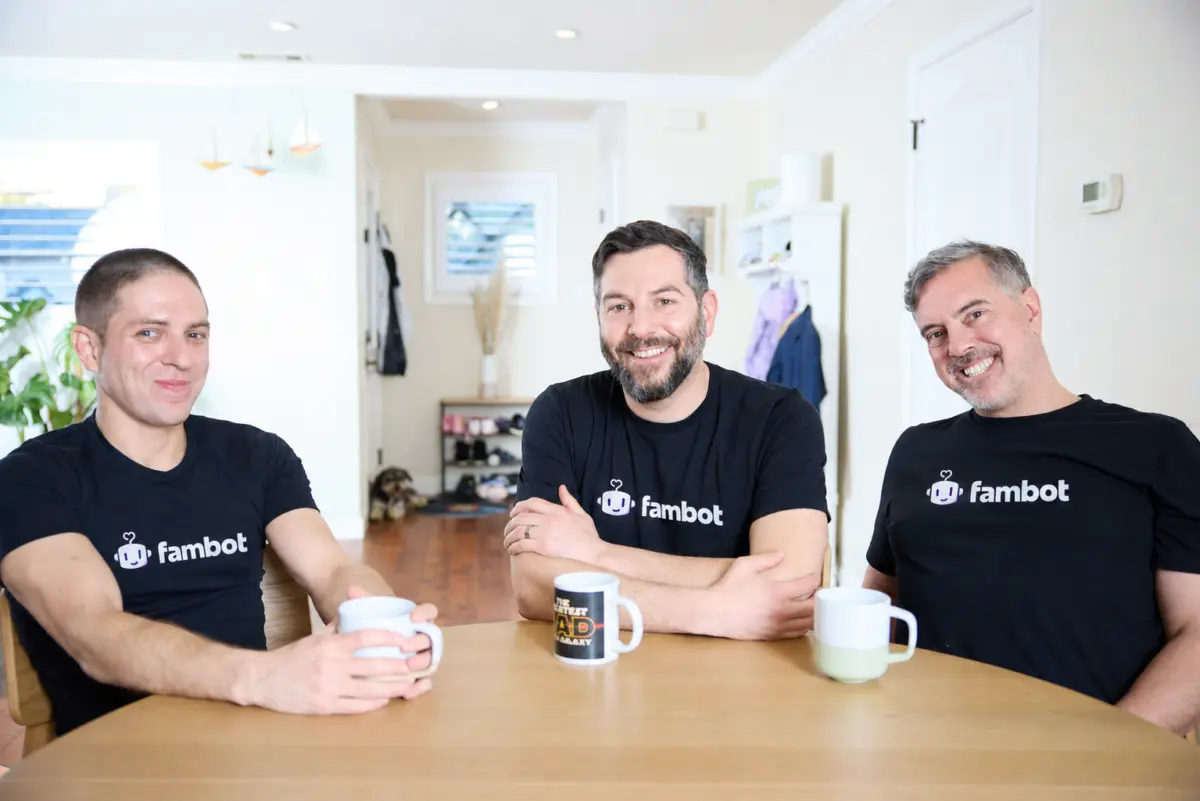
Enter Fambot, a pioneering startup positioned at the intersection of consumer artificial intelligence and family logistics. Co-founded by a trio of seasoned tech executives from Uber, Instagram, and Google, Fambot has emerged from stealth with a $3.5 million pre-seed funding round. The company’s core product is what it terms an "AI chief of staff" for parents—a proactive digital assistant designed to alleviate the crushing cognitive and administrative overhead of raising children in the digital age.
By consolidating the fragmented streams of communication that dictate modern family life—ranging from school newsletters and soccer club WhatsApp chats to physical flyers and calendar invites—Fambot aims to restore presence to parenthood. Crucially, the startup is diverging from the current trend of text-only AI interfaces, betting instead on a hybrid software ecosystem spanning native mobile apps, web interfaces, and structured daily checklists.
Detailed Chronology
The Genesis: A Founder’s Friction
The concept for Fambot did not originate in a corporate brainstorming session, but rather in the daily friction of a dual-career household. David Reich, Fambot’s CEO, spent years managing complex logistics in the corporate world. As the former president of music distribution platform UnitedMasters and the former head of product for Uber Transit—where he led a 250-person team overseeing transit integrations—Reich was no stranger to high-stakes operational coordination.
Yet, Reich found his most demanding operational challenge awaited him at home.
"I have three kids and am constantly struggling between doing all these executive jobs—as my wife is doing as well," Reich explained. "And then, getting home at the end of the day, I just want to unplug, spend some time with my kids, be present, do some homework together… kick the ball around, and instead I find myself just spending an hour, literally, catching up on 40 emails."
The administrative burden of modern parenting has expanded exponentially over the last decade. The transition from physical paper trails to digital platforms has not streamlined domestic life; rather, it has fragmented it. Parents are forced to navigate an array of disparate communication channels: school portals, youth sports coordination apps, neighborhood WhatsApp groups, local community flyers, and endless email threads.
Recognizing that this administrative friction was a systemic issue affecting millions of families, Reich set out in early 2023 to build a technology-driven solution that could act as a proactive buffer between parents and the digital onslaught.
Assembling the Founding Team
To translate this vision into a highly secure, scalable consumer product, Reich partnered with Greg Karlin, a former Instagram engineer with deep expertise in building high-scale consumer interfaces. Karlin assumed the role of Chief Technology Officer (CTO).
Approximately six months into the development cycle, the duo recruited their third co-founder, Jason Morrow, an engineering veteran whose resume includes senior technical roles at Google and LinkedIn. Together, the three founders spent roughly 18 months in quiet development, refining the underlying AI orchestration layer and testing early iterations of the product with real families.
[Early 2023: Reich identifies domestic administrative crisis]
       │
       ▼
[Mid 2023: Reich & Karlin (ex-Instagram) co-found Fambot; build core architecture]
       │
       ▼
[Late 2023: Morrow (ex-Google) joins as third co-founder]
       │
       ▼
[2024: 18-Month Closed Beta Testing with 1,000+ diverse families]
       │
       ▼
[Late 2024: Public Launch & Announcement of $3.5M Pre-Seed Funding]
Supporting Context & Metrics
The "Mental Load" and the Domestic Market
The sociological phenomenon known as "the mental load"—the invisible, non-physical labor of planning, organizing, and anticipating a household’s needs—has become a central talking point in discussions of modern family dynamics. According to census data, there are approximately 43 million families in the United States with children under the age of 16.
For the vast majority of these households, managing this mental load is a manual, highly stressful endeavor. Fambot’s market opportunity lies in converting this unpaid, stressful labor into structured, AI-assisted workflows.
| Metric | Detail |
|---|---|
| Target U.S. Demographic | 43 million families with children under the age of 16 |
| Pre-Seed Funding Raised | $3.5 million |
| Beta Program Cohort | 1,000+ families across diverse structures |
| Current Pricing Model | Free during active beta phase |
| Target Subscription Price | Equivalent to a standard Netflix subscription (approx. $10–$15/month) |
The Beta Program: Validating Across Demographics
To test the viability of an "AI chief of staff," Fambot conducted an extensive beta program involving more than 1,000 families. The founders initially hypothesized that the product’s primary demographic would be affluent, dual-income, multi-child households. However, the data gathered during the testing phase revealed a much broader appeal.
The active user base included:
- Single-parent households managing logistics solo.
- Families with only one child who still struggled with school-to-home communication barriers.
- Households where one parent stayed at home but struggled with the volume of extracurricular scheduling.
- Blended families coordinating schedules across multiple households.
This demographic diversity proved that the information overload of modern childhood is universal, transcending household wealth, parental employment status, or family size.

Venture Capital and Financial Backing
The investment community’s interest in consumer-facing AI agents has intensified, though venture capitalists have grown increasingly discerning, favoring teams with proven execution capability. Fambot’s pedigree and clear target market enabled the company to secure $3.5 million in pre-seed funding.
The round was co-led by NextView Ventures and Baukunst, two firms known for backing early-stage consumer and hardware-software integration platforms. Additional participation came from:
- Correlation Ventures
- Karman Ventures
- Founders Network
This capital injection is being deployed to expand the engineering team, accelerate integration development, and refine the proprietary AI pipeline.
Official Statements
Proactive vs. Reactive AI
A central theme in Fambot’s corporate philosophy is the distinction between reactive AI (such as traditional chatbots) and proactive AI. David Reich emphasized that for an AI agent to be truly useful to a busy parent, it cannot wait for instructions.
"We know what you’re going to face before you do sometimes, so that you can be prepared for it. There’s 43 million families in the U.S. with kids under 16, and they just haven’t gotten the support that they need."
— David Reich, CEO of Fambot
The Architectural Philosophy: Why UI Matters
In a market saturated with "wrapper" startups that operate entirely via SMS or WhatsApp threads (such as Poke or Instinct), Fambot’s leadership team made a deliberate, capital-intensive decision to build native applications for iOS, Android, and the web.
CTO Greg Karlin and the engineering team realized that while text-based interfaces are easy to build, they fail to provide the structured clarity required for complex family scheduling. A text message cannot easily display a color-coded weekly calendar, a collaborative checklist, or a nested list of permission slips. By offering a dedicated application interface, Fambot can build out highly structured features while still allowing parents the flexibility to text the bot for quick updates on the fly.
Strict Safeguards on Data Privacy
Given that Fambot handles highly sensitive information—including children’s schedules, school locations, and family contact details—privacy is a foundational concern. The founders have established strict data-governance policies to ensure user trust.
The company utilizes a sophisticated orchestration layer that routes data through a combination of leading large language models (LLMs). Crucially, Fambot has legally and technically structured its API agreements to ensure that none of the underlying AI models are permitted to train on user data. Family schedules, emails, and chat logs remain strictly private and siloed within the user’s secure account ecosystem.
Future Outlook
The Roadmap for Deep Integration
Currently, Fambot operates by ingestion: users connect their personal email accounts, digital calendars, and the specific WhatsApp groups they use to coordinate with other parents. The AI parses these incoming data streams, extracts actionable tasks, and presents them in a unified daily checklist.
[Inbound Data Streams]
  ├── Family Emails (School, PTA, Newsletters)
  ├── WhatsApp Groups (Sports teams, Neighborhood playdates)
  ├── Physical Document Scans (Flyers, Permission slips)
  └── Connected Calendars (Google, iCloud)
        │
        ▼
[Fambot Multi-Model Orchestration Layer] (No LLM training on user data)
        │
        ▼
[Unified User Interface]
  ├── Proactive Daily Checklists
  ├── Integrated Calendar Views
  └── Real-Time SMS/App Query Engine
The long-term vision, however, is much more ambitious. Fambot plans to build direct, native integrations with the proprietary software ecosystems that schools, sports leagues, and local clubs use to operate. By integrating directly with platforms like TeamSnap, Canvas, and various school district portals, Fambot aims to transition from a tool that summarizes family logistics to a central hub that automates them—such as draft-replying to a coach, paying a field trip fee, or auto-filling a permission slip.
Monetization and Accessibility
Currently, Fambot remains free to use while in its public beta phase on iOS, Android, and the web. As the platform transitions to a commercial release, the company intends to implement a subscription-based pricing model.
Rather than pricing the tool as an expensive luxury executive service, the founders plan to keep it highly accessible, targeting a monthly price point comparable to a standard streaming service subscription (roughly the cost of Netflix). This pricing strategy is designed to position Fambot not as an elite luxury, but as a standard, utility-like household expense for the modern family.
Conclusion: The Real-World Frontier of AI
While Silicon Valley remains fixated on using AI to optimize enterprise codebases and automate corporate marketing pipelines, Fambot represents a vital shift in the consumer AI narrative. By applying advanced multi-model orchestration to the overlooked and deeply felt pain point of domestic administration, Reich, Karlin, and Morrow are betting that the ultimate value of artificial intelligence lies not in the digital cloud, but in its ability to give parents their physical time back.