Executive Overview
From courtside seats at Madison Square Garden for a Knicks game to sipping Honey Deuces in the sun at the US Open, or screaming the lyrics to Olivia Rodrigo’s "Stupid Song" during her Unraveled tour, the contemporary live entertainment landscape offers wildly diverse cultural experiences. Yet, despite their differences, these events share a defining characteristic: they have become aggressively, prohibitively expensive.
Attending a major live event is no longer a casual weekend outing; it is a luxury purchase, increasingly reserved for the affluent or the fiscally reckless. The live entertainment industry has undergone a seismic shift over the past half-decade. In 2019, the average price of a concert ticket hovered around a relatively accessible $92. Even if your seats required binoculars, being in the room was financially feasible for the average working fan.
Today, that baseline has shifted dramatically. Face-value prices for standard concert tickets now average roughly $133, while the cost to see top-tier headliners in music and sports routinely shatters records. Propelled by corporate consolidation—most notably Live Nation’s towering grip on the ticketing ecosystem—alongside relentless service fees, dynamic pricing algorithms, and predatory secondary resale markets, consumers face a financial landscape with little relief in sight.
When nosebleed tickets for a New York Knicks season tip-off game soar to $1,845, or resale seats for Olivia Rodrigo command upwards of $2,000, the psychological barrier to entry transforms. Fans are left staring at seating charts, grappling with a profound sense of cultural alienation. What kind of person spends thousands of dollars to sit in the absolute last row? Are concertgoers secretly wealthy? Is this a mass exercise in financial irresponsibility?
To understand the mechanics of this phenomenon, we must look beyond the macro-level data of monopolies and inflation. We must examine the lived reality of the superfan.
Detailed Chronology: A $15,000 Journey Through Cowboy Carter
While industry analysts can quantify the macroeconomic factors driving up ticket costs, it is harder to map the psychological calculus of the individual consumer. To uncover how ordinary people justify extraordinary expenses, we sat down with Craig, a 44-year-old education worker living in the San Francisco Bay Area who earns approximately $180,000 a year.
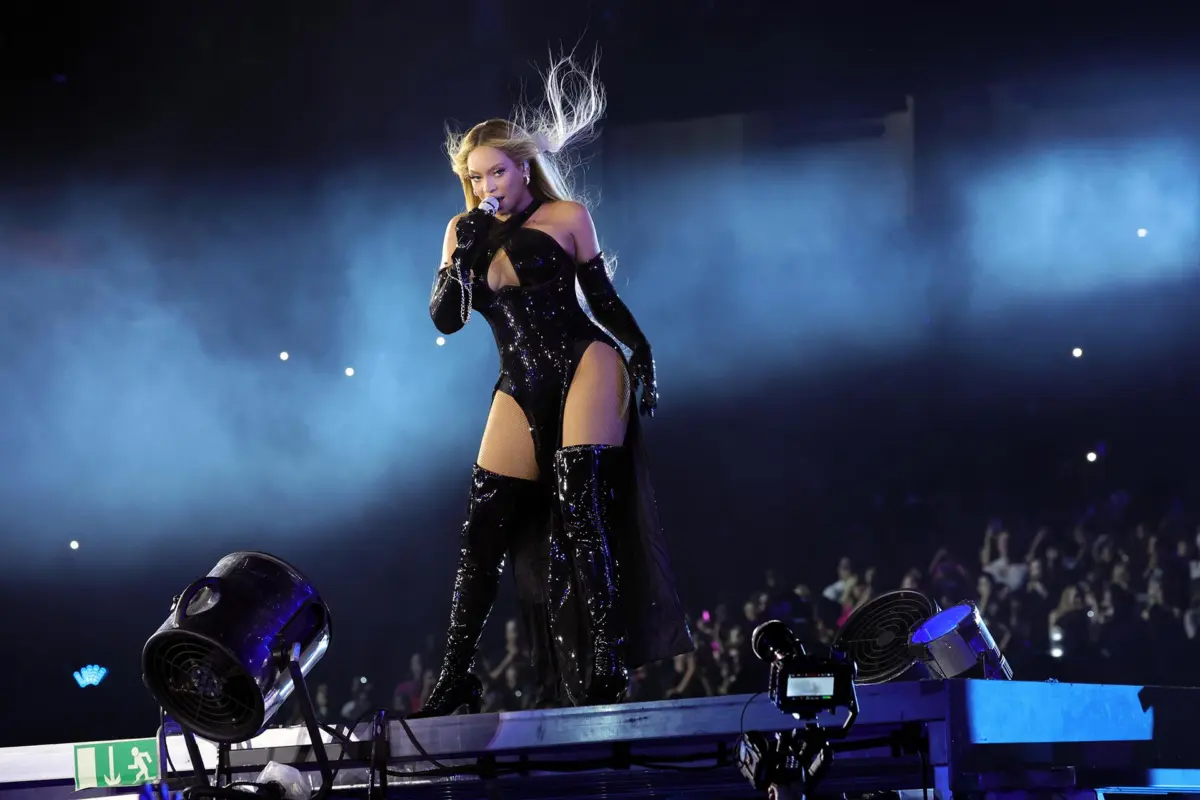
Craig made headlines in his personal circle by spending upwards of $15,000 to catch Beyoncé’s Cowboy Carter Tour six times. What follows is an exploration of his journey—from a structured plan to a runaway financial snowball.
The Spark: From Three Shows to Six
Craig’s relationship with live music is rooted in familial philosophy. "My mom’s big motto in life was, ‘We’re making memories,’" Craig explains. "So for me, I’m never going to regret going to Beyoncé six times. I’m going to regret only seeing her Renaissance tour twice."
Initially, Craig’s plan for Cowboy Carter was measured, albeit still expensive by historical standards. He planned to attend three shows alongside a partner at the time, covering the opening run in Los Angeles and an excursion to New York.
"I knew that I was going to see the first three shows," Craig recalls. "I had planned with a boyfriend who’s now an ex… I was going to go to the first show, the second show, and the third show, and then I was going to be done. But I knew in the back of my mind that I probably wasn’t done."
For Craig, live performance offers a rare psychological refuge. As a recovering addict with decades of sobriety, he acknowledges his susceptibility to compulsive behaviors, reframing his concert obsession through that lens. "I don’t mind putting this into print… I’m an addict, an alcoholic who’s been in recovery for decades, and so it’s easy for me to get hooked on things, but this is such a pure, very expensive way to have joy."
The Escalation and the Outfits
As the tour progressed, Craig’s initial boundary of three shows dissolved. Following a breakup after his New York trip, a wave of emotional turbulence accelerated his spending.
"The breakup that I had happened after my New York show," Craig shares. "And so I think my delusional sort of mania kicked in and I was like, Fuck it, I’m going to spend $800 on an outfit that’s custom-made. I’m going to go to both shows at the end and just—it got me through a really tough summer, and it was something that I don’t regret."
This escalation was visually mirrored in his wardrobe. For his early shows, Craig wore a homegrown, improvised look featuring a budget cowboy hat purchased at the venue. By the fifth and sixth performances, he was donning a custom-made gold outfit.
When asked about his seating strategy, Craig admits that proximity came at a premium. "I was in the section right by the catwalk. So it was like, Oh shit, I have to go do this again in the same spot. What I would’ve done differently is I would’ve seen it from way up above. I would’ve seen it from cheaper seats."
Instead, his ticket prices scaled upward, culminating in a $2,200 purchase for the final show. "At that point, it had built so much that there was no way I wasn’t going to be where I wanted to be. It just was like, Nope, this is happening."
Inside Club Ho-Down
The financial tipping point often defies rational logic. When asked how he justified pushing past $8,000 in credit card debt to ultimately spend $15,000, Craig’s logic was simple: "Once you’ve got $8,000 on your credit card, what is $12,000?"
That investment, however, bought access to rarified communal spaces. At the final show, Craig found himself alone in Club Ho-Down, rubbing shoulders with celebrities and sharing tears with fellow superfans as stars like Shaboozey, Jay-Z, and members of Destiny’s Child made surprise appearances.
"The amount of friends that I made and the amount of celebrities that I saw—to be in that environment with people that are on your same level and people are screaming and crying and know exactly what’s going to happen… I’m getting chills just thinking about it."
Supporting Context & Metrics: Why Live Events Cost So Much
Craig’s story is extreme, but it operates within a systemic framework that makes such expenditures possible—and increasingly normalized. Why has the live entertainment market reached such a boiling point?
1. The Ticketing Monopoly and Fee Structures
The live music ecosystem is heavily consolidated. Live Nation and its subsidiary, Ticketmaster, control an overwhelming share of primary ticketing and venue management across North America. This market dominance limits competitive pressure to keep fees low. Consumers routinely see 20% to 40% of their ticket’s face value added on at checkout in "service fees," "facility charges," and "processing fees."
2. Dynamic Pricing and Supply-Demand Realities
Modeled after airline and hotel pricing algorithms, dynamic pricing adjusts face-value ticket prices in real-time based on surging consumer demand. When a major artist goes on sale, software detects high traffic and automatically inflates ticket prices before scalpers even have a chance to list them on the secondary market. Consequently, primary ticketing platforms capture profits that historically went to independent brokers.
3. The Shift from Recorded Music to Live Touring
In the streaming era, recorded music generates fractions of a cent per stream for artists. Consequently, touring has transformed from a promotional tool for album sales into the primary revenue engine for musicians. To maintain lavish production values—such as those found on Beyoncé’s or Taylor Swift’s stadium tours—ticket prices must scale to cover the astronomical costs of staging, logistics, and crew payrolls.
4. The Socioeconomic Divide of Fandom
As ticket prices climb, the demographic makeup of live audiences shifts. A 2023 study by QuestionPro noted that average spending per fan at major pop tours often exceeds $1,000 when factoring in travel, lodging, merchandise, and tickets. For workers like Craig—who earns $180,000 in the Bay Area, carries no children, and rents rather than owns property—disposable income can be aggressively reallocated toward experiential consumption.
Yet, this lifestyle comes with financial trade-offs. Craig readily admits to carrying significant credit card debt over a multi-year period, navigating interest charges, and lacking long-term financial milestones like homeownership. "I am not good with money. I wish I were. But again, I don’t have aspirations to own property yet, and I don’t have children… I know how privileged I am to have the ability to put something on a credit card, pay it off eventually."
Official Statements & Industry Perspectives
The tension between accessibility and corporate profit has drawn the attention of regulatory bodies and consumer advocates alike.
In the wake of the 2022 Taylor Swift ticketing fiasco—where millions of fans encountered system crashes, exorbitant resale markups, and dynamic pricing spikes—the United States Department of Justice, alongside multiple state attorneys general, launched an antitrust lawsuit against Live Nation-Ticketmaster, seeking a breakup of the conglomerate.
Regulators argue that the company’s practices stifle competition and exploit music lovers. In official filings, the DOJ noted that Live Nation’s stranglehold over venues and ticketing leaves artists and fans with virtually no alternative distribution channels, forcing compliance with hyper-inflated pricing structures.
Industry defenders, however, point to post-pandemic consumer behavior as the primary driver of high prices. Representatives for major promoters emphasize that inflation, rising transport and labor costs, and fans’ insatiable appetite for immersive, high-production spectacles naturally necessitate higher baseline costs. Furthermore, proponents of dynamic pricing argue that capturing market value at the primary point of sale undercuts the predatory secondary resale market, even if it prices out casual observers.
Future Outlook: The Horizon of Act III and Beyond
For superfans like Craig, the financial pain of past tours is quickly eclipsed by anticipation for the future. Rumors surrounding Beyoncé’s anticipated Act III project have already set off speculative financial planning among dedicated followers.
"I’m going to possibly go to, I think, between five and eight shows depending on [the schedule]," Craig says, outlining his blueprint for the next cycle. By mapping out potential touring timelines—factoring in side projects and family milestones of the artists—he is already strategizing how to save, budget, and rationalize his next multi-thousand-dollar excursion.
Yet, this normalization of hyper-expensive fandom creates a stark cultural divide. While affluent urban professionals find ways to leverage credit lines and reallocate disposable income to secure their places in stadiums, lower- and middle-income fans are increasingly priced out of the shared cultural moments that define modern society.
As long as live events remain luxury commodities rather than accessible public goods, the concert arena will continue to reflect a broader societal reality: a shrinking middle class, an exploding cost of living, and an insatiable consumer appetite willing to pay any price in pursuit of collective euphoria.