Executive Overview
Since its debut on Netflix in December 2019, the live-action adaptation of Andrzej Sapkowski’s The Witcher book series has been one of the streaming giant’s most ambitious, polarizing, and widely discussed fantasy properties. Promising a sprawling world of monsters, political intrigue, and complex morality, the series captured a massive global audience eager to see the Continent brought to life. However, what began as a celebrated cultural phenomenon has faced a gauntlet of turbulent production hurdles, creative friction, and severe fan backlash.
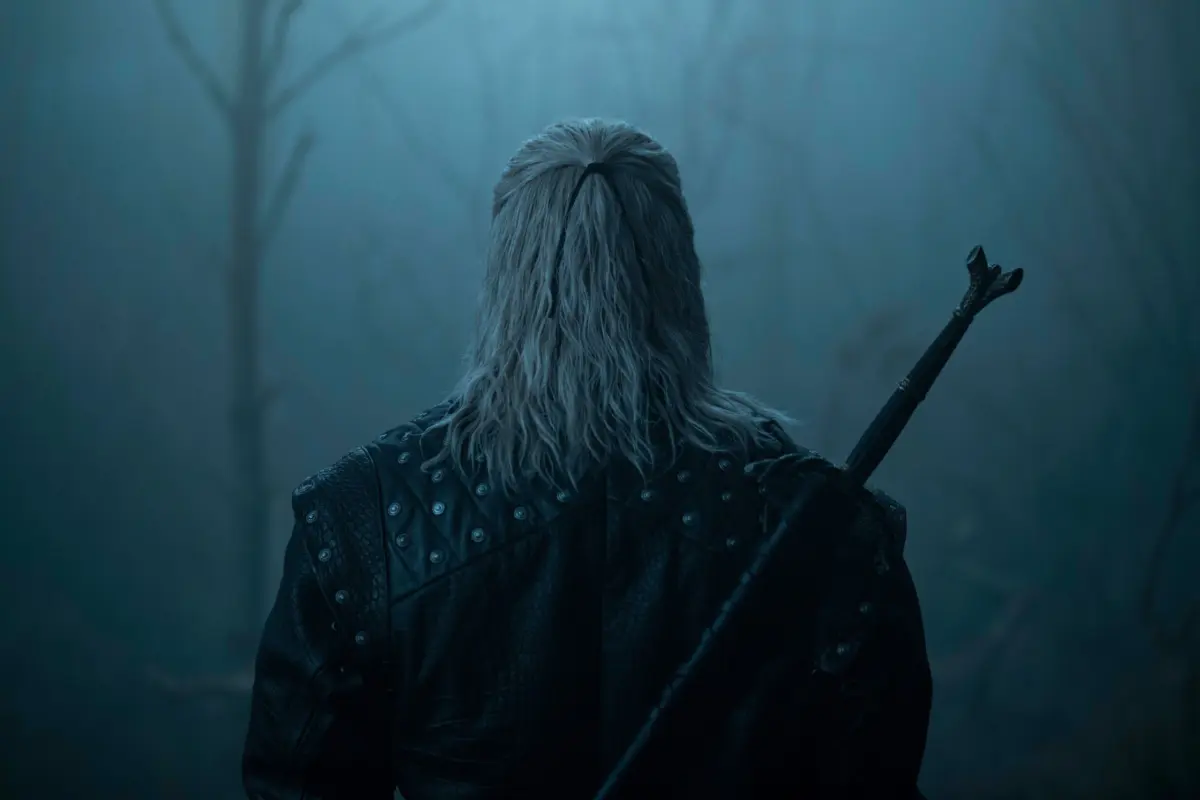
The latest blow to the franchise’s momentum arrived quietly, signaling a major shift in Netflix’s release roadmap. Originally projected to premiere its grand finale in 2026, The Witcher Season 5 has officially been delayed to 2027, according to industry reports. This delay extends the wait for the final chapters of Geralt of Rivia’s live-action journey, a narrative arc already tested by behind-the-scenes upheaval, most notably the high-profile departure of inaugural lead Henry Cavill and the controversial introduction of his successor, Liam Hemsworth.
As production teams work to finalize the back-to-back production blocks of Seasons 4 and 5, the impending conclusion of the Netflix series marks the end of an era. While the live-action adaptation prepares to close its doors, the broader Witcher intellectual property remains intensely active across multiple mediums, leaving fans to wonder whether the television universe can stick its landing or if the true future of the franchise lies elsewhere.
Detailed Chronology: From Continental Triumph to Production Purgatory
The trajectory of Netflix’s The Witcher has been anything but linear. Understanding the delay of Season 5 requires a look back at the timeline of events that transformed the series from a crowning jewel of the streaming service’s fantasy catalog into a cautionary tale of franchise management.
Phase One: The Golden Age of Cavill (2019–2021)
When Season 1 premiered in late 2019 under the guidance of showrunner Lauren Schmidt Hissrich, it defied early skepticism. Bolstered by a viral earworm ("Toss a Coin to Your Witcher") and a deeply committed lead performance by Henry Cavill—a self-proclaimed super-fan of the source material—the show became an instant ratings juggernaut. Despite some criticism regarding its non-linear storytelling structure, it proved that adult-oriented fantasy could thrive on streaming outside of HBO’s legacy frameworks.
Production on Season 2 faced unprecedented hurdles, interrupted repeatedly by the global COVID-19 pandemic and a severe on-set injury sustained by co-star Anya Chalotra and main lead Henry Cavill. Nevertheless, Season 2 debuted in December 2021 to generally positive reviews, further expanding the lore and cementing the core trio of Geralt (Cavill), Yennefer (Anya Chalotra), and Ciri (Freya Allan).
Phase Two: The Fracture and the Recasting (2022–2023)
The turning point for the franchise occurred in October 2022. Amid rumors of creative differences between Cavill and the series’ creative team regarding faithfulness to Sapkowski’s original novels, Netflix dropped a bombshell announcement: Henry Cavill would be stepping down as Geralt of Rivia following the conclusion of Season 3, with Australian actor Liam Hemsworth taking over the medallion and silver swords starting in Season 4.
Season 3, which aired in two volumes during the summer of 2023, served as Cavill’s swansong. While the season retained a dedicated viewership, critical reception began to sour. The narrative strain of bridging the gap between the source material and the television scripts became increasingly apparent, setting the stage for an uphill battle heading into the post-Cavill era.
Phase Three: The Nadir and the Back-to-Back Gamble (2024–2026)
As production on Season 4 commenced with Liam Hemsworth officially stepping into the iconic role, Netflix made a strategic decision to film Seasons 4 and 5 back-to-back. Showrunner Lauren Schmidt Hissrich and her writers’ room approached the final two seasons as a singular, unified narrative block designed to adapt the remainder of Sapkowski’s literary saga.
However, when Season 4 finally rolled out, it was met with what many critics and industry analysts termed a creative nadir for the series. Plagued by some of the lowest critical scores in the show’s history and facing an uphill battle to win over audiences alienated by the recasting, the fourth season struggled to maintain the cultural cachet of its early years.
Originally, marketing indicators and production schedules pointed toward a 2026 premiere for Season 5, allowing a relatively swift conclusion to the series. However, reports surfaced in August indicating that Netflix had quietly pushed the final season’s release window to 2027, granting the post-production and visual effects teams extended time to craft the sprawling, multi-episode conclusion.
Supporting Context & Metrics: The Anatomy of a Fantasy Collapse
To fully grasp the significance of the 2027 delay, one must examine the critical and commercial metrics that have shadowed The Witcher throughout its lifespan.
Critical Reception and Audience Polarization
While Season 1 enjoyed favorable metrics and immense cultural saturation, subsequent seasons saw a steady decline in critical approval ratings on aggregators like Rotten Tomatoes. By the time Season 4 debuted, the series hit an all-time low in critical consensus. Reviewers pointed to pacing issues, uneven character development, and the monumental hurdle of establishing a new emotional baseline for the protagonist.
| Season | Primary Lead | Release Year | Critical Consensus / Trajectory |
|---|---|---|---|
| Season 1 | Henry Cavill | 2019 | Strong debut; praised for world-building and lead performance. |
| Season 2 | Henry Cavill | 2021 | Solid viewership; more linear narrative structure introduced. |
| Season 3 | Henry Cavill | 2023 | Mixed reviews; noticeable creative friction and diverging book loyalty. |
| Season 4 | Liam Hemsworth | 2025* | Critical nadir; lowest scores in franchise history following recasting. |
| Season 5 | Liam Hemsworth | 2027 (Delayed) | Final season; extended post-production phase. |
*Estimated or actual release window based on production cycles.
The Creative Vision Behind the Final Block
The decision to produce Seasons 4 and 5 as one continuous narrative block was driven by the structural demands of Sapkowski’s final novels (Baptism of Fire, The Tower of the Swallow, and The Lady of the Lake).
Speaking on the creative philosophy behind this dual-season approach, showrunner Lauren Schmidt Hissrich elaborated on the writing process:
"We knew we had to break it up in terms of how it would be launched on Netflix, but truly it’s the story of this family journey back together, and I think when we’re choosing specifically what details to include from the books, we look for a really sort of diverse sort of swath of things… And at the end of the day, it has to be 16 narrative episodes that feel cohesive."
Despite this unified vision, managing the logistical weight of 16 episodes shot across extended blocks required massive resource allocation, contributing heavily to the eventual timeline adjustments that pushed Season 5 into 2027.
Official Statements and Industry Insights
The quiet nature of the Season 5 delay stands in stark contrast to the bombastic marketing campaigns that heralded the show’s early years. Rather than issuing a sweeping press release detailing creative roadblocks, Netflix’s adjustment surfaced through industry tracking reports, most notably from specialized outlets such as What’s On Netflix and Screen Rant.
Industry analysts suggest that the extended post-production window for Season 5 is a calculated move by Netflix. By giving the visual effects teams—who have historically shouldered heavy workloads on the series—more time to complete the massive set-pieces required for the series finale, the streaming platform hopes to avoid the rushed appearance that has plagued late-stage fantasy television projects across the industry.
Furthermore, the departure of Henry Cavill continues to cast a long shadow over official communications. While Cavill has transitioned smoothly into spearheading the adaptation of the massive Warhammer 40,000 universe for Amazon’s Prime Video, Netflix has faced the challenge of repositioning Liam Hemsworth as the definitive anchor for the show’s final hours. Executives have maintained a steady silence regarding the fan friction, choosing instead to focus promotional efforts on the overarching conclusion of the "family journey" described by Hissrich.
Future Outlook: Life Beyond the Netflix Series
While the live-action television adaptation of The Witcher is drawing to a definitive close with its fifth season in 2027, the overarching franchise is far from extinction. In many ways, the conclusion of the Netflix show marks the end of one chapter and the opening of several others across the entertainment landscape.
1. The Gaming Horizon: The Witcher 4
For video game enthusiasts, the future is anchored by CD Projekt Red. The acclaimed Polish developer is currently deep in development on The Witcher 4 (currently operating under codename project work), which is slated to feature Ciri as its primary protagonist. This upcoming title is designed to kick off an entirely new trilogy of role-playing games, shifting the interactive perspective away from Geralt of Rivia while retaining the gritty, morally ambiguous tone that made The Witcher 3: Wild Hunt a generational masterpiece.
2. Remasters and Expanded Media
The ecosystem is further sustained by ongoing releases, such as the critically acclaimed The Witcher 3: Wild Hunt — Remastered, which brought updated visual fidelity and modern quality-of-life improvements to contemporary gaming hardware. Additionally, Netflix’s own animated experiments—such as The Witcher: Nightmare of the Wolf—have demonstrated that the broader animated medium can successfully explore corners of the Continent that live-action budgets struggle to capture.
3. Conclusion of an Era
When The Witcher Season 5 finally premieres in 2027, it will bring an end to a tumultuous eight-year television experiment. Whether the final block of episodes can successfully reconcile the narrative fractures introduced by the mid-series recasting remains to be seen. What is certain, however, is that the Path walked by Geralt of Rivia on television will remain one of the most fascinating case studies in modern fantasy adaptation history—a journey defined by explosive initial triumph, unprecedented casting turbulence, and a hard-fought battle to reach the finish line.