Executive Overview
The paradigm of enterprise artificial intelligence has definitively shifted. For years, the primary benchmark for generative AI success was singular and monolithic: raw intelligence. Organizations competed to deploy the largest, most computationally expensive frontier models available, often accepting prohibitive latencies and excessive cost structures simply to secure incremental gains in reasoning capabilities. However, as the ecosystem matures, the foundational question facing enterprise architects has evolved. The industry is no longer asking, "How smart is this model?" Instead, the critical inquiries are far more nuanced: "Which model fits this specific operational step? What is the associated cost per token? How does this impact end-to-end latency?"
This evolution toward architectural efficiency and strategic model selection was brought into sharp focus by a wave of major model integrations on Amazon Bedrock. Over the past week, AWS expanded its managed AI portfolio with the introduction of OpenAI’s GPT-6 Sol and GPT-6 Luna, alongside Anthropic’s Claude Opus 5.5, the flagship kickoff of the Claude 5.5 model family.
These additions represent a fundamental maturation of the AWS generative AI ecosystem. Rather than offering a blunt instrument for every workload, Amazon Bedrock is positioning itself as a granular orchestration layer. Here, engineering teams can precisely match models to workload requirements across an intelligence-versus-efficiency curve. GPT-6 Sol is engineered for demanding, recurring development and operations (DevOps) workflows; GPT-6 Luna is optimized for high-volume, repeatable tasks at a fraction of previous generation costs; and Claude Opus 5.5 redefines agentic coding and long-running autonomous workflows while consuming significantly fewer tokens than its predecessor, Opus 5.
Simultaneously, the broader AWS ecosystem is racing to support this multi-model, agentic future. As autonomous agents transition from experimental proofs-of-concept to core production infrastructure, enterprise observability tools are evolving in tandem. This comprehensive overview examines the technical specifications, architectural implications, and strategic market dynamics behind last week’s major AWS announcements, offering enterprise leaders a roadmap for navigating the next phase of cloud-native artificial intelligence.
Detailed Chronology: A Week of Breakthrough Releases on Amazon Bedrock
The pace of innovation within the Amazon Bedrock managed service continues to accelerate, giving developers immediate access to state-of-the-art capabilities without the operational overhead of managing underlying hardware infrastructure. The chronology of last week’s deployments illustrates a concerted industry push toward cost-optimized, highly specialized frontier intelligence.
1. OpenAI’s GPT-6 Sol: Engineering Intelligence for DevOps and Complex Reasoning
The introduction of GPT-6 Sol to Amazon Bedrock marks a significant milestone for enterprise software engineering and operational automation. Building upon the foundational advancements of the GPT-5.6 generation, Sol is specifically architected to handle the demanding, recursive reasoning loops required in modern software development lifecycles (SDLC) and complex IT operations.
Unlike general-purpose conversational models that excel at synthesis but struggle with multi-step deterministic logic, GPT-6 Sol is tuned for deep contextual understanding of codebases, infrastructure-as-code (IaC) templates, and real-time incident telemetry. During initial evaluations integrated into Amazon Bedrock, enterprise development teams noted Sol’s exceptional capability in parsing sprawling microservices logs, identifying subtle race conditions, and proposing refactored code modules that adhere strictly to enterprise security guardrails.
Crucially, OpenAI and AWS have structured GPT-6 Sol to ship at a significantly lower price point than its GPT-5.6 predecessors. By decoupling advanced reasoning capabilities from prohibitive cost structures, AWS is enabling organizations to embed high-tier intelligence directly into continuous integration and continuous deployment (CI/CD) pipelines, automated security scanning, and autonomous debugging workflows.
2. OpenAI’s GPT-6 Luna: High-Volume Efficiency for Repeatable Enterprise Tasks
While GPT-6 Sol addresses the high-complexity end of the development spectrum, GPT-6 Luna is engineered for the massive scale of everyday enterprise operations. Many business processes—ranging from invoice reconciliation and automated customer support ticket triage to metadata tagging and routine document extraction—do not require the sprawling parametric capacity of a massive frontier model. However, they do require absolute consistency, high throughput, and minimal latency.
GPT-6 Luna bridges this gap. It is optimized for focused, repeatable tasks that must be executed at high volume without degrading financial margins. By prioritizing inference speed and operational efficiency, Luna delivers robust performance on deterministic text transformation and classification tasks. Furthermore, because it shares the generational efficiency gains of the GPT-6 architecture, Luna introduces a compelling unit-economics proposition: organizations can scale their automated workflows horizontally across millions of daily invocations without incurring the exponential cost spikes characteristic of earlier model generations.
3. Anthropic’s Claude Opus 5.5: Redefining Agentic Coding and Long-Running Workflows
Anthropic has long been a preferred partner for complex, long-context enterprise use cases within Amazon Bedrock. The arrival of Claude Opus 5.5—the first iteration of the highly anticipated Claude 5.5 family—pushes the boundaries of autonomous agentic capability.
Claude Opus 5.5 is designed to solve one of the most persistent bottlenecks in generative AI adoption: token inefficiency during extended operational horizons. In previous generations, as autonomous coding agents or research assistants maintained long conversational threads or explored deep file trees, token consumption escalated rapidly, leading to degraded attention retention, increased latency, and inflated costs.
Opus 5.5 introduces advanced architectural optimizations that allow it to accomplish more with significantly fewer tokens than Opus 5. By maximizing semantic density per token, the model maintains superior coherence over extended computational windows. This makes it uniquely qualified for autonomous agentic coding—scenarios where an AI agent must write, test, execute, and iteratively debug large blocks of software over hundreds of sequential steps without human intervention.
Supporting Context & Metrics: The Shift Toward Granular Model Economics
To fully appreciate the impact of these releases, one must examine the underlying macroeconomic and technical shifts currently transforming cloud computing.
The Economics of Token Optimization
For the past three years, enterprise cloud budgets for AI have been dominated by brute-force scaling. Companies defaulted to using the largest available model for every task, treating generative AI like a premium utility. However, as AI transitions from a novelty to a foundational operational expense (OpEx), Chief Information Officers (CIOs) and FinOps leaders are demanding granular accountability.
| Model Tier / Generation | Primary Target Workload | Relative Cost Efficiency | Latency Profile | Key Architectural Advantage |
|---|---|---|---|---|
| GPT-6 Sol (OpenAI) | Complex DevOps, software engineering, deep reasoning | High (Significantly lower than GPT-5.6) | Moderate-to-High | Advanced multi-step logic and codebase comprehension |
| GPT-6 Luna (OpenAI) | High-volume batch processing, data extraction, triage | Ultra-High | Low | Optimized for throughput, cost-per-token reduction |
| Claude Opus 5.5 (Anthropic) | Long-running autonomous agents, complex code synthesis | High (Token-efficient) | Moderate | Superior semantic density and extended context retention |
As illustrated above, the modern cloud architecture on AWS is no longer about finding a single "best" model. It is about constructing a model routing pipeline. Using Amazon Bedrock’s routing and orchestration features, an enterprise application can dynamically evaluate an incoming prompt, route simple extraction tasks to GPT-6 Luna, escalate architectural design queries to GPT-6 Sol, and hand off autonomous multi-file refactoring tasks to Claude Opus 5.5. This multi-model strategy prevents over-provisioning and ensures that compute budgets are allocated with surgical precision.
The Rise of the Agentic Enterprise and Observability
As models like Claude Opus 5.5 and GPT-6 Sol empower autonomous agents to execute complex, multi-day workflows across cloud infrastructure, a new engineering challenge has emerged: observability.
Traditional application performance monitoring (APM) tools were designed for deterministic code paths where inputs map predictably to outputs. Generative AI agents, by contrast, exhibit probabilistic behavior. They generate their own sub-tasks, make autonomous API calls, and iterate dynamically based on intermediate results.
A critical thread tying together last week’s AWS developments is the rapid maturation of agentic observability. To trust an autonomous agent with production database access or automated cloud deployment, engineering teams must possess real-time visibility into the agent’s internal "thought process," token expenditure, tool-invocation success rates, and latency bottlenecks. AWS’s ongoing tooling updates are specifically designed to trace these non-linear execution graphs, ensuring that developers can audit, debug, and govern autonomous AI systems at scale.
Official Statements and Industry Perspective
The architectural philosophy driving these latest deployments was highlighted in recent commentary from AWS engineering leadership. Reflecting on the shifting priorities of cloud builders, industry analysts and AWS insiders noted:

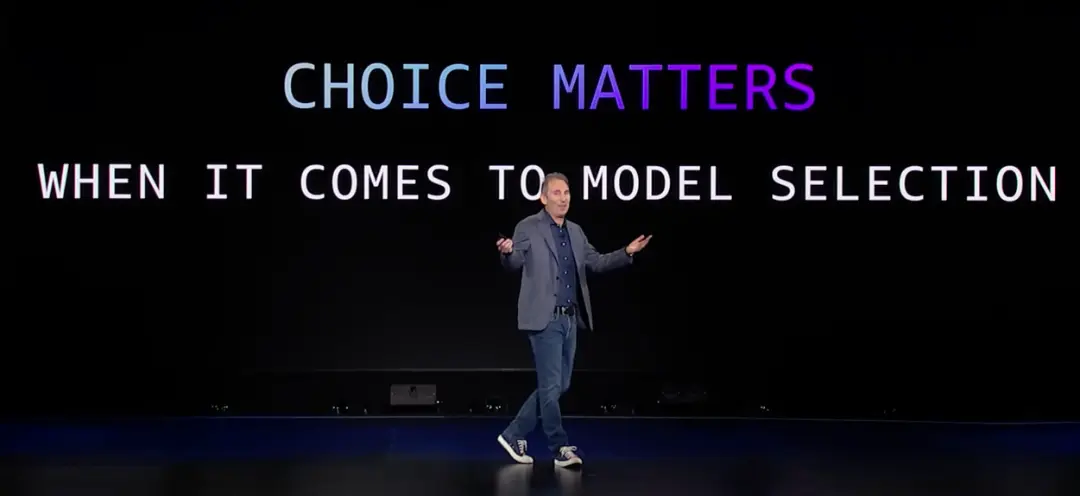
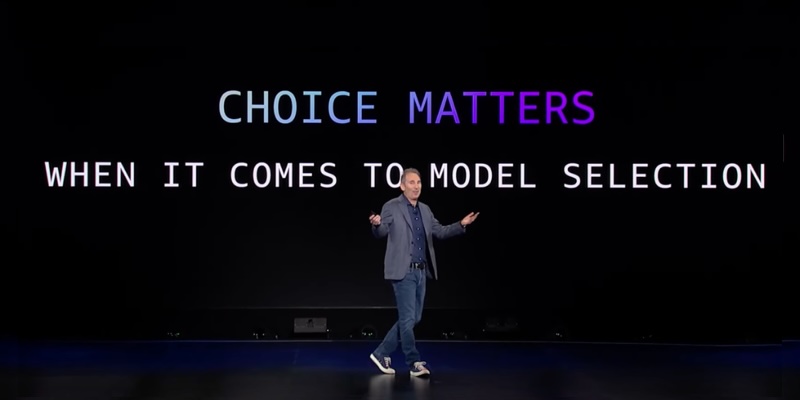
"If there’s one theme that defined last week, it’s choice. The frontier models keep arriving, and the interesting question is no longer just ‘how smart is it?’ but ‘which model fits this step, at this cost, at this latency?’ That’s exactly what landed on Amazon Bedrock over the past few days."
This perspective underscores Amazon’s long-standing platform strategy: neutrality and flexibility. Rather than betting the entire ecosystem on a single proprietary foundation model, AWS continues to curate a premier marketplace of the world’s leading AI architectures—from OpenAI and Anthropic to Meta, Cohere, and Mistral—all accessible through a unified, secure, enterprise-grade API.
Furthermore, engineering advocates emphasize the compounding benefits of matching models to specific workflow tiers:
"What I like about all three [GPT-6 Sol, GPT-6 Luna, and Claude Opus 5.5] is that they push toward the same idea: match the model to the job instead of reaching for the biggest one every time. When you combine this granular model selection with robust observability, you move past the experimental phase of AI and into true, scalable production economics."
Future Outlook: What This Means for Enterprise Builders
As we look toward the remainder of 2026 and beyond, the integration of GPT-6 Sol, GPT-6 Luna, and Claude Opus 5.5 on Amazon Bedrock signals several vital trends for enterprise technology leaders:
1. The Consolidation of Model Orchestration Frameworks
In the near future, manual model selection will likely be superseded by automated, intent-based routing engines. Enterprises will rely on intelligent middleware layers built on AWS that analyze incoming user requests, evaluate constraints on latency and budget, and dynamically assign the workload to the most cost-effective model on Bedrock—whether that is Luna for a quick classification or Opus 5.5 for deep architectural planning.
2. Autonomous Agents as Standard Operating Procedure
With token efficiency reaching new highs in models like Claude Opus 5.5, the financial barrier to long-running autonomous agents is collapsing. We will see a massive acceleration in "AI coworkers"—autonomous agents capable of managing entire software release cycles, conducting comprehensive security audits, and autonomously remediating cloud infrastructure drift with minimal human intervention.
3. FinOps Integration into AI Development
As the granularity of model pricing sharpens, FinOps practices will merge directly with MLOps. Development teams will be held accountable not just for feature delivery, but for the token efficiency and inference cost-per-user of their AI implementations. Tools that provide real-time cost attribution down to the individual prompt and model tier will become mandatory components of the enterprise stack.
Staying Connected with the AWS Community
For builders looking to stay at the cutting edge of these rapid deployments, the AWS ecosystem provides continuous educational and collaborative touchpoints. Developers are encouraged to join the AWS Builder Center to connect with peers, share multi-model orchestration solutions, and access deep-dive technical content.
Additionally, monitoring the official What’s New with AWS portal and the AWS Blogs page will remain essential for tracking the next wave of model releases, security enhancements, and observability tooling updates. As the boundaries of artificial intelligence continue to expand, Amazon Bedrock stands ready to provide the enterprise foundation for a smarter, more efficient, and infinitely more adaptable digital future.