Executive Overview
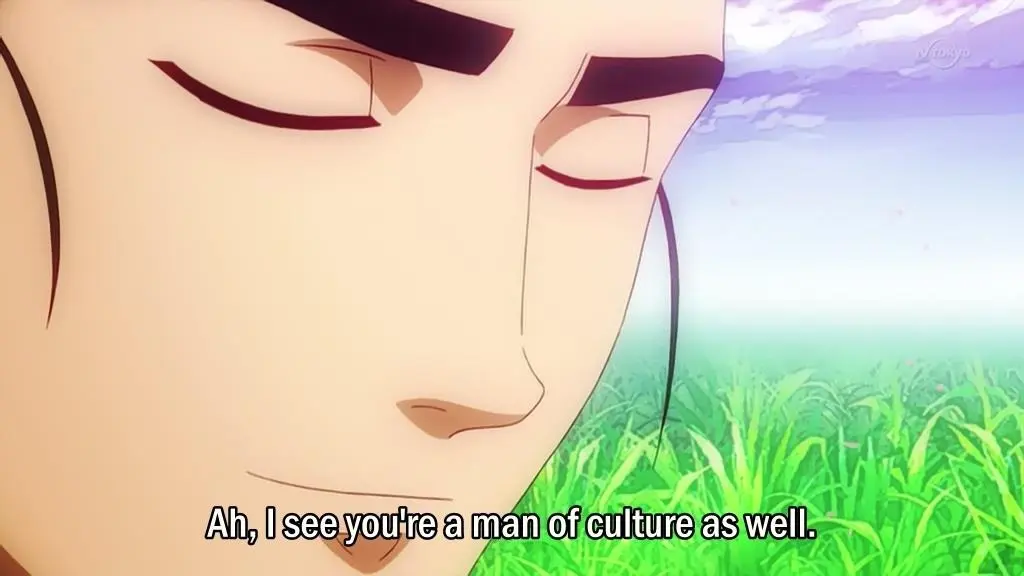
In the sprawling, volatile ecosystem of internet culture, few visual tropes have achieved the ubiquitous, cross-platform longevity of the reaction image featuring the character Last Samurai from the anime Arakawa Under the Bridge. Accompanied by the iconic, slightly mistranslated line, "Ah, I see you’re a man of culture as well," this meme has transcended its niche animated origins to become the internet’s definitive shorthand for acknowledging shared, highly specific, and often absurd tastes.
What began as a throwaway gag in a 2010 anime episode mutated through the labyrinthine message boards of 4chan before exploding across mainstream social media networks like Facebook, Reddit, Twitter (now X), and Instagram in early 2017. The meme operates on a dual layer of irony and earnest camaraderie: it allows users to bond over hyper-niche hobbies, esoteric preferences, and beautifully degenerate subcultural fixations while winking at the very concept of intellectual elitism.
This deep-dive investigation explores the origins, viral dissemination, socio-cultural impact, and enduring legacy of the "Man of Culture" meme. By tracing its path from a Japanese television broadcast to a cornerstone of global digital vernacular, we examine how a simple screenshot captures the paradoxical nature of modern internet community-building—where global solidarity is forged through obscure references and shared inside jokes.
Detailed Chronology
The Genesis: Arakawa Under the Bridge (November 2010)
The foundation of the meme was laid on November 28th, 2010, during the broadcast of Season 2, Episode 9 of the Shaft-produced anime series Arakawa Under the Bridge. Based on Hikaru Nakamura’s manga, the series follows the eccentric lives of individuals living beneath a bridge in Tokyo.
Roughly 17 minutes into the episode, a character known as the Last Samurai—a self-serious, sword-wielding hairdresser who runs a salon under the bridge—engages in a conversation regarding traditional Japanese hairstyles, specifically focusing on the aesthetic merits of the topknot. With an expression of profound, theatrical appreciation, the Last Samurai coyly delivers the line that would alter digital history. While the original Japanese dialogue and official subtitles varied, the phrasing that eventually burned itself into the collective consciousness was an English adaptation: "Ah, I see you are a man of culture as well."
For years, the scene remained a localized piece of dialogue appreciated only by dedicated fans of the series. The specific English phrasing that fueled the meme’s later success is even noted by community historians as likely being an unofficial or localized translation, adding a layer of grassroots authenticity that typical corporate subtitle localization often lacks.

The 4chan Incubation Period (November 2015 – May 2016)
Like many foundational internet memes, the transition from moving picture to static reaction image occurred within the anonymous, chaotic crucibles of 4chan. On November 16th, 2015, a user on the board /ck/ (dedicated to cooking and food discussion) deployed a cropped screenshot of the Last Samurai during a heated debate over chain pizza restaurants.
The image sat relatively dormant for months, acting as an underground currency among imageboard regulars. It wasn’t until May 15th, 2016, when a user on the /wsr/ (work-safe requests) board actively asked for the origin of the "man of culture" meme, that the image was recirculated, cataloged, and primed for a broader audience. By anchoring the visual to a versatile text layout—typically a setup question followed by an unexpected, hyper-specific, or absurd answer—the template proved endlessly adaptable.
The 2017 Viral Explosion
The true turning point for the meme occurred in the early months of 2017, transforming it from a message-board inside joke into a trans-platform juggernaut.
- March 7th, 2017: The Facebook page Weebs making fun of weebs for being weebs published a variation of the image featuring a mock dialogue where a character chooses "thighs" over conventional preferences. This post galvanized the anime-meme community on Facebook.
- March 8th, 2017: The meme crossed over to Instagram, aggressively reposted by high-volume curation accounts like
@dankest_memes_m8, exposing it to hundreds of thousands of casual scrollers. - March 11th, 2017: Redditor Noodletank posted to the speculative economy subreddit
/r/MemeEconomy, advising users to "invest quickly" in the asset. This meta-commentary on meme valuation acted as a self-fulfilling prophecy, driving a massive influx of submissions. - Mid-March 2017: The floodgates opened. Subreddits dedicated to niche hobbies—ranging from
/r/dankmemesand/r/2007scape* (RuneScape) to/r/MechanicalKeyboards—began adapting the format to their internal subcultures. A notable post by Redditor ChrisEvans19 on/r/MechanicalKeyboards` joking about mechanical keyboard switches pulled in over 2,600 upvotes in 72 hours, proving the meme’s cross-industry viability. - March 21st, 2017: Mainstream aggregators like 9GAG embraced the format, cementing its status as global digital pop culture.
Supporting Context & Metrics
To understand the mechanics of the "Man of Culture" meme, one must analyze its structural anatomy. The meme relies on a tripartite conversational framework:
- The Premise / Interrogation: A baseline question is posed, usually contrasting two or three mainstream options (e.g., "Ass or tits?", "Razer or Logitech switches?", "Do you study or just look at memes?").
- The Subversion: The second party responds with an entirely unhinged, overly specific, highly niche, or deliberately degenerate answer (e.g., "Thighs," "Topre switches," "Illegal Minecraft x Roblox trap hentai").
- The Validation: The Last Samurai appears, offering his beatific smile and the validating declaration: "Ah, I see you’re a man of culture as well."
Socio-Psychological Appeal
The brilliance of the format lies in its ironic elevation of the mundane or the taboo. By labeling bizarre, hyper-fixated, or antisocial behaviors as "culture," the meme constructs a satirical aristocracy out of internet trash. It plays on the human desire for peer validation; when someone confesses to an obscure preference, finding a "fellow man of culture" provides a comforting sense of belonging in an otherwise fragmented digital landscape.
Furthermore, the meme acts as an efficient gatekeeping antidote. Instead of aggressively excluding newcomers for having unorthodox tastes, the "Man of Culture" template co-opts that unorthodoxy, celebrating it with sarcastic reverence.

Official Statements & Community Perspectives
While corporate entities rarely comment on organic internet memes, the creators, voice actors, and streaming platforms associated with Arakawa Under the Bridge inadvertently presided over a cultural handoff. Shaft, the animation studio behind the anime, maintained its focus on producing avant-garde animation, leaving the internet to independently unearth and re-contextualize their work.
Prominent digital culture analysts and community archivists have frequently cited the Last Samurai meme as a textbook example of "accidental longevity." In retrospective analyses compiled across platforms like Know Your Meme, commentators have noted:
"The Last Samurai meme succeeded because it hit the exact sweet spot of user-generated utility. It didn’t require complex graphic design skills to edit—just basic text insertion over a recognizable face. It gave millions of internet users a socially acceptable—and inherently funny—way to say ‘I, too, am deeply weird.’"
Future Outlook: The Legacy of the Last Samurai
As the internet continues to accelerate its consumption and disposal of visual trends, reactions images from the mid-2010s face a high risk of obsolescence. Yet, years after its 2017 peak, the "Ah, I See You’re a Man of Culture as Well" template refuses to die entirely.
Its resilience points to a broader truth about digital communication: formats that mimic human conversational nuance—specifically expressions of mutual understanding and irony—outlast static image macros tied to specific news cycles. While the frequency of its deployment fluctuates alongside changing algorithmic preferences, the Last Samurai has permanently secured his place in the pantheon of internet archetypes.
As long as human beings continue to form niche communities around bizarre hobbies, obscure media, and shared digital eccentricities, there will always be a need for someone to nod sagely, stroke an imaginary beard, and remind us that we are all, in our own strange ways, men of culture.