Executive Overview
The internet has long possessed a peculiar penchant for extracting real individuals from the digital ether, stripping away their nuance, and reducing their complex identities, arguments, and ideological squabbles into flattened caricature. Across platforms spanning from obscure, subcultural imageboards to hyper-viscous mainstream feeds, internet lore is littered with human beings whose digital footprints were permanently warped into meme formats.
One of the most fascinating and contentious recent additions to this lineage is "Meximutt," a character derived from a real internet user that has circulated widely under alternative monikers including "O Algo" and "Mateo."
Rooted deeply within the sprawling, ever-expanding Soyjak and Wojak macro-ecosystems, Meximutt functions as a direct conceptual sibling to older internet tropes like "Amerimutt"—a caricature designed to mock American demographic anxieties and cultural archetypes through grotesque facial exaggerations. Equipped with the recurring Spanish-language catchphrase "o algo" (meaning "or something"), Meximutt provides a localized, Spanish-language counterpart to its American predecessor.
By late 2026, the character had successfully crossed the impenetrable barrier separating niche subcultural archives from mainstream social media landscapes. In particular, the meme found a turbulent second life on TikTok, where it was rapidly co-opted, remixed, and weaponized across artificial intelligence video generation, surrealist shitposting, and fast-paced "brainrot" content cycles.
This deep-dive investigative report examines the origins of the Meximutt phenomenon, maps its chaotic dissemination across social media throughout the mid-2020s, and analyzes the broader cultural mechanics of how modern internet subcultures manufacture viral icons out of real human friction.
Detailed Chronology: The Genesis of a Digital Caricature
To understand how a real person becomes a foundational pillar of modern internet surrealism, one must trace the timeline backward from algorithmic TikTok feeds to the toxic, insular trenches of niche message boards.
Phase 1: The SoyBooru Era and the "Country Wars" (Late 2022 – Early 2023)
The saga of Meximutt does not begin with an artist sketching a novel character out of thin air; rather, it begins with targeted harassment, ideological posturing, and interpersonal digital feuds on marginal imageboards such as SoyBooru, Soyjak.party, and legacy domains on 4chan.
On October 9, 2022, a user registered on SoyBooru under the names Satoko Yoyo Fan, satoko_houjou_fan, and Shio. Over time, Shio ascended to a moderator position on the platform. Cultivating an eccentric online persona, Shio frequently identified ethnically as Mexican while simultaneously asserting Germanic ancestry—a contradictory claim that immediately drew the scrutiny and suspicion of fellow board members.
During this period, SoyBooru was plagued by what community regulars referred to as "country wars"—protracted, caustic digital turf wars where users assumed national identities to mock, degrade, and wage ideological battles against one another. Representing Mexico in these digital skirmishes, Shio quickly locked into a long-running, intensely bitter feud with a prominent user known as Italian_Chad.
Recognizing Shio’s volatile temperament, other board members began actively baiting him with a cocktail of pro-Italy and anti-Mexican propaganda. They anticipated—and reliably received—hyper-aggressive, paragraph-length rebuttals. Shio’s predictable, defensive outbursts transformed him into an ongoing source of localized entertainment and ridicule. His repetitive phrasing during these arguments birthed early internal catchphrases, most notably "Obsessed brimstone."
Phase 2: The Birth of Meximutt (December 2023)
The transition from a living, breathing user to a codified meme character occurred on December 31, 2023. A user known on various boards as Romanian Skipso (also documented on the Soyjak Wiki under aliases such as Romanian Schizo, Rosa_Ushiiromiya_Fan, and Fatcord) published an illustrated caricature explicitly designed to mock Shio.
According to architectural documentation on the Soyjak Wiki, Romanian Skipso took an existing, pre-digital illustration of the "Impish Amerimutt" variant and heavily modified it. The artist redrawn the facial structures, expressions, and aesthetic markers to closely resemble Shio’s perceived appearance and online posturing.
This custom illustration was quickly dubbed "Meximutt." Bound to the existing visual conventions of the broader Soyjak library—characterized by distorted, grotesque features, sunken eyes, and open-mouthed grimaces—the character was immediately adopted across interconnected imageboards, including specialized boards on 4chan. For nearly two years, Meximutt remained a subcultural inside joke, circulating exclusively within insular imageboard ecosystems.
Phase 3: The Greentext Catalyst (Late 2025)
The first major breakthrough into adjacent text-based communities occurred on November 26, 2025. An anonymous 4chan user published a classic Greentext Story detailing a satirical narrative about the everyday experiences of being Mexican. The post prominently featured the Meximutt character graphic as an illustrative header.
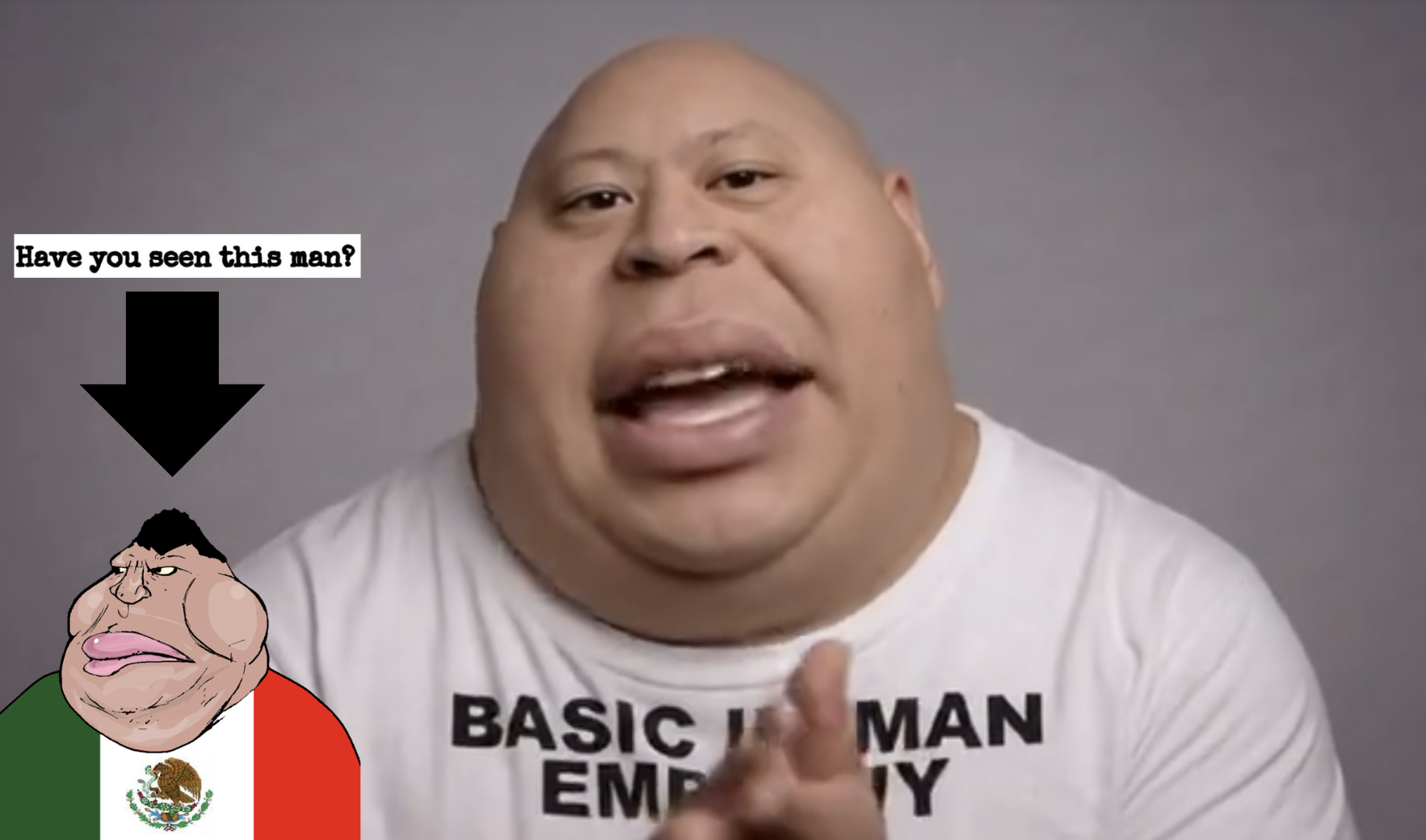
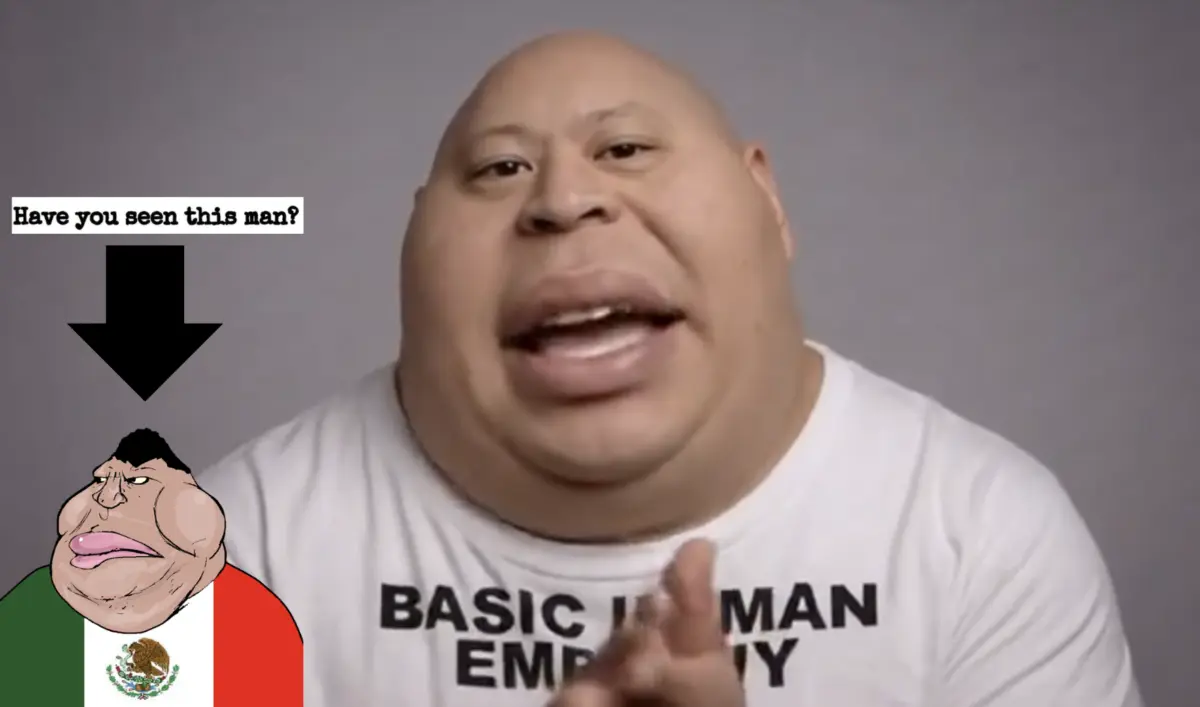
Sensing comedic and subcultural value, a reader cross-posted the story to Reddit’s /r/greentext community later that same day. Titled simply "Oh dios mio o algo," the post exposed thousands of mainstream Reddit users to the character’s signature Spanish catchphrase, planting the linguistic seeds that would blossom into full-scale algorithmic virality roughly a year later.
Supporting Context & Metrics: The TikTok Explosion (October 2026)
By October 2026, the Meximutt meme had completely shed its insular imageboard skin, crossing over into the mainstream recommendation loops of TikTok. Here, the character was stripped of its original targeted harassment context by younger demographics, transforming instead into an abstract vehicle for surrealist humor, ironic rants, and avant-garde shitposting.
Central to this phase was the phrase "o algo" ("or something"), which users appended to everything from mundane consumer goods to complex philosophical propositions.
Key Viral Metrics and Content Vectors
The mid-October 2026 surge on TikTok generated millions of views within compressed 48-to-72-hour windows, demonstrating the hyper-accelerated nature of modern digital trend adoption:
- The Ironic Rant Vector (@muttyies): On October 15, 2026, TikTok creator
@muttyiespublished a video leveraging the "o algo" phrase within a satirical, high-speed rant touching upon basic human empathy and sociopolitical double standards. The post resonated immediately with younger users navigating algorithmically induced irony, racking up over 649,000 views and 72,400 likes in just six days. - Mainstream Assimilation (@mingyangxiao1): Cementing the meme’s arrival in mainstream spaces, creator
@mingyangxiao1posted a short-form video centered squarely on the "o algo" variation on October 16, 2026. Capitalizing on platform trends, the video exploded past 1.4 million views and 115,000 likes within five days. - Meta-Commentary and Backlash (@vorlyne & @yungoctoberss): As is customary with any rapidly scaling subcultural artifact, a counter-wave of critical content emerged almost simultaneously. On October 16, creator
@vorlyneposted a compilation screenshot highlighting the bizarre integration of imageboard culture into mainstream feeds, drawing 1.2 million views and 165,400 likes. This was followed closely on October 19 by@yungoctoberss, whose direct critique of the Meximutt phenomenon pulled in 1.2 million views and 160,100 likes in a mere 48 hours, proving that controversy and backlash act as primary fuel for algorithmic propulsion. - Absurdist Consumerism (@will.bobkins): Demonstrating the total abstraction of the meme from its hostile origins, creator
@will.bobkinsdeployed the phrase into a completely benign, low-stakes food joke captioned "yummy chips o algo" on October 17, 2026. The video secured over 915,300 views and 125,200 likes in four days.
Official Statements and Sociological Perspectives
The rapid commercialization and mainstream sanitization of a meme rooted in targeted cyber-harassment have drawn sharp commentary from digital anthropologists, sociologists, and internet historians.
Dr. Elena Vance, a senior researcher specializing in digital folklore at the Institute for Advanced Media Studies, issued a comprehensive statement regarding the Meximutt phenomenon:
*"The evolution of ‘Meximutt’ perfectly encapsulates the dark alchemy of contemporary internet culture. What begins as a localized tool for interpersonal cruelty and cyberbullying on dark-corner imageboards is ingested by the algorithmic meat-grinder of mainstream platforms like TikTok. Through layers of abstraction, deepfakes, AI video generation, and linguistic flattening, the original human victim is completely erased.
Younger users inherit the graphic not as a symbol of targeted harassment, but as a detached, surrealist absurdist icon—the linguistic equivalent of static noise. It raises profound ethical questions about the permanence of digital identity and the terrifying ease with which a living person can be commodified into a permanent cartoon character against their will."*
Furthermore, digital rights advocates have pointed to the Meximutt phenomenon as an extreme case study in "involuntary digital caricature." While historical memes often relied on stock photography or public domain imagery (such as Success Kid or Bad Luck Brian), the modern era of anonymous imageboard culture increasingly targets fringe participants in online communities, weaponizing their psychological vulnerabilities to construct enduring digital myths.
Future Outlook: Where Does the ‘O Algo’ Era Lead?
As we look toward the remainder of the decade, the trajectory of the Meximutt / O Algo phenomenon offers critical insight into how internet culture consumes its own history.
1. Complete Decoupling from Origin
The primary trajectory of the meme is total abstraction. As demonstrated by the late 2026 TikTok wave, the vast majority of users deploying the phrase "o algo" or utilizing the accompanying visual tropes possess zero awareness of Satoko Yoyo Fan, SoyBooru, or the toxic "country wars" of 2022–2023. For the mainstream digital populace, Meximutt has successfully transitioned from a specific historical insult into a generalized template for postmodern absurdity—functioning similarly to abstract surrealist art styles that defy literal interpretation.
2. Algorithmic Fatigue and the Cycle of Irony
Like all hyper-accelerated internet memes, Meximutt faces the imminent threat of algorithmic burnout. The rapid saturation of "o algo" humor across TikTok, paired with the inevitable counter-wave of meta-commentary videos critiquing the meme’s dark origins, suggests that the trend will likely peak and fragment into micro-niches. Creators are already beginning to ironize the irony, paving the way for post-ironic sub-genres of brainrot that treat the character with detached fatigue.
3. Regulatory and Ethical Repercussions
The normalisation of turning real internet users into caricatures highlights an unregulated frontier in digital ethics. As AI video generation tools become more sophisticated, the ability to animate, voice-clone, and weaponize the digital likenesses of fringe or vulnerable online personalities will only accelerate. The legacy of Meximutt will likely serve as a foundational case study in academic literature concerning digital harassment, platform migration, and the ethics of viral media production for years to come.
For a comprehensive, continuously updated multimedia repository and archival history of the Meximutt / O Algo phenomenon, researchers and internet historians can consult the definitive encyclopedia entry maintained by Know Your Meme.