Executive Overview
The landscape of indie horror has long chased the claustrophobic, high-tension atmosphere popularized by David Szymanski’s 2022 breakout hit, Iron Lung. Despite widespread critical acclaim, viral streaming success, and an upcoming feature film adaptation helmed by prominent content creator Markiplier, the industry has seen a curious scarcity of direct spiritual successors. While titles like Barotrauma offer cooperative oceanic chaos, and recent job-simulation horror games draw heavy mechanical cues from Lethal Company, the distinct brand of solitary, blind vehicular dread pioneered by Iron Lung remains largely un-replicated.
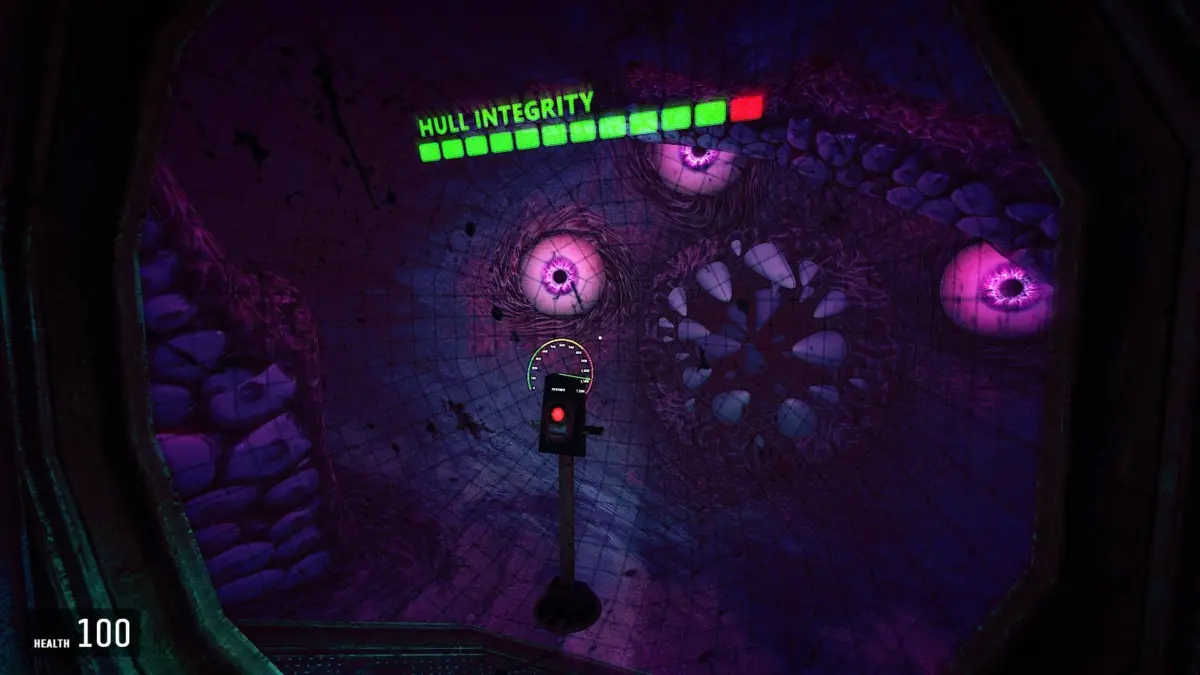
Enter The Temple—an ambitious upcoming total conversion mod for Valve’s legendary Half-Life 2. Developed by modder Klems, The Temple takes the core premise of piloting a blind, cramped submersible through hostile alien waters and dramatically scales it up. Moving far beyond the confines of a single ocean trench, this forthcoming mod expands the terror across three entirely distinct vehicles, transporting players from crushing deep-sea abysses to desolate skies, towering megastructures, and ultimately, the vacuum of space. Originally conceived as a brief, 20-minute submission for the MapLabs community, the project has evolved into a fully realized, two-hour sci-fi horror experience boasting intricate atmospheric design, unique narrative mechanisms, and old-school Source engine wizardry.
Detailed Chronology: From Community Mod to Comprehensive Sci-Fi Epic
The journey of The Temple from a fleeting concept to a major upcoming indie release highlights the enduring creative vitality of the Half-Life 2 modding community.
The MapLabs Genesis
The project’s origins trace back to MapLabs, an established community-driven modding initiative that regularly challenges level designers to craft short, tightly scoped experiences based on specific thematic constraints, utilizing Valve’s versatile Source engine. In its initial iteration, The Temple existed merely as a pair of tightly packed, experimental maps. Spanning a brief runtime of roughly 20 minutes, these early levels introduced players to an alien, water-dominated world punctuated by monolithic, brutalist concrete structures.
Despite its compact size, the prototype captured the attention of atmospheric horror enthusiasts. It established a distinct visual and mechanical identity, marrying the industrial decay typical of classic Source engine mapping with the cosmic dread of an unfathomable ocean world.
Expansion into a Total Conversion
Recognizing the untapped potential of the initial maps, creator Klems elected to blow the concept wide open. Rather than letting the project remain a minor entry in the MapLabs catalog, the developer committed to transforming The Temple into a comprehensive total conversion.
This transformation involves a complete technical and artistic overhaul:
- Remastering the Originals: The two original MapLabs levels are being heavily revamped, expanded, and polished to meet modern standards of pacing and visual fidelity.
- The Addition of a Third Map: A brand-new third chapter is being integrated into the campaign, bridging the gap between atmospheric exploration and escalatory terror.
- Extended Runtime: The final release promises over two hours of dedicated, unbroken sci-fi horror exploration, shifting the project from a bite-sized tech demo into a substantial narrative-driven campaign.
Supporting Context & Metrics: The Mechanics of Vehicular Terror
To understand why The Temple is generating significant buzz among immersive sim and horror aficionados, one must examine its mechanical lineage and the specific design choices driving its development.
The Anatomy of Vehicular Horror
In traditional first-person horror, vulnerability is typically defined by mobility: the player can run, hide, or occasionally fight, but their body is always directly exposed to danger. Vehicular horror shifts this dynamic entirely. By placing the player inside a mechanical shell—a submarine hull, an airship cabin, or a shuttle cockpit—the vehicle acts simultaneously as a sanctuary and a coffin.
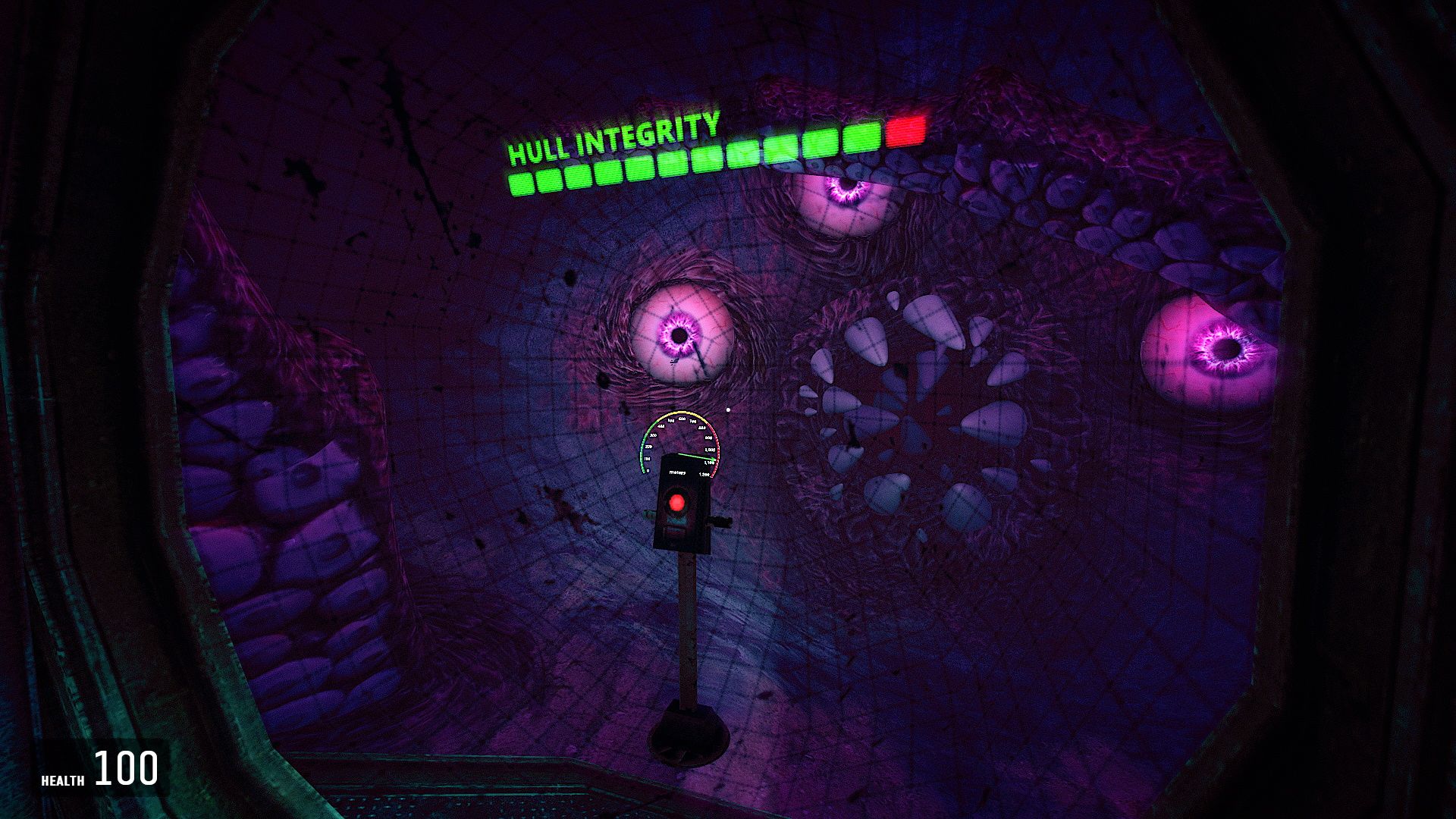
While Iron Lung restricted players to a single, claustrophobic submarine where navigation was conducted entirely via static 2D grid coordinates and camera feeds, The Temple borrows this philosophy while diversifying the operational toolset.
The Three Tiers of Transportation
The Temple escalates the stakes by forcing players to master three distinct modes of transport, each corresponding to a different layer of the game’s alien world:
- The Submarine: Designed for deep-sea exploration, this vessel forces players to navigate the pitch-black trenches of an alien ocean, echoing the iconic blind-navigation panic of Iron Lung.
- The Airship: Shifting the theatre of operations upward, the airship allows players to traverse the heavy alien skies, drifting past abandoned, vertigo-inducing concrete towers and colossal megastructures.
- The Space Shuttle: Breaking planetary atmosphere entirely, the shuttle enables traversal into orbit, offering eerie exploration of asteroidal moons tethered to the aquatic world below.
Atmospheric Influences and Design Elements
Klems has woven several proven horror tropes and mechanics into the fabric of the Source engine:
- Invisible Aquatic Menaces: Drawing a clear line to frictional games like Amnesia: The Dark Descent, the deep-sea segments feature unseen entities moving through the murky waters, tracking the player through audio cues and environmental disturbance.
- Unconventional Companionship: Breaking away from the silent, isolated protagonist trope common in submarine horror, The Temple introduces a talking crow—or at least an entity communicating in an understandable corvid language—that acts as an esoteric guide through the desolate environment.
- Brutalist Scale: Leveraging the Source engine’s rendering capabilities, the mod emphasizes colossal architectural forms. The sheer scale of the concrete towers and interstellar architecture dwarfs the player vehicles, inducing a profound sense of existential insignificance.
| Game / Mod | Engine / Platform | Primary Vehicle(s) | Estimated Runtime | Core Horror Mechanic |
|---|---|---|---|---|
| Iron Lung | Unity | Submarine | ~1 hour | Blind navigation via grid coordinates and camera snapshots |
| Barotrauma | Custom 2D | Multi-crew Submarine | Variable (Co-op) | System management, leaks, and alien monster incursions |
| The Temple | Source Engine | Submarine, Airship, Space Shuttle | ~2+ hours | Multi-environment exploration, monstrous entities, colossal scale |
| Lethal Company | Unity | Transport Ship (Hub) | Variable (Co-op) | Quota-based scavenging and environmental hazard evasion |
Official Statements and Creator Insights
While formal corporate press releases are absent—as The Temple is a passionate, independent community project—the creator’s public updates on platforms like Mod DB have provided clear insight into the project’s trajectory and release window.
Reflecting on the evolution of the mod from its humble beginnings in community map jams to a sprawling multi-environment horror experience, Klems has emphasized that the expansion was driven by a desire to push the boundaries of what atmospheric storytelling can achieve within the constraints of older id Tech-derived architectures.
Regarding the imminent launch of the project, Klems offered a reassuring update to eager fans: while an exact calendar date remains fluid, the total conversion is slated to drop "very soon, possibly next month." This swift timeline indicates that the comprehensive overhaul and the integration of the third map are in their final stages of polish and bug-testing.
Future Outlook: The Resurgence of Source Engine Modding
The trajectory of The Temple serves as a testament to the longevity and adaptability of Valve’s Source engine. More than two decades after its initial commercial release, the engine continues to support innovative micro-genres that commercial studios frequently overlook.
As the lines between traditional retro-modding and standalone indie development continue to blur, projects like The Temple demonstrate that high-concept horror does not require cutting-edge, million-dollar photorealism to be effective. Instead, precise atmospheric control, brilliant sound design, and an oppressive sense of scale can transform aging technical foundations into vehicles of genuine terror.
When The Temple officially launches, it will not only provide a satisfying two-hour campaign for sci-fi horror enthusiasts yearning for more Iron Lung-style mechanical dread, but it will also set a new benchmark for what can be achieved within the storied ecosystem of Source engine total conversions.