Executive Overview
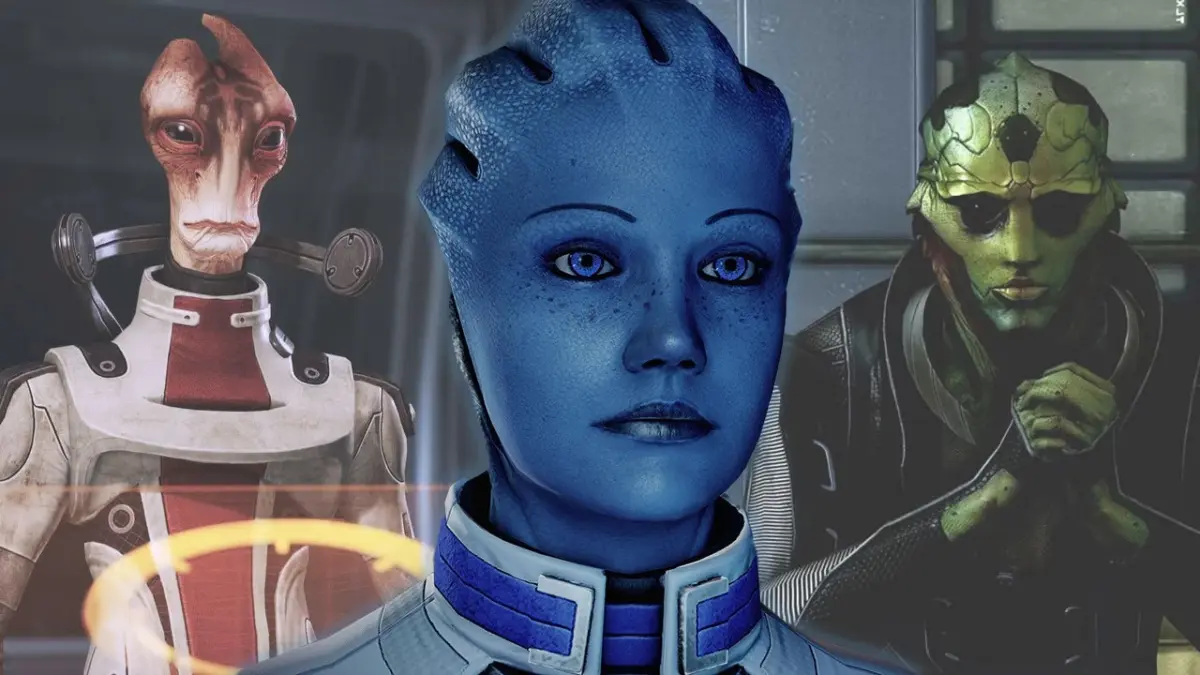
The video game industry was rocked to its core on October 21, when Electronic Arts (EA) announced a sweeping corporate restructuring that claimed one of the most revered and foundational studios in the history of interactive entertainment. BioWare—the legendary Edmonton-based developer synonymous with defining the modern role-playing game (RPG) genre through monumental franchises like Mass Effect, Dragon Age, and Jade Empire—has been officially shut down by its parent company.
The closure brings a definitive, heartbreaking end to a storied 30-year legacy. Alongside the studio shuttering, EA confirmed the immediate cancellation of the early-development Mass Effect project (often colloquially referred to by fans as Mass Effect 5), a title many enthusiasts and industry veterans were banking on to restore the sci-fi franchise to its narrative glory after the divisive reception of Mass Effect: Andromeda and Anthem.
As the gaming community grapples with the sudden wave of layoffs and the loss of a pioneer, attention has pivoted urgently toward the future of BioWare’s intellectual properties (IPs). Leading the conversation is former BioWare Executive Producer Mark Darrah, who spent nearly a quarter-century at the studio (1997–2021). In a recent breakdown addressing the closure, Darrah offered a cautiously realistic assessment of what lies ahead for Mass Effect, Dragon Age, and Jade Empire under EA’s absolute corporate ownership.
Compounded by EA’s staggering $55 billion private acquisition in August and an overarching industry pivot toward aggressive cost-containment, the fate of BioWare’s catalog hangs in a precarious balance. This report explores the timeline of the closure, the economic realities driving EA’s restructuring, industry and fan reactions, and expert analysis on whether these legendary RPG universes will ever see the light of day again.
Detailed Chronology: From Industry Pinnacle to Sudden Demise
To understand the weight of BioWare’s closure, one must look back at its meteoric rise and the structural shifts that gradually distanced the studio from its golden era.
The Golden Age (1995–2009)
Founded in 1995 by medical doctors Ray Muzyka and Greg Zeschuk in Edmonton, Alberta, BioWare initially made waves with Shattered Steel before cementing its masterpiece status with Baldur’s Gate (1998) in partnership with Interplay Entertainment and TSR. The studio single-handedly rescued Western computer RPGs from niche obscurity, pairing deep, tactical mechanics with branching, choice-driven character narratives.
Throughout the 2000s, BioWare’s output was nothing short of legendary. Neverwinter Nights (2002) revolutionized user-generated content and digital distribution tools, while Star Wars: Knights of the Old Republic (2003) proved that licensed properties could yield profound literary and mechanical depth. In 2005, the studio launched Jade Empire, its first original intellectual property of the modern era, exploring mythological martial arts.
The acquisition of BioWare by Electronic Arts in 2007 for approximately $775 million marked a critical turning point. Under EA, the studio delivered its most culturally impactful original universes: Mass Effect (2007)—which blended third-person cover-based shooting with sprawling space opera science fiction—and Dragon Age: Origins (2009), a dark fantasy epic that spiritualized the tactical roots of Baldur’s Gate.
The Strain of Scaling and Live-Service Pivots (2012–2020)
As the industry shifted toward high-fidelity graphics, massive development budgets, and live-service monetization, BioWare began to feel the friction of scaling up. While Mass Effect 2 (2010) and Mass Effect 3 (2012) achieved critical and commercial acclaim (despite polarizing debates over the latter’s ending), the studio’s internal culture began to face strain.
The development of Mass Effect: Andromeda (2017) was plagued by troubled management, engine transitions (shifting to EA’s Frostbite engine), and a compressed development cycle, resulting in a critically panned launch that damaged the franchise’s momentum. This was followed by Anthem (2019), an action role-playing live-service game that suffered through years of chaotic pre-production—aptly detailed in journalist Jason Schreier’s famous exposé on BioWare’s "crunch" culture—and ultimately failed to capture an audience, leading to the cancellation of its planned overhaul (Anthem Next).
Even Dragon Age: Inquisition (2014), which won Game of the Year at The Game Awards, faced internal challenges regarding its sprawling open-world design philosophy. Through it all, founders Ray Muzyka and Greg Zeschuk retired in 2012, and long-time veterans like Casey Hudson and Mark Darrah eventually departed, leaving the studio navigating leadership vacuums and shifting corporate mandates.
The Final Years and the October 21 Restructuring
In the years leading up to its closure, BioWare was quietly funneled into a skeleton-crew operation. Following the tumultuous, decade-long development cycle of Dragon Age: The Veilguard (released in late 2024), EA transitioned the remaining core talent onto early pre-production for the next installment in the Mass Effect franchise.
However, macro-economic pressures, corporate debt obligations following EA’s massive private buyout, and a strategic pivot away from high-risk, single-player investments culminated in a catastrophic corporate review. On October 21, EA dropped the hammer, cancelling the Mass Effect project, shuttering the historic Edmonton workspace, and pulling the plug on BioWare entirely.
Supporting Context & Metrics: Financial Pressures and the $55 Billion Buyout
The decision to shutter BioWare does not occur in a vacuum; it is the direct symptom of unprecedented financial realignment within the video game industry at large, and Electronic Arts specifically.
In August, EA stunned the financial world by completing a colossal $55 billion private acquisition spearheaded by an undisclosed consortium of private equity and institutional investors. Moving a publicly traded titan of EA’s scale into private hands introduced immense pressure to immediately streamline operations, optimize profit margins, and slash overhead costs to service the immense debt load accrued during the buyout transaction.
According to insider reports and financial filings accompanying the transition, the investment group placed heavy emphasis on leveraging emerging technologies—specifically artificial intelligence—to trim development expenditures across their broader portfolio, which includes cash-cow franchises like EA Sports FC, The Sims, Fight Night, and Star Wars.

+--------------------------------------------------------------------------+
|                     EA RESTRUCTURING METRICS & DRIVERS                   |
+--------------------------------------------------------------------------+
| Acquisition Value   : $55 Billion (Private Consortium Buyout - August)    |
| Primary Mandate     : Aggressive Cost Control & Debt Mitigation          |
| Impacted Divisions  : BioWare (Edmonton), Early-Development Mass Effect    |
| Preserved Divisions : The Sims, Fight Night, Star Wars                   |
| Key Risk Factors    : High development budgets, long-cycle RPG formulas  |
+--------------------------------------------------------------------------+
Within this unforgiving financial climate, prestige-driven, single-player RPG development—which requires massive teams, years of iteration, high-end writing, and complex voice-acting pipelines—was categorized as a high-risk liability. Despite the deep cultural legacy of Mass Effect and Dragon Age, the long lead times required to produce a blockbuster single-player title conflicted sharply with the new ownership’s mandate for rapid, predictable revenue generation.
Official Statements and Industry Reactions
The announcement sent immediate shockwaves through the global gaming community, triggering grief, outrage, and solidarity from developers, journalists, and millions of fans alike.
Electronic Arts’ Official Position
In a lengthy corporate statement released on October 21 outlining the broader restructuring of its global studios, EA addressed the closure of BioWare with measured corporate diplomacy:
"As we focus on these larger opportunities, we’ve had a small team at BioWare working on early-development for Mass Effect. We’ve made the decision not to move forward with this development, which means we’re closing the studio and our Edmonton workspace. BioWare is a legendary studio that helped define the role-playing genre, and we do not take this decision lately."
While the statement acknowledges BioWare’s historical importance to the industry, it underscores the harsh commercial reality that sentimentality could no longer shield the studio from portfolio-wide optimization.
Mark Darrah’s Industry Analysis
Offering a sobering insider’s perspective on the matter, former Executive Producer Mark Darrah took to YouTube to contextualize what the closure actually means for the intellectual properties left behind in EA’s vault.
"Remember BioWare is 100% owned by EA," Darrah explained in his video breakdown. "EA owns all the IPs. They own Dragon Age, they own Mass Effect, they own Jade Empire. That doesn’t change the situation, really, at all. Now, there’s nobody working on a [BioWare] game, or games, within the EA organization, and chances are there never will be, which might make them more likely to sell off those IPs. But it might also make them more likely to just try to forget that they ever existed and bury them in the vault."
Darrah pointed out that while the absence of active internal development teams makes offloading the IPs an theoretical option, timing is everything within corporate finance. Right now, EA is trapped in "cost control mode." Only if leadership pivots toward a "revenue-generation mode" down the line might the corporate giant consider offloading dormant assets to external buyers.
Public and Community Outcry
Social media platforms erupted following the news. Hashtags mourning BioWare trended worldwide as fans posted emotional retrospectives of their favorite companion romances, mission arcs, and epic narrative choices from Commander Shepard’s journey and the Grey Wardens’ crusades.
Simultaneously, a vocal faction of the community—and industry observers alike—began floating the idea of EA selling off the franchises to developers known for masterclass RPG execution. Studio CD Projekt Red (The Witcher 3, Cyberpunk 2077) quickly emerged as a fan-favorite fantasy buyer, given the historical mutual respect between the two development houses. However, industry veterans were quick to temper expectations, noting that multi-billion-dollar corporations rarely part ways with crown-jewel IPs easily, even when those IPs are left indefinitely dormant.
Future Outlook: What Lies Ahead for BioWare’s IP Vault?
As the dust settles on the Edmonton studio closure and former BioWare employees navigate the painful transition into an already oversaturated job market, the long-term outlook for the studio’s creations can be categorized into three distinct, speculative pathways:
-
The Vault Scenario (Most Probable in the Near-Term):
Given EA’s current cost-cutting mandates under its new private owners, Mass Effect, Dragon Age, and Jade Empire will likely be mothballed. The source code, artistic assets, and lore bibles will sit idle in EA’s digital archives. No new games will be made, but EA retains absolute legal control, blocking any external studio from touching them without paying prohibitive licensing fees—fees EA may simply refuse to negotiate out of corporate inertia. -
The Dormant IP Sale or Licensing Model (Possible in the Medium-Term):
As Mark Darrah noted, if EA eventually transitions from strict cost-mitigation to aggressive revenue extraction, the publisher might look to monetize its inactive vaults. This could manifest as selling off secondary or primary IPs to well-capitalized external publishers, or licensing out the rights for legacy remasters or spin-offs. However, the corporate bureaucracy involved in valuing an IP as culturally sensitive as Mass Effect makes this a complex hurdle. -
The Spiritual Successor Movement (The Fans’ True Legacy):
History shows that while corporate entities can buy and dissolve studios, they cannot extinguish creative DNA. Just as former BioWare alumni have previously gone on to form independent studios (such as Archetype Entertainment, founded by veteran BioWare developers working on Exodus), the creative diaspora from this closure will inevitably seed the next generation of sci-fi and fantasy RPGs.
Conclusion
The death of BioWare marks the closing chapter of a golden age in video game development—an era when sprawling, dialogue-heavy, character-driven storytelling was championed as the pinnacle of interactive art. While Commander Shepard’s journey and the fate of Thedas remain trapped in EA’s corporate ledger, the profound emotional impact BioWare left on millions of players worldwide ensures that its spirit will endure far beyond the walls of its shuttered Edmonton home.