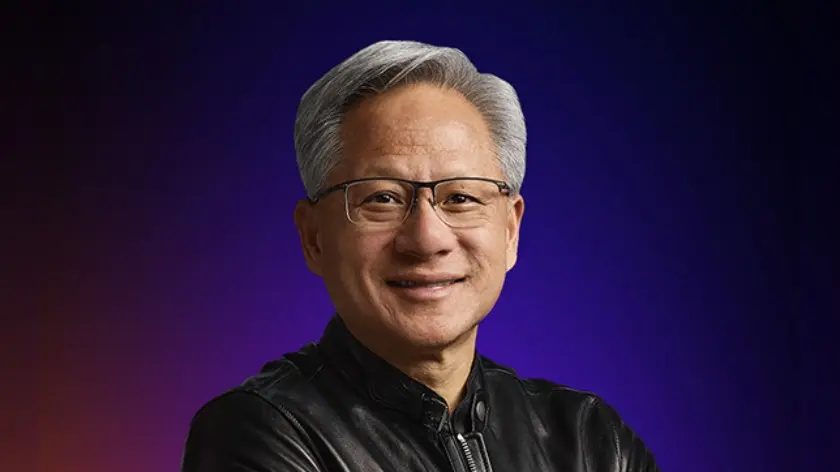
BERLIN — In a keynote address that underscored the relentless acceleration of the artificial intelligence era, Nvidia founder and CEO Jensen Huang took the stage at the Tempodrom during GTC Berlin on October 21, 2026. Addressing a packed auditorium of technologists, telecom executives, and enterprise leaders, Huang delivered a sweeping vision for the future of digital infrastructure.
The announcements made during the address mark a fundamental shift in how computing power is manufactured, deployed, and distributed. From modular, containerized AI factories that slash construction timelines from months to weeks, to the long-awaited commercialization of AI-powered Radio Access Networks (AI-RAN) in partnership with global telecom giants, Nvidia is aggressively reshaping the physical and logical foundations of the modern economy.
Crucially, Huang used the European stage to issue a pragmatic warning and a strategic challenge: Europe must transition from being a mere consumer of digital intelligence to a sovereign producer of it. Backed by nearly $10 billion in recent commitments across the continent’s technology ecosystem, Nvidia’s blueprint for Europe—and the world—relies on a complete reimagining of energy, hardware, and telecommunications architecture.
Executive Overview
The landscape of enterprise and hyperscale computing is bottlenecked not by imagination, but by physical constraints: power, cooling, real estate, and supply chain capacity. Nvidia’s GTC Berlin announcements directly targeted these friction points.
At the center of the hardware unveilings is the DSX POD, a modular, containerized reference design built specifically for complete Vera Rubin AI factories. By pre-integrating cabling, rack-level power, and liquid cooling within controlled factory environments before shipping, Nvidia claims it can reduce on-site data center deployment times from six months to a remarkable 14 days.
Concurrently, Nvidia announced major advancements in energy efficiency through its wider DSX platform, leveraging closed-loop liquid cooling and dry coolers to drive facility water usage close to zero. Software optimizations, such as the DSX MaxLPS platform, are demonstrating the ability to yield identical token generation metrics while slashing power consumption by up to 30%.
In the telecommunications sector, the narrative shifted toward the transformation of global mobile networks into distributed AI infrastructure. Highlighting the culmination of nearly eight years of research, Huang celebrated the world’s first live AI-RAN call—executed in Bellevue, Washington, alongside T-Mobile and Nokia—proving that CUDA can now natively power cellular networks. In Europe, pioneers like Elisa, BT, and Deutsche Telekom are spearheading regional trials and deployments, positioning mobile networks as the connective tissue for future intelligence.
To support this explosive global expansion, Nvidia secured critical supply chain agreements across Asia, dramatically ramping up manufacturing capacity for substrates, advanced packaging, and optical engines. Yet, as Huang succinctly noted during his keynote: “Demand is extraordinary. Capacity is the constraint.”
Detailed Chronology and Core Announcements
The announcements at GTC Berlin unfolded across several critical pillars of technology infrastructure, representing years of engineering breakthroughs converging simultaneously.
1. The DSX POD: Revolutionizing Data Center Deployment
For years, the construction of enterprise and hyperscale AI data centers has been plagued by prolonged timelines, complex on-site integration hurdles, and soaring labor costs. Nvidia’s introduction of the DSX POD fundamentally disrupts this paradigm.
The DSX POD serves as a standardized reference design for complete Vera Rubin AI factories. Rather than assembling complex liquid-cooling loops, high-density power distribution units, and optical interconnects on-site, manufacturing partners construct these units inside modular containers. The infrastructure is fully integrated, validated, and stress-tested before ever leaving the factory floor. Upon arrival at a prepared site—complete with basic power, cooling, and network connections—the modular units are plugged in and brought online in as little as 14 days.
Nvidia has forged strategic alliances with industry leaders including Bull, Dell Technologies, HPE, Lenovo, Schneider Electric, and Vertiv to scale the manufacturing of DSX POD units. Global commercial deliveries are scheduled to begin in early 2027.
2. Radical Efficiency: Cooling and Power Optimization
The exponential rise of generative AI has placed unprecedented strain on global electrical grids and municipal water supplies. Nvidia’s updated DSX platform addresses these sustainability challenges head-on through advanced thermal engineering and software efficiency.
By pairing closed-loop liquid cooling systems with high-efficiency dry coolers, Nvidia’s reference designs reduce facility cooling water usage to near-zero levels. According to Nvidia’s projections, a massive 2GW AI deployment utilizing this architecture could save up to 54 million liters of water daily—an amount roughly equivalent to the daily consumption of 180,000 households. Supplemental mechanical cooling remains an option configurable only during peak ambient temperature spikes, depending on local geography.
On the software front, the DSX MaxLPS platform is proving to be a game-changer for inference economics. Early adopters exploring the software include CoreWeave, Firmus, Google Cloud, IREN, Lambda, Nebius, Nscale, and Sharon AI. Demonstrating real-world viability, an evaluation conducted at Nscale’s Icelandic AI facility revealed a staggering 49% increase in inference throughput while maintaining the exact same 264kW power budget.

3. Telecom Networks Evolve into Distributed AI Infrastructure
One of the most profound paradigm shifts highlighted in Berlin is the convergence of telecommunications and accelerated computing. Huang emphasized that the world’s roughly 100,000 mobile network sites and an estimated 100GW of distributed data center capacity represent an untapped goldmine for edge intelligence. Cell towers are no longer merely routing voice and data traffic; they are becoming distributed AI infrastructure.
The milestone achievement validating this thesis occurred in Bellevue, Washington, where T-Mobile, Nokia, and Nvidia successfully completed the world’s first AI-RAN call on a live production network. Marking the culmination of nearly eight years of collaborative research and development, Huang declared to the audience: "Now CUDA makes phone calls."
European operators are rapidly following suit:
- Elisa has completed what Nvidia terms Europe’s first AI-RAN field trial, successfully running concurrent voice, mobile data, and computer vision AI workloads on a single accelerated computing platform over a 5G network.
- BT has announced plans to conduct live AI-RAN trials in Birmingham alongside Nokia and Nvidia in 2027.
- Deutsche Telekom has already validated the commercial platform within its advanced labs in Bonn and Oulu, laying the groundwork for live field trials slated for 2027. Additionally, Deutsche Telekom is expanding its Nvidia-powered Industrial AI Cloud, which currently hosts open-source models and provides crucial compute resources to robotics pioneers such as Agile Robots.
Globally, nearly 20 network operators have publicly announced AI-RAN collaborations utilizing Nokia’s anyRAN software and Nvidia’s Aerial RAN Computer. Across EMEA alone, nine operators are actively building or expanding Nvidia-powered infrastructure, with carriers such as CRA, etisalat, Silknet, and TIM deploying new hardware, while Cassava, Deutsche Telekom, Fastweb combined with Vodafone, Kazakhtelecom, and Orion Telecom scale existing footprints. Furthermore, Nokia is integrating Nvidia’s Nemotron open models into its Autonomous Networks Suite, and Cisco has fine-tuned Nemotron for its Crosswork AI network automation software.
4. Fortifying the Global Supply Chain
To meet the staggering global appetite for accelerated computing, Nvidia has engineered massive expansions across its hardware supply chain. Huang detailed a series of multi-year capacity agreements designed to alleviate critical manufacturing bottlenecks:
- Substrate Capacity: Partnerships with IBIDEN, Samsung Electro-Mechanics, and Unimicron will collectively increase substrate manufacturing capacity by 2.5x over the next three years.
- Advanced Packaging: Amkor has committed to scaling its advanced packaging capacity by more than 300% by the end of 2028.
- Co-Packaged Optics: SPIL is targeting an ambitious 15x increase in optical-engine manufacturing capacity for co-packaged optics by mid-2027.
Supporting Context & Metrics
The urgency driving GTC Berlin cannot be separated from the broader geopolitical and economic context of Europe’s digital transformation. During the week leading up to the keynote, Huang embarked on a high-stakes tour across Paris, London, Stockholm, and Dublin, culminating in nearly $10 billion in direct commitments to Europe’s technology ecosystem.
This capital injection addresses a fundamental vulnerability highlighted by Huang throughout his European tour: the risk of technological dependency. Describing AI as a sophisticated five-layer technology stack rooted firmly in energy, Huang cautioned policymakers and enterprise leaders that robust physical infrastructure must precede the emergence of indigenous software models.
"You don’t want to just be consuming the AI," Huang warned the audience at the Tempodrom. His message served as a rallying cry for European digital sovereignty—urging the region to harness its exceptional engineering talent and renewable energy assets to build, train, and deploy domestic intelligence systems rather than relying entirely on foreign imports.
Beyond infrastructure and telecommunications, the keynote also ventured into the realms of agentic security and physical AI. Nvidia introduced the OpenShell Reference Architecture for Safe AI Agents to secure autonomous software entities. In the physical robotics sphere, Volvo Cars announced the adoption of Nvidia’s Hyperion platform for advanced autonomous driving, while the Agile ONE SN was showcased as a reference humanoid robot slated for commercial rollout next year.
Official Statements and Industry Commentary
The announcements at GTC Berlin drew widespread acclaim from industry partners who view Nvidia’s modular and distributed frameworks as essential for the next phase of enterprise adoption.
Speaking on the introduction of the DSX POD, representatives from participating infrastructure giants emphasized the practical benefits of pre-integrated manufacturing. By shifting complex liquid-cooling and power-distribution validation from dusty construction sites to precision-controlled factories, the data center industry can finally match the deployment velocity demanded by hyperscalers and sovereign cloud builders.
Similarly, telecom executives underscored the revolutionary nature of the AI-RAN architecture. By converging radio access networks and artificial intelligence workloads onto shared accelerated computing hardware, operators can transform capital expenditure liabilities into revenue-generating edge intelligence nodes. The successful trials led by T-Mobile, Elisa, BT, and Deutsche Telekom signal that software-defined, AI-native networks are no longer theoretical concepts, but operational realities.
Future Outlook
As the industry looks ahead to early 2027—the targeted global rollout window for the DSX POD and the expanded rollout of European AI-RAN field trials—the trajectory of artificial intelligence is entering a more physically demanding, infrastructure-heavy phase.
The challenges ahead remain formidable. The insatiable energy demands of generative AI will continue to test the limits of national power grids, forcing closer collaborations between tech giants, energy providers, and municipal governments. Meanwhile, the successful execution of Nvidia’s supply chain expansion agreements will determine whether the industry can overcome the hardware constraints that currently threaten to throttle deployment velocity.
Nevertheless, Jensen Huang’s roadmap in Berlin has cast a clear light on the path forward. By treating mobile networks as distributed intelligence nodes, revolutionizing data center deployment through modular engineering, and challenging Europe to build its own sovereign AI stack, Nvidia has laid the groundwork for an intelligent, highly integrated global infrastructure that will define the next decade of technological progress.