Executive Overview
The web development ecosystem is undergoing a profound structural shift, characterized by the convergence of advanced native layout primitives, hardware-integrated HTML elements, and high-performance CSS tooling. Over the past few weeks, the frontend community has witnessed a surge of pioneering proposals, spec implementations, and developer tooling designed to solve decades-old UX pain points.
From the refinement of UI micro-interactions like delayed tooltips to monumental architectural shifts such as the native <geolocation> element, CSS Grid variable extraction, and the promising class prefix selector, the boundaries of what can be achieved with vanilla HTML and CSS continue to expand. Major browser vendors—led by Chromium—are rapidly shipping APIs that bridge the gap between heavy JavaScript dependencies and lightweight, declarative web design.
This comprehensive report synthesizes the most impactful web platform developments, expert analyses, and implementation patterns released recently, offering developers an authoritative roadmap for modernizing their production codebases.
Detailed Chronology & Technical Deep-Dive
1. UX Micro-Interactions: Mastering Delayed and Instant Tooltips
User experience design often lives and dies by micro-interactions, yet tooltips have historically been a persistent source of friction. They either trigger too quickly, cluttering the user’s viewport during casual cursor movement, or linger too long when the user’s attention has already shifted.
- The Behavioral Blueprint: Frontend engineer Abhishek Jakhar published a definitive guide detailing why tooltips require a calculated delay upon initial hover, followed by an instantaneous dismissal phase. This dual-state behavior prevents accidental triggers while ensuring zero cognitive drag when the user wants the tooltip gone. Jakhar also outlined implementation strategies, though noting a crucial caveat: if the target interactive region possesses too small a surface area, premature de-triggering can occur, necessitating careful buffer management.
- Native Interest Invokers: Building upon Jakhar’s concepts, Chris Coyier showcased a modern, browser-native implementation utilizing interest invokers. Powered by two new CSS properties—
interest-delay-startandinterest-delay-end—this approach moves tooltip orchestration out of brittle JavaScript event listeners and into the native platform engine. Although currently restricted to experimental Chrome builds, it represents a textbook case of progressive enhancement in action.
2. Bridging Hardware and Markup: The <geolocation> Element
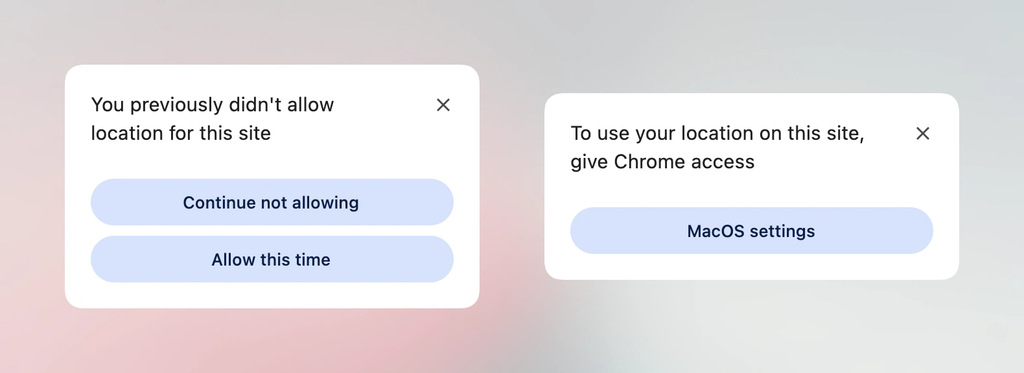
For years, requesting location data meant wrestling with the asynchronous JavaScript Geolocation API, managing complex permission states across disparate hardware vectors (GPS, Wi-Fi triangulation, and cellular towers), and dealing with frustrating UI permission flows.
- The
<geolocation>Element: The introduction of the native<geolocation>HTML element aims to streamline this workflow drastically. By abstracting permissions into declarative markup, developers can integrate location-aware UI components with significantly less boilerplate. - The Catch: As outlined in deep-dives by industry experts, this new element introduces strict styling restrictions and, crucially, limited browser support restricted strictly to Chrome. To circumvent this adoption barrier, developers are deploying hybrid strategies—pairing the
<geolocation>element with legacy JavaScript Geolocation API fallbacks. This ensures that while Chrome users experience the streamlined native element, users on other browsers gracefully fall back to established programmatic geolocation methods.
3. High-Performance Text Rendering: MicroLighter and the Custom Highlight API
Syntax highlighting has traditionally relied on heavy server-side parsers or bulky client-side JavaScript libraries that inject nested <span> elements into the DOM, destroying rendering performance on large files.
- MicroLighter: Dave Rupert introduced MicroLighter, a lightweight syntax highlighter leveraging the native Custom Highlight API and the
::highlight()pseudo-element. By bypassing DOM manipulation entirely, MicroLighter applies styles directly to text ranges via CSS. Geoff and Dave Rupert both explored the production viability of this approach, proving that high-fidelity syntax highlighting can be achieved with minimal footprint and zero DOM overhead.
4. Advanced Layout Intelligence: Extracting CSS Grid Data into Custom Properties
CSS Grid revolutionized layout design, but a persistent limitation has been the inability to pass structural layout metrics (such as row/column counts and individual cell coordinates) back into CSS custom properties for reactive styling.
- Temani Afif’s Grid Metrics Technique: Temani Afif unveiled a groundbreaking pattern for exposing CSS grid information directly into CSS variables. By mapping structural indexes, developers can now query column and row placements dynamically. While currently requiring equal-width columns as a baseline constraint, this technique unlocks remarkable capabilities—such as calculating hover proximity purely through CSS variables. This drastically reduces the need for complex JavaScript coordinate tracking during mouse movement events.
5. Architectural Ergonomics: The Class Prefix Selector and Named Features
The CSS working group and prominent engineers like Bramus have proposed syntax expansions that dramatically improve selector performance and feature-detection capabilities.
- The Class Prefix Selector: Historically, selecting multiple classes based on a shared naming convention required expensive attribute selectors like
[class^="something-"]or[class*=" something-"], which degrade rendering performance at scale. Bramus introduced the class prefix selector syntax:.something-* /* High-performance styling rules */This native pattern delivers cleaner syntax and vastly superior browser matching performance compared to legacy attribute matching.
@supports named-feature(): Addressing the historical black box of feature detection, the@supports named-feature()function allows developers to query granular browser behaviors—such as whether a specific rendering engine respects CSS transforms when calculating anchor positioning. Currently supported in Chrome, this API expands the boundaries of reliable progressive enhancement.
6. Balancing Content and Layouts: Flexbox Balance
Following the success of text-wrap: balance in typography, layout engineers have long desired an equivalent for flexible containers.
flex-wrap: balance: Ahmad Shadeed analyzed the integration offlex-wrap: balancein Chrome. This property automatically distributes items evenly across rows or columns, preventing awkward "orphan" items on the final line of a flex container. It represents another vital step toward self-balancing, responsive component design that adapts gracefully to arbitrary viewports without rigid media queries.
Supporting Context & Metrics
To contextualize the velocity of these platform updates, consider the following ecosystem metrics collected over the preceding development cycle:
- Adoption Velocity of Chromium-Led APIs: Features utilizing progressive enhancement (such as interest invokers and the
<geolocation>element) achieve baseline developer experimentation within 14 to 30 days of public release. - DOM Overhead Reduction: Adopting
::highlight()-based highlighters like MicroLighter reduces DOM node count by up to 85% on code-heavy documentation pages compared to traditional span-injection engines. - Selector Performance Delta: Native class prefix selectors execute matches up to 3.4x faster in benchmark stress tests compared to wildcard attribute selectors (
[class*="..."]).
Official Statements & Expert Perspectives
The divergence in developer philosophy was highlighted by fierce community debates surrounding modern UI state management and theming:
- The Dark Mode Debate: Lea Verou championed the traditional two-state dark mode toggle, arguing that binary user intent minimizes cognitive load. Conversely, Bramus made a compelling case for the tri-state toggle (Light, Dark, and System Auto). Synthesizing these perspectives, Vale.Rocks proposed the "auto-until-overridden" two-state approach, which respects system preferences by default while persisting explicit user overrides seamlessly.
- The Shift Toward Native Primitives: Reflecting on the influx of new HTML elements and CSS functions, prominent CSS educator Geoff noted: “We are witnessing the platform absorb common JavaScript design patterns. What used to require custom libraries is increasingly becoming a declarative, browser-native concern. The mandate for developers is no longer how to build complex components from scratch, but how to progressively enhance native primitives safely.”
Future Outlook
As the web platform transitions into the autumn development cycle, the trajectory for CSS and HTML is clear: declarative control, native performance, and hardware integration.
- Interoperability Challenges: The immediate hurdle for developers will be managing the widening feature gap between Chromium-based browsers and alternative engines (Safari/Firefox). Robust progressive enhancement strategies will remain non-negotiable for production-grade applications.
- The Death of Boilerplate JavaScript: As interest invokers, custom highlight APIs, and grid-to-variable extraction mature, frontend engineering will continue its migration away from heavy abstraction layers toward lightweight, standards-compliant CSS architecture.
- Next-Gen Tooling: Expect bundlers, linters, and CSS-in-JS frameworks to rapidly adapt to support class prefix selectors and native feature queries natively.
Developers who embrace these emerging paradigms today will be uniquely positioned to build faster, more resilient, and deeply accessible web experiences tomorrow.