Executive Overview
In the continuously evolving landscape of internet culture, viral phenomena often emerge from the unlikeliest of cultural artifacts. The latest internet sensation to capture the collective imagination of TikTok and YouTube is the "More Like a Quesadilla" Guy—a moniker assigned to prominent content creator Chad Wild Clay. The meme traces its roots back to a 2021 music video titled "Come Back Daniel" by the Spy Ninjas. However, it underwent a dramatic revitalization in late 2026, suddenly transforming into a ubiquitous viral template.
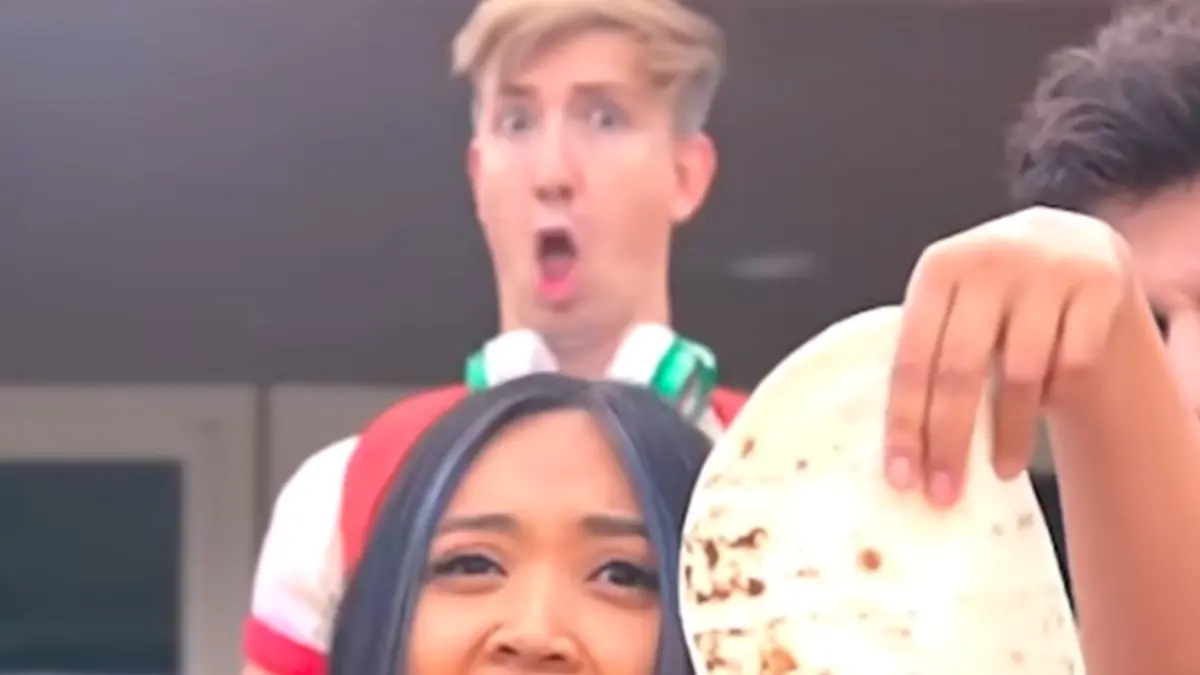
Characterized by an intensely exaggerated, wide-eyed look of absolute shock and betrayal, Wild Clay’s background reaction in the music video has become the cornerstone for a sprawling ecosystem of digital parodies. These range from high-accuracy physical reenactments to self-deprecating humor regarding unposted social media drafts.
This deep-dive investigation explores the origins, trajectory, and sociological impact of the "More Like a Quesadilla" meme. By analyzing the mechanics of its 2026 resurgence on TikTok, we can better understand how micro-moments within long-form digital media are retroactively re-contextualized by audiences years after their initial publication.
Detailed Chronology: From 2021 Music Video to 2026 TikTok Phenomenon
To fully grasp the cultural weight of the "More Like a Quesadilla" phenomenon, one must trace its lineage across a timeline spanning more than five years. The journey moves from a niche children’s action-adventure music video to a masterclass in unintentional comedic timing.
Phase 1: The Inciting Incident (May 2021)
On May 8th, 2021, popular family-friendly YouTuber and internet personality Chad Wild Clay published a video titled "Come Back Daniel Song – Spy Ninjas (Official Music Video)" on his primary channel. The video was part of the overarching "Spy Ninjas" narrative universe—a serialized, action-comedy series popular among younger demographics on YouTube. Over the next five years, the video steadily accumulated views, eventually crossing the 94-million-view threshold.
However, buried deep within the production was a fleeting moment that would take years to be appreciated. At precisely the 01:11 mark in the video, fellow cast member Regina delivers a sharply comedic, unexpectedly aggressive bar during a rap segment:
"Think you’re tough like a gorilla? Pshh, more like a quesadilla."
While the lyric itself is undeniably absurd, it was the background choreography that ultimately captured the internet’s attention. Standing just behind the performer, Chad Wild Clay reacts with a wildly exaggerated, theatrical expression of profound shock. His eyes bulge, his jaw drops, and his entire posture contorts as if he has just witnessed a catastrophic event. At the time of its release, the moment passed without significant isolated commentary, safely sequestered within the broader narrative of the Spy Ninjas universe.
Phase 2: The Initial Discovery (July 2026)
Fast-forward over five years to July 21st, 2026. The dormant comedic potential of the clip was finally unlocked when TikTok user @thebiggestbird49 isolated the exact 01:11 timestamp. Publishing the snippet with the caption, "I’m sobbing what is his problem," the user tapped into a vein of surrealist internet humor that appreciates over-the-top, unexplained emotional reactions.
The post quietly brewed over the summer months, acting as the foundational seed for what would become a massive viral wave. By framing Wild Clay’s earnest, kid-friendly acting style as something bizarre and baffling, the TikTok community began to view the clip through an ironic, detached lens.
Phase 3: The November 2026 Explosion
The true tipping point arrived during the first week of November 2026. Within a matter of days, the "More Like a Quesadilla" reaction transitioned from a mildly amusing TikTok video into a full-scale viral template.
- November 1st, 2026: TikToker
@0la.marieposted a short-form video utilizing the audio and visual cues of Wild Clay’s expression. Superimposing the relatable caption, "’Why don’t you post your drafts?’ My drafts:," the video struck a chord with creators struggling with self-censorship and digital embarrassment. The post rocketed past 3 million views in just four days, proving the meme’s versatility for self-deprecating humor. - November 3rd, 2026: The trend diversified rapidly. Creator
@joieatthediscopublished a lip-dub adaptation, incorporating both the iconic lyric delivery and a frame-by-frame physical recreation of Wild Clay’s face. Simultaneously, user@frigginpacketjoereleased a dedicated "accuracy reenactment" video. In it, he meticulously studied and reproduced the exact tension of Wild Clay’s facial muscles, pulling in over 1.4 million views in 48 hours. - November 4th, 2026: The momentum showed no signs of slowing down. Creator
@ilikeuncrideradded to the pile-on with another faithful recreation, securing hundreds of thousands of views within a single day and cementing the meme as a mainstay of the early-November algorithmic feed.
Supporting Context & Metrics: Decoding the Virality
The rapid ascension of the "More Like a Quesadilla" meme offers a fascinating case study in contemporary algorithmic distribution and audience behavior. Several key metrics and contextual factors fueled its meteoric rise:
Quantitative Reach
- Source Material Longevity: The original YouTube video’s baseline of 94 million views provided an enormous, pre-existing pool of viewers who had theoretically been exposed to the scene, lowering the barrier for cognitive recognition when the meme appeared on TikTok.
- Velocity of Spread: Within a 72-hour window from November 1st to November 4th, 2026, cumulative views across the top four trending TikTok interpretations surpassed 5.8 million views, demonstrating an unusually high engagement-to-time ratio.
- Format Versatility: The meme successfully crossed over multiple established TikTok formats, including the "My Drafts" relational format, direct lip-dubs, and hyper-focused physical accuracy reenactments.
Psychological and Cultural Drivers
Why did an innocuous moment from a 2021 children’s web series suddenly capture the zeitgeist in late 2026?
- The Appeal of Earnest Over-Acting: Modern internet culture has developed an acute appreciation for the earnestness of older digital media. Chad Wild Clay’s acting style—designed for high-retention children’s programming—relies on broad, cartoonish expressions. When viewed by an older, irony-poisoned TikTok demographic, this earnestness is re-interpreted as high comedy.
- The "Micro-Expression" Meta: TikTok has frequently trended formats where creators attempt to replicate hyper-specific facial expressions from pop culture (think of previous viral grimaces, stares, or shock-faces). The "More Like a Quesadilla" face offers a masterclass in physical comedy: it requires precise eyebrow elevation, eye-widening, and jaw-slackening, making it an appealing challenge for creators looking to showcase their comedic timing and facial control.
- Absurdist Juxtaposition: The sheer ridiculousness of the lyric itself—comparing a supposed lack of toughness to a Mexican cheese-and-tortilla flatbread—creates a comedic dissonance. Pairing this silly line delivery with an expression of existential dread creates a jarring contrast that audiences naturally find irresistible.
Comparative Analysis: Types of "More Like a Quesadilla" Content
To understand how creators adapted the meme across different niches, we can categorize the primary content verticals that emerged during its peak week in November 2026:
| Content Category | Primary Mechanics | Representative Example | Audience Engagement |
|---|---|---|---|
| Relational / Self-Deprecating | Using the face to represent chaotic, embarrassing, or unhinged personal behaviors stored in private folders. | @0la.marie ("My drafts:") |
Extremely high (3M+ views in 4 days) |
| Accuracy Reenactments | Focusing purely on the technical precision of mimicking Chad Wild Clay’s facial distortion. | @frigginpacketjoe |
High (1.4M+ views in 2 days) |
| Performance Lip-Dubs | Combining the audio delivery of the rap lyric with synchronized physical acting of the background reaction. | @joieatthedisco |
Moderate-High (263K+ views in 2 days) |
| Meta-Parody | Commenting on the absurdity of the meme’s sudden resurgence five years after the video’s release. | Various community stitches | Steady long-tail engagement |
Future Outlook: The Legacy of the Meme in the Creator Economy
As the initial wave of viral fervor settles, industry analysts and internet historians are left to ponder the long-term implications of phenomena like the "More Like a Quesadilla" guy.
Retroactive Content Mining
One of the most notable trends of the mid-2020s creator economy is the phenomenon of retroactive content mining. As platforms like TikTok rely increasingly on algorithmic discovery rather than chronological feeds, older pieces of media are no longer insulated by the passage of time. A frame from a 2021 YouTube video is just as viable a candidate for virality as content produced yesterday. This shifts the power dynamic of internet fame: creators can inadvertently mint viral memes years after a video has ceased active monetization or promotional pushes.
Chad Wild Clay’s Brand Impact
For Chad Wild Clay (real name Chris Pirillo-esque or similar independent creator pipelines), unexpected viral resurgences of older catalog items are generally viewed as windfalls. While the meme initially relies on mild bemusement at his theatrical acting style, it ultimately drives renewed traffic back to his primary YouTube channel and the broader Spy Ninjas intellectual property. In an era where audience attention spans are notoriously fragmented, becoming a living meme—even an ironic one—re-establishes cultural relevance across an older demographic that may have outgrown children’s action-vlogs.
Conclusion
The "More Like a Quesadilla" Guy stands as a testament to the unpredictable nature of internet virality. What began as a throwaway background reaction in a 2021 children’s action-comedy music video was successfully resurrected, deconstructed, and celebrated by millions of TikTok users in late 2026. Through clever physical reenactments, relatable self-deprecating humor, and a collective appreciation for absurdist over-acting, the internet proved once again that no piece of digital history is ever truly forgotten—it is simply waiting for the right quesadilla-fueled moment to shine.