Executive Overview
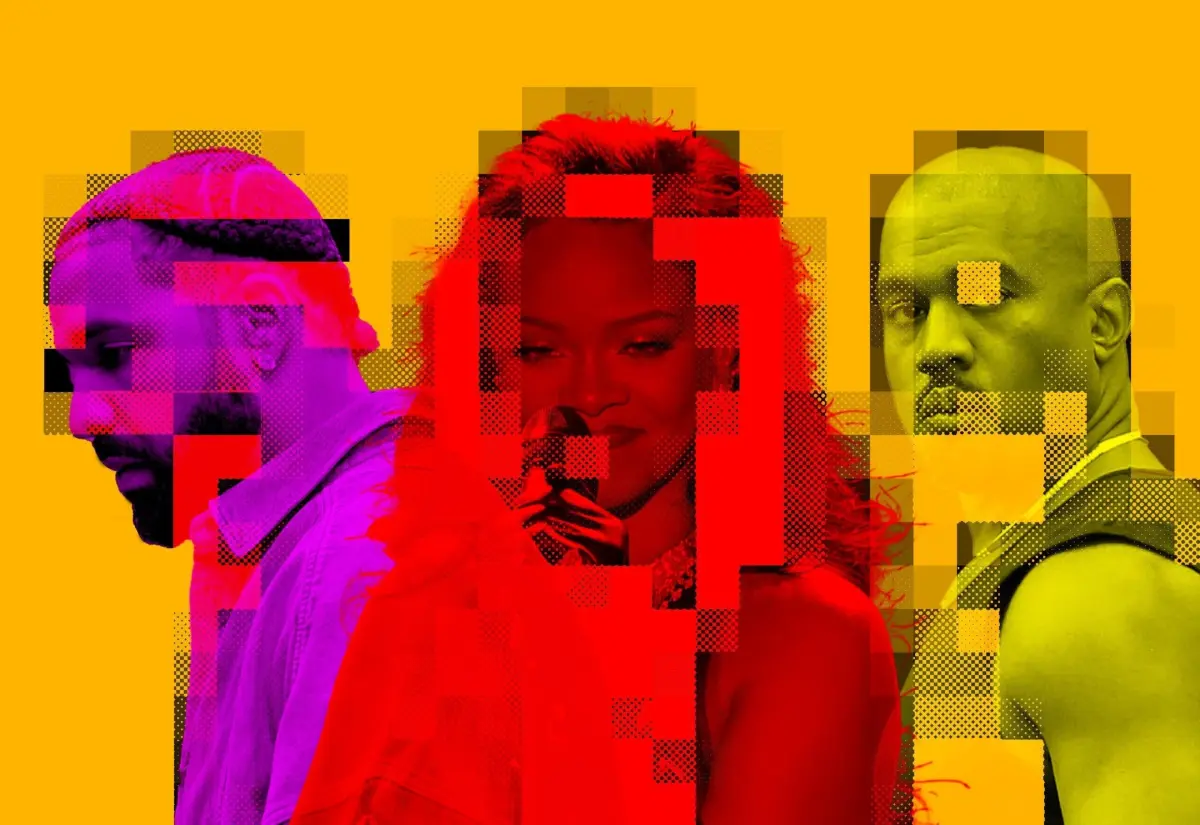
The global music industry stands at an unprecedented precipice. Thanks to the explosive democratization of powerful generative artificial intelligence (AI) tools, the once-unassailable boundary between an artist’s authentic catalog and an algorithmic phantom has effectively dissolved. Across platforms like YouTube, Instagram, and TikTok, internet users are routinely greeted by tracks where superstar artists appear to sing, rhyme, and perform songs they never recorded.
From superstar DJ David Guetta dropping an unreleased track featuring an AI-generated Eminem vocal during a live festival set, to the viral sensation "Heart on My Sleeve"—an eerily convincing collaboration between simulated versions of Drake and The Weeknd—the cultural footprint of generative voice models is expanding exponentially. While casual listeners and digital hobbyists marvel at the novelty of hearing Kanye West cover indie rock anthems or Freddie Mercury lead an impossible virtual choir, the upper echelons of the music business are viewing these developments with alarm.
Major record labels, spearheaded by Universal Music Group (UMG), are moving swiftly to stem the tide, lobbying streaming giants and issuing copyright takedowns to protect their intellectual property. The core issue transcends mere copyright infringement; it strikes at the very heart of artist identity, right of publicity, and the economic frameworks that have sustained the recorded music business for a century. As legal scholars grapple with uncharted statutory territory and major label executives warn of an existential threat, a decentralized community of bedroom producers continues to push the technological envelope, leaving the future of recorded music caught in a high-stakes tug-of-war between open-source innovation and corporate protectionism.
Detailed Chronology: The Rise of the Algorithmic Pop Star
The transition of AI-generated music from a niche computer science experiment to a mainstream cultural phenomenon has occurred with breathtaking speed. Understanding how the industry arrived at this crossroads requires examining the sequence of technological milestones and viral moments that brought synthetic vocals into the cultural zeitgeist.
Late 2022 to Early 2023: The Open-Source Explosion
The foundation for the current wave of AI cover tracks was laid with the release and proliferation of open-source voice conversion software, most notably So-Vits-SVC (Soft-Voice-to-Soft-Voice Singing Voice Conversion). Originally shared through GitHub and popularized within specialized Discord communities, the tool allowed users to take clean vocal stems—often isolated a cappella tracks of professional artists—and train a lightweight AI model on an artist’s specific vocal timbre, inflection, and vibrato.
As the software spread across online forums, hobbyists began experimenting. In February 2023, the paradigm shifted from hidden experiments to public showcases. Superstar DJ and producer David Guetta electrified a live concert audience by dropping a track featuring an artificial Eminem vocal, generated entirely without the Detroit rapper’s knowledge or consent. Around the same time, French hip-hop act AllttA released "Savages," a track incorporating a compelling, AI-generated Jay-Z vocal. Cultural critics noted that the simulated voice brought an eerie, authentic gravitas to the composition, signaling that the technology was no longer just a toy, but a viable compositional layer.
Spring 2023: Viral Sensations and the Breaking Point
By April 2023, the volume of AI-generated tracks overwhelmed social media feeds. The most disruptive entry came in the form of "Heart on My Sleeve," a meticulously produced track uploaded by a mysterious user known as @ghostwriter977. The song featured startlingly realistic performances by simulated versions of Drake and The Weeknd trading verses about Selena Gomez. The track racked up millions of views across TikTok and Spotify before industry watchdogs began questioning whether it was a sophisticated marketing stunt orchestrated by an AI startup.
Concurrently, independent creators were minting viral hits by forcing artists into absurd conceptual pairings. A pseudonymous 22-year-old Oklahoma creator operating under the moniker "YeezyBeaver" published a surprisingly charming cover of the Plain White T’s classic "Hey There Delilah," performed by a synthesized Kanye West. Another creator, using a model trained on unreleased Kanye vocal snippets, produced a cover of Ice Spice’s "Munch (Feelin’ U)" that garnered public approval from fellow rap star Travis Scott on Instagram.
For the real artists whose likenesses were being co-opted, the novelty wore off rapidly. When an AI-generated track surfaced featuring a simulated Drake rapping over the instrumental of Ice Spice’s "Munch," the real Drake took to Instagram to declare it "the final straw."
Supporting Context & Metrics: The Tech, the Creators, and the Numbers
To understand the mechanics of this disruption, one must examine the tools empowering everyday internet users, the motivations of the creators behind the music, and the macroeconomic anxieties gripping the traditional music business.
The Technology: So-Vits-SVC and the Democratization of Voice
The driving engine behind this movement is machine learning architectures designed for singing voice conversion. Unlike text-to-speech engines that synthesize words from scratch, So-Vits-SVC takes an existing vocal performance—often sung by an amateur creator or derived from an instrumental cover—and maps the pitch, dynamics, and tonal color onto a target artist’s voice model.
The barrier to entry has plummeted. On TikTok, the hashtag #sovistssvc has accumulated upwards of 2 million views, serving as a decentralized tutorial hub where teenagers and college students share pretrained model weights for artists ranging from Ariana Grande to Juice WRLD.
Inside the Mind of the AI Creator
For the hobbyists building these models, the motivations are rarely financial; instead, they stem from a culture of remixing, fanfiction, and digital subculture.
- YeezyBeaver, the 22-year-old behind the Kanye West indie-pop covers, stumbled upon a voice model link in a Discord fan server. After testing it by placing Ye’s voice over Drake’s track "Jungle," he realized the vast creative canvas the technology offered. "I just started looking for other artists, songs that I think Kanye would sound good on," he explained. "And then that’s pretty much how we got to here."
- Pieawsome, an American college student and member of the online "Kanye unreleased community," approached the technology from an archival perspective. Recognizing that fans possessed hours of low-quality, unfinished studio sessions, he chopped up a cappella sections to train a robust model. "I realized we had enough Kanye material where we could probably make an AI model out of it to finish some of the songs," he noted, defending his work as the digital age’s equivalent of video game modding or literary fanfiction.
- Jered Chavez, a 19-year-old student at the University of South Florida, leveraged the technology for comedic effect. His viral Instagram videos feature simulated trios of Drake, Kanye West, and Kendrick Lamar singing anime theme songs, such as the closing track to Rascal Does Not Dream of Bunny Girl Senpai. Chavez acknowledges the ethical tightrope: "With this area of AI, there’s a lot of controversy and ethical concerns… creating something that’s essentially putting words in people’s mouths."
Economic and Industry Metrics
The financial stakes are immense. Major record labels operate on an asset-heavy model where copyright ownership, master recordings, and right-of-publicity licensing generate billions of dollars in annual revenue.
- The Streaming Tsunami: Industry analysts note that billions of audio files are uploaded to digital service providers (DSPs) annually. Generative AI threatens to exponentially multiply this volume, drowning out human artists in a sea of algorithmic noise.
- The Valuation Threat: A BNP Paribas Exane analyst report explicitly categorized generative AI music as a "new disruptive threat" to the traditional major label business model, prompting institutional investors to reevaluate the long-term defensibility of music catalogs.
Official Statements and Industry Response
The music industry’s leadership has shifted rapidly from bemused observation to aggressive containment.
Universal Music Group’s Defensive Maneuver
Universal Music Group (UMG), which represents industry heavyweights including Drake, Rihanna, Taylor Swift, and Kendrick Lamar, took direct action. UMG reportedly reached out to major streaming platforms—including Spotify and Apple Music—demanding that they block AI developers from scraping copyrighted catalog material to train their models.
In a public statement addressing the ecosystem, a UMG spokesperson emphasized the company’s commitment to protecting its artists: "We have a responsibility to our artists to prevent the unauthorized commercial exploitation of their artistry and likeness. The current unchecked scraping of protected audio content poses an existential challenge to the creative community."
Legal Perspectives: Identity Theft vs. Transformative Art
The legal landscape remains deeply ambiguous, leaving attorneys and technologists sharply divided over where the boundaries of law lie.
- Jonathan Bailey, former Chief Technology Officer of music tech company Soundwide, offered a stark assessment of the legal and moral implications: "I think you can make a persuasive argument that using AI to reanimate Jay-Z’s voice to have him rap or sing something he never created is kind of a form of identity theft."
- Conversely, creators like pieawsome view their work through the lens of fair use and transformative fan culture. "That may be a good thing. It may be a bad thing. I don’t know. But it’s kind of an inevitable thing that was going to happen."
- When asked to weigh in on the nascent litigation surrounding AI voice cloning, Donald Passman, a veteran entertainment attorney at Gang, Tyre, Ramer, Brown & Passman, Inc. who has represented icons like Adele and Taylor Swift, declined to offer a definitive prediction. Citing the need to protect future litigation positions, Passman remarked, "It’s way too new."
Major labels have increasingly turned to automated copyright strikes, purging unauthorized AI tracks from YouTube and SoundCloud en masse. While some creators acknowledge that takedowns are an effective speed bump, many believe the genie cannot be put back in the bottle.
Future Outlook: Navigating the Synthetic Era
As the dust settles on the initial wave of viral novelty, the music industry faces a transformative crossroads. The trajectory of generative AI in music will likely be shaped by three major developments:
1. Legislative and Statutory Evolution
Current intellectual property laws—built primarily around fixed compositions and sound recordings—do not adequately address voice cloning, algorithmic styling, and digital likeness rights. Lawmakers in Washington and international jurisdictions are beginning to draft legislation (such as proposed federal right-of-publicity protections) specifically targeting unauthorized generative voice replicas. The outcome of these legal battles will determine whether an artist’s vocal timbre can be legally trademarked.
2. Authorized Collaboration and Licensing
Rather than fighting a losing war of attrition against open-source developers, forward-thinking sector leaders are exploring authorized AI partnerships. Major labels are currently experimenting with frameworks that allow artists to license their voices for approved AI projects, creating new revenue streams while maintaining strict quality control. Grimes (Claire Boucher), for instance, famously invited fans to use her voice freely for AI projects under a 50/50 royalty-split agreement, pointing toward a collaborative future.
3. Technological Watermarking and Detection
To combat unauthorized cloning, technology companies and DSPs are investing heavily in cryptographic audio watermarking. These invisible data signatures embedded in master recordings will allow platforms to automatically identify and filter out AI-generated tracks trained on protected material before they ever reach public streaming playlists.
Conclusion
The collision of generative artificial intelligence and popular music marks a permanent turning point in cultural history. While bedroom producers celebrate a new frontier of democratized creativity, legacy institutions are fiercely defending the sanctity of human artistry and copyright law. As Jered Chavez aptly noted, "The responsibility lies in the judgment of the people that are making [AI-generated music]… This is kind of new territory for everyone." Whether this new territory descends into an intellectual property wild west or evolves into a regulated, collaborative ecosystem will depend entirely on how swiftly the law, the tech sector, and the music industry can adapt to the digital ghosts haunting the modern soundscape.