In the contemporary landscape of massively multiplayer online role-playing games (MMORPGs), efficiency is king. Modern behemoths like World of Warcraft operate as precision-engineered amusement parks, shuttling players from one seasonal milestone to the next with minimal friction. Every login is greeted by a barrage of refreshed weekly prompts, escalating gear score requirements, and frantic queues designed to fast-track users toward quantifiable, predictable rewards.
Yet, as games have become faster, sleeker, and more mathematically optimized, something vital has been lost: the sensation of living within a truly shared, breathing world.
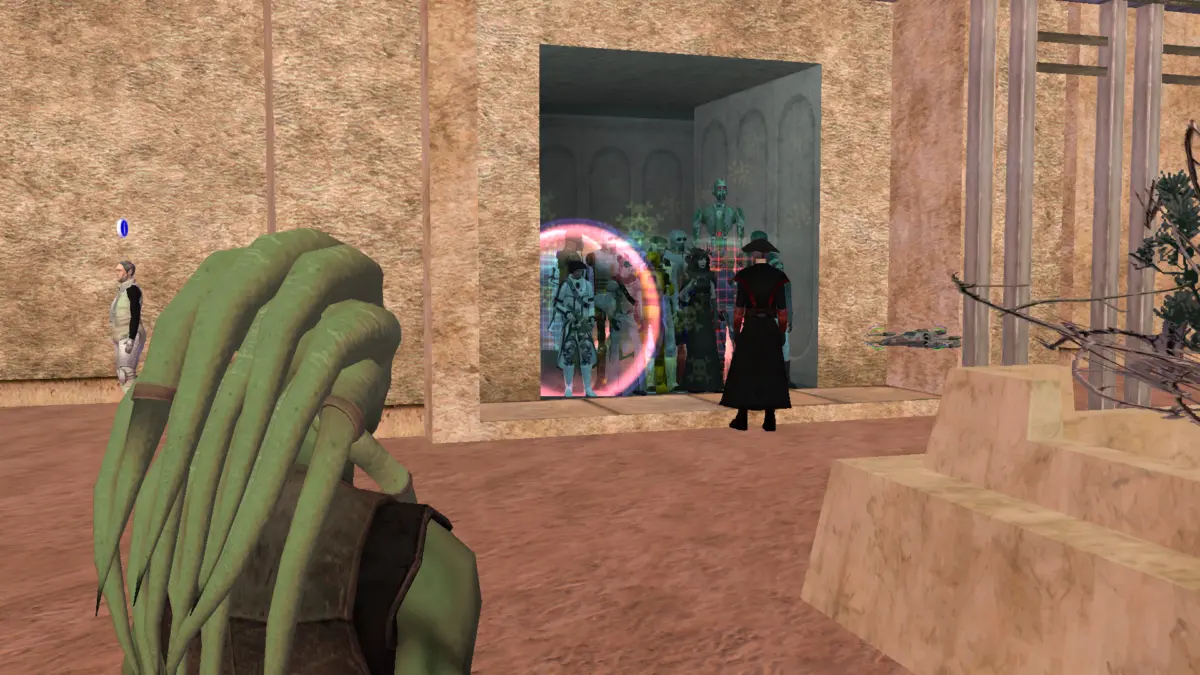
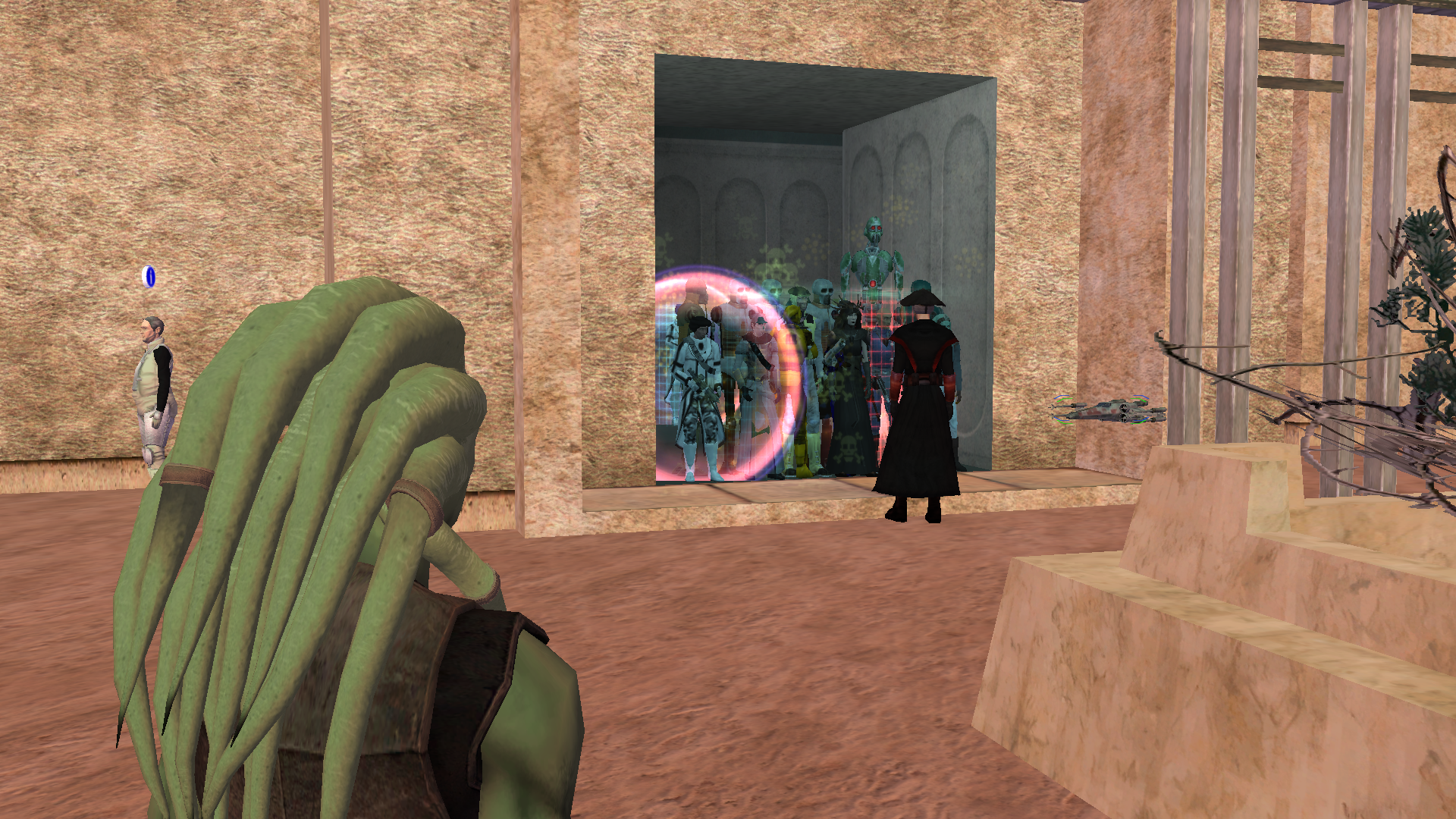
Enter Star Wars Galaxies (SWG). Originally launched by LucasArts and Sony Online Entertainment in 2003, shuttered in 2011, and kept alive today solely through the relentless dedication of private server communities, SWG represents an entirely different philosophy of virtual space. A recent expedition into its fan-preserved digital deserts revealed a stark contrast to modern design paradigms. While contemporary MMOs relentlessly drive players toward high-intensity progression loops, Star Wars Galaxies embraces aimlessness. It permits players to exist, wander, and socialize without the constant pressure of a mechanical carrot dangling just out of reach. In doing so, it exposes a deep-seated industry paradox: why are dead games often better at feeling "alive" than the multi-million-dollar titans that replaced them?
Detailed Chronology: The Rise, Fall, and Resurrection of a Galaxy Far, Far Away
To understand why Star Wars Galaxies retains such a powerful grip on the collective imagination of the MMO community, one must trace its turbulent historical trajectory—a timeline defined by soaring ambition, controversial mechanical overhauls, and an unprecedented afterlife.
2003–2004: The Sandbox Golden Age
When Star Wars Galaxies: An Empire Divided launched in June 2003, it was a radical departure from the traditional fantasy theme-park structure pioneered by EverQuest. Developed by Verant Interactive and Sony Online Entertainment, SWG offered a wide-open sandbox set during the Galactic Civil War. Players were not forced down a linear narrative path; instead, they chose professions ranging from humble artisans, doctors, and musicians to bounty hunters, smugglers, and combat specialists.
The game’s economy was entirely player-driven. Weapons, armor, buildings, and vehicles were crafted from raw materials harvested by resource-gatherers who surveyed planetary landscapes for specific mineral concentrations, water tables, and organic yields. Entire player-built cities sprung up across desolate planets like Tatooine and Naboo, complete with mayors, civic structures, and sprawling bazaars.
2004–2005: The Jedi Grind and the NGE Catastrophe
In its earliest days, unlocking the game’s ultimate fantasy—becoming a Jedi—was an infamous, highly cryptic ordeal. Players had to master an unpredictable combination of hidden, randomized professions before finally unlocking force sensitivity. This sparked months of obsessive experimentation across the community.
However, buckling under pressure to capture a broader, more casual audience, Sony Online Entertainment introduced the infamous Combat Upgrade (CU) in 2005, followed shortly by the catastrophic New Game Enhancements (NGE) later that same year. The NGE stripped away SWG’s complex, multi-tiered classless skill system, replacing it with traditional, rigid level-based classes (including making Jedi a starting profession). The update alienated hundreds of thousands of core subscribers, sparking legendary forum mutinies, subscription cancellations, and a rift in the community that never healed.
2011: The Final Sundown
Despite attempts by developers to steer the ship back on course, the damage was done. On December 15, 2011, after more than eight years of operation, the official servers of Star Wars Galaxies went dark forever. The digital cities that players had spent years building were wiped away, leaving behind only nostalgic memories and digital scrapbooks.
The Modern Era: The Private Server Renaissance
The story did not end in 2011. Recognizing that the unique sandbox ecosystem of pre-NGE Star Wars Galaxies could not be found anywhere else in modern gaming, dedicated engineering collectives set out to resurrect it. Through reverse-engineering projects like SWGemu (Star Wars Galaxies Emulator), hobbyist programmers painstakingly reconstructed the game’s core architecture. Today, these private servers thrive, drawing thousands of nostalgic veterans and curious newcomers alike into a preserved snapshot of early-2000s MMO history.
Supporting Context & Metrics: The Efficiency Trap of Modern MMOs
The enduring appeal of Star Wars Galaxies in its afterlife highlights a growing fatigue among veteran MMO players. Modern design metrics prioritize engagement loops, retention analytics, and microtransaction pipelines over organic community interaction.
Design Element
Modern Theme-Park MMOs (e.g., World of Warcraft)
Classic Sandbox MMOs (Star Wars Galaxies)
Primary Goal
Gear progression, raiding, seasonal ranks, and meta optimization.
Socializing, crafting economies, exploration, and roleplay.
Player Agency
Highly linear; fast-traveled via automated queues and flying mounts.
Non-linear; aimless wandering, resource surveying, and emergent play.
Interdependence
Low; instanced content allows soloing or automated matchmaking.
High; specialized professions (medics, entertainers, crafters) are essential.
World Persistence
Dynamic events happen to the player; the world resets or phases.
Player-built cities, permanent housing, and persistent ecologies.
In games like World of Warcraft, logging in often feels less like visiting a secondary home and more like punching a clock. Weekly prompts demand immediate attention. Flying mounts propel players at breakneck speeds past gorgeous, intricately detailed environments, completely bypassing the tactile wonder of world exploration. The journey from point A to point B has been streamlined out of existence in the name of respect for the player’s time—yet paradoxically, by removing the time spent traveling, modern MMOs frequently strip away the very friction that breeds memorable, unscripted social encounters.
By contrast, an hour spent wandering the dunes of Tatooine in SWG—perhaps surveying eahiate iron deposits or harvesting womp rat corpses for crafting materials—accomplishes nothing of quantifiable value by modern standards. No gear score increases. No raid lockouts completed. Yet, that aimless drifting creates space for unscripted emergent gameplay: watching a bounty hunter tear by on a speeder bike toward mysterious ends, trading nods with a Zabrak working on carbine marksmanship, or discovering a decaying, player-built metropolis abandoned in the desert.
Official Perspectives & Industry Commentary
Industry veterans and cultural critics have increasingly pointed to the loss of sandbox mechanics as a critical turning point in online game design.
Reflecting on his experiences traversing both modern theme-park giants and preserved legacy servers, games journalist and MMO columnist Lincoln Carpenter notes the profound psychological shift between the two models:
"In comparison, whenever the WoW itch gets strong enough for me to reup my subscription, I end up doing nothing but doing. Logging into WoW… means enduring a bombardment of refreshed weekly prompts and directives urging me to get on my flying mount and accelerate at breakneck speed towards whatever prescribed activity… will provide my next predictable gear score increase."
Carpenter emphasizes that while modern MMOs are objectively better engineered to deliver quantifiable successes, they routinely starve players of true spontaneity:
"It’s in those moments where it feels like the MMO rediscovers itself—where it recaptures the ways that multiplayer in a shared, persistent world can be a source of wonder… It’s that wonder that motivated Star Wars Galaxies in 2003, and it’s what its private server maintainers have worked to keep in suspended animation ever since."
Game designers point out that early MMOs relied on player vulnerability and interdependence to build communities. Because travel was dangerous and combat required careful preparation, players had to rely on passing strangers for buffs, emergency heals, or craft repairs. Modern matchmaking queues eliminate the necessity of social interaction, transforming other human players into interchangeable avatars designed solely to clear a dungeon instance.
Future Outlook: Can the Modern Industry Learn from the Past?
As the MMORPG genre matures, a silent rebellion is brewing among players exhausted by hyper-efficient, seasonal content treadmills. While triple-A publishers continue to chase streamlined, mass-market accessibility, niche developers and independent creators are increasingly looking backward to recapture the magic of early-2000s sandboxes.
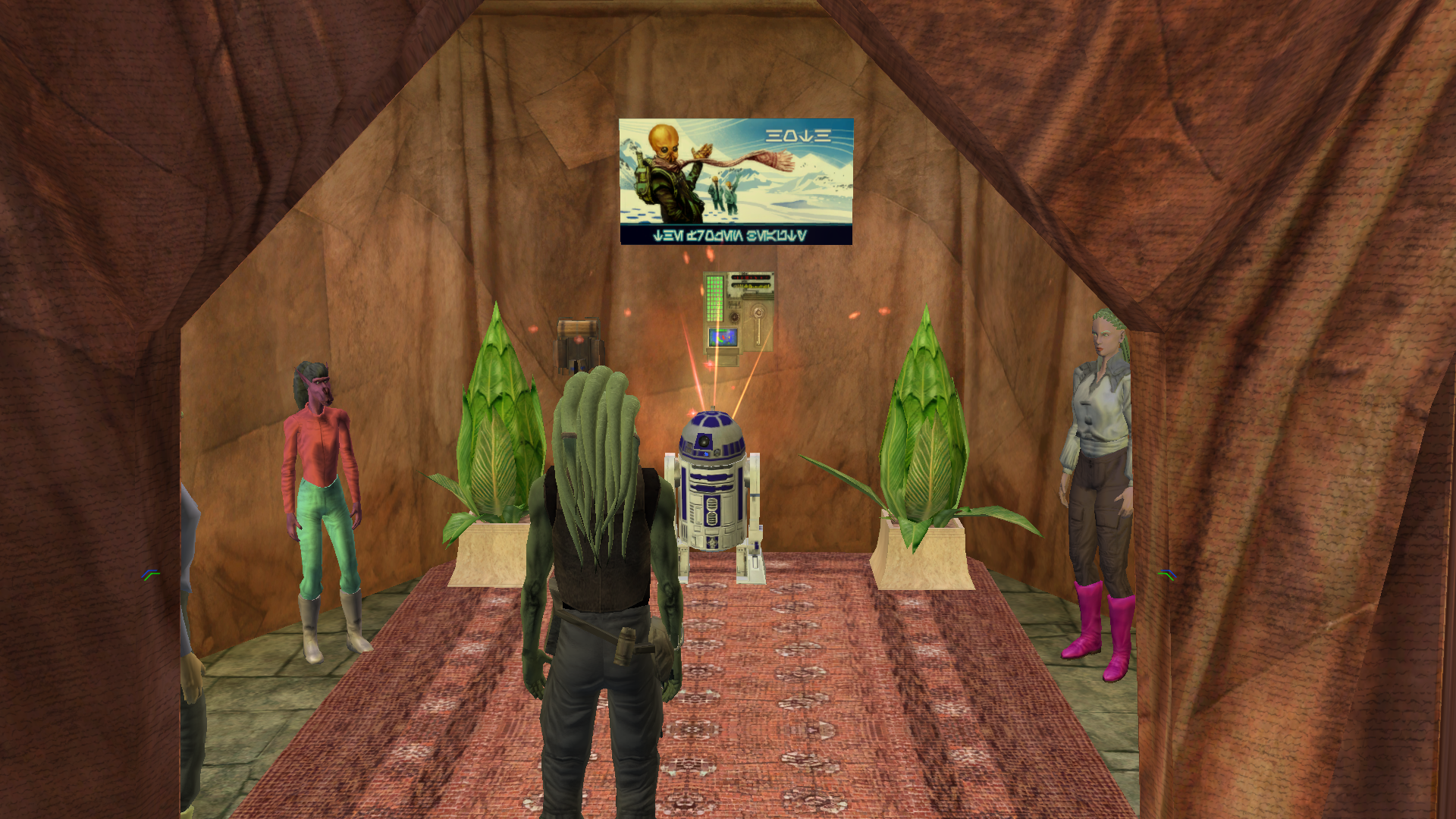
Projects like Scylla, Monsters & Memories, and various community-driven revival efforts prove that an appetite remains for virtual spaces that do not demand constant productivity. Players are actively seeking out games that afford them the luxury of wasting time—of sitting in a cantina listening to a player-run musician buff stats, or wandering through player-constructed towns without a quest marker guiding their every step.
Star Wars Galaxies remains dead in a corporate and commercial sense, its official servers long since turned to dust. Yet, through the sheer will of its community, it continues to teach a vital lesson to the developers of today: an online world does not need to be fast, efficient, or relentlessly rewarding to be captivating. Sometimes, the greatest achievement an MMO can unlock is simply giving its inhabitants a reason to linger together in the dark.