Executive Overview
The modern recording studio is no longer tethered to physical space, expensive mixing boards, or even the physical presence of the artists themselves. Across YouTube, TikTok, Instagram, and SoundCloud, a sonic revolution is quietly—and sometimes explosively—unfolding. Thanks to the democratization and unprecedented rise of generative artificial intelligence (AI) tools, listeners are routinely finding themselves unable to distinguish between genuine vocal performances and algorithmically synthesized clones.
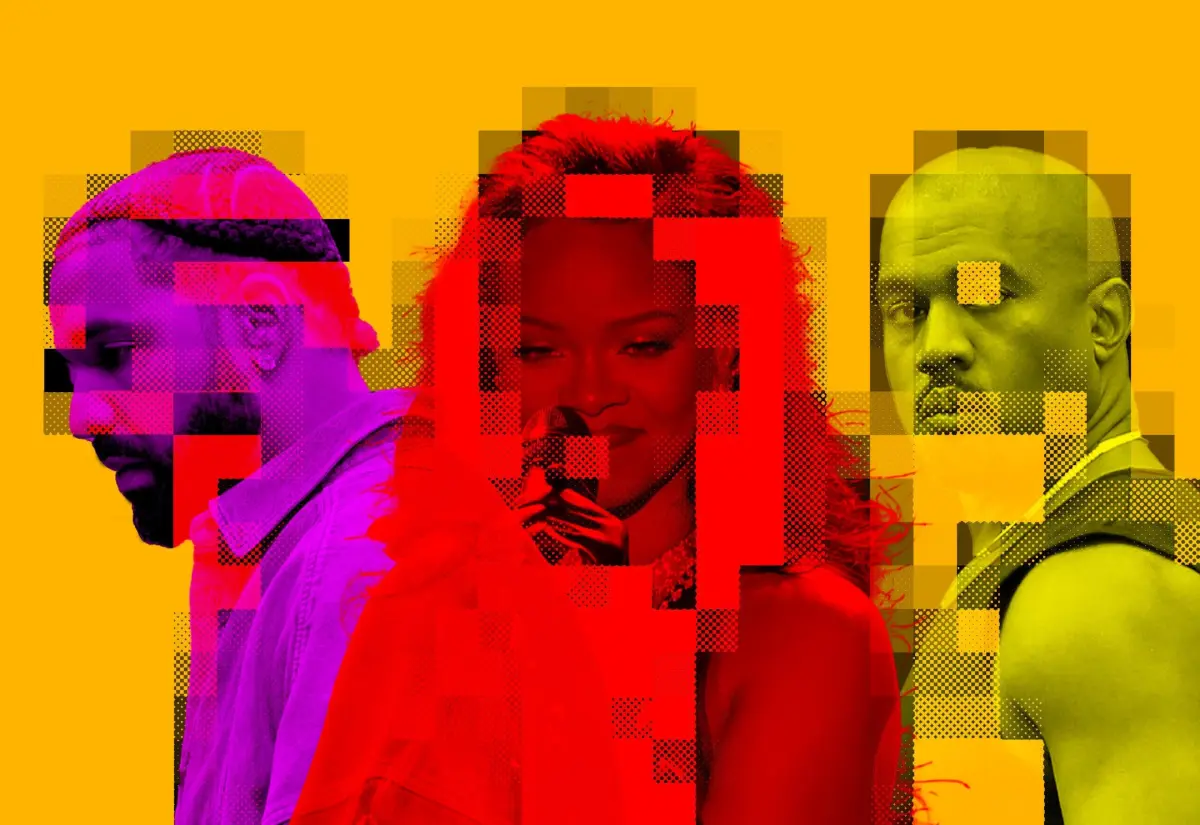
From superstar DJ David Guetta dropping an unreleased Eminem vocal clone during a live stadium set to viral fake collaborations like the Drake and The Weeknd track “Heart on My Sleeve,” the music world has been thrust into uncharted territory. While hobbyists and digital creators hail this movement as the ultimate evolution of fan fiction and digital artistry, major record labels, legal experts, and top-tier artists view it as an existential threat. Universal Music Group (UMG) has already mobilized, demanding that streaming giants block AI platforms from scraping copyrighted music catalogs.
As the boundaries between creator and creation dissolve, the music industry faces a profound identity crisis. The technology raises unprecedented legal, ethical, and economic questions regarding copyright infringement, the protection of personal likeness, and the future monetization of human creativity. This report investigates the technological surge driving AI-generated music, the community of digital creators building the tools, the industry’s aggressive pushback, and the murky legal vacuum that threatens to reshape popular culture forever.
Detailed Chronology: The Rise of Voice Cloning in Pop Culture
The normalization of generative AI in music did not happen overnight; it represents a rapid escalation of machine-learning capabilities that caught both the public and major labels flat-footed.
Early 2023: The Flashpoint Era
The collision between artificial intelligence and mainstream music accelerated dramatically in the early months of 2023. In February, electronic dance music icon David Guetta stunned a live concert crowd—and millions online—by playing a track built around an AI-generated Eminem vocal clone. Guetta admitted he used text-to-speech and voice-conversion models to generate the rap verses as a joke for his fans, but the stunt highlighted how easily proprietary vocal identities could be co-opted without permission.
Shortly thereafter, French hip-hop duo AllttA released “Savages,” a track featuring an AI-generated Jay-Z vocal performance. Unlike Guetta’s novelty track, AllttA integrated the synthesized voice with artistic intent, prompting critics like The New Yorker’s Kyle Chayka to observe that the familiar voice added an "ineffably compelling" layer to the music.
However, the tipping point arrived when a pseudonymous creator uploaded “Heart on My Sleeve,” a track purportedly featuring seamless, high-definition performances by Drake and The Weeknd. The song went viral across TikTok and Twitter, garnering millions of streams before industry watchdogs began questioning whether the track was an organic viral phenomenon or a calculated marketing stunt orchestrated by an AI startup.
Spring 2023: The Backlash and the Floodgates
As the technology became more accessible, the internet flooded with "faux covers"—amateur tracks featuring famous artists performing songs completely outside their genres. Drake’s patience finally snapped in mid-April when an AI-generated track surfaced featuring his voice covering Ice Spice’s breakout hit "Munch (Feelin’ U)." Taking to Instagram, Drake declared it “the final straw.”
Despite the growing hostility from top-tier talent, other artists found themselves swept up in the wave without immediate comment. Rihanna, for instance, became the unwitting vocalist for a suite of AI-generated covers featuring songs by Beyoncé, Katy Perry, and Maroon 5. Concurrently, independent creators began deploying tools like So-Vits-SVC—an open-source singing voice conversion framework—to craft increasingly sophisticated covers. From Kanye West (“Ye”) singing the Plain White T’s acoustic ballad “Hey There Delilah” to multi-artist anime theme song mashups, the barrier to entry for creating convincing celebrity vocal tracks plummeted to zero.
Supporting Context & Metrics: The Mechanics and Culture of AI Cover Art
To understand why this wave of synthetic music cannot easily be turned back, one must examine the communities building and driving the technology. The phenomenon is largely fueled by passionate subcultures operating on platforms like Discord, Reddit, and TikTok.
Inside the Creator Communities
Take, for example, a 22-year-old Oklahoma resident who goes by the online moniker YeezyBeaver. Operating a YouTube channel dedicated to Kanye West covering various pop and indie songs, YeezyBeaver stumbled into AI music creation through a dedicated Ye Discord fan server. The server shared a pre-trained voice model of the rapper alongside step-by-step instructions on how to integrate it into generative audio pipelines.
Utilizing the So-Vits-SVC software—whose dedicated TikTok hashtag has amassed over 2 million views—YeezyBeaver began experimenting. His first successful test placed Kanye’s distinctive cadence over Drake’s track “Jungle.” Encouraged by modest viral traction, he expanded his repertoire, culminating in the surprisingly emotive cover of “Hey There Delilah.”
Similarly, an American college student known online as "pieawsome" operates within the internet’s underground "Kanye unreleased community." Dedicated to archiving and studying unfinished Ye material, pieawsome realized the community sat on a goldmine of isolated vocal tracks (acapellas).
"I realized we had enough Kanye material where we could probably make an AI model out of it to finish some of the songs," pieawsome explained.
By chopping up unreleased audio fragments and feeding them into So-Vits-SVC, pieawsome trained a custom voice model over several days. He shared the model on Discord, where it quickly spread through digital networks. Within weeks, the model was used to create a cover of Ice Spice’s "Munch" performed by an AI Kanye—a track that notably received an appreciative "like" on Instagram from superstar Travis Scott.
The Comedy and Controversy Balance
For younger creators like Jered Chavez, a 19-year-old student at the University of South Florida, AI music is treated as a medium for internet absurdism. Chavez went viral on Instagram with a video featuring Drake, Kanye West, and Kendrick Lamar singing the closing theme song to the anime series Rascal Does Not Dream of Bunny Girl Senpai.
"I thought it was a cool concept," Chavez said. "What makes my page stand out is I try to put a little twist on it and add a comedy aspect."
However, Chavez readily acknowledges the ethical tightrope he and other creators are walking. By utilizing software to replicate an artist’s distinct vocal timbre, creators are effectively "putting words in people’s mouths" without consent. This ethical dilemma grows infinitely darker when applied to deceased icons. Projects like BohemianRhapsod.ai—which allows users to orchestrate a virtual choir of 16 AI-generated Freddie Mercury vocal tracks—operate in a cultural gray area where departed artists cannot grant or withhold approval.
Official Statements and Industry Reactions
As the novelty of AI covers gives way to corporate alarm, major record labels are shifting from passive observation to aggressive containment strategies.
Universal Music Group Leads the Charge
Universal Music Group (UMG), the powerhouse record label representing industry titans like Drake, Rihanna, Taylor Swift, and The Weeknd, has taken a proactive stance against unauthorized AI training. According to reports from the Financial Times, UMG formally reached out to major streaming platforms—including Spotify and Apple Music—urging them to block AI developers from scraping copyrighted catalogs to train generative audio models.
This corporate panic was catalyzed, in part, by financial analysts warning of systemic disruption. A prominent report from a BNP Paribas Exane analyst characterized generative AI music as an "existential threat" to the traditional business models of major music conglomerates, warning that automated content could flood streaming platforms, dilute royalty pools, and bypass traditional licensing structures entirely.
The Legal Vacuum: Modding vs. Identity Theft
Despite the industry’s aggressive posture, the legal framework governing AI-generated voices remains largely undefined.
Hobbyist creators often struggle to categorize their work within existing intellectual property paradigms. Pieawsome compares his projects to video game "modding" or literary fanfiction:
"It’s our version of that. That may be a good thing. It may be a bad thing. I don’t know. But it’s kind of an inevitable thing that was going to happen."
Legal and industry professionals hold a far more severe view. Jonathan Bailey, former chief technology officer of music technology firm Soundwide, argues that the technology crosses ethical and legal boundaries.
"I think you can make a persuasive argument that using AI to reanimate Jay-Z’s voice to have him rap or sing something he never created is kind of a form of identity theft," Bailey noted.
However, establishing legal precedent will take years. Donald Passman—a veteran entertainment attorney at Gang, Tyre, Ramer, Brown & Passman, Inc., who has represented legends like Adele and Taylor Swift—declined to offer a definitive legal assessment for this story, citing the uncharted nature of the technology and the risk of taking positions that could conflict with future litigation.
"It’s way too new," Passman stated simply.
In the absence of clear statutory laws, record labels are relying on brute-force copyright enforcement. Discord servers dedicated to AI music generation report a steady stream of copyright takedown notices targeting YouTube channels and SoundCloud accounts hosting AI-generated covers.
"I guess that’s one way of tackling it," Chavez reflected regarding the copyright strikes. "But honestly, now this technology is out there, I don’t think people are ever going to stop using it. The responsibility lies in the judgment of the people that are making [AI-generated music]. I try to use my best judgment. This is kind of new territory for everyone."
Future Outlook: Navigating the Synthetic Horizon
The genie is permanently out of the bottle. Open-source models like So-Vits-SVC are hosted on public repositories like GitHub, meaning millions of people have local access to vocal synthesis technology that no corporation can entirely scrub from the internet. As processing power increases and machine learning algorithms become more efficient, the fidelity of AI-generated music will only improve.
The industry’s path forward likely splits into three distinct trajectories:
- Litigation and Legislation: Major labels will aggressively test existing right-of-publicity laws, copyright statutes, and trademark regulations in court. Landmark lawsuits against AI developers and prominent creators will establish whether a human voice’s unique timbre and cadence can be legally protected as intellectual property.
- Authorized Licensing Partnerships: Rather than fighting a losing war of attrition, forward-thinking labels will likely build authorized frameworks. Artists may soon license their digital likenesses and vocal models to tech platforms, earning royalties every time a fan generates an official AI-assisted track or virtual collaboration.
- The Underground Creator Economy: Regardless of corporate guardrails, underground communities will continue pushing the envelope. Just as hip-hop grew out of unauthorized sampling in the Bronx during the 1970s, the AI cover movement represents a grassroots, albeit legally perilous, folk art movement for the digital age.
Ultimately, the rise of AI-generated music forces a philosophical reexamination of what art truly is. When a machine can perfectly emulate the soul, pain, and cadence of a human artist, the value proposition shifts away from the physical execution of sound and toward the legal, emotional, and cultural ownership of human identity. Until the courts catch up to the code, the global music industry will continue to dance with the ghosts in the machine.