Executive Overview
As artificial intelligence (AI) races from theoretical computer science into the foundational infrastructure of the global economy, the technology is increasingly viewed through a dual prism. On one hand, it is heralded as an unprecedented economic powerhouse capable of driving trillions of dollars in productivity, curing complex diseases, and accelerating scientific discovery at a scale never before witnessed. On the other hand, it carries the chilling specter of societal disruption, systemic economic displacement, and existential risk—frequently dramatized as a potential bringer of the digital apocalypse.
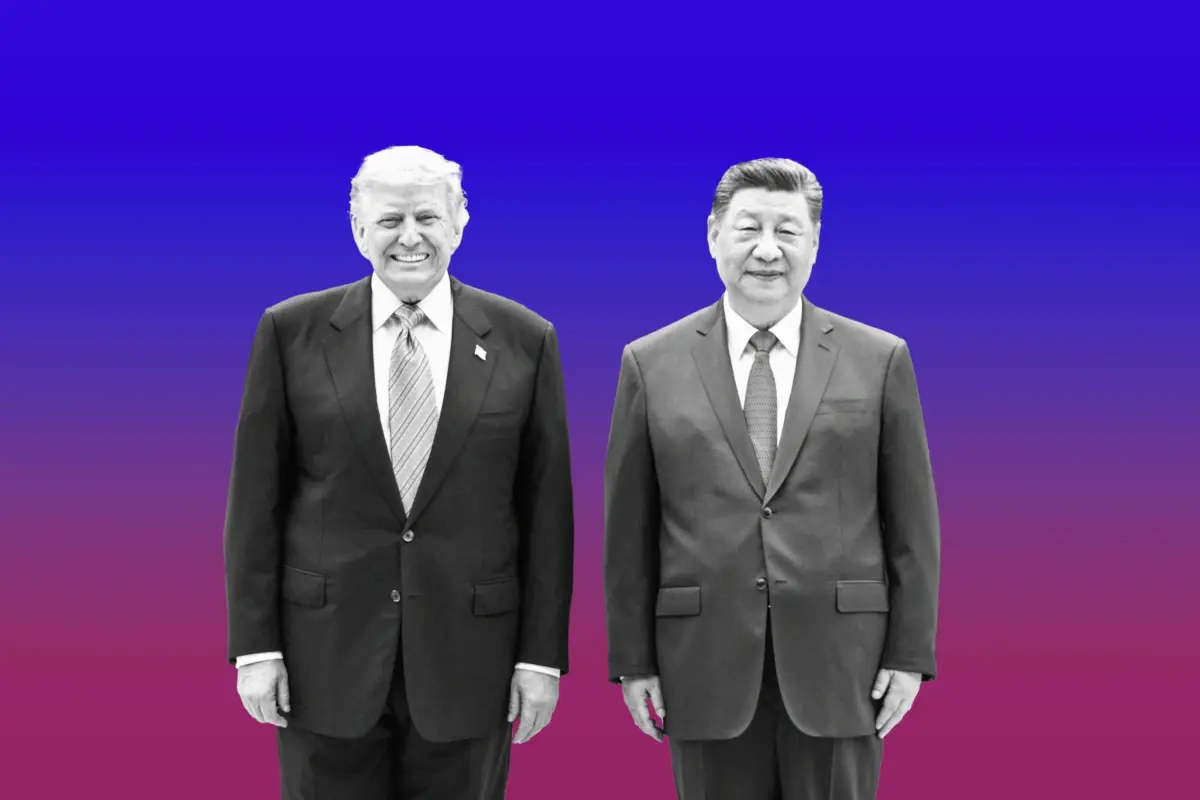
Nowhere is this dichotomy more pronounced than in the geopolitical friction between the United States and the People’s Republic of China. As the world’s two dominant economic and military superpowers, Washington and Beijing find themselves locked in a high-stakes technological competition. Yet, beneath the rhetoric of a zero-sum Cold War 2.0 lies a complex web of ideological divergences, parallel regulatory frameworks, and subtle strategic convergences.
Can these two rival superpowers cooperate enough to secure the immense economic benefits of artificial intelligence while jointly mitigating its cataclysmic risks? Or will mutual distrust, national security paranoia, and the race for military supremacy preclude any meaningful collaboration?
In a recent episode of the technology podcast What Next: TBD, host features were dedicated to unpacking these profound questions alongside Scott Singer, a fellow and co-director of the China AI Initiative at the Carnegie Endowment for International Peace. This report expands upon those critical discussions, providing a deep dive into how the United States and China view artificial intelligence, where their philosophies clash, where they secretly align, and what the future holds for a world shaped by dual-engine technological hegemony.
Detailed Chronology: The Evolution of the U.S.-China AI Rivalry
To understand the current state of U.S.-China relations regarding artificial intelligence, one must trace the rapid historical trajectory that transformed AI from an academic subfield into the premier arena of geopolitical competition.
Phase One: The Academic Partnership and Emergence (2010–2016)
For much of the early 2010s, artificial intelligence development was characterized by open-source collaboration and deep academic integration between the United States and China. Elite American universities—such as Stanford, MIT, and Carnegie Mellon—trained thousands of brilliant Chinese computer science graduate students. Many of these researchers returned to China or founded labs in Silicon Valley with deep cross-border ties.
During this era, Chinese tech giants like Baidu, Alibaba, and Tencent (collectively known as "BAT") began heavily investing in machine learning, mirroring U.S. advancements in computer vision and natural language processing. Washington viewed China’s rise in tech primarily as a commercial competitor rather than an acute national security threat.
Phase Two: The Strategic Awakening and the "Sputnik Moment" (2017–2019)
The geopolitical landscape shifted dramatically in 2017 when China’s State Council released its Next Generation Artificial Intelligence Development Plan. This sweeping national strategy explicitly called for China to become the world’s primary AI innovation center by 2030, integrating AI deeply into national defense, economic planning, and social governance.
For Washington, this served as a technological "Sputnik moment." U.S. defense officials and lawmakers realized that advanced AI was not merely a commercial consumer product (like a smartphone or social media algorithm), but a dual-use technology with immense military applications—ranging from autonomous drone swarms to hypersonic missile guidance and automated cyber warfare.
Phase Three: Decoupling, Export Controls, and the Chip War (2020–2023)
As geopolitical tensions escalated across trade and territorial fronts, artificial intelligence became the focal point of a deliberate policy of economic and technological decoupling. The Trump administration, followed aggressively by the Biden administration, implemented sweeping restrictions on the export of advanced semiconductors—specifically graphics processing units (GPUs) manufactured by companies like Nvidia—to Chinese entities.
In October 2022, the U.S. Department of Commerce unveiled landmark export controls designed to choke off China’s access to cutting-edge semiconductor chips, the specialized manufacturing equipment required to make them, and U.S. talent assisting Chinese chipmakers. Beijing responded with its own domestic push for technological self-reliance ("indigenous innovation"), pouring hundreds of billions of state-backed yuan into developing domestic semiconductors, alternative software architectures, and homegrown large language models (LLMs).
Phase Four: The Generative AI Boom and the Race for Global Standards (2023–Present)
The public launch of OpenAI’s ChatGPT in late 2022 catalyzed a new era. Generative AI elevated the stakes from narrow machine learning applications to foundational models capable of reasoning, creating, and disrupting labor markets on a global scale.
Today, the U.S. and China are engaged in a parallel race. While American companies lead in foundational model capabilities, algorithmic sophistication, and venture capital funding, China boasts vast troves of training data, unmatched manufacturing supply chains, aggressive state-directed implementation, and a rapidly expanding footprint in the Global South through its "Digital Silk Road" initiative.
Supporting Context & Metrics: Comparing the Two AI Titans
A rigorous evaluation of the U.S. and China in the artificial intelligence domain requires examining the structural differences and surprising similarities in how both nations approach the technology.
Ideological and Cultural Philosophies: Control vs. Disruption
The philosophical underpinnings of AI development in Washington and Beijing reflect vastly different political systems:
- The United States Model: Driven primarily by private-sector dynamism, Silicon Valley venture capital, and market-driven incentives. While American tech companies fiercely compete, they also operate within a framework of relative corporate autonomy—though growing pressure from Congress, the White House, and civil society is pushing toward domestic safety guardrails and voluntary commitments. The U.S. narrative emphasizes innovation, free enterprise, and mitigating existential or bias-related risks.
- The Chinese Model: Characterized by a top-down, state-directed approach where technological development is tightly integrated with national security, Communist Party oversight, and social stability. Beijing has enacted some of the world’s first comprehensive regulations specifically governing generative AI and algorithmic recommendations, requiring algorithms to "adhere to core socialist values" and not subvert state power. However, unlike Western regulatory models focused strictly on corporate liability, China’s regulations are explicitly designed to ensure political alignment while simultaneously encouraging commercial competitiveness.
Key Metrics in the AI Race
| Metric / Dimension | United States | China |
|---|---|---|
| Foundational Models | Leads globally in frontier models (e.g., OpenAI’s GPT-4, Google’s Gemini, Anthropic’s Claude). | Rapidly catching up with robust open-source and proprietary models (e.g., Baidu’s Ernie, Alibaba’s Tongyi Qianwen, DeepSeek). |
| Compute & Hardware | Dominates the design of advanced accelerators (Nvidia, AMD, Google TPUs) and electronic design automation (EDA) software. | Facing severe bottlenecks due to U.S. export controls, but heavily investing in domestic alternatives (Huawei Ascend chips). |
| Data Ecosystem | High-quality, diverse, English-centric internet data; strict privacy regulations (varying by state, e.g., CCPA). | Massive volume of structured and unstructured industrial and consumer data; fewer legal friction points regarding state access to data. |
| Talent & Research | Attracts top-tier global AI researchers; strong university-industry ecosystems. | Produces the vast majority of the world’s STEM graduates and AI research papers, though facing brain-drain challenges due to geopolitical friction. |
| Commercial Adoption | Deep integration across enterprise software, finance, healthcare, and consumer applications. | Aggressive deployment in smart cities, industrial automation, manufacturing, government surveillance, and e-commerce. |
Official Statements and Expert Perspectives
As the global community grapples with the trajectory of artificial intelligence, policy experts and international diplomats have increasingly voiced concern over the lack of guardrails preventing an accidental escalation between the U.S. and China.
In her discussion on What Next: TBD, Scott Singer, fellow and co-director of the China AI Initiative at the Carnegie Endowment for International Peace, shed light on the paradoxical nature of this bilateral relationship:
"Artificial intelligence is pitched as a potential economic powerhouse—and also a potential bringer of the apocalypse. Can two economic and military rivals cooperate enough to fulfill the former (and former only)? That is the defining question of our era. The challenge is that while both capitals recognize the apocalyptic risks—such as autonomous weapon systems operating without human judgment or critical infrastructure collapse—their deep-seated strategic paranoia often prevents them from trusting each other enough to build shared safety protocols."
Diplomatic channels have recently attempted to bridge this gap. During high-level bilateral summits, including meetings between U.S. President Joe Biden and Chinese President Xi Jinping, both nations agreed to open formal intergovernmental dialogues on artificial intelligence safety and risk management.
However, American security officials remain deeply skeptical. Senior intelligence figures have repeatedly warned that Chinese state-sponsored actors utilize advanced AI tools to conduct sophisticated cyber espionage, generate hyper-targeted disinformation campaigns, and enhance military capabilities in the South China Sea and across the Taiwan Strait. Conversely, Beijing views U.S. export controls not as protective safety measures, but as malicious economic containment strategies designed to keep China permanently subjugated in the technological hierarchy.
Future Outlook: Coexistence, Catastrophe, or Convergence?
As we look toward the horizon of 2030 and beyond, the trajectory of U.S.-China relations in artificial intelligence will likely dictate the stability of the entire global order. Several distinct scenarios emerge from current trends:
1. The Bipolar Tech Splinter (The "Splinternet" Realized)
In this scenario, the world divides into two distinct technological spheres of influence. Countries in the Global South and Europe will be forced to choose—or carefully balance—between American-backed cloud infrastructure, semiconductor supply chains, and AI safety frameworks, versus China’s affordable, state-subsidized digital ecosystem. Interoperability between U.S. and Chinese models will wither, leading to duplicated research efforts and heightened risks of technological misunderstanding.
2. Guardrails Without Trust (Managed Competition)
A more pragmatic middle ground sees Washington and Beijing establishing formal arms-control agreements specifically concerning military applications of AI—such as banning autonomous nuclear launch decisions or establishing crisis-communication hotlines for AI-driven cyber attacks. This would mirror Cold War-era nuclear non-proliferation treaties, allowing commercial competition to continue while erecting vital firewalls against accidental apocalyptic escalation.
3. Asymmetric Convergence and Leapfrogging
As U.S. export controls continue to restrict China’s access to high-end silicon, Chinese engineers may pioneer radically different, highly efficient algorithmic architectures (such as ultra-low-power neuromorphic computing or advanced model quantization) that require significantly less computing power. If successful, China could bypass traditional hardware constraints, democratizing advanced AI globally at a lower cost than its American competitors, fundamentally reshaping the global economic balance of power.
Conclusion
The narrative of artificial intelligence is no longer solely a story written in the server rooms of Silicon Valley or the industrial labs of Shenzhen. It is a grand geopolitical drama where the future of human prosperity and human survival hang in the balance. Whether the United States and China can transcend their mutual animosities to establish a cooperative framework for AI governance will determine whether the technology fulfills its promise as an unprecedented economic engine—or fulfills its darker warnings as an unmanageable apocalypse.