Executive Overview
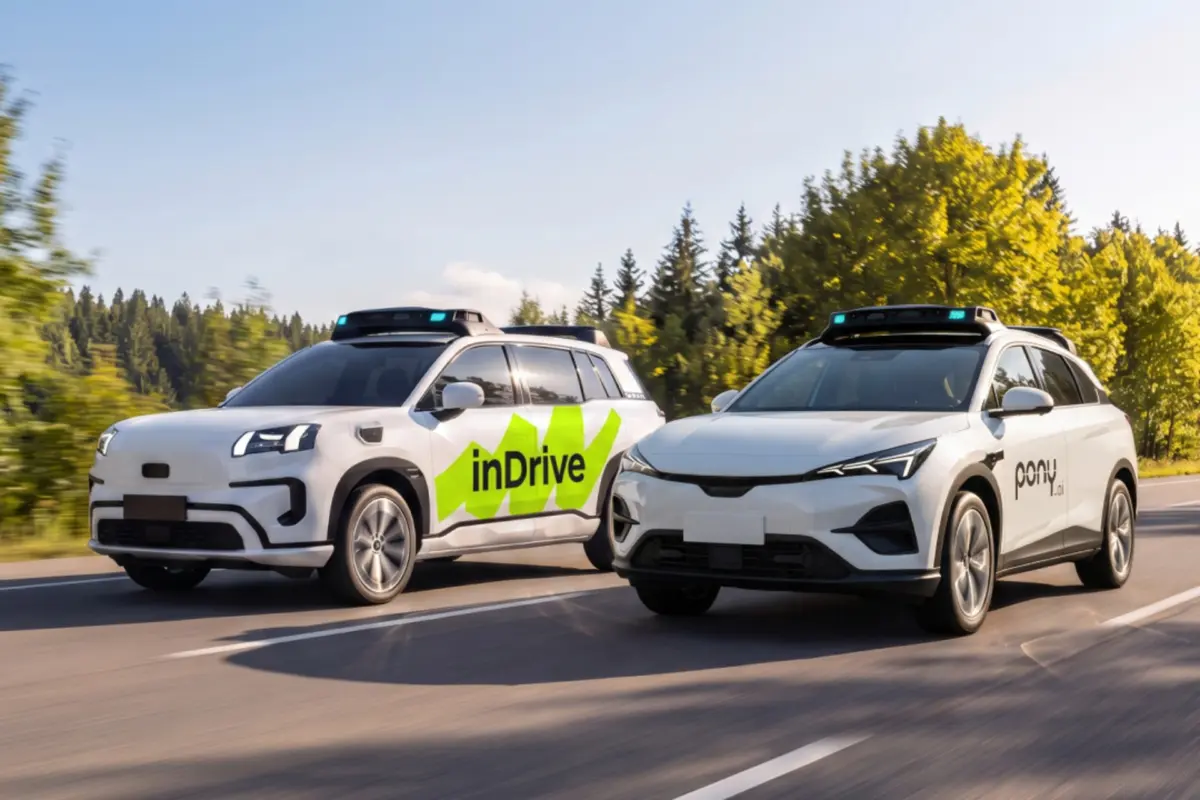
The international landscape for autonomous vehicles (AVs) is undergoing a pivotal geographic shift. Long dominated by intense commercial rollouts across metropolitan hubs in North America and mainland China, driverless technology is now expanding into emerging economies and extreme climate zones. In a landmark strategic move, international ride-hailing mobility platform inDrive has entered into a tripartite Memorandum of Understanding (MoU) with Chinese autonomous driving pioneer Pony.ai and tech giant Nvidia. The collaboration aims to deploy and test Level 4 robotaxi fleets in Astana, the capital of Kazakhstan, beginning in the first half of 2027.
This alliance highlights a significant shift in the global deployment strategy for self-driving technology. Rather than attempting to own and operate expensive fleets directly, inDrive is executing a "capital-light" integration strategy. By embedding Pony.ai’s seventh-generation (Gen-7) autonomous vehicles into its consumer application while utilizing Nvidia’s end-to-end hardware architecture and artificial intelligence compute engine, inDrive seeks to democratize driverless transit outside traditional high-cost markets.
       +-------------------------------------------------------+
       |             TRIPARTITE ROBOTAXI ALLIANCE             |
       +-------------------------------------------------------+
                                   |
         +-------------------------+-------------------------+
         |                         |                         |
         v                         v                         v
+------------------+     +------------------+     +------------------+
|     inDrive      |     |     Pony.ai      |     |      Nvidia      |
| Orchestration &  |     |  Gen-7 Robotaxi  |     | DRIVE Hyperion,  |
| Marketplace Platform |   |  Hardware & Driver |   | Halos & Compute  |
+------------------+     +------------------+     +------------------+
         |                         |                         |
         +-------------------------+-------------------------+
                                   |
                                   v
       +-------------------------------------------------------+
       |   ASTANA PILOT (1H 2027): Safety Operator -> L4 Driverless|
       +-------------------------------------------------------+
The initiative coincides with a national legislative push by the government of Kazakhstan to establish regulatory frameworks for autonomous road transit. Furthermore, testing in Astana offers an ideal proving ground for extreme weather navigation. Known for harsh, sub-zero winter conditions, ice-crusted infrastructure, and severe blizzards, Astana presents an ideal operational stress-test for autonomous perception algorithms—offering data that could accelerate self-driving deployments in cold-climate regions worldwide.
Detailed Chronology
The agreement between inDrive, Pony.ai, and Nvidia represents the culmination of key corporate decisions, legislative shifts, and technology milestones over recent years.
[Late 2025 – Early 2026] ──> inDrive signs MoU with Saudi Arabia's AI Driver & WeRide (Riyadh Pilot)
[June 2026]            ──> Pony.ai scales operational global fleet to 1,975 robotaxis
[September 2026]       ──> Government of Kazakhstan outlines 2027 driverless transit roadmap
[October 2026]         ──> Uber & Pony.ai announce London robotaxi testing expansion
[Present Day]          ──> Nvidia CEO Jensen Huang visits Kazakhstan; Tripartite MoU signed
[Target: 1H 2027]      ──> Safety-operator robotaxi testing launches in Astana
Precursor Strategic Initiatives (Late 2025 – Mid-2026)
inDrive, historically known for its peer-to-peer fare negotiation model, began laying the groundwork for autonomous mobility integration in late 2025. In December of that year, the company forged an agreement with Saudi Arabia’s AI Driver to explore the deployment of autonomous vehicles powered by Chinese AV firm WeRide in Riyadh. Targeted for a initial pilot in the first half of 2026, this move signaled inDrive’s broader strategy to expand into AV operations across the Middle East and Central Asia without taking on the heavy balance-sheet costs of vehicle manufacturing.
Simultaneously, Pony.ai rapidly scaled its international footprint. By June 2026, the company operated a global commercial fleet of 1,975 autonomous vehicles, primarily across major Chinese tier-one cities. In an aggressive move to diversify beyond its domestic market, Pony.ai set a corporate target to expand its fleet to more than 3,500 robotaxis operating across 20 global cities by the end of 2026.
Legislative Acceleration in Central Asia (September 2026)
Recognizing the economic potential of autonomous logistics and public transit, the government of Kazakhstan enacted sweeping regulatory updates in September 2026. The Ministry of Transport unveiled plans to launch commercial autonomous taxi services in 2027. The government established dedicated regulatory sandboxes and public testing rules across three major municipalities, with the national capital, Astana, designated as the primary testing hub. This supportive policy environment removed regulatory hurdles that often stall autonomous deployments in Western markets.
Cross-Industry Alignment and Announcement (Late 2026)
As legacy ride-hailing networks accelerated their own driverless initiatives—evidenced by Uber’s October 2026 announcement to pilot Pony.ai robotaxis in London alongside its investments in British AV startup Wayve—inDrive moved swiftly to solidify its position in Central Asia.
The strategy culminated during Nvidia CEO Jensen Huang’s official executive visit to Kazakhstan. During this visit, inDrive, Pony.ai, and Nvidia formally executed their tripartite MoU, setting a target to begin safety-operator-supervised public trials in Astana during the first half of 2027, with full driverless operation set as the ultimate milestone.
Supporting Context & Metrics
Technical Deep Dive: Compute, Perception, and Safety Architecture
Deploying autonomous vehicles in demanding operational environments requires tight integration between vehicle hardware, sensor suites, compute chips, and simulation platforms.
+-------------------------------------------------------------------+
|                   TECHNICAL ARCHITECTURE STACK                    |
+-------------------------------------------------------------------+
|  Perception Layer  | LiDAR, Radar, High-Res Optical Cameras      |
+--------------------+----------------------------------------------+
|  Compute Platform  | Nvidia DRIVE Hyperion Architecture           |
+--------------------+----------------------------------------------+
|  Safety System     | Nvidia Halos System-on-Chip (SoC) Redundancy |
+--------------------+----------------------------------------------+
|  AI & Simulation   | Nvidia Alpamayo Model & Synthetic Data Pipeline|
+--------------------+----------------------------------------------+
|  Vehicle Chassis   | Pony.ai Gen-7 L4 Autonomous Vehicle Platform |
+-------------------------------------------------------------------+- Pony.ai Gen-7 Platform: Represents the company’s latest iteration of Level 4 autonomous vehicle technology. It features a fully redundant automotive-grade sensor stack designed to handle dense urban congestion, low-visibility conditions, and sudden environmental obstacles.
- Nvidia DRIVE Hyperion Platform: Functions as the nervous system for the vehicle. Hyperion provides a standardized, scalable hardware ecosystem that integrates multi-modal sensor arrays (including high-resolution cameras, millimeter-wave radar, and LiDAR) into a central compute module. By delivering a pre-validated system, Hyperion significantly reduces initial research and engineering overhead.
- Nvidia Halos & Alpamayo Ecosystem: The software architecture incorporates the Halos safety system, which introduces multi-layered hardware and processing redundancy to ensure safe operations even in the event of component failure. Furthermore, Nvidia’s Alpamayo AI framework enables high-fidelity synthetic data generation. This tool is crucial for creating rare edge-case driving scenarios in virtual simulation environments, allowing self-driving software to safely learn how to handle severe weather events before touching real asphalt.
The Astana Proving Ground: Testing Sub-Zero Autonomous Boundaries
While warm-weather cities like Phoenix, San Francisco, and Guangzhou have served as early launchpads for robotaxis, extreme weather remains one of the final hurdles for universal Level 4 autonomy.
Astana presents a unique set of harsh weather challenges:
- Sub-Zero Extremes: Winter temperatures routinely plunge below -30°C (-22°F), testing battery thermal management and low-temperature hardware endurance.
- Sensor Occlusion: Heavy snow, blowing ice, and airborne road salt can obstruct optical cameras and LiDAR lenses, requiring specialized active heating and cleaning systems.
- Traction and Road Markings: Ice-covered asphalt eliminates standard visual lane markings and significantly alters tire traction, requiring perception algorithms to rely more heavily on radar, localized high-definition mapping, and dynamic surface friction estimation.
Navigating these winter conditions will allow the alliance to train and refine AI models for sub-zero operations, producing valuable data that can be applied to other cold-climate regions across Europe, North America, and Northern Asia.
+-------------------------------------------------------------------+
|               METRIC & FOOTPRINT COMPARISON MATRIX                |
+---------------------------------------+---------------------------+
| Metric Parameter                      | Value / Scope             |
+---------------------------------------+---------------------------+
| inDrive Global Reach                  | 1,200+ Cities | 47 Nations |
| Target Pilot Launch Date              | 1H 2027                   |
| Primary Testing Location              | Astana, Kazakhstan        |
| Pony.ai Global Fleet Target (End 2026)| > 3,500 Robotaxis         |
| Pony.ai Target Active Cities (2026)   | > 20 Global Hubs          |
| Astana Population Base                | ~ 1.7 Million Residents   |
+---------------------------------------+---------------------------+
Capital-Light Economics in Emerging Mobility Markets
In developing economies, traditional ride-hailing fares are typically lower than those in North America or Western Europe. Consequently, the high costs of first-generation autonomous hardware—often exceeding $100,000 per vehicle—have historically made robotaxi deployment financially unviable in emerging markets.
The inDrive-Pony.ai-Nvidia partnership addresses this unit-economic challenge through a capital-light business model:
- Platform Disaggregation: inDrive avoids the capital-intensive process of manufacturing vehicles or developing proprietary self-driving hardware, focusing instead on consumer demand aggregation, dispatch algorithms, and local operational maintenance.
- Standardized Hardware Savings: Utilizing Nvidia’s off-the-shelf Hyperion compute platform bypasses the costly, specialized chip design cycles that traditionally limit robotaxi profitability.
- Fleet Integration Strategy: Partnering with Pony.ai allows inDrive to deploy existing, mass-produced Gen-7 AV platforms into its ecosystem, lowering the barrier to entry and accelerating time-to-market.
Official Statements
Executives from all three companies emphasized the strategic, technological, and financial rationale driving the Kazakh initiative.
Yuri Misnik, Chief Technology Officer at inDrive, highlighted the strategic core of the platform’s business model:
"Our approach is capital-light by design. We work with a range of partners in different markets, combining their expertise with ours to deliver a better customer experience. One of the main requisites for successful launch in our view is a favorable and collaborative regulatory environment to facilitate safe and sustainable testing on the roads."
Arsen Tomsky, Founder and Chief Executive Officer of inDrive, pointed to the technological advantages of launching in Astana’s harsh winter climate:
"Launching here will provide an important opportunity to evaluate autonomous driving technology in challenging winter conditions. Success in Astana could offer valuable insights for expanding autonomous mobility to other locations facing similar challenges."
Ali Kani, Vice President of Automotive at Nvidia, addressed the economic benefits of off-the-shelf platform architectures in developing markets:
"Those savings are particularly relevant in emerging markets, where ride-hailing is already relatively affordable and autonomous services need to compete on cost."
Future Outlook
The partnership between inDrive, Pony.ai, and Nvidia highlights how quickly the global autonomous ecosystem is evolving. Once concentrated primarily in coastal U.S. markets and top-tier Chinese cities, driverless tech is rapidly expanding into non-traditional markets across Central Asia, the Middle East, and Latin America.
           +-------------------------------------------------+
           |          FUTURE SCALING & EXPANSION PATH        |
           +-------------------------------------------------+
                                    |
  +---------------------------------+---------------------------------+
  |                                 |                                 |
  v                                 v                                 v
+------------------+     +------------------+     +------------------+
| Phase 1: Astana  |     | Phase 2: Regional|     | Phase 3: Platform|
| Sub-Zero Testing | --> | Expansion        | --> | Vertical Synergy |
| Safety Operators |     | Multi-City Hubs  |     | Freight, Delivery|
| (1H 2027)        |     | (2027 - 2028)    |     | & Financial Services|
+------------------+     +------------------+     +------------------+
Operational Trajectory & Scaling Pathways
If the 1H 2027 pilot in Astana successfully navigates its initial testing phase, the coalition is well-positioned to scale autonomous operations across Kazakhstan’s secondary cities, including Almaty and Shymkent. Success in Central Asia could also serve as a commercial blueprint for inDrive’s other target markets. With active operations spanning more than 1,200 cities across 47 countries, inDrive possesses an ideal distribution network to bring Level 4 autonomous transit to markets that traditional AV companies have largely overlooked.
Super-App Synergy and Market Impact
Furthermore, inDrive’s ongoing evolution from a core ride-hailing app into a broader multi-service ecosystem—encompassing intercity shipping, localized freight logistics, delivery services, and consumer financial tools—creates clear operational synergies with autonomous driving systems. Autonomous technology perfected on passenger vehicle fleets can eventually be adapted to power automated freight transport and mid-mile delivery logistics.
As the race for commercial autonomy enters its next phase, the Astana initiative demonstrates that the future of driverless mobility will not be defined solely by tech hubs like Silicon Valley or Shenzhen. Instead, the broader adoption of AV tech will depend heavily on versatile partnerships, flexible regulatory environments, capital-efficient deployment models, and software platforms capable of operating in any environment—from clear, sunny roads to frozen winter streets.