Executive Overview
For the better part of two years, the booming prediction market industry operated as a central pillar of the Trump 2.0 financial-political ecosystem. Platforms like Polymarket and Kalshi enjoyed explosive growth, an accommodating federal regulatory apparatus under the Commodity Futures Trading Commission (CFTC), and cozy, high-level financial ties to the presidential family—most notably through Donald Trump Jr., who simultaneously held a massive multi-million-dollar equity stake in Polymarket while collecting advisory payouts from Kalshi.
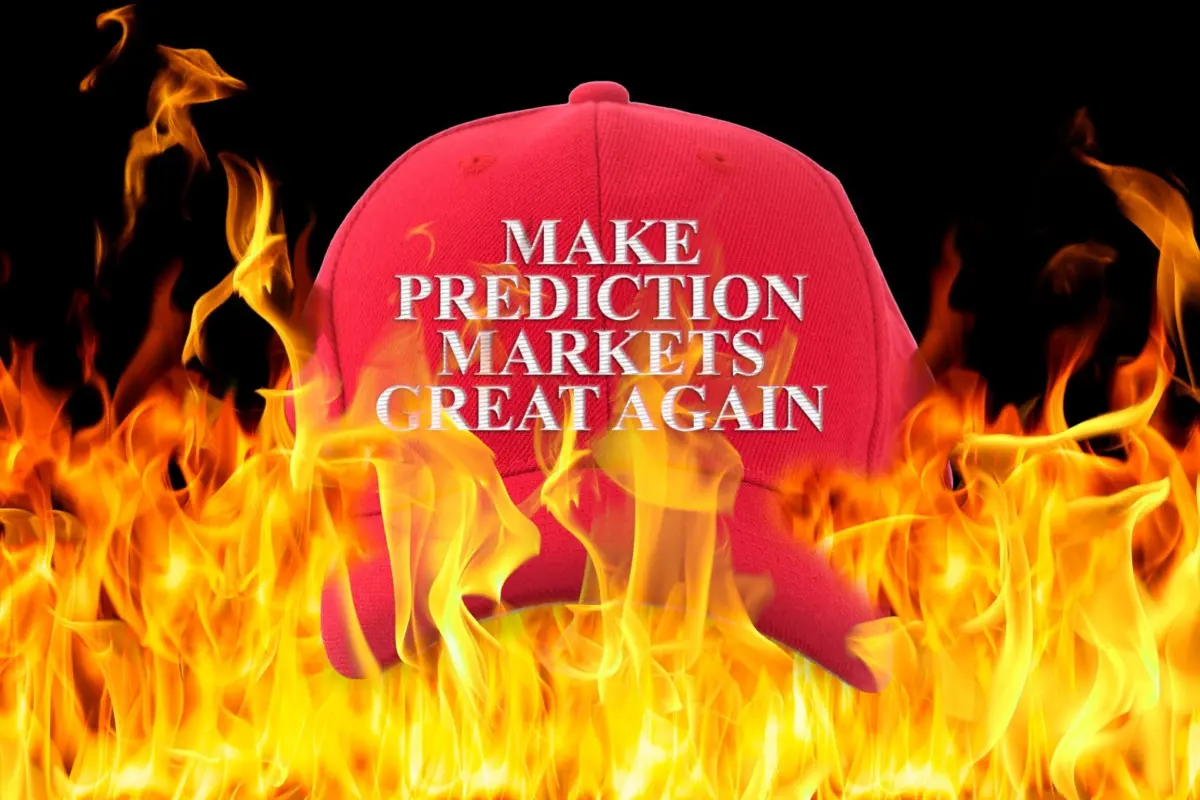
However, political tides shift quickly in Washington. Following a seismic midterm cycle that handed new majorities in the House and Senate to the Democratic Party, the industry’s survival strategy has undergone a radical metamorphosis. Platforms that once proudly wrapped themselves in MAGA-aligned branding and embraced proximity to the White House are now attempting to burn their metaphorical MAGA hats.
In a frantic dash for self-preservation, prediction market heavyweights are executing a massive rehabilitation campaign. They are quietly severing ties with Trump’s inner circle while opening their checkbooks and executive suites to seasoned Democratic strategists, Obama administration veterans, and party insiders. Their goal is as transparent as it is urgent: to court the very Democratic lawmakers who are constitutionally and politically positioned to investigate their operations, question their ethics, and potentially dismantle their business models.
This deep-dive investigation examines how an industry built on real-time speculation became entangled in executive-branch favoritism, the policy battles looming over sports betting and state sovereignty, and the high-stakes charm offensive designed to disarm a newly empowered congressional opposition.
Detailed Chronology: From Presidential Proximity to Sudden Separation
The tangled relationship between the modern prediction market boom and the Trump family dates back to the foundations of Trump’s second term in January 2025. What followed was a golden age of deregulation and financial convergence for platforms that sought to gamify everything from geopolitical crises to domestic elections.
- January 2025: Donald Trump Jr.’s investment firm takes a staggering nine-figure stake in Polymarket—positioning the presidential son as a key financial stakeholder in one of the market’s two dominant exchanges. Concurrently, Kalshi—Polymarket’s chief regulated domestic rival—retains Trump Jr. as a paid advisor. The arrangement, which allowed Trump Jr. to play both sides of a fierce duopoly, raised immediate eyebrows among government ethics watchdogs but was largely ignored by a Republican-led Congress.
- October 2025: Seeking to cement a favorable regulatory climate, President Trump nominates Michael S. Selig to head the CFTC. Under Selig, the agency adopts a uniquely aggressive, pro-market posture, repeatedly clashing with state attorneys general to assert exclusive federal jurisdiction over financial contracts—thereby shielding prediction markets from state-level gambling laws, particularly regarding sports.
- April to October 2026: Sensing a changing political climate as midterm rhetoric heats up, Kalshi and Polymarket quietly begin defensive maneuvers. Kalshi hires prominent Democratic strategist Stephanie Cutter in April, making sure its public announcements emphasize her deep ties to President Barack Obama. In the weeks immediately preceding the November midterms, Kalshi adds another Obama administration alumnus, Eric Schultz, to its ranks. Meanwhile, Polymarket expands its political donations to include key Democratic campaign committees.
- November 6, 2026: Investigative reports highlight the growing web of suspicious trading activity tied to political insiders on both platforms, including bets placed around major polling releases and administration staffing announcements.
- Mid-November 2026: In the wake of the midterm elections—which deliver new House and Senate majorities to Democrats—Kalshi and Trump Jr. abruptly announce the "mutual" termination of their advisory relationship. Both parties cite the growing complications of Trump Jr.’s expanding, roughly $500 million stake in rival Polymarket, marking the definitive first crack in the industry’s unvarnished alignment with the executive branch.
Supporting Context & Metrics: The Mechanics of a "Truth Machine" Under Scrutiny
To understand why prediction markets are scrambling to clean up their image, one must look closely at what these platforms actually do—and how they generate revenue.
Pitched to the public as enlightened "truth machines" capable of aggregating collective wisdom to separate signal from noise on societal issues, the reality of trading volume tells a starkly different story. According to data from the Pew Research Center, trading volume on platforms like Kalshi and Polymarket doubled between May and July of 2026, driven overwhelmingly by a single category: sports betting.
As of mid-2026, approximately 80 percent of all trading volume on these platforms consisted of sports betting repackaged under the sophisticated nomenclature of "financial contracts" and "event trading." This has triggered a ferocious jurisdictional war with the states. Following the Supreme Court’s landmark 2018 ruling striking down the federal ban on sports gambling and returning authority to individual states, local legislatures established robust, highly taxed, and regulated sports betting frameworks.
However, under CFTC Chairman Michael S. Selig, the federal government has systematically attempted to steamroll state authority. The CFTC has argued in federal courts—most recently in a lawsuit filed against Arkansas—that prediction markets operate under federal financial rules that supersede state gambling laws. This allows platforms to bypass state taxes, licensing fees, and consumer protection mandates. To date, only four states have managed to successfully drive Kalshi and Polymarket sports-related contracts offline.
Beyond sports, the unchecked expansion of contract offerings has created unprecedented avenues for insider trading and national security vulnerabilities.
- In April 2026, federal prosecutors indicted a U.S. soldier who allegedly utilized classified information to bet heavily on the U.S. capture of Venezuelan leader Nicolás Maduro via Polymarket.
- Additional investigative reports have flagged questionable, highly timed trades surrounding White House announcements and presidential press secretary appointments.
While Kalshi maintains a more strictly regulated domestic footprint—banning extreme markets like armed conflict or targeted violence—neither platform possesses the regulatory bandwidth or inclination to systematically police the massive influx of speculative insider capital.
Official Statements & Legislative Proposals
With congressional power shifting, the legislative branch is suddenly poised to transform from a passive spectator into an active inquisitor. A robust menu of bipartisan and Democratic-led legislative proposals is already drafted and waiting on Capitol Hill:
- The Sports Prediction Ban: Spearheaded by a bipartisan coalition of lawmakers earlier this year (including Rep. Steven Horsford and Rep. Mark Amodei), proposed House and Senate bills would explicitly ban sports prediction market contracts nationwide, protecting local jobs and restoring state-level regulatory rights.
- Federal Official Trading Bans: Following efforts by Democratic senators like Jeff Merkley and Amy Klobuchar, new legislative pushes seek to outright ban federal elected officials and high-ranking government employees from profiting off or trading on prediction markets.
- Restrictions on Sensitive Geopolitical Markets: Lawmakers such as Sen. Chris Murphy and Rep. Greg Casar have introduced bicameral legislation to outlaw prediction markets centered on war, assassination, intelligence operations, and other government actions inherently vulnerable to insider corruption.
- Anti-Nepotism Financial Safeguards: Progressive lawmakers are actively discussing targeted provisions to prohibit prediction markets from offering direct payouts, advisory fees, or equity stakes to the immediate family members of sitting executives and federal officials—a direct legislative riposte to the "Trump Jr. loophole."
While outgoing oversight efforts under Republican leadership—such as the House Oversight Committee’s late-stage staff memos released by Rep. James Comer—largely deflected scrutiny away from financial tech conglomerates, the incoming Democratic majorities face an open runway.
Future Outlook: Reputation Cleansing vs. Congressional Reckoning
The prediction market industry’s sudden pivot away from overt partisan alignment represents a classic Washington survival playbook. Recognizing that their cozy relationship with the Trump administration is now a massive political liability, industry leadership is systematically executing a multi-million-dollar reputation-cleansing operation.
By staffing up with seasoned Democratic operatives—such as former DCCC officials, veterans of the Obama administration like Eric Schultz, and high-profile political advisors like Stephanie Cutter—prediction market executives hope to reframe their platforms as essential, bipartisan pillars of modern financial technology. They intend to argue before Congress that their markets serve a vital macroeconomic purpose that transcends political cycles and family ties.
However, the incoming Democratic majorities face a pivotal institutional choice. They can accept the overtures of a well-funded lobbying apparatus and permit the industry to scrub away its MAGA branding while continuing to quietly erode state sovereignty and concentrate wealth among political insiders. Alternatively, armed with a battery of proposed bills addressing insider trading, sports betting federalism, and executive nepotism, Democrats can launch rigorous, high-profile congressional investigations into an industry that spent the last two years treating the American political apparatus as both its regulator and its personal piggy bank.
One thing is certain: the era of frictionless, unchecked expansion for prediction markets has officially come to an end. Whether they can successfully burn their MAGA hats before Congress strikes back will define the next chapter of financial technology regulation in Washington.