Executive Overview
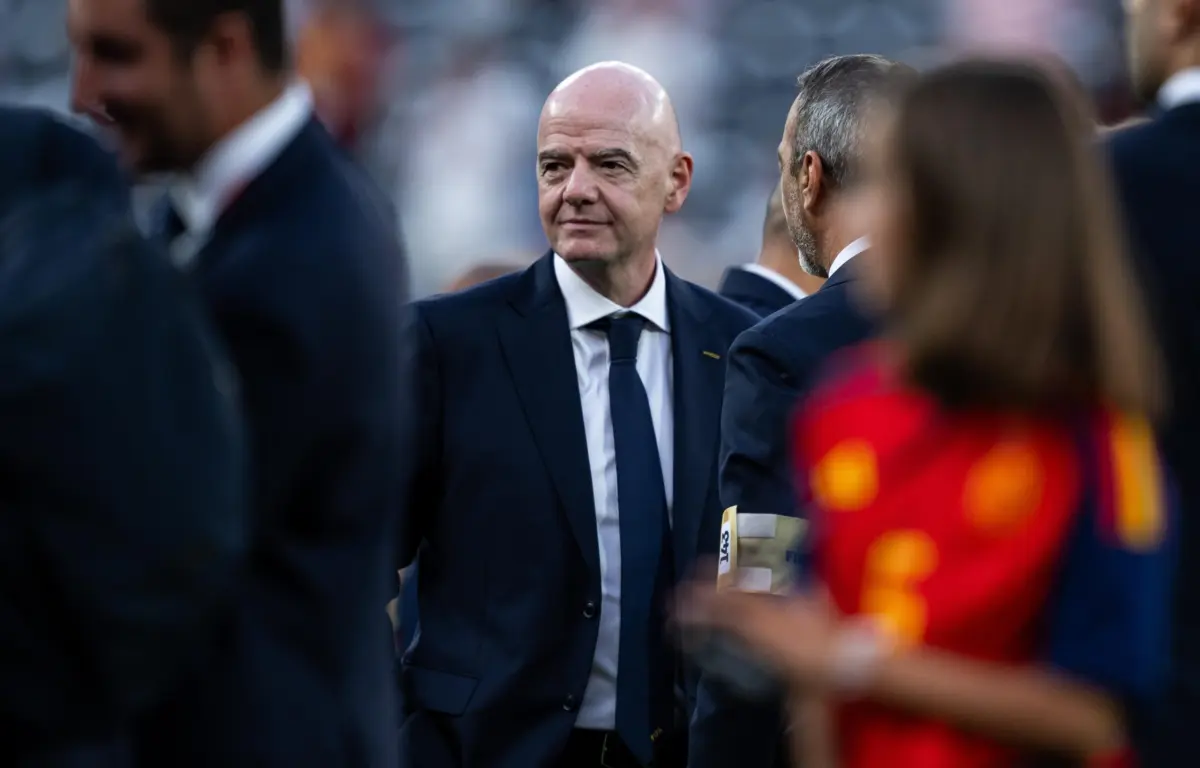
The dust had barely settled on North America’s historic summer of football when a fresh storm broke at the highest echelons of international sports administration. Fresh from a 2026 FIFA World Cup that was widely lauded as an overwhelming sporting and cultural triumph—spanning the United States, Canada, and Mexico, generating a record-shattering $15 billion in revenue, and capturing the global imagination through the fairy-tale runs of underdog nations like Cape Verde—FIFA President Gianni Infantino managed to alienate the global football community almost overnight.
Just weeks after the tournament concluded, Infantino advanced a controversial, high-stakes proposal to sell a 21 percent equity stake in the World Cup to private equity investors. The plan aimed to siphon corporate capital into a newly formed commercial entity that would manage the world’s most lucrative sporting asset, marking an abrupt and radical departure from FIFA’s foundational, ostensibly non-profit governance model.
The reaction was swift, visceral, and uncompromising. Within days, a massive internal and external revolt erupted across the global game. UEFA, Europe’s governing body, threatened an outright boycott of FIFA events, declaring that it would "never lend this model our legitimacy." They were joined by regional powerhouses Concacaf and the Asian Football Confederation, leaving Infantino facing hostile math within FIFA’s 211-member general assembly. Facing unprecedented mutiny—including internal betrayals from his own chief operating officer, who publicly dismissed the plan as "the project of one person"—FIFA executed a dizzying U-turn, officially scrapping the proposal by July 31.
This near-miss crisis highlights a deeper, existential war within modern football: a desperate struggle between the grassroots integrity of the sport and the relentless commercial imperatives of late-stage global capitalism.
Detailed Chronology
July 2026: The Highs of a Historic Tournament
The 2026 FIFA World Cup was designed to be expansive, inclusive, and financially unprecedented. Jointly hosted by the United States, Canada, and Mexico, the tournament drew millions of international travelers, fostered cross-border cultural goodwill, and showcased an elevated standard of athletic competition. For American audiences—historically lukewarm to the world’s game—the embrace of visiting fans and the dramatic performances of Cinderella teams like Cape Verde cemented soccer’s cultural footprint in North America.
Commercially, the tournament was an undisputed juggernaut. Surpassing all previous financial metrics, the 2026 edition raked in an astronomical $15 billion in overall revenue. To FIFA leadership, this financial bounty was not a ceiling, but a floor—an invitation to radically reimagine how the sport’s crown jewel is commercialized.
Late July 2026: The Infantino Proposal
Capitalizing on the fiscal success of the tournament, FIFA President Gianni Infantino tabled a radical restructuring plan behind closed doors. The blueprint proposed stripping direct operational control of the World Cup away from traditional governance structures and housing it inside a newly created commercial entity.
Under this framework, FIFA would retain a majority share, but up to 21 percent of the corporate vehicle would be sold off to private equity firms. The objective was clear: cash in immediate, multi-billion-dollar private capital injections to secure liquidity and drive speculative growth. However, critics immediately noted that this privatized model fundamentally altered FIFA’s non-profit mission, transforming the global game’s quadrennial celebration into a yield-generating asset for Wall Street and private wealth funds.
Thursday, July 30, 2026: The European Ultimatum
The backlash was instantaneous. Recognizing the existential threat posed by private equity gatekeepers, UEFA—representing 55 European national associations—unleashed a scathing public statement on Thursday morning. Calling the proposal an affront to the integrity of the sport, UEFA threatened a total boycott of FIFA-run events if the plan advanced.
Concurrently, reports from The Athletic highlighted that Infantino’s political capital was rapidly evaporating ahead of his upcoming reelection campaign scheduled for March. The cracks in FIFA’s executive wall deepened when Chief Operating Officer Mattias Grafström’s camp and other high-ranking officials began leaking dissent to the press, exposing a profound disconnect between the president’s inner circle and the administrative apparatus.
Friday, July 31, 2026: Internal Defection and the Global Front
The rebellion metastasized on Friday. Concacaf (representing North America, Central America, and the Caribbean) and the Asian Football Confederation (AFC) officially aligned against the private equity sell-off. Together with UEFA, these dissenting regional confederations commanded nearly two-thirds of FIFA’s 211 member associations—a fatal mathematical reality for any presidential initiative requiring a general assembly vote.
Adding insult to injury, high-ranking FIFA officials openly broke ranks. In interviews with international media, including Al Jazeera, senior administrators lambasted the initiative as "the project of one person," explicitly isolating Infantino and framing the proposal as a rogue autocrat’s gamble rather than a democratically vetted strategy.
Late July 31, 2026 (8:15 PM ET): The Abrupt U-Turn
Recognizing that he was careening toward an irreversible vote of no confidence, a catastrophic electoral defeat in March, and potentially paralyzing continental boycotts, Gianni Infantino blinked. At 8:15 PM ET on July 31, FIFA officially announced it was scrapping the plan entirely, halting the private equity discussions and retreating to familiar administrative ground.
Supporting Context & Metrics: The Financialization of Football
To understand why Infantino felt empowered to float a private equity play—and why the footballing world reacted with such apocalyptic fury—one must examine the staggering financial trajectory of the modern World Cup.
| Metric / Indicator | Historical Context | 2026 Tournament Data |
|---|---|---|
| Total Tournament Revenue | ~$7.5 billion (2022 Qatar World Cup) | ~$15 billion (2026 North America) |
| Governance Model | Traditional, non-profit sports federation | Proposed hybrid corporate entity (21% private equity) |
| Key Opposing Blocs | UEFA, Concacaf, Asian Football Confederation | Representing >65% of FIFA’s 211 member associations |
| Primary Points of Contention | Commercialization of broadcast/hydration windows | Privatization of tournament equity and asset stripping |
The commercialization of the World Cup has accelerated dramatically over the past decade. The introduction of expanded tournament formats—such as the bloated 48-team structure seen in 2026—was engineered primarily to maximize broadcast inventories, ticket sales, and corporate sponsorships.
This hyper-commercialization has frequently collided with the traditional rhythms of the sport. Earlier in the summer, soccer analyst and Men in Blazers podcast founder Roger Bennett pointed out to Vox that modern football is locked in a generational tug-of-war. "Ultimately," Bennett explained, "the whole game of football is currently in a battle between its roots and the commercial imperative that comes from being as big as it is."
Bennett highlighted that the World Cup remains "the last megaphone which is faintly audible around the world." When a cultural institution commands that level of undivided, global attention, it inevitably attracts predatory capital. Private equity firms, flush with institutional cash and hunting for yield in a volatile global economy, view marquee sports leagues and tournaments as untapped, recession-proof revenue streams. Infantino’s plan was essentially an invitation for these financial titans to monetize the passion of billions.
Official Statements & Key Voices
The war over the World Cup’s soul played out through sharply worded institutional communiqués and candid journalistic commentary.
UEFA’s Official Stance:
Released on Thursday, July 30, the European governing body minced no words in rejecting the monetization of international football:
"We will never lend this model our legitimacy. European football represents the heritage, values, and grassroots soul of this sport. Introducing private equity stakeholders into the governance of the world’s most sacred tournament treats human passion as a balance-sheet commodity. We stand united in our refusal to compromise the game’s future."
Internal Dissent within FIFA:
Speaking anonymously to international news agencies before going on the record, senior administrative figures highlighted the autocracy of the push. As reported by Al Jazeera, a prominent FIFA insider branded the initiative directly:
"This is not a collective vision. It is the project of one person. Staff and member associations were entirely deceived regarding the scope and intent of these private equity negotiations."
Roger Bennett (Men in Blazers) on the State of the Sport:
Reflecting on the underlying commercial pressures driving FIFA’s leadership, Bennett contextualized the broader cultural battle facing fans:
"When you have something that big, it becomes deeply desirous to make as much money as you can out of it. But in doing so, you risk breaking the very emotional architecture that makes people care about the game in the first place."
Future Outlook: A Precarious Peace
While Gianni Infantino has successfully executed a tactical retreat, the political landscape within FIFA has been permanently altered. The July 2026 private equity fiasco exposed deep fissures within global football governance, casting a harsh light on the leadership style of the current FIFA administration.
1. The March Reelection Battle
Infantino’s immediate horizon is defined by his upcoming reelection bid in March. Historically, incumbent FIFA presidents wield immense patronage power, securing the loyalty of smaller national associations through development grants and infrastructure funding programs (such as the FIFA Forward initiative). However, the unprecedented unity displayed by UEFA, Concacaf, and the Asian Football Confederation demonstrates that the institutional firewall protecting Infantino has cracks. If regional confederations choose to run a consensus opposition candidate, March could feature the most competitive and volatile presidential election in modern FIFA history.
2. The Inevitability of Commercial Pressure
Scrapping the private equity plan does not mean FIFA’s appetite for revenue generation has vanished. The pressures that drove Infantino to pitch the $15 billion capitalization scheme—soaring operational costs, demands for expanded distributions to member nations, and the unending pursuit of corporate growth—remain very much alive. Future commercial battles will likely center on broadcast innovations, expanded tournament formats, and surrogate revenue streams like mandatory commercial "hydration breaks" that double as high-value advertising windows.
3. The Resistance of Global Fandom
Ultimately, the swift collapse of Infantino’s proposal serves as a powerful reminder of football’s unique socio-political weight. Unlike corporate conglomerates, football clubs and international tournaments derive their entire value from emotional authenticity, tribal loyalty, and community heritage. When executives attempt to strip away that heritage in favor of private equity balance sheets, they trigger a defensive immune response from fans, players, and regional administrators alike.
The summer of 2026 proved that while football is undeniably a global business, its soul remains fiercely protected by those who play it, watch it, and refuse to see it commodified out of existence.