Published: May 24, 2025
Author: Investigative Desk
Category: Technology, Politics, and Public Policy
Executive Overview
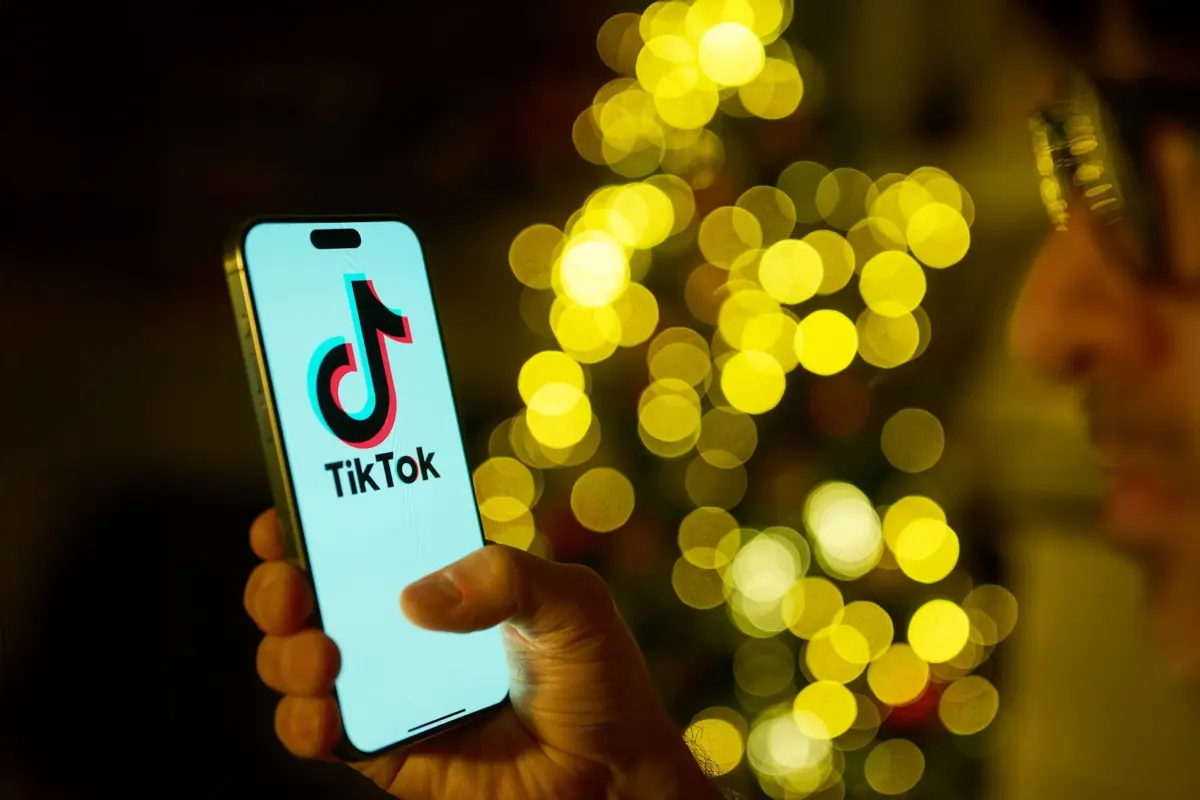
In the modern landscape of public policy and digital marketing, few contradictions are as glaring as the American state government’s relationship with TikTok. Over the past three years, more than 30 U.S. states have enacted sweeping bans on the popular short-form video application, barring its use on state-owned devices, government networks, and institutional infrastructure. Lawmakers from both sides of the political aisle have repeatedly stepped before cameras to warn constituents that the platform—owned by the Beijing-based parent company ByteDance—poses an existential threat to national security, functioning as an insidious conduit for foreign intelligence gathering and data harvesting.
Yet, a stroll through the digital corridors of these very same state governments reveals a remarkably different reality. While cybersecurity chiefs and governors issue dire warnings about state-sponsored espionage, state-funded tourism boards are busy filming viral choreography outside iconic local landmarks, buying targeted ad placements, and optimizing their algorithms to capture the attention of Gen Z travelers. From the sunny coasts of Florida to the rugged wilderness of Montana, official state-backed tourism entities continue to embrace the platform with open arms.
This profound disconnect lays bare a persistent tension in contemporary governance: when state security rhetoric collides with hard economic realities, profitability and public visibility almost always win. For regional economies heavily reliant on the hospitality and tourism sectors, the temptation of reaching TikTok’s vast, highly engaged user base outweighs ideological posturing. This investigative report examines how state governments managed to turn TikTok into both a pariah of national security and a cornerstone of economic development, exploring the legislative timeline, the economic motives, and the broader implications of this systemic policy contradiction.
Detailed Chronology: From Security Threat to Marketing Channel
To understand how state governments arrived at this dizzying paradox, one must trace the timeline of political escalation and digital adoption that has defined the platform’s recent history in the United States.
The Legislative Crackdown (2022–2023)
The systemic political backlash against TikTok began in earnest in late 2022. Citing confidential intelligence briefings and mounting fears over data privacy, state executives began issuing executive orders to purge the app from government-issued hardware.
- December 2022: Texas Governor Greg Abbott took decisive action, directing state agencies to ban TikTok on all government-issued devices. In his directive, Abbott pulled no punches, labeling the application a platform that "offers this trove of potentially sensitive information to the Chinese government." Shortly thereafter, states like Florida, Maryland, South Dakota, and Montana followed suit, framing the app as a digital Trojan horse.
- Early 2023: Legislative bodies across the country turned executive directives into statutory law. Montana took the most aggressive stance in the nation by attempting a statewide consumer ban—a measure that would later face fierce legal challenges and temporary injunctions. By mid-2023, over 30 states had successfully erected digital walls around their state employees, blocking access to TikTok on official Wi-Fi networks and corporate smartphones.
The Federal Maneuvers and Deadlines (2024)
As state-level bans proliferated, the federal government escalated the pressure. In April 2024, President Joe Biden signed a bipartisan legislative package that included a strict mandate: ByteDance was given a strict ultimatum to divest its U.S. operations or face a nationwide ban across all app stores and web hosting services.
Washington lawmakers argued that the platform’s algorithmic control under a foreign adversary left the United States vulnerable to widespread propaganda and surveillance. However, as legal battles dragged on and the mandatory divestment deadlines passed, the anticipated "doomsday" ban failed to materialize. TikTok remained fully operational, continuing its explosive growth across the American digital landscape.
The Quiet Resistance of State Tourism Boards (2022–Present)
Even as governors signed sweeping legislation to scrub TikTok from state agency phones, a quiet rebellion was taking place within sub-agencies dedicated to state revenue and economic development.
State tourism boards—often quasi-governmental entities funded by taxpayer dollars, hotel taxes, and legislative appropriations—quickly realized that abandoning TikTok meant voluntarily surrendering the most potent marketing funnel available to modern advertisers. While departments of public safety and transportation locked down their IT infrastructure, state-funded tourism handles like Texas’s @visitvacation and Central Florida’s @visitcentralfl kept posting. They traded serious administrative compliance for high-engagement travel content, proving that when it comes to boosting local economies, political rhetoric often bends to market necessity.
Supporting Context & Metrics: The Undeniable Power of the Algorithm
The persistence of state tourism boards on TikTok is not born out of mere defiance; it is driven by hard metrics that modern marketers cannot afford to ignore.
Despite being branded a geopolitical hazard in Washington and state capitals, TikTok’s cultural footprint and user engagement metrics expanded at an astonishing rate. In 2024 alone, the platform added approximately 100 million new users globally, pushing its total active user base to roughly 1.6 billion people worldwide. Within the United States, the app boasts over 135 million active users, skewing heavily toward younger demographics—specifically Gen Z and Millennials—who increasingly rely on TikTok as a primary search engine for travel planning, dining recommendations, and lifestyle inspiration.
Traditional advertising channels, such as print brochures, television commercials, and static banner ads, no longer hold the same sway over younger travelers. Modern tourism relies on authentic, peer-style video content that showcases hidden gems, local eateries, and breathtaking vistas in a dynamic, 30-second format. TikTok’s recommendation algorithm is uniquely engineered to push this type of content directly to users based on their specific travel interests, making it an indispensable tool for destination marketing organizations (DMOs).
Consider the economic stakes:
- Tourism Revenue: In states like Florida and Texas, tourism is a multi-billion-dollar economic engine that supports hundreds of thousands of jobs, generates vital sales tax revenue, and sustains local small businesses.
- Marketing Efficiency: Allocating marketing budgets away from TikTok would force state tourism boards to rely on less effective channels, potentially dampening visitor numbers and hurting regional economies.
Faced with these economic realities, state officials engaged in a pragmatic form of cognitive dissonance. They successfully compartmentalized the platform: to a state cybersecurity worker, TikTok is a dangerous foreign surveillance tool; to a state tourism marketer, it is simply too profitable to quit.
Official Statements and Institutional Rationalizations
The friction between political posture and economic execution has invited intense scrutiny from watchdogs, media outlets, and civil liberties advocates. When pressed about the glaring hypocrisy of banning an app on government devices while simultaneously using state funds to purchase advertising space and run official accounts on it, state officials have offered various justifications—and often, strategic silence.
Representatives for state tourism boards frequently argue that their digital marketing arms operate under a distinct operational mandate from general state agencies. While departments of public safety and health handle sensitive public data, state-funded tourism marketing organizations view their accounts as commercial consumer-facing storefronts. According to this rationale, reaching potential tourists where they spend their digital lives is a fiduciary responsibility to local hotels, restaurants, and entertainment venues.
Furthermore, many state agencies have instituted bureaucratic workarounds to bypass their own bans. For instance, rather than operating official state-owned devices connected to secure government networks to run TikTok accounts, some marketing departments outsource their social media management to third-party marketing agencies. These private contractors handle the day-to-day video production, editing, and posting using non-governmental hardware and independent internet connections, technically adhering to the letter of the law while violating its spirit.
Critics, however, are unimpressed by these legalistic gymnastics. Digital privacy advocates and political analysts argue that if the platform truly presents the severe national security risks that governors claim—such as unauthorized data exfiltration and foreign influence operations—then no arm of a state government should endorse, legitimize, or financially support the application. By continuing to use TikTok to drive commerce, state governments are effectively signaling to the public that the national security threat is negotiable when money is on the line.
Future Outlook: Where Do We Go From Here?
As the digital policy landscape continues to evolve, the unresolved contradictions surrounding TikTok highlight a deeper systemic failure in how federal and state governments approach cybersecurity and digital sovereignty in the 21st century.
If lawmakers genuinely believe that ByteDance represents a clear and present danger to American security, a piecemeal approach—where security restrictions apply to administrative state employees but spare commercial and economic promotional arms—is entirely toothless. It undermines public trust in cybersecurity directives, leaving citizens confused as to whether the app is a dangerous instrument of foreign espionage or simply a convenient scapegoat for political theater.
Looking ahead, several trajectories are likely to unfold:
- Increased Scrutiny and Accountability: Investigative journalists and political opponents will continue to spotlight state-funded accounts on banned platforms, increasing pressure on governors to either reconcile their security policies or openly defend their economic marketing choices.
- Evolution of State Digital Strategies: Some states may eventually move to phase out direct platform presence in favor of alternative short-form video ecosystems (such as Instagram Reels or YouTube Shorts) to eliminate the optical hypocrisy, even if those alternatives offer slightly different audience dynamics.
- The Normalization of Pragmatic Hypocrisy: Alternatively, governments may quietly accept this state of affairs as a permanent reality—acknowledging that in an interconnected global digital economy, complete decoupling is virtually impossible when economic survival hangs in the balance.
Ultimately, the saga of state-level TikTok bans and tourism board campaigns serves as a masterclass in modern realpolitik. It demonstrates that when a conflict arises between abstract national security warnings and concrete economic prosperity, the ledger usually wins. Until lawmakers establish a coherent, uniform policy that applies equally to state security and state revenue, American governance will continue to dance to a tune dictated by the very algorithms its leaders condemn.