By Investigative Staff
Published April 2023
Executive Overview
The media landscape is facing a profound digital reckoning. As Twitter prepares to sunset its legacy verification system—pulling the iconic blue checkmarks from accounts that refuse to enroll in its subscription tiers—global newsrooms are locked in a high-stakes standoff with platform leadership under Elon Musk.
Beginning April 1, legacy verified accounts must either subscribe to the $8-per-month Twitter Blue service or upgrade to the enterprise-level “Verified Organizations” tier, which starts at a staggering $1,000 per month. This seismic policy shift has transformed what was once a global standard for authenticity and editorial accountability into a commoditized subscription perk.
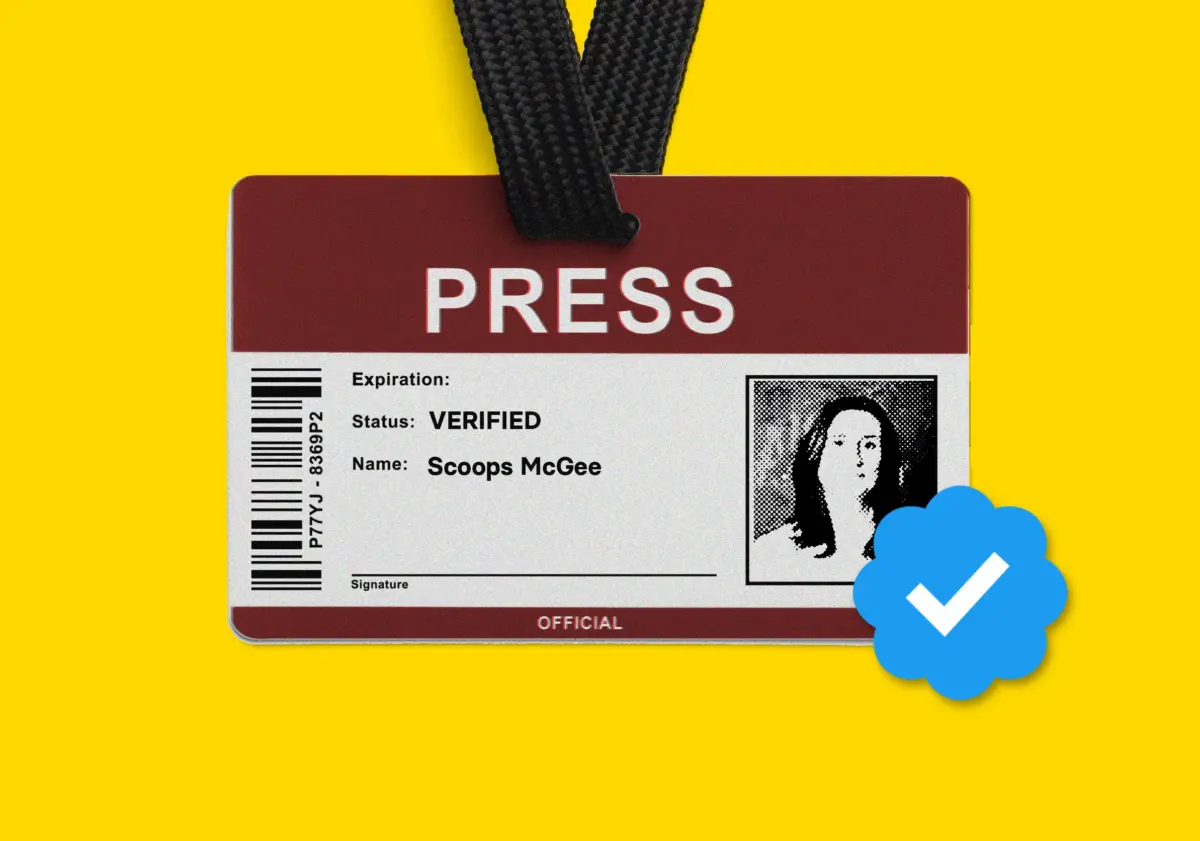
For decades, the blue checkmark served as a digital seal of credibility, verifying that journalists, public figures, and institutions were genuinely who they claimed to be. Today, major journalistic heavyweights—including The New York Times, The Washington Post, The Los Angeles Times, Politico, Insider, and BuzzFeed News—have drawn a definitive line in the sand. Citing a loss of editorial credibility, changing platform utility, and a poor return on investment, these legacy outlets have overwhelmingly announced they will not subsidize verification for their reporters.
Conversely, a different calculus is emerging among independent publishers, niche digital outlets, and commercial entertainment publications. For smaller operations and freelance journalists who rely heavily on algorithmic distribution, the financial investment is increasingly viewed as a pragmatic cost of doing business. This deep divergence highlights a fractured media ecosystem, raising urgent questions about the future of news dissemination, online trust, and algorithmic gatekeeping in the digital age.
Detailed Chronology: How the Verification Crisis Unfolded
To understand the current standoff between media institutions and Twitter, one must trace the rapid dismantling of the platform’s traditional trust and safety architecture following Elon Musk’s acquisition of the company in late 2022.
The Death of Legacy Verification
Under its previous administration, Twitter’s verification program was designed to authenticate high-profile accounts in the realms of politics, journalism, entertainment, and government. It was non-commercial, vetting applicants based on strict criteria of notability and active public interest. The blue badge was universally recognized across the internet as a symbol of institutional authority, designed specifically to curb impersonation and safeguard public discourse from malicious misinformation campaigns.
Following Musk’s takeover, the platform initiated a rapid restructuring aimed at boosting revenue and democratizing platform features. This led to the creation of Twitter Blue—a paid subscription model that bundled the blue checkmark alongside features like longer character limits, edited tweets, and prioritized algorithmic placement.
The Enterprise Rollout and the $1,000 Price Tag
As the April 1 deadline to remove legacy checkmarks approached, Twitter introduced its enterprise offering: the “Verified Organizations” tier. Priced at a minimum of $1,000 per month, the package offers institutions a gold checkmark, a square profile avatar, and five affiliated user accounts equipped with standard Twitter Blue perks. Additional affiliated accounts carry an extra charge of $50 per month.
For cash-strapped newsrooms grappling with declining advertising revenues and industry-wide layoffs, the enterprise price tag proved difficult to justify. Furthermore, newsroom leaders reported widespread confusion regarding the operational details, scalability, and security parameters of the enterprise tier. Internal communications and emails sent by Twitter to prospective corporate clients reveal a high-pressure sales strategy aimed at enticing enterprise accounts before the absolute expiration of legacy badges.
Supporting Context & Metrics: The Algorithmic Advantage vs. Institutional Integrity
At the heart of this dispute is a fundamental clash between journalistic ethics and platform algorithms. News organizations evaluate verification through the lens of institutional trust, while Twitter’s new management views verification purely as a software feature tied to algorithmic distribution.
The "For You" Feed Dilemma
A central driver pushing some publishers to reconsider their stance is the shift in Twitter’s recommendation architecture. Under Musk, platform updates have heavily prioritized paid Twitter Blue subscribers within the core “For You” algorithmic feed, while making it more difficult for unverified or non-followed accounts to achieve organic reach.
For independent journalists and digital-first startups whose business models depend on web traffic driven by social media distribution, this algorithmic reality cannot be easily ignored.
- Semafor Co-Founder Ben Smith noted that his publication would permit reporters to expense the $8 monthly fee if it yields measurable distribution advantages. “I just see it as a totally practical issue in that sense,” Smith explained, emphasizing that content visibility remains the lifeblood of modern digital publishing.
- Alex Kantrowitz, founder of the Big Technology newsletter and a former BuzzFeed News reporter, adopted an even more direct approach. Having subscribed immediately, Kantrowitz stated: “I don’t care about the blue checkmark, which might be a liability at this point. But getting added distribution in the For You tab is worth it for me at $8/month, given that distribution is the lifeblood of smaller media brands like Big Technology.”
The Security and Impersonation Threat
While independent creators lean into the paid model for distribution, enterprise-level outlets face severe institutional risks. Beyond simple brand identity, major publications worry about sophisticated impersonation campaigns, financial fraud, and the erosion of public trust during breaking news events.
For instance, entertainment and pop-culture outlets face unique vulnerabilities. A newsroom leader at a major entertainment publication—speaking anonymously due to internal policy constraints—revealed that while their organization faces lower geopolitical risks than hard-news outlets, they battle an incessant wave of scammers. Malicious actors frequently pose as reporters for the publication, soliciting money or favors from recording artists and public figures in exchange for fraudulent coverage guarantees. For these entities, paying for verified enterprise status functions less as a luxury and more as a defensive cybersecurity measure.
Official Statements: Industry Leaders Speak Out
The breadth of the pushback from major newsrooms underscores a unified industry consensus: the cultural and functional equity of the blue checkmark has been fundamentally compromised. Below is a comprehensive breakdown of how major publishing houses have officially responded to Twitter’s ultimatum.
The New York Times
"We aren’t planning to pay the monthly fee for check mark status of our institutional Twitter accounts. We also will not reimburse reporters for Twitter Blue except in rare instances where this status would be essential for reporting purposes."
— Charlie Stadtlander, Director of External Communications
The Washington Post
"The Washington Post will not pay for Twitter Blue service as an institution or on behalf of our journalists. It’s evident that verified checkmarks no longer represent authority and expertise."
— Official Spokesperson
The Los Angeles Times
"Some of you may be wondering whether or not the L.A. Times will pay for Twitter Blue subscriptions, and the answer right now is no, for several reasons: First of all, verification no longer establishes authority or credibility, instead it will only mean that someone has paid for a Twitter Blue subscription. Secondly, while Twitter remains an important tool for newsgathering, it is not as reliable as it once was."
— Sara Yasin, Managing Editor
Insider
"The value of a blue checkmark was that it said the person was who they said they are. Now a blue checkmark just says they are a Twitter Blue subscriber. That doesn’t help Twitter users or our readers."
— Nicholas Carlson, Editor-in-Chief
Politico
"In the future, a checkmark will no longer mean you are a verified journalist. Instead, it will simply mean you are paying for benefits such as longer tweets and fewer ads. Politico will not pay for you to subscribe to Twitter Blue. You may, of course, enroll at your own expense."
— Anita Kumar, Senior Editor of Standards and Ethics
BuzzFeed Inc. (BuzzFeed, BuzzFeed News, HuffPost, Tasty, Complex)
"As a company, we do not think it’s a wise use of resources to pay for individuals to retain a blue checkmark that is no different from anyone else’s — an amateur medical expert, Elon stan, or otherwise — who is simply willing to pay the fee for a blue check."
— Karolina Waclawiak, Editor-in-Chief of BuzzFeed News
The Daily Caller
While legacy giants flatly rejected the fees, some digital-native political and opinion outlets are adopting a cautious, data-driven approach. Geoffrey Ingersoll, Editor-in-Chief of the Daily Caller, admitted he personally intended to let his own verification lapse.
"I had planned to let mine lapse because I have no interest in being nerd famous among journalists on Twitter. Ever since verification became a pay-for, it’s lost its utility for me — particularly searching tweets from verified-only people to get a sense of where the media is taking a story."
Nevertheless, Ingersoll noted that the Daily Caller organization will likely utilize the enterprise package for select institutional accounts, intending to review internal analytics after several months to determine if the financial outlay delivers tangible audience engagement returns.
Future Outlook: What Lies Ahead for Journalism on Social Media?
As the digital dust settles following the removal of legacy verification badges, the relationship between journalism and social media platforms has entered uncharted territory. Several long-term structural shifts are already becoming apparent.
1. The Devaluation of Institutional Signifiers
For nearly two decades, digital platforms acted as trusted arbiters of identity, helping audiences distinguish professional reporting from fringe commentary, state-sponsored propaganda, and malicious misinformation. By shifting to a fee-based model where anyone with a credit card can obtain the same visual marker of authenticity as an investigative reporting unit, platforms have effectively dismantled that architecture. Newsrooms are now forced to build brand equity entirely independently of platform-provided trust badges.
2. Fragmented Newsroom Policies
The absence of a unified industry strategy has resulted in a patchwork of internal corporate policies. While institutional giants like The New York Times and The Washington Post maintain strict prohibitions against corporate reimbursement, independent creators and niche digital publishers are utilizing personal expense accounts to maintain algorithmic visibility. This disparity risks creating an uneven playing field, where well-funded boutique newsletters or commercial operations easily out-reach traditional institutional reporters trapped by rigid compliance guidelines.
3. Alternative Verification and Decentralization
In response to the shifting utility of legacy social networks, many journalists and media executives are accelerating exploratory migrations toward decentralized and alternative platforms—such as Mastodon, Bluesky, Substack, and independent RSS aggregators. The willingness of major newsrooms to walk away from Twitter’s verified ecosystem signals that institutional journalism no longer views centralized social media platforms as indispensable utility providers, but rather as volatile utilities whose costs increasingly outweigh their benefits.
Conclusion
The collision between Elon Musk’s monetization strategy and the rigorous standards of global journalism marks the end of an era. As April 1 ushers in a checkmark-free landscape for non-paying media professionals, the ultimate arbiter of credibility will no longer be a digital stamp issued by a platform, but the enduring trust between journalists and their readers. Whether Twitter’s subscription model can sustain its value proposition—or whether it will permanently alienate the very institutions that built the platform’s cultural relevance—remains the definitive media question of the decade.