As the sweltering days of late summer yield to the crisp, amber mornings of autumn, pop culture enthusiasts invariably turn their attention toward a singular annual ritual: the ushering in of "spooky season." For contemporary horror aficionados, this transition has become synonymous with the meticulously crafted, emotionally resonant cinematic universes of writer, director, and showrunner Mike Flanagan. While Flanagan has cultivated an extensive and widely celebrated filmography—ranging from his faithful adaptations of Stephen King’s literary catalogue to wholly original creations like Midnight Mass—his apex achievements remain rooted in his prestige horror anthology series for Netflix.
Chief among these, and an essential text for any October viewing rotation, is The Haunting of Bly Manor. Premiering in October 2020 as the thematic follow-up to the cultural phenomenon The Haunting of Hill House, Bly Manor initially received a complex critical and audience response. Where its predecessor offered relentless, spine-chilling terror centered on grief and familial fracturing, Bly Manor pivoted into something vastly different: a melancholic, deeply layered gothic romance.
Years removed from its initial debut, the series has aged with remarkable grace. Far from merely echoing the haunted-house tropes of the past, Flanagan’s nine-episode masterwork operates as a profound meditation on memory, possession, trauma, and enduring love. By cleverly interweaving Henry James’ seminal 1898 ghost story The Turn of the Screw with several of the author’s lesser-known works, Bly Manor established a distinct emotional vocabulary that elevates it above standard television horror. As the nights grow longer, revisiting—or discovering for the first time—the gloomy corridors and fog-shrouded lakes of Bly Manor remains one of the definitive experiences modern horror television has to offer.
Detailed Chronology: From Henry James to Netflix Prestige
To fully appreciate the narrative architecture of The Haunting of Bly Manor, one must examine the rich lineage of the gothic literary tradition from which it draws its lifeblood. The roots of the series stretch back to the late nineteenth century, a period defined by societal anxieties, repressed Victorian sensibilities, and a burgeoning fascination with the occult.
The Literary Foundation (1898–1910)
In 1898, American-British author Henry James published The Turn of the Screw as a serial in Collier’s Weekly before releasing it as a completed novella. The text introduced a chilling, ambiguous premise: a young, inexperienced governess travels to a remote country estate in Essex to care for two orphaned children, Flora and Miles. Almost immediately, she begins to perceive the spectral apparitions of the estate’s former employees, Peter Quint and Miss Jessel. Believing the children are psychologically and spiritually corrupted—or actively possessed—by these dead entities, the governess launches a desperate crusade to save them, culminating in a tragedy that has fueled literary debate for well over a century.
James did not stop at ghost stories; his expansive bibliography explored the fragility of human memory, unrequited love, and the ghosts of our own making. Works such as The Altar of the Dead (1895) and The Jolly Corner (1908) explored how individuals interact with the dead, whether through sacred remembrance or haunting regret. These thematic threads would lie dormant for over a century, awaiting a cinematic visionary capable of translating James’ notoriously slippery, psychological prose into a visual medium.
The Flanagan Renaissance (2018–2020)
Enter Mike Flanagan. Following the critical success of his Stephen King adaptations Gerald’s Game (2017) and Doctor Sleep (2019), Flanagan partnered with Netflix to construct an ambitious horror anthology. In 2018, The Haunting of Hill House dropped on the streaming platform, instantly capturing the zeitgeist. Based loosely on Shirley Jackson’s 1959 masterwork, the series married high-concept supernatural scares with a deeply authentic examination of childhood trauma and familial estrangement.
Capitalizing on this historic streaming success, Flanagan and his creative team immediately turned their sights toward Henry James for the anthology’s second iteration. Rather than adapting a single novel as he had with Jackson, Flanagan expanded his scope. He utilized The Turn of the Screw as the primary structural skeleton for The Haunting of Bly Manor, while simultaneously weaving in elements, character names, and thematic arcs from James’ broader catalog of ghost stories, including The Romance of Certain Old Clothes and The Jolly Corner.
By shifting the chronology of the source material from the Victorian era to the mid-1980s, Flanagan preserved the timeless isolation of the gothic estate while introducing contemporary anxieties, cultural touchstones, and musical cues that grounded the narrative in a tangible, recognizable past.
Supporting Context & Metrics: Deconstructing the "Bly" Formula
While The Haunting of Hill House utilized a tight-knit, blood-related family unit to explore the inescapable gravity of generational trauma, Bly Manor constructs its emotional stakes through an entirely different mechanism: an improvised family of strangers brought together by circumstance, isolation, and quiet desperation.
The Ensemble and Setting
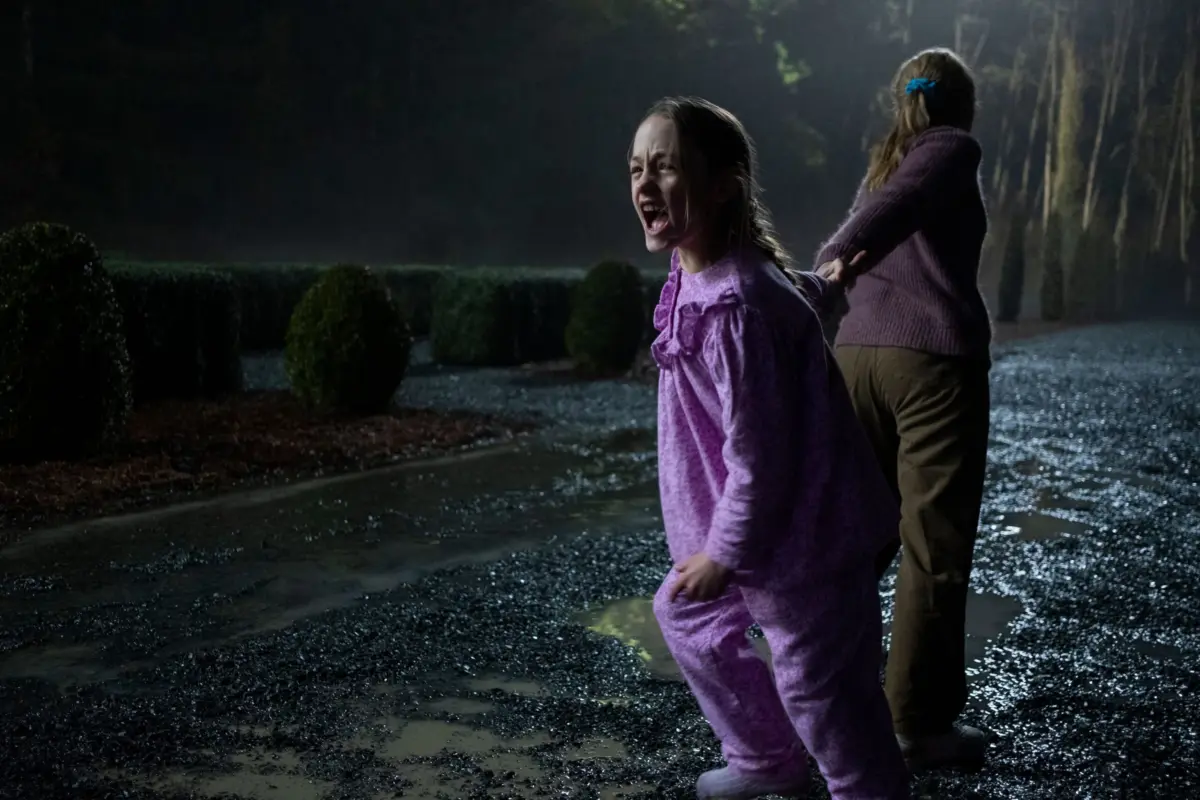
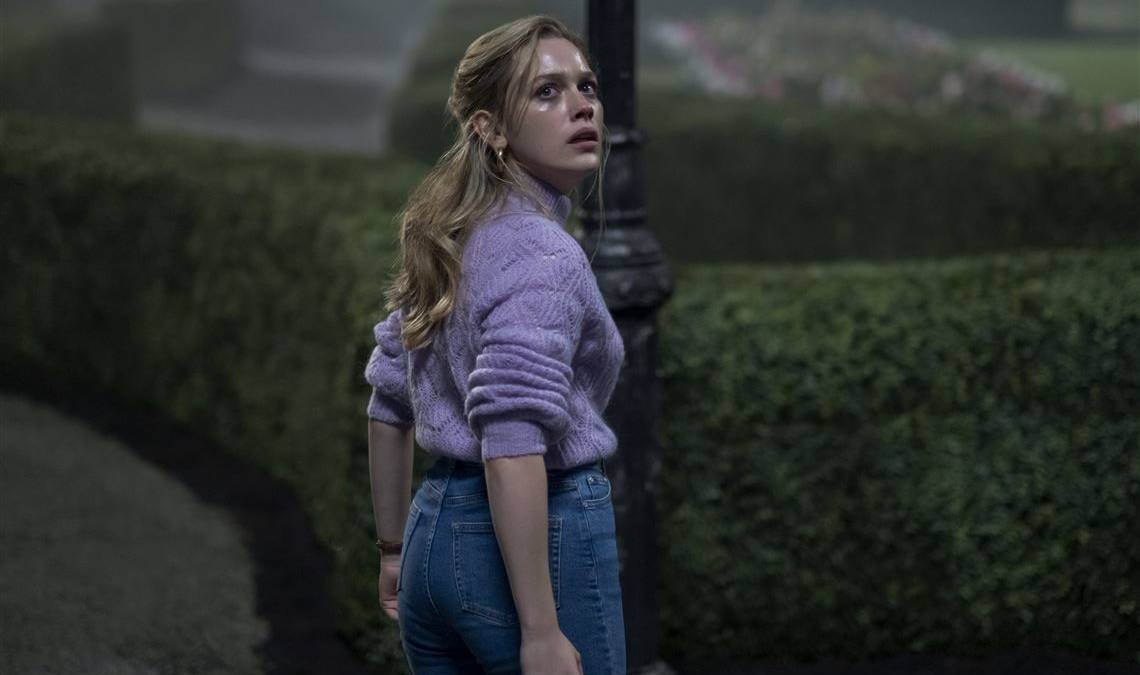
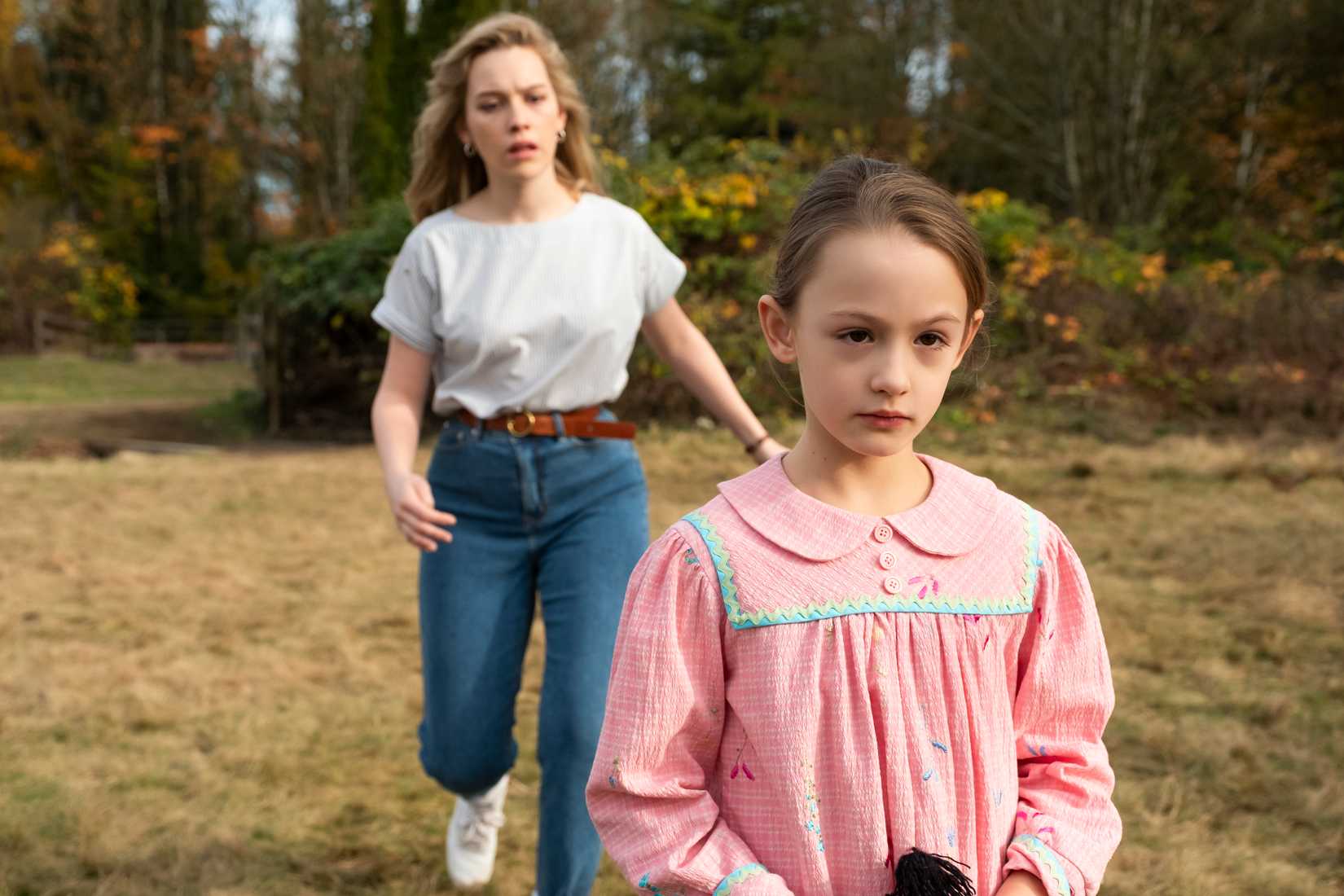
The series follows Dani Clayton (portrayed by Hill House breakout star Victoria Pedretti), an American au pair fleeing a haunting personal tragedy who accepts a position at the grand, decaying Bly Manor in the English countryside. There, she is tasked with watching over Flora and Miles Wingrave, two precocious children under the care of the estate’s stoic manager, Owen Sharma (Rahul Kohli), the pragmatic housekeeper Hannah Grose (T’Nia Miller), and the eccentric gardener Jamie Taylor (Amelia Eve).
As the episodes unfold, the series meticulously unpacks the inner lives of each resident. Far from serving as mere fodder for jump scares, the characters are defined by what they refuse to let go of. The narrative utilizes a classic gothic framing device—a contemporary framing story told around a fire during a wedding rehearsal dinner—to establish a tone of timeless oral storytelling.
Critical Reception and Streaming Milestones
Upon its release in October 2020, The Haunting of Bly Manor debuted to strong commercial metrics, immediately claiming the top spot on Netflix’s global viewership charts. According to data analytics released by streaming aggregators at the time, the series racked up hundreds of millions of viewing hours within its first two weeks of availability, proving that the appetite for prestige, slow-burn horror remained insatiable.
Critical consensus, however, was notably more polarized than its predecessor. Reviewers praised the atmospheric direction, complex character studies, and standout performances—particularly T’Nia Miller’s heartbreaking tour-de-force in the mid-season bottleneck episode centered on Hannah Grose (drawing heavily from James’ The Altar of the Dead). Conversely, some critics argued that the series traded too heavily in romantic melodrama, dialing back the relentless terror of Hill House in favor of a melancholic, bittersweet denouement.
In hindsight, this very divergence is what cements Bly Manor’s longevity. By refusing to simply repeat the formula of a haunted house, Flanagan carved out a unique space for horror that prioritizes empathy over annihilation.
Official Statements: The Creative Vision Behind the Masterpiece
To understand the core philosophy guiding The Haunting of Bly Manor, one must look directly to the creative forces who shaped its aesthetic and thematic trajectory. Mike Flanagan has frequently articulated his desire to challenge conventional genre boundaries, viewing horror not merely as a vehicle for adrenaline, but as a safe space to process grief and human vulnerability.
In a comprehensive 2020 interview with Entertainment Weekly during the show’s promotional rollout, Flanagan detailed the deliberate departure from Hill House:
"Though Haunting of Hill House is about a very tight family, Bly Manor is about strangers, a family that is created," Flanagan explained. "All of the people that inhabit Bly Manor come from completely different backgrounds, and get to know each other through friendship, tension, conflict, and love. What sets Bly Manor apart is that at its heart, it’s a love story. It’s a gothic romance story."
This sentiment was echoed by key members of the ensemble cast, who noted the unique collaborative environment fostered on set. Victoria Pedretti, reflecting on her transition from the tortured Nell Crain in Hill House to the guilt-ridden Dani Clayton in Bly Manor, emphasized the psychological weight demanded by Flanagan’s scripts:
"Henry James’ characters are constantly wrestling with things they cannot see, but more importantly, with things they cannot forgive themselves for," Pedretti noted during a press roundtable. "Dani carries an invisible weight that makes the ghosts of Bly Manor almost secondary to the ghost she carries inside her own head."
These official statements underline a unifying thesis across Flanagan’s body of work: the true monsters are rarely supernatural anomalies lurking in dark hallways; rather, they are our unexpressed regrets, our unrequited passions, and our desperate, futile attempts to freeze time.
Future Outlook: The Enduring Legacy of Flanagan’s Horror Legacy
As the television landscape continues to evolve—increasingly dominated by algorithm-driven content, rapid-fire reboots, and fleeting cultural moments—the work of Mike Flanagan stands as a monument to auteur-driven streaming television. Although Flanagan’s formal partnership with Netflix has since concluded with subsequent projects like The Midnight Club and The Fall of the House of Usher moving to other platforms, the legacy of his Netflix horror anthology remains completely intact.
Looking toward the future, The Haunting of Bly Manor has secured its place as a seasonal classic. Much like perennial cinematic touchstones that viewers revisit every autumn, Flanagan’s gothic romance has found a permanent home in the annual October rotation of horror fans worldwide. Its exploration of memory—summarized by the haunting recurring phrase "to tuck away"—serves as a poignant reminder of how human beings process loss.
For viewers seeking an entry point into spooky season that balances genuine chills with profound emotional resonance, the misty, gothic grounds of Bly Manor remain as inviting and unsettling as ever. Whether consumed in a single, immersive weekend binge or savored one atmospheric episode at a time, the series proves that when it comes to intelligent, character-driven horror, Mike Flanagan truly does not miss.