Executive Overview
Nvidia’s latest iteration of its flagship image-enhancement and neural rendering architecture, DLSS 5, has officially arrived in the wild—though an eager modding community managed to preempt the official debut by cracking open pre-release builds just days prior. To evaluate the tangible impact of Nvidia’s boldest AI-driven leap yet, we put the technology through rigorous performance testing using NBA 2K27, the newest installment in the long-running basketball franchise.
Our test bench was far from modest: an elite, high-end rig packing an AMD Ryzen 7 9800X3D processor, 32GB of blazing-fast DDR5 memory, and an Nvidia GeForce RTX 5080. On paper, this configuration handles the baseline hardware requirements of NBA 2K27 with absolute ease. Yet, our empirical findings reveal a sobering reality. Even when deployed on a graphics card that commands upwards of $1,500 in the current components market, enabling DLSS 5 results in a staggering performance penalty.
While Nvidia’s marketing briefings cautioned early adopters to expect a severe 50% to 60% frame rate tax when utilizing full neural rendering pipelines, our real-world testing demonstrates that the actual hit can plummet hardware performance by an alarming 73% in certain scenarios. DLSS 5 delivers genuinely impressive visual fidelity, adding lifelike sheen, complex texturing, and startlingly realistic facial micro-details. However, it forces a philosophical and technical dilemma upon players: is the juice worth the squeeze when your multi-thousand-dollar GPU is choked of more than half its operational throughput?

Detailed Chronology of the Release and Initial Testing
The rollout of DLSS 5 has been unorthodox, to say the least. Whispers and closed-door demonstrations at tech showcases earlier this year set the gaming hardware community abuzz, but concrete release timelines remained hazy. Nvidia officially slated the rollout for the fall, promising a leap forward in neural lighting, material simulation, and character rendering. However, software enthusiasts and modders accelerated the timeline by leaking functional implementations just days before official developer kits and game patches rolled out.
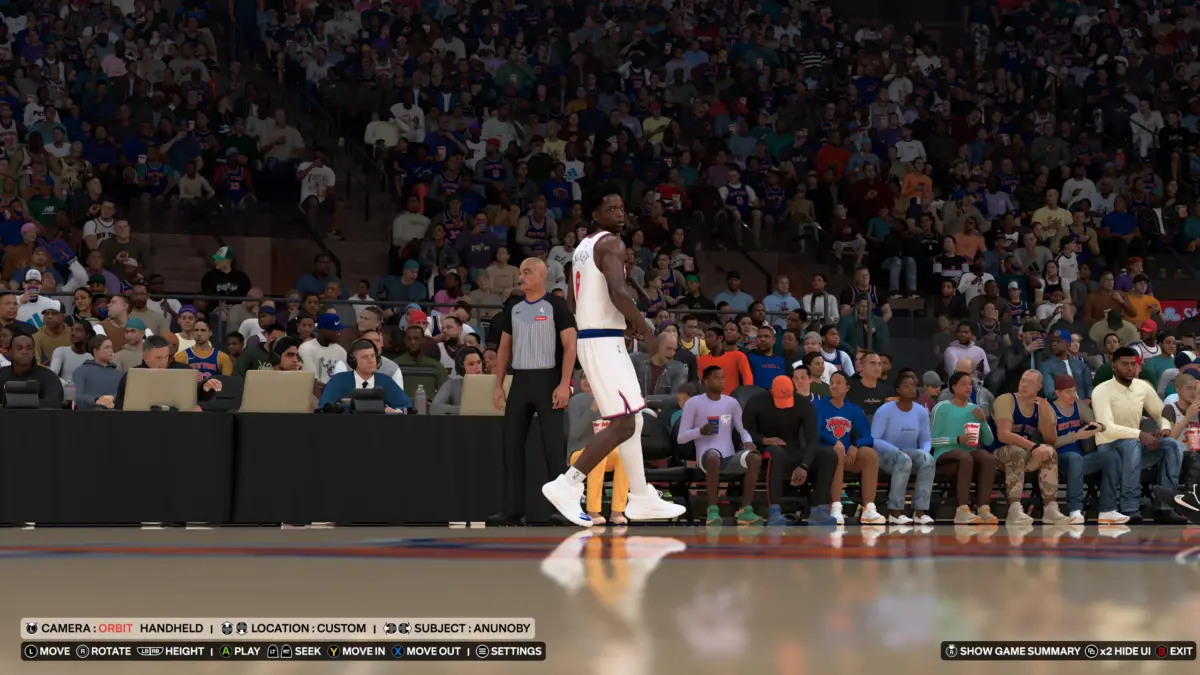
Capitalizing on this chaotic debut, we acquired a pre-release build of NBA 2K27 to conduct deep-dive performance profiling. The testing methodology focused heavily on the game’s bustling "Quick Match" mode, played at Ultra settings with full ray tracing enabled. To capture realistic drops, benchmark runs were extended to include dynamic cinematic cutaways, player celebrations, and crowd reactions—moments where rendering pipelines are pushed to their absolute limits.
At a native resolution of 1440p, the RTX 5080 system initially outputs a fluid, effortless 230 average frames per second (FPS), with 1% lows sitting at a comfortable 93 FPS. The moment DLSS 5 neural rendering is toggled on at native resolution, the average frame rate collapses to 93 FPS, while 1% lows nosedive to a stuttering 37 FPS.

When paired with traditional upscaling and frame generation techniques (Quality upscaling combined with 2x Frame Generation), the system pumps out an astronomical 363 average FPS. Yet, turning on DLSS 5 on top of this suite slashes that figure down to 168 average FPS, with 1% lows dropping to 75 FPS. While a 168 FPS average remains playable, the nearly 55% to 73% evaporation of frame headroom on a top-tier GPU sparks immediate questions regarding optimization and efficiency.
Supporting Context & Metrics: Pushing the RTX 5080 to the Brink
To understand the scale of this performance deficit, one must examine the 4K metrics. At 4K resolution with Ultra settings and ray tracing fully engaged—free from any upscaling or frame generation crutches—the RTX 5080 handles NBA 2K27 gracefully, churning out an admirable 183 average FPS (91 1% lows).
Once DLSS 5 is forced into the equation at 4K, that pristine performance metric plunges directly to 49 average FPS, accompanied by a concerning 31 1% low. This constitutes a brutal 73% performance penalty. While 49 FPS remains technically playable for some, it strips away the high-refresh-rate fluidity expected by enthusiasts who invest heavily in high-end hardware.
======================================================================
NBA 2K27 PERFORMANCE BENCHMARKS (RTX 5080, ULTRA PRESET, RAY TRACING ON)
======================================================================

1440p Resolution:
- Native:                          230 Avg FPS  |  93 1% Low FPS
- Native + DLSS 5:                  93 Avg FPS  |  37 1% Low FPS
- Quality Upscaling + 2x FG:       363 Avg FPS  |  153 1% Low FPS
- Quality Upscaling + 2x FG + DLSS:168 Avg FPS  |  75 1% Low FPS

4K Resolution:
- Native:                          183 Avg FPS  |  91 1% Low FPS
- Native + DLSS 5:                  49 Avg FPS  |  31 1% Low FPS
- Quality Upscaling + 2x FG:       255 Avg FPS  |  118 1% Low FPS
- Quality Upscaling + 2x FG + DLSS: 92 Avg FPS  |  53 1% Low FPS
======================================================================
Compensating for this tanking frame rate requires leaning heavily on upscaling and frame generation tools. Activating Quality DLSS upscaling alongside 2x frame generation lifts the 4K DLSS 5 average to 92 FPS. While acceptable, comparing this to the 255 average FPS achieved at the exact same upscaling settings without DLSS 5 reveals a staggering 163-frame deficit.
The financial context exacerbates these performance grievances. Amid ongoing global memory shortages and component inflation, finding an RTX 5080 for its baseline MSRP is increasingly rare, with street prices regularly fluctuating between $1,550 and well over $2,000. Consumers investing month’s-worths of disposable income into a GPU naturally expect generational leaps without paying a draconian tax on operational speed.
Official Statements and Technological Aspirations
Nvidia has defended the architectural framework of DLSS 5 by emphasizing its reliance on deep neural networks to fundamentally alter how light, geometry, and skin shaders interact in real time. Rather than relying solely on traditional rasterization or simple spatial upscaling, DLSS 5 dynamically synthesizes environmental lighting and sub-surface scattering.

Company representatives have repeatedly stressed that developers maintain full artistic control over how aggressively these neural filters are applied, aiming to mitigate the "AI beauty filter" aesthetic that drew criticism during early tech demos. In statements provided to hardware press outlets, Nvidia engineers noted that initial performance hits are expected given the heavy tensor-core workload required for neural rendering. Furthermore, company roadmaps promise forthcoming driver optimizations and SDK updates designed to claw back lost frame margins in future patches.
Nevertheless, early adopters are left weighing Nvidia’s lofty vision against the cold, hard data of benchmark charts. The technology clearly works wonders for static presentation, but bridging the gap between computational overhead and playable high-refresh gaming remains an uphill battle.
Visual Analysis: Beautiful, Ugly, and Everything in Between
To Nvidia’s credit, NBA 2K27 serves as an effective showcase for the aesthetic highs of DLSS 5—provided you spend your time lingering in the game’s photo mode rather than tracking fast-paced court action.

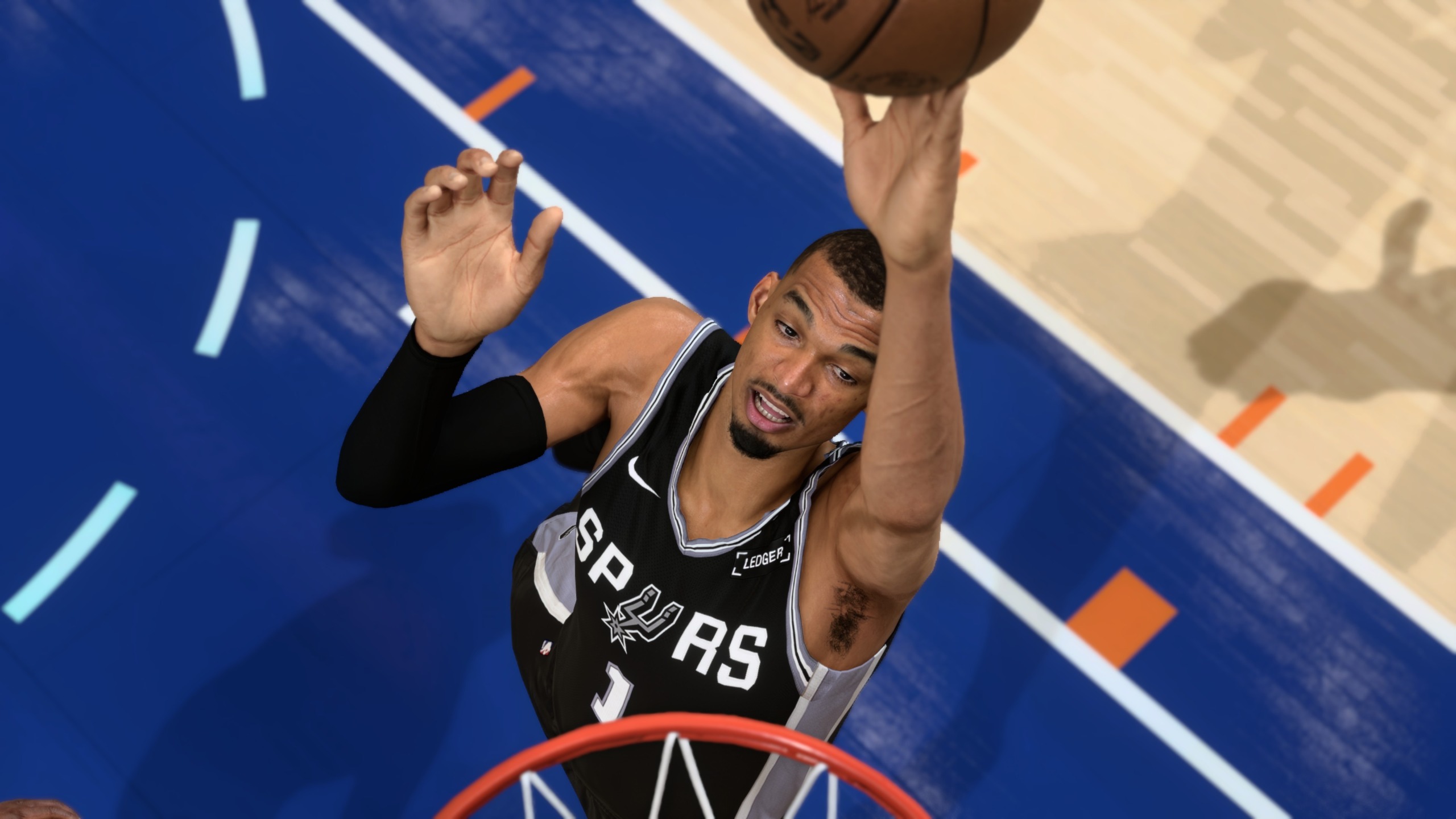
When observing character models up close, the transformation is undeniable. Without DLSS 5, player faces often appear flat, muted, and subject to muddy shading under stadium lights. Activating the feature injects a palpable sense of realism. Skin specular highlights on the nose and forehead look naturally wet and reflective without completely blowing out pixel data. Beards exhibit individual strands with greater clarity, hair rendering appears denser, and jerseys benefit from micro-wrinkles and fabric tension simulations that give uniforms a tangible, 3D texture.
Crowd members sitting in the lower bowls and courtside commentators also receive subtle passes, yielding sharper jawlines and more distinct facial expressions during cutaways.
However, the technology is far from infallible. In certain dynamic camera cuts, the neural network over-corrects, applying an overly aggressive contrast and sharpening pass that borders on uncanny valley territory. When athletes burst down the court at breakneck speed, these minute visual improvements blur into the background, rendered imperceptible during the chaotic flow of competitive gameplay.

Future Outlook
The debut of DLSS 5 in NBA 2K27 paints a complex, contradictory picture of modern PC gaming hardware. On one hand, Nvidia has successfully engineered a neural rendering pipeline capable of producing breathtakingly realistic character details, proving that AI-assisted visuals are maturing rapidly. On the other hand, the sheer computational weight of the technology introduces performance penalties that defy current hardware capabilities.
When an elite, multi-thousand-dollar system suffers a 73% frame rate drop, it raises existential questions about target hardware ecosystems. Technologies that demand such aggressive compromises feel less tailored for the hardware sitting on our desks today, and more like visionary prototypes built for the next generation of graphics cards—perhaps arriving in the form of an RTX 60-series or beyond.
For now, players diving into NBA 2K27 face a distinct choice. You can toggle DLSS 5 on, marvel at the sweat-slicked realism of your digital athletes during slow-motion replays, and accept a heavy performance tax. Or, you can leave the neural checkboxes unticked, enjoy buttery-smooth high-refresh-rate performance, and wait for optimization updates to mature. If DLSS 5 causes this severe of a frame rate collapse in a relatively lightweight sports title, the gaming community watches with cautious dread to see how it handles truly demanding open-world powerhouses on the horizon. Until efficiency catches up with ambition, disabling DLSS 5 may well prove the most pragmatic play in the playbook.