

Executive Overview
In the fast-paced ecosystem of digital culture, internet trends rarely linger without transforming, evolving, or capturing a distinct psychological zeitgeist. Enter the "I’m So Sorry" TikTok trend, a viral slideshow phenomenon that has dominated the platform’s algorithm throughout late 2026. At its core, the trend relies on a masterclass in bait-and-switch visual storytelling. A user begins by posting what they purport to be a striking, highly curated photo of themselves—often showcasing an attractive appearance, an enviable relationship, or a conventionally cool aesthetic. However, as viewers swipe through the subsequent slides, the illusion slowly unravels.
Each progressive frame reveals more of the original unedited, uncropped photograph, peeling back layers of digital manipulation. By the final slide, the glamorous portrait has disintegrated into an entirely different, highly ironic, embarrassing, or laughably mundane reality. The punchline is sealed with a mock-dramatic, tongue-in-cheek apology for the initial lie.
While the format originated as a playful commentary on the ubiquitous nature of photo-editing and self-branding on social media, it quickly metastasized into a massive cultural touchstone. By October 2026, the trend found a second wind through the retrospective lens of nostalgia, heavily adapting into a mechanism for users to showcase deeply "cringe" or unintentionally problematic childhood Halloween costumes. As social media users increasingly grapple with the curated perfection of their digital footprints, the "I’m So Sorry" trend offers a collective, comedic sigh of relief—reminding millions that behind every polished profile lies a history of awkward phases, homemade props, and questionable fashion choices.
Detailed Chronology: From Experimental Post to Algorithmic Juggernaut
The Genesis: August 2026
The origins of the "I’m So Sorry" trend trace back to the twilight of summer 2026. As creators experimented with TikTok’s robust photo-slideshow format—which allows users to manually control the pacing of a narrative through sequential images—early innovators realized the comedic potential of progressive cropping.
On August 22nd, 2026, TikTok user @theywanthunter published what would retroactively become the blueprint for the phenomenon. The post opened innocuously enough: a high-contrast image of a well-built, conventionally attractive man standing beside a woman, stamped with the caption, "Happy 2 years bae."
For casual scrollers, it looked like a standard couple appreciation post. But the second slide forced a double-take, revealing that the female companion had been digitally inserted into the frame. The third slide pulled back the crop further, exposing that the man was actually white rather than the tan or ethnically ambiguous individual initially implied. By the final slide, the grand illusion collapsed entirely—the subject was revealed to lack the muscular physique and full head of hair shown in the initial crop. Accompanied by a hyperbolic, dramatic confession of deception, the post struck a chord with the algorithm. Within two months, it skyrocketed past 25.6 million views, setting off a chain reaction across the platform.
The Mid-Late September Wave
Following the blueprint laid by early pioneers, creators began tweaking the formula to explore different avenues of self-deprecation. On September 13th, 2026, creator @mels.vd uploaded a variation centered on physical appearance and modern dating culture slang. Opening with a faux-flex regarding relationship longevity ("Happy 1st anniversary Gng i can’t pull shi—"), the slideshow systematically dismantled the creator’s digital vanity. Slide by slide, the sharp jawline faded, the voluminous hair vanished, and the hyper-curated aesthetic dissolved into raw reality. The post resonated deeply with Gen Z demographics, pulling in over 6 million views in under a month and cementing the trend’s structural mechanics: a lie of grandeur followed by an immediate, theatrical collapse.
The October Surge and the Halloween Retrograde
While the trend initially focused on fabricated physical attractiveness and relationship status, it truly hit its cultural stride in October 2026, seamlessly intersecting with the lead-up to Halloween. This month marked a pivot from satirical vanity to nostalgic cringe.
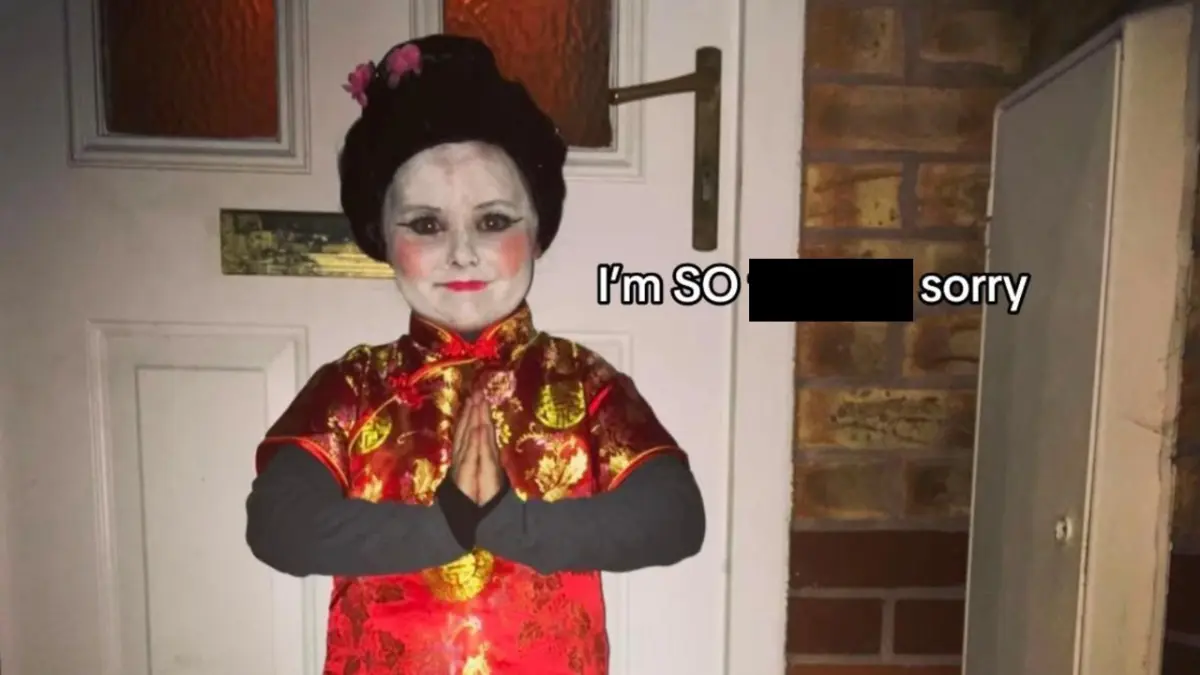
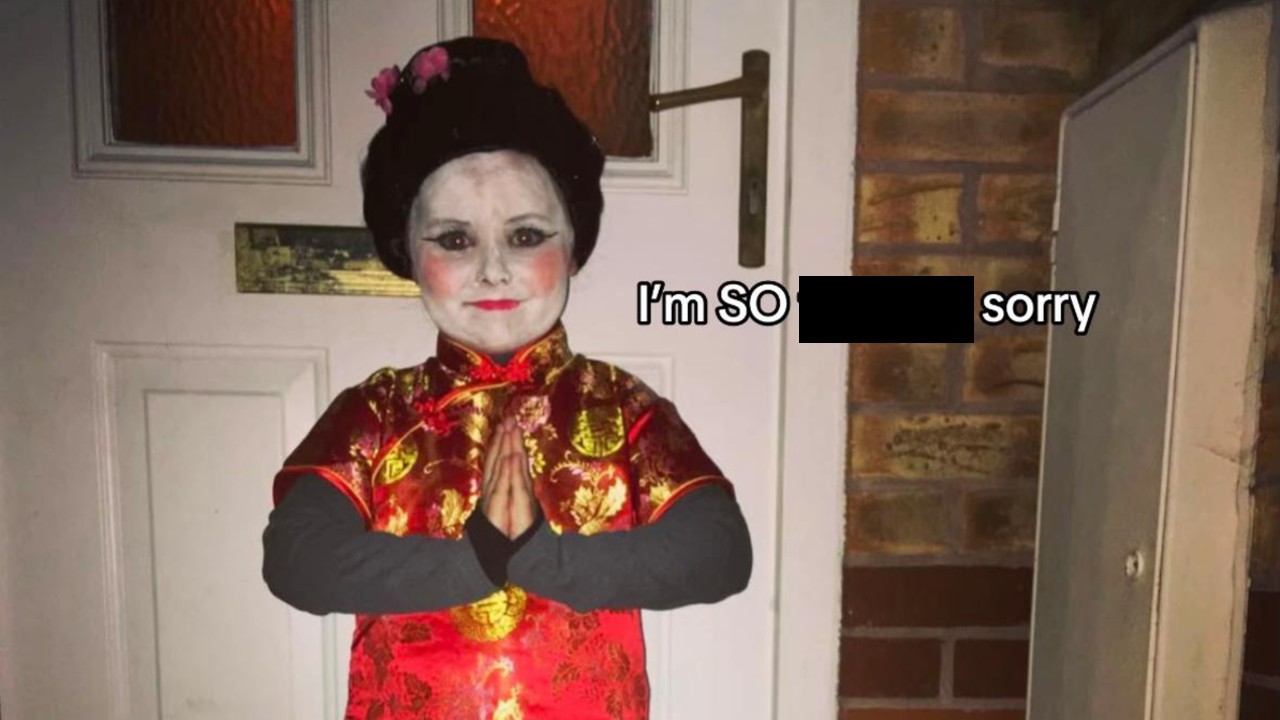
On October 20th, user @girllover4u1 capitalized on seasonal sentiment by sharing a slideshow that began with what appeared to be a standard, elegant childhood photo of a girl in a pristine princess dress. Subsequent slides steadily widened the aspect ratio, ultimately revealing that the young girl was not dressed as Disney royalty, but was instead wearing a messy, deeply improvised attempt at a geisha costume. The juxtaposition between the initial royal framing and the awkward childhood reality captured the internet’s imagination, racking up over 2.1 million views in a mere 48 hours.
The momentum continued unabated the following day. On October 21st, 2026, creator @ciaraamandaa posted a submission focused entirely on the DIY spirit of childhood creativity. Highlighting a catastrophically makeshift Roman soldier helmet constructed for a sixth-grade school play, the post leaned heavily into the comedic horror of juvenile craft projects. Generating 2.9 million views in a single day, it proved that the trend had successfully expanded to encompass familial embarrassments and craft disasters.
Supporting Context & Metrics: The Mechanics of Modern Irony
Why the Slideshow Format Works
To understand the explosive growth of the "I’m So Sorry" trend, one must examine the unique UX (User Experience) design of TikTok’s photo mode. Unlike traditional video content, where a narrative is dictated by a fixed timeline and a soundtrack, slideshows require active participation. The user must manually tap or swipe to advance the story.
This mechanical engagement creates a micro-suspense loop. When a viewer sees an initial slide that looks too good to be true, their brain instantly scans for signs of digital alteration. By intentionally baiting the audience with a hyper-polished lie—and then rewarding their curiosity with a slow-motion reveal of the truth—creators harness the psychology of the punchline. The delay between slides acts as a comedic drumroll.
Cross-Platform Migration and Public Reception
While the trend was born and nurtured within the walled garden of TikTok, its cultural shockwaves quickly bled into other digital spaces. On October 21st, 2026, X (formerly Twitter) user @NotJustLerato vocalized the sentiments of millions, posting: "The ‘I’m so sorry trend’ on TikTok is so funny 😭🤌 It is actually making me feel better about my childhood photos🧎🏾♀️🙇🏾♂️." The post quickly accumulated over 3,500 likes, highlighting a vital secondary function of the trend: therapeutic collective embarrassment.
In an era where curated perfection dominates platforms like Instagram and TikTok, the "I’m So Sorry" trend functions as an antidote to digital fatigue. By intentionally weaponizing their past awkwardness, creators flip the script on self-presentation. Instead of hiding behind filters, users compete to see who can produce the most humbling, unvarnished piece of personal history.
Sociological Analysis: The Death of the "Clean Feed"
The rise of the "I’m So Sorry" trend is not an isolated incident; it represents a broader generational shift in how users interact with digital authenticity. For over a decade, social media was defined by the pursuit of the "aesthetic"—a meticulously organized grid of high-resolution, flattering, and idealized representations of daily life. Even as platforms like BeReal attempted to force spontaneous reality upon users, audiences quickly found ways to game those systems, staging their unscripted moments to look effortlessly cool.
The "I’m So Sorry" trend bypasses this dilemma through weaponized honesty wrapped in layered irony. By stating a grandiose, obvious lie in the first frame ("Happy 2 years bae," "I was a gorgeous princess"), the creator establishes a contract of absurdism with the viewer. Everyone watching knows it is a setup. The joy is not in believing the lie, but in watching the slow-motion demolition of the creator’s ego.
Furthermore, the focus on childhood Halloween costumes taps into a distinct vein of millennial and Gen Z humor: retroactive embarrassment. Many of the costumes featured in October 2026 iterations—ranging from misguided cultural approximations to disastrous DIY cardboard armor—would have been social liabilities if posted unironically. By framing them through the lens of a dramatic apology, the creators reclaim ownership of their past cringe. They disarm potential critics by mocking themselves first, effectively rendering outside judgment obsolete.
Future Outlook: Where Does the Trend Go From Here?
As the calendar turns past the autumn holiday season, the "I’m So Sorry" trend faces the inevitable challenge of algorithmic saturation. A format built entirely around a specific structural reveal risks burning out quickly once audiences learn to anticipate the punchline on slide one.
However, the underlying mechanics of the trend—interactive deception, progressive reveals, and self-deprecating humor—have proven to be remarkably adaptable. Already, creators are pushing the boundaries of the format beyond static photographs. Variations involving text messages, resume embellishments, and academic achievements have begun bubbling up in niche communities, suggesting that the core philosophy of "lie big, confess slowly" can be applied to almost any domain of modern life.
Ultimately, the "I’m So Sorry" trend will likely be remembered not just as a fleeting autumn meme of 2026, but as a watershed moment for internet self-awareness. It taught a generation of digital natives that perfection is boring, vulnerability can be weaponized for comedy, and the best way to survive the embarrassment of your past is to laugh at it—one slide at a time.




