October 2, 2026 Reporting from Milan and Genoa, Italy
Executive Overview
The Mediterranean basin, long regarded as a maritime crossroads of human civilization, has undergone a profound metamorphosis. For decades, the region served primarily as a transit corridor, channeling vast volumes of international telecommunications traffic between Europe, Asia, and Africa through traditional, legacy subsea cables. Today, however, that role has transformed utterly. Driven by an insatiable global appetite for cloud computing, hyperscale infrastructure, and artificial intelligence (AI), the Mediterranean is rapidly evolving into a high-density, ultra-resilient digital superhighway.
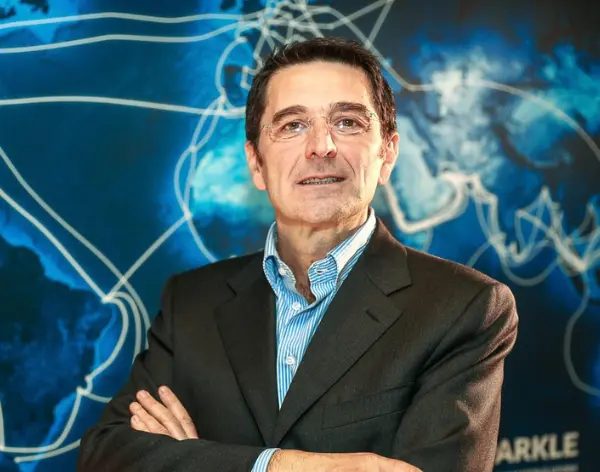
At the heart of this tectonic shift in telecommunications infrastructure is Sparkle, the international service arm of the TIM Group. According to Giuseppe Valentino, Sparkle’s Executive Vice President of Marketing and Product Management for Backbone and Infrastructure Solutions, the sector is experiencing a period of unprecedented dynamism. International operators, hyperscalers, and infrastructure funds are flooding the region with capital, redrawing the map of global connectivity through innovative routes, diverse landing points, and open, carrier-neutral ecosystems.
This article examines how Sparkle is leading this structural evolution. By blending legacy reliability with bleeding-edge innovation—exemplified by the dual-sea architecture of the BlueMed and upcoming GreenMed subsea systems, global IP transit milestones, pioneering environmental sensing technologies, and specialized academic training programs—Sparkle is laying the foundational bedrock for the AI era.
Detailed Chronology: From Legacy Consortia to Modern Digital Corridors
To understand Sparkle’s current trajectory, one must look at the historical timeline of Mediterranean and intercontinental subsea connectivity, punctuated by pivotal infrastructure deployments and evolutionary leaps.
1. The Genesis: Establishing the Foundation (1996)
The Launch of Seabone: In 1996, Sparkle inaugurated its global IP transit backbone, Seabone. At its inception, the network operated on modest 45 Mbps links connecting critical nodes such as Milan, Palermo, Miami, and Montreal. Over the next three decades, Seabone would scale into a Tier-1 global IP transit network, bridging internet service providers (ISPs), hyperscalers, and enterprises across the globe.
Deep Mediterranean Roots: Early foundational systems, including the proprietary MedNautilus cable and participation in major legacy consortia like SEA-ME-WE 4, SEA-ME-WE 5, and IMEWE, established Sparkle as a premier architect of Mediterranean and interregional connectivity.
2. The Multi-Sea Strategy: BlueMed and Genoa (2023–2024)
September 2023: Sparkle brought its flagship BlueMed subsea cable system live. Routing through the Tyrrhenian Sea to the west of Italy, BlueMed established a high-capacity artery designed to meet surging bandwidth demands between North Africa, the Middle East, and European hubs.
The Genoa Landing Platform: Alongside BlueMed and the Google-backed Blue-Raman cable, Sparkle developed its strategic landing station in Genoa, Italy. Evolving into a primary alternative gateway into Europe, Genoa quickly attracted additional systems, including Unitirreno and Barracuda, cementing the city as a critical gravitational hub in southern Europe alongside Milan.
3. Intercontinental Expansion and Open Ecosystems (2025–2026)
The AAE-2 Collaboration: Sparkle joined forces with international carriers on the AAE-2 cable initiative. Spanning Europe, Africa, and Asia, AAE-2 connected Italy directly to Hong Kong and Singapore via Egypt, the Arabian Peninsula, and Thailand, reinforcing interregional corridors toward India and Southeast Asia.
Seabone’s 30th Anniversary: Reaching its third decade in operation, Seabone expanded to 126 Points of Presence (PoPs) and telehouses globally, integrating advanced capabilities such as dedicated DDoS protection and automated traffic management.
4. The Horizon: GreenMed and Jordan (2026 and Beyond)
Early 2026: Sparkle unveiled GreenMed, a complementary subsea cable to be built in the Adriatic Sea to the east of Italy. Developed in partnership with Alcatel Submarine Networks (ASN) and Elettra (an Orange subsidiary), GreenMed is slated to enter service by late 2028.
Strategic Levant Integration: Sparkle inked a landmark agreement with NaiTel—the telecommunications arm of Jordan’s Aqaba Digital Hub—to integrate GreenMed with terrestrial fiber networks, extending a seamless digital corridor directly into Jordan and bridging Europe with the Levant.
Supporting Context & Metrics: The Architecture of Resilience
The modern digital economy demands more than raw capacity; it demands architectural resilience. According to TeleGeography’s August connectivity rankings, Europe houses four of the ten most connected cities globally: London, Frankfurt, Amsterdam, and Paris. However, as Giuseppe Valentino notes, channeling all traffic through identical geographical paths creates systemic vulnerability.
"The market is becoming more conscious of resilience," Valentino explains. "It is no longer sufficient to have a lot of capacity if that capacity is concentrated along the same geographical paths."
The Dual-Sea Philosophy: BlueMed meets GreenMed
Sparkle’s infrastructure strategy explicitly addresses this concentration risk through geographical diversity. By splitting its primary maritime assets across both sides of the Italian peninsula, Sparkle has engineered a two-pronged approach:
BlueMed (Tyrrhenian Sea): Handles western maritime traffic flows connecting Sicily, Genoa, and Marseille into northern European hubs.
GreenMed (Adriatic Sea): Bridges the eastern edge of the Mediterranean, linking Levant countries, the Balkans, and Italy via strategic gateways in Crete and Sicily.
Both systems converge at aggregation points in Milan, creating an interconnected mesh network rather than isolated point-to-point links. Furthermore, GreenMed operates under an open-cable model, granting fibre tenants absolute autonomy to select their preferred optical transmission architecture and vendor hardware.
Global Footprint Metrics
Total Fiber Reach: Over 600,000 kilometers of managed fiber worldwide, spanning proprietary terrestrial and subsea backbones across Europe, the Mediterranean, and the Americas.
IP Transit Reach: Seabone operates across 126 Points of Presence globally, delivering Tier-1 IP transit capable of supporting data-intensive enterprise digitalisation, cloud computing, and AI model training workloads.
Official Statements & Industry Insights
To capture the strategic vision guiding Sparkle’s leadership, consider the core philosophies articulated by Giuseppe Valentino regarding the transition from simple bandwidth provision to holistic, end-to-end connectivity orchestration:
"BlueMed, GreenMed and other assets like our Genoa landing platform are not separate pieces of infrastructure. They are complementary elements of a broader connectivity strategy. We’re moving from a capacity-driven model to an end-to-end connectivity model."
Valentino emphasizes that enterprise customers and hyperscalers are no longer merely asking how much capacity is available, but where that traffic travels:
"Customers increasingly want to know not only how much capacity they can buy, but which exact route that capacity is taking. They want more routes, more landing options, more geographical diversity, and open and easy interconnection."
Addressing the technical maturation of global IP networks over the past thirty years, Valentino reflects on Seabone’s evolution:
"For me, the most important achievement of Seabone is not related to a specific technology or asset. It’s the fact that the network has continuously evolved and expanded, being adapted to where the digital world was going."
Future Outlook: Sensing Networks and Training the Next Generation
As the telecommunications industry looks toward the late 2020s and beyond, Sparkle is investing heavily in frontier technologies and human capital to ensure infrastructure remains future-proof.
1. Next-Level Innovation: The ECSTATIC Project
Traditionally, a subsea cable’s sole function has been the transmission of high-speed data. However, through participation in the European Union-funded ECSTATIC project—joined by Sparkle last year—that paradigm is shifting.
The initiative explores harnessing submarine fiber-optic cables as real-time distributed sensors. Utilizing advancements in artificial intelligence and optical signal processing, the cable network can detect subtle environmental anomalies.
Early Warning Systems: Potential applications include the early detection of seismic activity, underwater tremors, and tsunami precursors.
Predictive Maintenance: Continuous structural monitoring allows operators to detect physical threats or mechanical stress on cables before catastrophic failures occur.
As Valentino notes: "We’re beginning to think of fibre not only as a data highway, but also as infrastructure capable of observing its environment." Sparkle plans to trial these sensing innovations in Italian territorial waters in the near future.
2. Human Capital: Bridging the Multidisciplinary Skills Gap
Building state-of-the-art submarine networks requires an increasingly diverse skill set. To combat the industry-wide talent shortage, Sparkle has partnered with the University of Genoa and the philanthropic organization SubOptic Foundation to launch the world’s first postgraduate academic program dedicated entirely to submarine cables.
"The subsea industry has become much more multidisciplinary," Valentino explains. "You need expertise in network architecture, marine operations, permitting, environmental aspects, cybersecurity, regulation, economics and, increasingly, geopolitics. We need people who understand how all the pieces of the ecosystem fit together."
Conclusion
As artificial intelligence, cloud workloads, and enterprise digital transformation drive exponential data consumption, the Mediterranean basin stands at the epicentre of global network design. Through strategic asset placement like the BlueMed and GreenMed corridors, open-access landing platforms in Genoa and Milan, pioneering environmental sensing initiatives, and robust educational investments, Sparkle is not merely moving traffic—it is architecting the resilient, intelligent digital superhighway of the future.