Executive Overview
In an era saturated by digital curation, the human body has ceased to be merely a physical vessel; it has become a scoreboard for personal virtue. From viral "scalp check" videos to algorithmic decrees that equate thick, lustrous locks with high moral character—and baldness with personal failure or moral rot—society has entered a troubling phase of aesthetic fundamentalism.
At the center of this cultural phenomenon is a toxic fusion of wellness culture, digital humor, and historical puritanism. Social media platforms like TikTok are currently awash with casual cruelty disguised as content: jokes that deceitful men go bald, viral challenges ranking hair quality as an indicator of personal discipline, and the weaponization of the pseudoscientific concept of "health supremacy."
Yet, beneath the hyper-fixation on Rapunzel-esque lengths and miracle gummies lies a devastating reality. Hair loss is a common, largely uncontrollable biological event, touching the lives of roughly 85% of men and 33% of women. For individuals like Leia Batula—a 24-year-old alopecia awareness advocate who lost 70% of her hair in a matter of months—online spaces have transformed from communities of support into breeding grounds for shame.
This deep-dive investigation explores how society collapsed the physical self into a moral indicator. By examining the historical policing of hair, consulting leading hair historians, sociologists, and trichology specialists, and analyzing the socio-economic engine of the beauty industry, we unpack why "good hair" has become the ultimate gauge of modern righteousness—and the heavy psychological toll it takes on those who fall outside its rigid boundaries.
Detailed Chronology: From the First Clump to Digital Ridicule
To understand the modern psychological landscape of hair loss, one must trace the timeline of how biological occurrences are wrongfully attributed to personal choices.
2020: The First Signs and the Onset of Control
For Leia Batula, the journey began quietly during a routine haircut in California in 2020. Still navigating the pressures of college life, her hairdresser pointed out small, nascent areas of thinning on her scalp. At the time, Batula followed the traditional playbook for early-stage hair thinning: topical medications, steroid injections, and minoxidil. For a few years, these interventions kept the condition under relative control. Like many facing early hair loss, Batula sought to manage the problem privately, operating under the assumption that with enough discipline, topicals, and scalp care, she could arrest the biological tide.
2024: The Rapid Unravelling
The fragile equilibrium shattered in 2024. Within a staggering four-month window, Batula lost approximately 70% of her hair, eventually progressing to near-total hair loss.
"I was devastated," Batula recounts. "As a young adult woman, having a physical part of me feel like it was being ripped away so quickly was one of the hardest things I have ever dealt with. I know hair may seem superficial to some people, but losing my hair completely changed how I saw myself and how comfortable I felt going out in public."
The Rise of Digital Moralism (2023–Present)
As Batula navigated her physical transformation away from the public eye, the internet was moving in the opposite direction. Over the last several years, social media algorithms have fostered a hyper-fixation on "scalp checks," "hair growth miracle" gummies, and chemical serums.
Concurrently, a darker cultural trend took root: the moralization of hair. TikTok videos began surfacing where users explicitly linked long, thick hair to indicators of high moral character, purity, and psychological stability. Conversely, old tropes gained digital traction, reviving the age-old, scientifically baseless joke that "men who cheat go bald."
Culinary and aesthetic trends bled into this ecosystem, birthing viral phrases like being "pure of heart." Originally used in ironic or esoteric wellness contexts to joke about escaping wrinkles or foodborne outbreaks, the phrase morphed into hair-loss discourse. Digital creators began posting tongue-in-cheek disclaimers suggesting that one needn’t worry about thinning tresses if they are simply "pure of heart."
While often framed as jokes or harmless flexes of voluminous manes, the underlying punchline remains corrosive: the structural assumption that good, moral people do not lose their hair, and those who do are somehow culpable.
Supporting Context & Metrics: The Anatomy of Modern Hair Loss
To dismantle the myth that hair loss is a reflection of personal virtue, one must look at the unvarnished statistics and dermatological realities.
The Numbers Don’t Lie
Hair loss is not an anomaly; it is a fundamental part of the human life cycle for a massive percentage of the global population.
- Men: Approximately 85% of men will experience major hair thinning or pattern baldness in their lifetime.
- Women: Roughly 33% of women will experience female-pattern hair loss or significant thinning, often exacerbated by hormonal shifts, aging, or autoimmune conditions such as alopecia areata.
Despite these staggering figures, public perception remains stubbornly rooted in the idea of bodily deviance. When hair loss occurs, society treats it as an aberration—a sign of poor hygiene, stress mismanagement, or spiritual failure.
Historical Roots of Hair Policing
Hair historian Rachael Gibson notes that linking outward appearance with inner character is far from a modern invention. Across centuries and cultures, hair has served as a primary text for judging morality, religion, femininity, and social hierarchy.
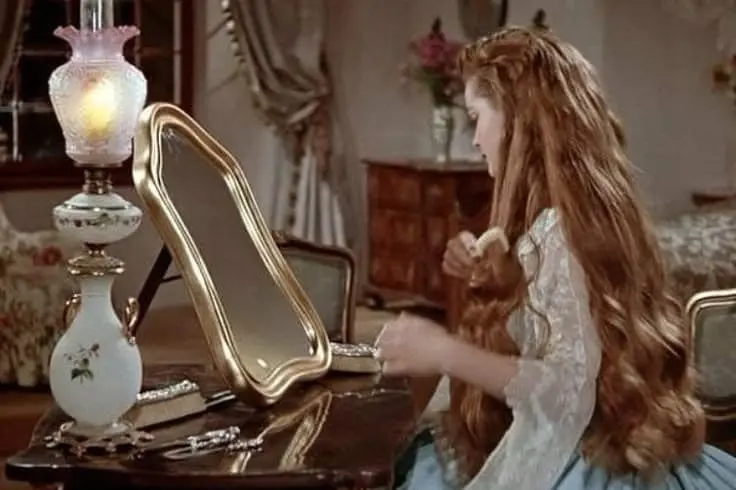
In Western history, long hair remained a strict benchmark of feminine respectability well into the 20th century. Wearing hair loose, unkempt, or uncovered was frequently read as a sign of moral impropriety or sexual deviance. Furthermore, the concept of "presentable" hair has historically functioned as a mechanism of social control. This is acutely visible in the systemic policing of Black hair textures and protective styles, where natural Black hair has long been penalized under Eurocentric and white supremacist beauty standards that privilege straight textures and images of fairytale purity—such as the classic blonde Disney princess archetype representing virtue, desirability, and high status.
The Illusion of "Health Supremacy"
Today, Gibson identifies this phenomenon as "health supremacy"—the pervasive belief that the condition of our exterior body is a direct report card for the internal mechanisms beneath it.
Julie Dickson, a fine-hair specialist and founder of Joon Drop, sees the psychological fallout of this mindset daily in her salon chair.
"When clients sit in my chair, they often arrive feeling as though they’re doing something ‘wrong,’" Dickson explains. "There’s a lot of bad information out there, like if you use horse shampoo or brush your hair a thousand times a day it’s going to grow. Or that if you don’t wash your hair at all the oils will nourish your hair, which is such bullshit because it’s mostly genetics, sometimes stress, sometimes environment and sometimes illness."
This misinformation is heavily monetized. While foundational treatments like minoxidil are relatively accessible, the modern wellness-industrial complex profits enormously from consumer anxiety. Chasing every trending product, specialized shampoo, red-light therapy cap, and extension creates a vicious financial cycle fueled entirely by shame.
Official Statements and Expert Perspectives
The intersection of digital culture, philosophy, and personal identity reveals a profound systemic shift in how humanity values itself. Experts across disciplines weigh in on the dangerous trajectory of aesthetic moralism.
Leia Batula on the Lack of Nuance Online
As an advocate who eventually regained full coverage after seeing a medical specialist and starting the treatment Litfulo, Batula remains deeply critical of how platforms handle bodily autonomy and medical conditions.
"I think there’s a lot of nuance missing from hair loss conversations online, especially because hair loss is often treated as a joke or used as an insult," Batula states. "Hair loss is something that is out of people’s control—it can happen at any age, and it can happen to anyone."
Coming across viral videos where creators mock their exes for "failing" in life because they have gone bald leaves Batula deeply disillusioned. She emphasizes that the casual cruelty of these trends inflicts invisible wounds on thousands of viewers quietly battling chemotherapy side effects, alopecia, hormonal imbalances, and natural aging.
Professor Heather Widdows on the Collapse of the Self
Weighing in from a sociological and philosophical perspective, Professor Heather Widdows of the University of Warwick points out that the current obsession with aesthetic perfection represents a silent, tectonic shift in global value frameworks.
"Normally, when you get a fundamental change in value framework or belief system, you have things like wars and conflicts, but this has happened without us noticing," Professor Widdows observes.
In historical, text-based cultures, human virtue and "goodness" were evaluated through actions, communal contributions, and philosophical or spiritual adherence. In today’s hyper-visual, digital-first culture, goodness has taken on inescapable visual connotations.
"What’s happened is we’ve collapsed the body to be the self, and goodness to be the person," Widdows explains.
By cloaking vanity in the language of wellness, spirituality, and "purity of heart," modern internet culture turns superficial maintenance into an act of perceived enlightenment. Yet, this dynamic is ultimately predatory. As Widdows notes, "The most dominant moral emotion that attaches to the body is shame. By projecting that shame onto others, we only reinforce standards that will eventually come back to bite us all."
Future Outlook: Escaping the Algorithmic Trap
As we look toward the future of digital culture and beauty standards, the path forward requires a conscious unlearning of aesthetic fundamentalism. The conflation of hair density with personal integrity is not just logically absurd; it is a manufactured psychological trap designed to keep self-esteem perpetually contingent on commercial consumption.
1. Reclaiming Medical Reality Over Wellness Morality
Public health initiatives and educational creators must work harder to demystify hair loss. By reframing thinning hair and conditions like alopecia not as personal hygiene failures or moral indictments, but as common genetic and medical realities, society can begin to strip away the stigma.
2. Digital Literacy and Empathy
Platforms like TikTok and Instagram bear a corporate and community responsibility to address the rise of casual aesthetic bullying. Just as body-positivity and neutrality movements forced a reckoning around weight and size stigma, a parallel movement for follicular neutrality is urgently needed—one that rejects the idea that a person’s worth can be measured by the follicle count on their scalp.
3. Dismantling "Health Supremacy"
Consumers must learn to recognize the dogwhistles of health supremacy. Terms like "pure of heart" used in conjunction with physical preservation are designed to otherize aging, illness, and genetic diversity. Rejecting these linguistic tropes is the first step toward breaking free from the algorithmic loop of inadequacy.
Ultimately, hair is dynamic, temporary, and profoundly unpredictable. Whether full, thinning, styled, or completely absent, it tells us nothing about a person’s kindness, intelligence, or moral character. Until internet culture learns to separate the physical shell from the human soul, the true loss won’t be on our scalps—it will be our collective capacity for empathy.