Executive Overview
For several years, the dedicated camera market found itself caught in a seemingly terminal downward spiral, aggressively choked out by the computational photography leaps of modern smartphones. However, the industry has experienced an unexpected, viral resurgence. Sparked largely by aesthetic-driven online communities on platforms like TikTok and Instagram, consumer demand for dedicated, premium compact cameras skyrocketed. Buyers began treating pocketable shooters not merely as tools, but as lifestyle accessories and superior photographic instruments.
While iconic models like Fujifilm’s X100 VI, along with premium offerings from Ricoh and Leica, captured the cultural zeitgeist, they introduced distinct operational limitations. Chief among these was the reliance on fixed focal-length lenses, which often frustrated casual users and travelers attempting to dynamically compose shots without physically repositioning themselves.
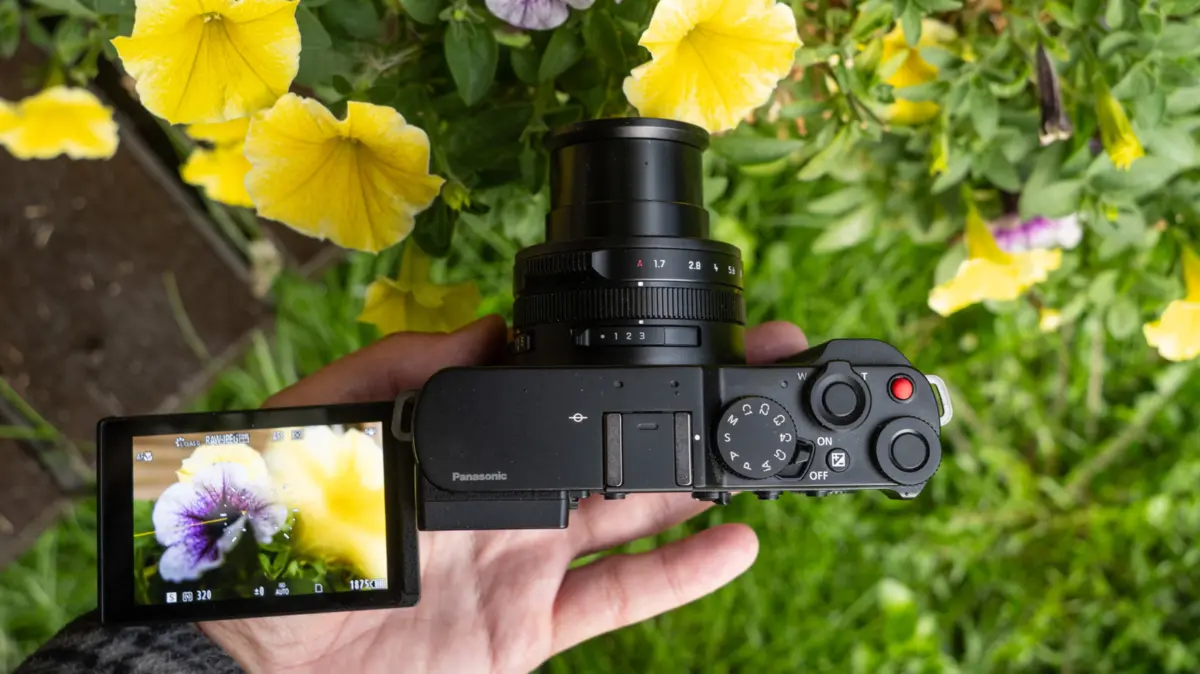
Enter the Panasonic Lumix L10, a stylish, highly capable 20.3-megapixel compact camera featuring a versatile 24-75mm equivalent Leica zoom lens. Priced at $1,500, the L10 directly targets the vacuum left by its predecessor, the LX100 II, while taking aim at established heavyweights like the Sony RX100 VII and Fujifilm X100 VI. Boasting an updated Four Thirds sensor, lightning-fast burst capabilities, advanced AI subject tracking, and surprising 5.6K video proficiencies, the L10 attempts to bridge the gap between pocket-friendly convenience and professional-grade imaging performance.
This comprehensive review explores the design evolution, performance benchmarks, image and video fidelity, and market viability of Panasonic’s latest enthusiast compact.
Detailed Chronology: From the LX100 II to the L10
To understand the engineering and design choices embedded within the Lumix L10, it is necessary to examine the lineage of Panasonic’s compact series.
- August 2018: Panasonic launches the Lumix LX100 II at an introductory price of $1,000. It is praised for its multi-aspect Four Thirds sensor and manual exposure controls, though it faces criticism for its wobbly contrast-detect autofocus system and fixed rear display.
- The Compact Camera Boom (2022–2023): A sudden cultural shift drives a massive surge in used and new high-end compact camera sales. Creators and everyday consumers alike reject the flat look of smartphone imagery in favor of tactile shooting experiences and film-like color science straight out of the camera.
- The Development of Phase Hybrid AF: Panasonic refines its autofocus algorithms, successfully transitioning away from purely contrast-based systems toward sophisticated phase-detect hybrid autofocus systems, famously showcased in flagship Micro Four Thirds bodies like the G9 II.
- Present Day: Panasonic announces the Lumix L10, carrying a $1,500 price tag. Designed to address the compositional limitations of fixed-lens competitors, the L10 introduces a heavily updated sensor, an articulating touchscreen, and robust video capabilities to the high-end pocketable market.
Design and Ergonomics: Evolution, Build, and Handling
Weight, Dimensions, and Handfeel
The Lumix L10 is unmistakably a spiritual successor to the LX100 II, yet physical inspection reveals distinct differences in build philosophy. The L10 tips the scales at 508 grams, marking a substantial increase over the 392-gram footprint of the LX100 II. Consequently, it is not quite as effortlessly pocketable as its predecessor or some ultra-slim alternatives.
However, this added heft serves a structural purpose. Panasonic has engineered a deeper, more pronounced handgrip that provides a remarkably secure and comfortable hold during extended shooting sessions. Available in black, silver, and platinum finishes, the camera balances a sophisticated retro aesthetic with modern ergonomics.
Control Layout and Customization
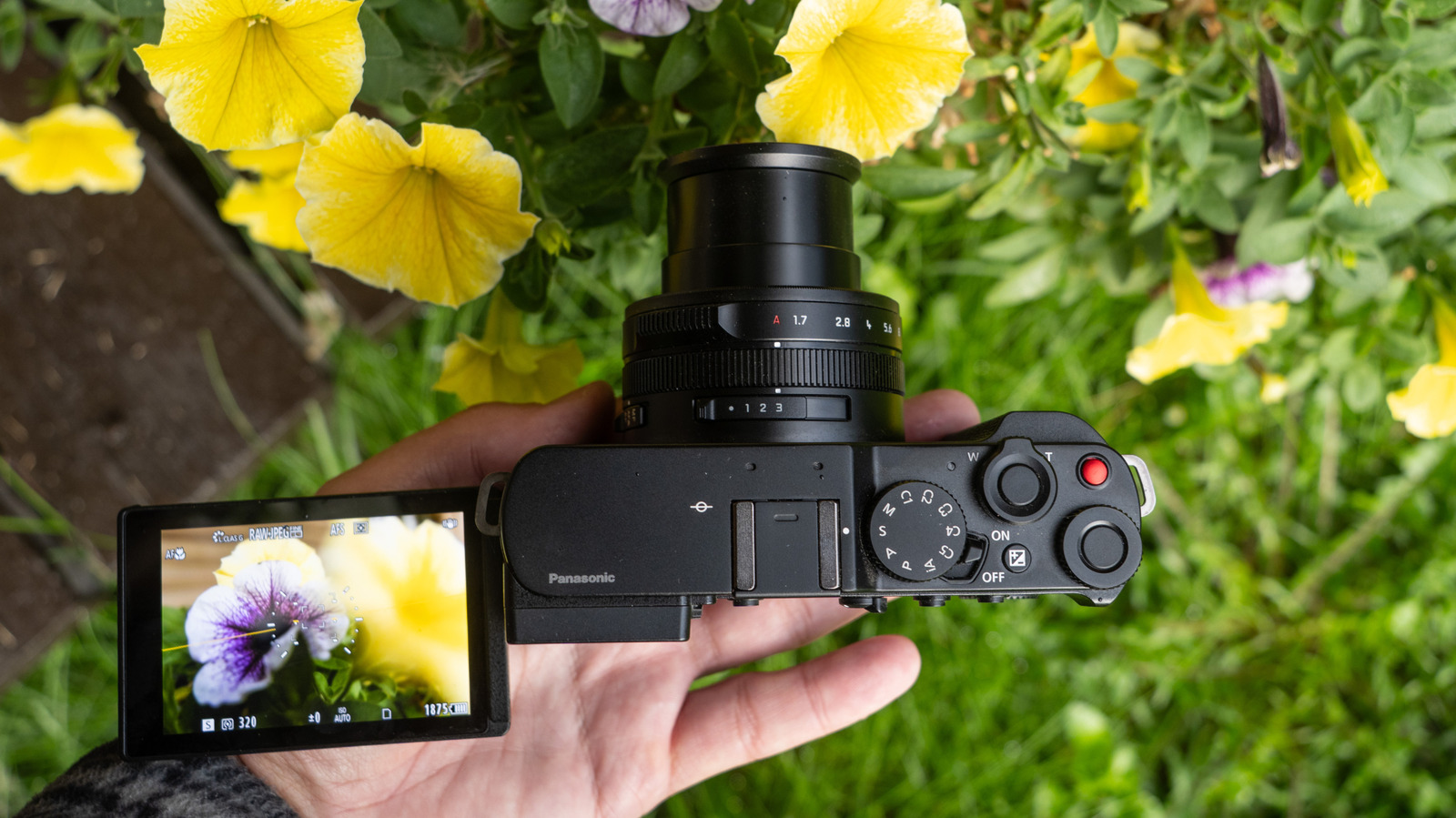
Purists who reveled in the physical, dedicated shutter speed and exposure compensation dials of the LX100 series will notice their absence on the L10. Panasonic has opted for a cleaner, more streamlined layout featuring dual command dials (top and rear), a dedicated photo/video/S&Q (slow and quick) mode switch, and a four-step aspect ratio selector.
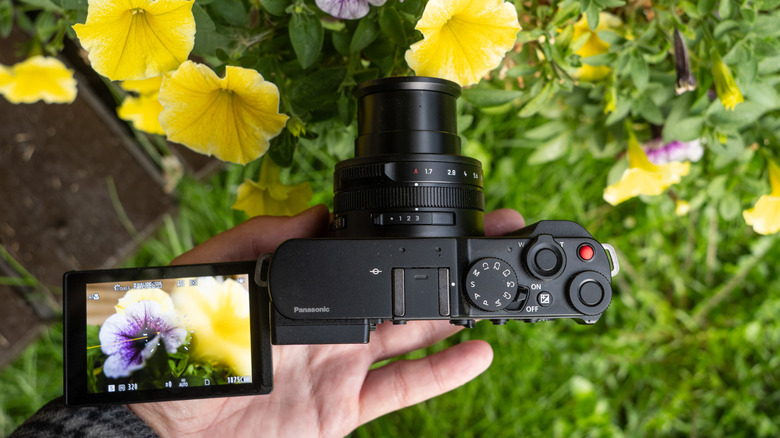
For advanced users, the L10 offers a staggering dozen programmable buttons, allowing shooters to tailor the camera’s tactile feedback entirely to their workflows.
Optics and Viewfinder
Unlike the fixed lenses dominating the luxury compact segment, the Lumix L10 utilizes a versatile 24-75mm f/1.7-2.8 equivalent Leica DC Vario-Summilux zoom lens. Inherited and refined from the LX100 II, this optic remains remarkably sharp and fast throughout its zoom range. Furthermore, its macro capabilities are exceptional: it can focus down to a mere 3 centimeters at the 24mm equivalent setting, and 30 centimeters when fully telephoto-zoomed.
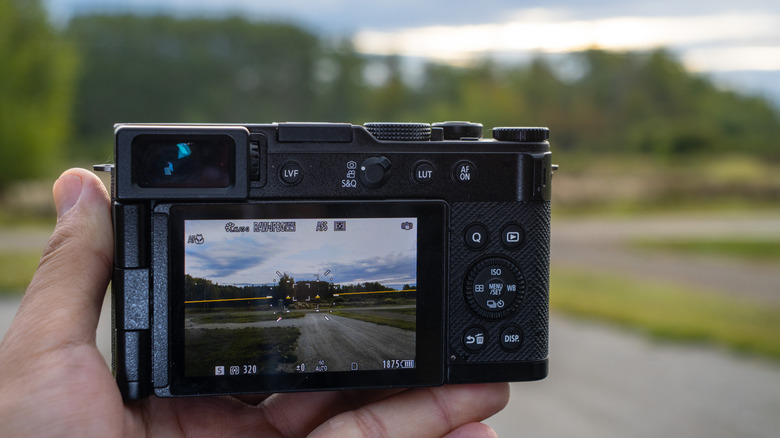
The rear interface features a fully articulating 1.8-million-dot touchscreen display—a massive functional upgrade over the fixed displays of older Panasonic compacts, drastically improving usability for vertical content creation, vlogging, and self-portraits. While the electronic viewfinder (EVF) is serviceable at 2.34 million dots, it lacks the ultra-crisp resolution found in pricier flagships, though its inclusion remains a major victory over screen-only alternatives like Canon’s PowerShot V1.
Power and Storage Architecture
A standout engineering achievement in the L10 is its adoption of a full-sized DMW-BLK22 battery, identical to those used in larger Panasonic interchangeable-lens cameras. This integration yields remarkable power longevity: users can expect approximately 420 shots per charge under standard conditions, up to 1,000 shots in power-saving mode, or roughly 100 continuous minutes of 4K 60p video capture. Additionally, Panasonic has engineered a dedicated, isolated compartment for the single SD UHS-II card slot, preventing frustrating card swaps inside tight battery bays.
Performance Benchmarks & Autofocus Architecture
Sensor and Processor Upgrades
At the technological core of the L10 lies a newly minted sensor and image processor combination. Panasonic has incorporated a slightly cropped iteration of the 26.5-megapixel Four Thirds sensor first popularized in the acclaimed GH9 II. This allows the L10 to capture higher-resolution stills peaking at 20.3 megapixels, granting photographers greater latitude when cropping into images post-capture.
Burst Shooting Speeds
Speed is a defining characteristic of the L10. In mechanical shutter mode with continuous autofocus active, the camera rattles off images at a brisk 9 frames per second (fps). Switching to the electronic shutter accelerates this figure to an astonishing 30 fps.
To contextualize these metrics, the L10 comfortably outpaces its legacy predecessor (5.5 fps) and undercuts or matches primary market rivals, including the Sony RX100 VII (20 fps max) and the Fujifilm X100 VI (20 fps).
Autofocus Reliability and AI Subject Recognition
Previous iterations of Panasonic compacts occasionally struggled with hunting behavior due to reliance on contrast-detect autofocus systems. The L10 completely banishes this issue by integrating Panasonic’s advanced Phase Hybrid AF system featuring 779 points.

During field testing—ranging from fast-moving wildlife in northern Canada to unpredictable human subjects—the continuous autofocus system locked onto targets with remarkable tenacity. The inclusion of deep-learning AI subject recognition further elevates performance, reliably identifying and tracking humans, cats, dogs, and wildlife such as deer. While highly complex forestry environments occasionally challenged the tracking algorithms, the overall hit-rate for sharp, in-focus action shots represents a quantum leap forward for Panasonic’s compact lineup.
Image Quality and Optical Fidelity
Aspect Ratios and Real-Time LUTs
Like select high-end peers, the L10 features a dedicated physical switch allowing instant toggling between four distinct aspect ratios: 4:3, 3:2, 16:9, and 1:1. While purists may prefer capturing raw files across the entire sensor area and cropping later, mobile-first shooters and JPEG enthusiasts will deeply appreciate the instant framing control.
Complementing this is the newly implemented "LUT" (Look-Up Table) button. Alongside Panasonic’s classic color profiles—such as L.ClassicGold and Leica Monochrome—photographers can download or custom-build color and contrast profiles via the Lumix Lab app and bake them directly into JPEGs in real-time.
Sharpness, Noise Control, and Dynamic Range
Thanks to the updated sensor architecture, the L10 produces noticeably sharper photographs with suppressed digital noise at baseline ISO levels compared to the LX100 II. Straight-out-of-camera JPEGs exhibit rich, accurate color science that requires minimal retouching.

Thanks to dual-gain sensor technology, low-light performance is surprisingly competent for a Micro Four Thirds sensor:
- ISO up to 2,500: Virtually imperceptible noise levels.
- ISO 2,500 to 12,800: Noise remains well-managed and easily correctable in post-production, though underexposed shadow regions demand caution.
For high-contrast shooting scenarios, the L10 incorporates an automatic dynamic range boost function. By simultaneously combining data from both high- and low-gain circuits into a single frame, the camera effectively extends dynamic range under harsh, direct sunlight without introducing ghosting artifacts.
Video Capabilities: A Hybrid Powerhouse?
While Panasonic primarily markets the L10 as a dedicated photography tool, its video specification sheet rivals dedicated cinema compacts.
- Resolutions & Frame Rates: Capable of capturing 5.6K video at up to 60 fps in 10-bit color, as well as 4K video at up to 120 fps for high-definition slow-motion sequences. It supports both intra-frame (I-frame) capture for editing ease and Long-GOP codecs to conserve storage space.
- Thermal Management: Due to its compact, fanless chassis, sustained recording limits apply. Users can record 4K 60p footage for approximately 10 minutes before thermal throttling occurs, or 4K 30p for up to 20 minutes.
- Log Recording & Low-Light Floor: The integration of phase-detect AF removes previous hunting issues during video execution. Crucially, the V-Log profile features a remarkably low base ISO of 500 (compared to ISO 2,000 on the GH6), making log-profile shooting vastly more practical under bright daylight conditions.
- Stabilization Limitations: Optical image stabilization adequately smooths out minor hand tremors down to shutter speeds of roughly one-fifth of a second. However, for active video movement (such as walking shots), stabilization is noticeably jerky, and the digital stabilization mode introduces a slight crop that fails to fully correct dynamic motion.
Comparative Metrics & Market Analysis
| Feature | Panasonic Lumix L10 | Sony RX100 VII | Fujifilm X100 VI |
|---|---|---|---|
| Sensor Size | Micro Four Thirds (20.3MP) | 1-inch (20.1MP) | APS-C (40.2MP) |
| Lens | 24-75mm f/1.7-2.8 Zoom | 24-200mm f/2.8-4.5 Zoom | 23mm f/2.0 Fixed Prime |
| Burst Speed (Max) | 30 fps (Electronic) | 20 fps | 20 fps |
| Autofocus System | Phase Hybrid AF (779 pts) | Fast Hybrid AF | Hybrid AF (AI tracking) |
| Max Video Resolution | 5.6K / 60p (10-bit) | 4K / 30p | 6.2K / 30p |
| Launch Price | $1,500 | $1,500 | $1,800 |
When weighed against its primary market competitors, the Lumix L10 carves out a distinct identity. While Sony’s RX100 VII offers a vastly superior zoom reach (24-200mm), its much smaller 1-inch sensor compromises low-light potential, and its menu system and ergonomics frequently draw user complaints. Conversely, Fujifilm’s X100 VI commands a higher price ($1,800) and features a larger APS-C sensor with a robust build, but its fixed focal length severely restricts compositional flexibility compared to the L10’s versatile zoom lens.

Future Outlook
The launch of the Panasonic Lumix L10 signals a maturing phase in the ongoing compact camera renaissance. Consumers are no longer satisfied with mere aesthetic novelty; they demand robust optical performance, reliable autofocus tracking, and modern hybrid utility without sacrificing pocketability.
While its $1,500 price tag positions it firmly in enthusiast territory, the L10 successfully justifies the investment through its brilliant Leica zoom optics, rapid burst speeds, intuitive tactile controls, and formidable video suite. As manufacturers continue to navigate the demands of content creators and street photographers alike, Panasonic has proven that Micro Four Thirds sensors still have a vital, highly competitive role to play in the modern pocketable camera ecosystem.