Executive Overview
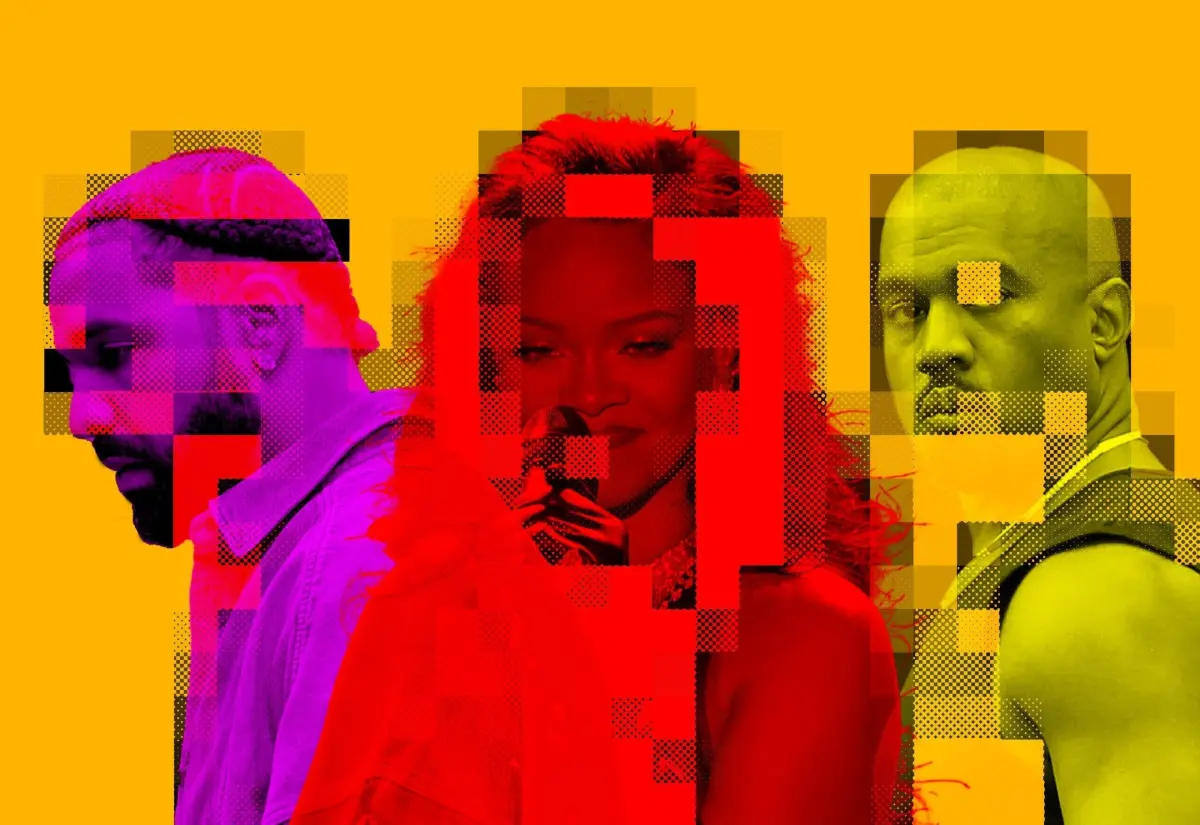
The modern pop landscape is undergoing a silent, seismic shift. Scroll through YouTube, Instagram, or TikTok today, and you are just as likely to hear your favorite superstar singing—or, more frequently, rapping—a track they never recorded, in a studio they never stepped into, using vocal cords that belong to an algorithm.
Fuelled by powerful, accessible, and rapidly evolving generative artificial intelligence tools, the barrier to entry for creating convincing auditory replicas of the world’s most famous musicians has practically vanished. From superstar DJ David Guetta dropping an AI-synthesized Eminem vocal mid-concert to viral tracks seamlessly blending the stylings of Drake and The Weeknd, artificial intelligence has gatecrashed the global music charts.
Yet, this democratization of audio production has triggered an existential panic across the multi-billion-dollar music industry. Major labels are scrambling to protect their assets, legal scholars are grappling with unprecedented questions surrounding intellectual property and identity rights, and artists themselves are speaking out—sometimes in amused bewilderment, but increasingly in outraged protest.
As hobbyists train open-source vocal models in their bedrooms to craft everything from Kanye West covers of indie pop hits to eerily accurate vocal resurrections of late icons like Freddie Mercury, the music industry finds itself standing at a dangerous, exhilarating, and entirely uncharted crossroads.
Detailed Chronology: The Rise of the Synthetic Voice
The journey from academic curiosity to mainstream disruption happened with dizzying speed. To understand how the music industry arrived at its current flashpoint, it is necessary to retrace the milestones that brought synthetic vocals from the shadows of niche Discord servers into the glaring spotlight of viral social media.
Early 2023: The Flashpoint of Unsanctioned Collabs
The opening months of 2023 served as a public awakening regarding the capabilities of audio deepfakes. In February, superstar DJ and producer David Guetta electrified a live concert crowd by dropping an original track featuring an AI-generated Eminem vocal. The track was created without the Detroit rapper’s knowledge or consent, offering millions of fans a glimpse into a future where an artist’s voice can be conjured out of thin air.
Around the same time, French hip-hop act AllttA released “Savages,” a track incorporating an AI-generated Jay-Z vocal. Critics noted that the familiar timbre and cadence of the hip-hop mogul added an ineffably compelling gravity to the song.
However, the tipping point arrived when an anonymous creator dropped “Heart on My Sleeve,” a hyper-realistic collaboration between simulated versions of Drake and The Weeknd. The track sounded so authentic that it instantly went viral across major social media platforms, sparking intense industry speculation that the drop was actually a sophisticated, albeit unauthorized, marketing ploy by an ambitious tech startup.
Spring 2023: The Backlash Begins
As faux cover songs and bootleg collaborations proliferated across the internet, the mood among major artists shifted from fascination to frustration. Unknown creators began pumping out thousands of AI-generated tracks, testing the limits of public credulity.
The breaking point for Drake came in mid-April, when an AI-generated track surfaced featuring a digital recreation of the Canadian superstar rapping Ice Spice’s viral hit “Munch (Feelin’ U).” Visibly incensed, Drake took to Instagram to denounce the track, declaring it “the final straw.”
While artists like Drake drew a hard line in the sand, others found themselves swept up in the wave without offering public comment. Rihanna, for instance, became the unwitting featured artist on a slew of viral AI tracks covering songs by Beyoncé, Katy Perry, and Maroon 5, illustrating just how pervasive the trend had become.
Late Spring 2023 to Present: The Counter-Offensive
Recognizing a direct threat to their business models, major record labels moved swiftly into defensive postures. Universal Music Group (UMG), which represents industry heavyweights including both Drake and Rihanna, reportedly reached out to major streaming platforms—such as Spotify and Apple Music—demanding active cooperation to block AI developers from scraping copyrighted catalogs to train their models.
Concurrently, independent creators, tech hobbyists, and legal experts began clashing over the ethics of audio replication. While copyright strikes started hitting prominent YouTube channels hosting AI-generated music, open-source communities continued to share, refine, and iterate upon the underlying software, proving that once Pandora’s box had been opened, it could not easily be shut.
Supporting Context & Metrics: Inside the Open-Source Audio Revolution
While major labels view generative AI through the lens of piracy and copyright infringement, the ground-level reality is driven by a passionate, decentralized community of bedroom producers and tech enthusiasts operating largely outside traditional commercial structures.
The Tools of the Trade: So-Vits-SVC
At the heart of the current wave of AI-generated music is a piece of open-source software known as So-Vits-SVC (Soft-Voice-To-Voice Singing Voice Conversion). Originally developed on GitHub, the tool has exploded in popularity among digital hobbyists. On TikTok, the hashtag dedicated to the software has amassed over 2 million views, serving as an informal academy where users share tutorials, vocal models, and mixing tips.
The mechanics behind the software rely on deep learning. Users typically harvest isolated a cappella vocal tracks of a target artist—often pulled from unreleased studio sessions, leaked demos, or acapella stems—and feed them into the model. After a training period lasting anywhere from a few hours to a few days, the AI learns the unique acoustic fingerprint, vibrato, accent, and inflection of the artist’s voice.
Once trained, a user can speak or sing a melody into a microphone, and the software will instantly translate that performance into the distinct vocal timbre of the targeted artist.
Profiles from the Underground
YeezyBeaver, a 22-year-old creator based in Oklahoma, represents a new archetype of internet creator. Operating via a YouTube channel dedicated to Kanye West performing an eclectic array of covers, YeezyBeaver’s breakout hit was a surprisingly poignant, gentle rendition of the Plain White T’s acoustic ballad “Hey There Delilah,” performed entirely by a simulated Kanye.
YeezyBeaver’s entry into the space began simply enough: a link shared on a Kanye West fan Discord server pointing toward a pre-trained voice model and basic instructions. After experimenting by superimposing Kanye’s voice onto Drake’s track “Jungle”—a modest viral success on TikTok—he began scanning the musical landscape for songs that fit the rapper’s signature aesthetic.
Similarly, pieawsome, an American college student and member of the internet’s underground “Kanye unreleased community,” began utilizing the technology to breathe new life into unfinished demos. Realizing that the community possessed hours of fragmented, unreleased vocal recordings of Ye, pieawsome chopped up the audio, fed it into So-Vits-SVC, and successfully constructed a refined voice model.
After pushing his model back out to the Discord community, the ripple effects were immediate. Within days, tracks generated using his model—including a viral cover of Ice Spice’s “Munch”—captured the attention of major hip-hop stars, with Travis Scott publicly "liking" an Instagram post featuring the AI-generated track.
Comedy, Anime, and the Digital Avant-Garde
For many young creators, the primary driver is not malice or financial gain, but rather a blend of meme culture, internet humor, and artistic exploration.
Jered Chavez, a 19-year-old student at the University of South Florida, gained internet renown by posting mind-bending AI music videos to Instagram. One of his most notable creations featured a simulated trio of Drake, Kanye West, and Kendrick Lamar singing “Fukashigi no Karte,” the closing theme song to the popular anime series Rascal Does Not Dream of Bunny Girl Senpai.
“I thought it was a cool concept,” Chavez explained. “I’m clearly not the first one to start it, but what makes my page stand out is I try to put a little twist on it and add a comedy aspect.”
Chavez openly acknowledges the ethical tightrope he and his peers are walking. By utilizing a comedic framing device, he attempts to insulate himself from some of the legal and moral backlash, while freely admitting that the underlying technology inherently involves taking someone’s likeness and putting words into their mouths without permission.
Official Statements and Industry Perspectives
The rapid emergence of AI voice cloning has polarized the music community, drawing stark divides between financial stakeholders, legal minds, and the creators building the technology.
The Financial Threat Assessment
Industry analysts have been quick to quantify the danger. A recent research note by an influential analyst at BNP Paribas Exane categorized generative AI music as a “new disruptive threat” capable of fundamentally fracturing the traditional major label business model.
Universal Music Group’s aggressive outreach to streaming services underscores this anxiety. By attempting to cut off the supply chain—preventing AI companies from scraping copyrighted audio libraries to train their neural networks—labels are drawing a line in the digital sand.
Legal Gray Areas and Identity Theft
Despite the alarm bells, the legal standing of hobbyist creators remains profoundly murky. No binding judicial precedent currently exists to govern the use of AI voice clones for non-commercial parody or fan-driven tributes.
Pieawsome compares his work to familiar internet traditions, likening AI voice generation to video game "modding" or writing fanfiction based on a beloved book series. “It’s our version of that,” he noted. “That may be a good thing. It may be a bad thing. I don’t know. But it’s kind of an inevitable thing that was going to happen.”
Veterans of the music technology sector hold a far less benign view. Jonathan Bailey, former Chief Technology Officer of music tech firm Soundwide, argues that the technology crosses ethical and legal boundaries.
“I think you can make a persuasive argument that using AI to reanimate Jay-Z’s voice to have him rap or sing something he never created is kind of a form of identity theft.”
However, actual legal practitioners warn against jumping to premature conclusions. Donald Passman, a premier entertainment attorney at Gang, Tyre, Ramer, Brown & Passman, Inc., who has represented legendary icons such as Adele and Taylor Swift, declined to comment on specific AI imitation cases. He cited the need to avoid taking positions that could conflict with future litigation, emphasizing simply: “It’s way too new.”
The Question of Posthumous Ethics
The ethical dilemmas surrounding AI voice cloning become starkest when applied to deceased performers. While living artists can issue cease-and-desist orders or publicly air their grievances on social media, departed icons have no voice in the matter.
Projects like BohemianRhapsod.ai—which allows users to conduct a virtual choir of 16 AI-generated vocal tracks of Freddie Mercury performing Queen’s legendary rock opera—demonstrate the technical viability of posthumous digital resurrection. Critics argue that manipulating the voices of artists who are no longer around to grant or deny permission strips them of agency over their artistic legacy.
As Jered Chavez pointed out regarding dead artists: “They’re not around to give their approval, and we don’t truly know what they would want.”
Future Outlook: Navigating the Synthetic Era
As the dust begins to settle on the initial wave of viral audio deepfakes, the music industry finds itself staring down an irreversible technological paradigm shift. Copyright takedown notices are flying fast and furious across YouTube and SoundCloud, and major labels are aggressively lobbying streaming services to implement algorithmic filters that detect synthetic audio.
Yet, technological containment is widely regarded by digital natives as a losing battle. Once open-source weight files and voice models are distributed across decentralized networks like Discord and GitHub, retracting them from the wild becomes virtually impossible.
Instead, the future of music in the age of generative AI will likely be forged in the courtroom, through legislative policy reform, and via innovative licensing frameworks. We may soon see official, blockchain-backed voice marketplaces where artists can legally license their vocal likenesses to third-party creators for a cut of the streaming revenue—turning a disruptive threat into a lucrative new revenue stream.
Until then, the responsibility rests heavily on the shoulders of the creators navigating this lawless frontier. As Jered Chavez reflects on his place in the movement:
“The responsibility lies in the judgment of the people that are making [AI-generated music]. I try to use my best judgment. This is kind of new territory for everyone.”
Whether this new era ultimately ushers in a golden age of participatory fan culture or sounds the death knell for authentic human artistry remains to be seen. What is certain, however, is that the voice you hear on tomorrow’s chart-topping hit may belong to no human being at all.