Executive Overview
Fifteen years after rewriting the rulebook for prestige television, Vince Gilligan’s seminal crime drama Breaking Bad continues to exert a profound gravitational pull on pop culture. In a major cinematic event tailored for die-hard devotees of the meth-manufacturing saga, the Alamo Drafthouse theater chain has announced a nationwide, one-night-only theatrical screening of the legendary Season 4 finale, "Face Off." Scheduled for September 7—an annual celebratory milestone known colloquially among fans as "Breaking Bad Day," corresponding with the fictional birthday of protagonist Walter White—the screening promises to elevate one of the most explosive finales in television history from the living room to the silver screen.
This exclusive engagement is more than a simple retrospective; it is an immersive, multi-sensory tribute designed to reward the enduring loyalty of a fanbase that has kept the show’s cultural footprint alive long after the final credits rolled in 2013. Attendees securing a ticket via a $10 food and beverage voucher will not only witness the harrowing, high-stakes chess match between Walter White and Gustavo Fring in a premium theatrical environment, but they will also receive a curated collection of iconic franchise memorabilia upon entry.
Yet, this cinematic revival arrives at a bittersweet juncture for the franchise. As series creator Vince Gilligan pivotally charts new creative territory with his upcoming Apple TV+ project Pluribus—starring Better Call Saul alumnus Rhea Seehorn—and principal cast members shut the door on future expansions of the Albuquerque crime syndicate, this theatrical event serves as a poignant reminder of television’s golden age. This comprehensive report explores the logistical details of the upcoming Alamo Drafthouse screening, unpacks the cultural and narrative weight of "Face Off," examines the broader history of the Breaking Bad universe on the big screen, and evaluates the definitive future outlook for the franchise.
Detailed Chronology: The Road to "Face Off" and Alamo Drafthouse’s Cinematic Tribute
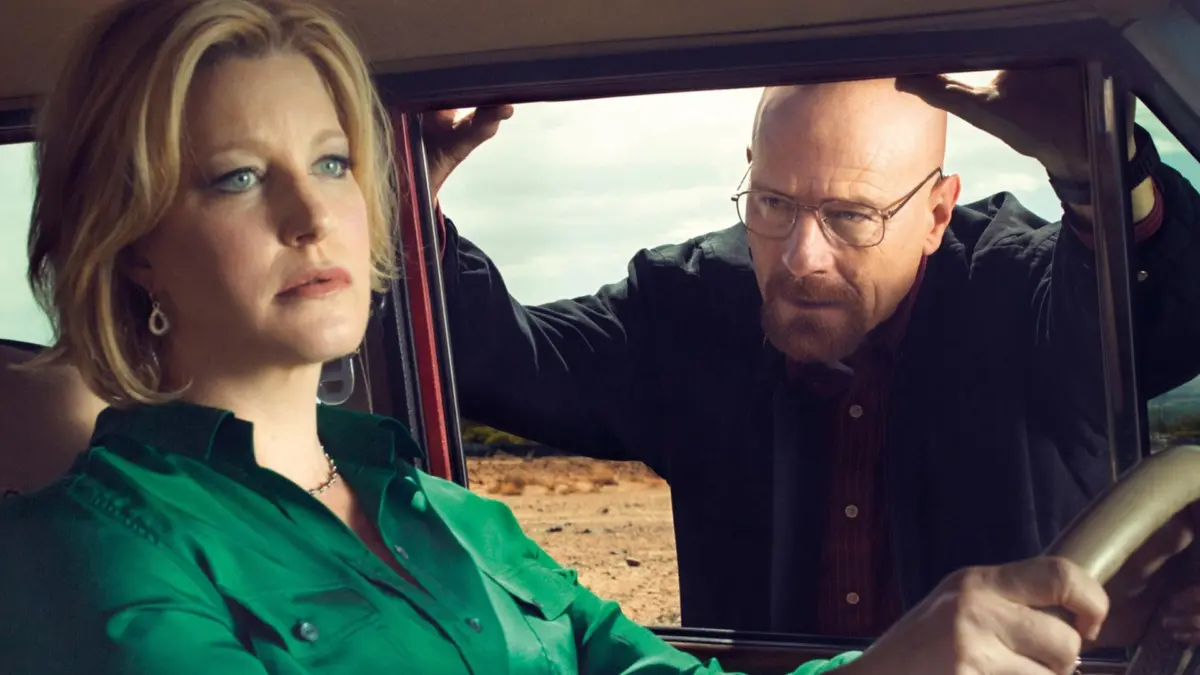
To fully appreciate the significance of bringing "Face Off" to theaters, one must contextualize the trajectory of Season 4. By late 2011, Breaking Bad had evolved from a critically acclaimed cult favorite into an absolute cultural juggernaut. Season 4 charted a slow-burn, psychological thriller of escalating paranoia and power struggles as Walter White (Bryan Cranston) found himself locked in a mortal combat of wits with his cool, calculating employer-turned-adversary, Los Pollos Hermanos proprietor Gustavo Fring (Giancarlo Esposito).
The season finale, appropriately titled "Face Off" and written and directed by series creator Vince Gilligan, originally aired on AMC on October 9, 2011. It remains a masterclass in narrative tension, structural pacing, and visual storytelling. The episode’s narrative engine focuses on Walter’s desperate gambit to eliminate Gus before Gus can murder him and his family. Outmaneuvered, financially strained, and hunted, Walt engineers an alliance with an incapacitated Hector Salamanca (Mark Margolis), utilizing a pipe bomb strapped to a wheelchair in a nursing home to orchestrate a suicide bombing that takes out both Gus Fring and his bodyguard Tyrus. The chilling final image of Gus—adjusting his tie with half of his face blown off before collapsing—cemented the episode in television lore.
[Timeline of Key Breaking Bad Milestones]
-------------------------------------------------------------------------
• January 20, 2008  : Series premiere debuts on AMC.
• October 9, 2011   : Season 4 finale "Face Off" airs, drawing record audiences.
• September 29, 2013: Series finale "Felina" broadcasts to 10.3 million viewers.
• October 11, 2019  : Sequel film 'El Camino' premieres on Netflix and select theaters.
• February 8, 2022  : 'Better Call Saul' concludes its run with Season 6.
• September 7, 2026 : Alamo Drafthouse hosts nationwide "Breaking Bad Day" screening.
-------------------------------------------------------------------------
The upcoming September 7 screening at Alamo Drafthouse locations leverages this rich narrative legacy. Designed as an exclusive event to honor Walter White’s fictional birthday, the evening is engineered to be a communal celebration for cinephiles and television purists alike. Participants who purchase the required $10 food and drink voucher will be handed a suite of exclusive, highly collectible memorabilia upon arrival, bridging the gap between passive viewing and active fandom engagement. The swag bag includes:
- The Heisenberg Hat: The quintessential black porkpie hat worn by Walter White during his descent into criminal dominance.
- Blue Rock Candy: A meticulous nod to the trademarked 99.1% pure methamphetamine produced by Walter and Jesse.
- Hector’s Bell: A replica of the explosive, brass call bell used by the wheelchair-bound Salamanca to exact his ultimate revenge.
- A Gus Fring Half-Face Mask: A haunting physical recreation of the iconic makeup and prosthetic effects from the episode’s unforgettable climax.
Tickets for the event are currently available through the official Alamo Drafthouse ticketing portal, with high demand anticipated across participating metropolitan locations.
Supporting Context & Metrics: The Box Office and Cultural Footprint of Prestige TV in Theaters
The decision by Alamo Drafthouse to screen a television episode in a theatrical setting reflects a growing trend within modern entertainment: the blurring of lines between cinematic releases and serialized television. While historical precedent typically relegated TV episodes to home media or syndication, the rise of premium streaming and specialized theatrical curation has turned culturally seismic episodes into major public events.
Breaking Bad is no stranger to the big screen, though its cinematic footprint has historically been calculated and sparing. In October 2019, Netflix and Sony Pictures Television partnered for a limited theatrical run of El Camino: A Breaking Bad Movie, a feature-length sequel centered on Jesse Pinkman’s (Aaron Paul) immediate aftermath following his escape from Jack Welker’s neo-Nazi compound in the series finale "Felina." While El Camino enjoyed a brief, multi-day theatrical window across select independent and chain cinemas in major U.S. markets before its global streaming debut, it grossed an estimated localized box office while prioritizing its digital distribution model.
[Franchise Metrics & Economic Impact]
-------------------------------------------------------------------------
• Emmy Awards Won     : 16 Primetime Emmy Awards (Breaking Bad)
• Viewership Peak     : 10.3 million viewers for the 2013 series finale
• Theatrical Runs     : El Camino (2019); Alamo Drafthouse "Face Off" (2026)
• Primary Streamers   : Netflix, AMC+, Apple TV+
-------------------------------------------------------------------------
The economic and cultural staying power of the Breaking Bad intellectual property cannot be overstated. Over its five-season run on AMC, the series collected 16 Primetime Emmy Awards, launched a critically acclaimed prequel spin-off (Better Call Saul), and established Albuquerque, New Mexico, as a premier destination for cinematic tourism. By mounting repertory screenings like the upcoming "Face Off" event, theaters are able to capitalize on proven intellectual property while offering audiences a communal experience that living room streaming cannot replicate. Watching the silent, suffocating tension of Walt waiting for Gus to enter the retirement home, amplified through state-of-the-art Drafthouse sound systems and projected onto massive screens, transforms a known narrative beat into a visceral, edge-of-your-seat communal gasp.
Official Statements and Industry Perspectives
The enduring appeal of the Breaking Bad universe continues to resonate not only with viewers, but also with the creative minds who brought it to life. Yet, as the franchise celebrates milestones like "Breaking Bad Day," its key architects have been remarkably candid about the definitive closure of the narrative universe.
In recent interviews, series creator Vince Gilligan has consistently emphasized that milking the Breaking Bad cash cow indefinitely was never part of his creative ethos. Having successfully concluded both Breaking Bad and the six-season run of Better Call Saul, Gilligan made a conscious choice to step away from the drug trade saga to explore entirely new imaginative landscapes.
Similarly, actor Bob Odenkirk—whose portrayal of slick, morally flexible attorney Saul Goodman/Jimmy McGill earned him universal acclaim—has addressed persistent fan queries regarding potential future continuations of the Better Call Saul timeline. According to Odenkirk, any hypothetical continuation focusing on Saul Goodman post-series finale would present insurmountable narrative hurdles. Because Jimmy McGill/Saul Goodman begins serving an 86-year prison sentence in the federal penitentiary system during the final moments of the Better Call Saul series finale, Odenkirk has noted that a continuation would inherently have to be set entirely behind bars—a creative direction he views as creatively restrictive and practically unnecessary.
Meanwhile, the creative team has shifted its focus entirely to future projects. Gilligan’s upcoming collaboration with Apple TV+, titled Pluribus, reunites him with Better Call Saul star Rhea Seehorn. While plot details for Pluribus remain tightly guarded under strict non-disclosure agreements, industry analysts anticipate that the series will carry the signature tonal complexity, sharp character-driven writing, and moral ambiguity that defined Gilligan’s previous television triumphs.
Reflecting on the franchise’s past ventures, Gilligan has occasionally shared behind-the-scenes trivia regarding roads not traveled. Among the most widely discussed anecdotes is Gilligan’s prior pitch for a Grand Theft Auto-style open-world video game adaptation of Breaking Bad. Though the concept briefly captured the imagination of gaming enthusiasts across the internet, the project ultimately failed to secure greenlight funding or development partnerships, leaving Breaking Bad’s interactive legacy largely confined to mobile tie-ins and minor VR experiences rather than a full-fledged AAA sandbox simulator.
Future Outlook: The Finality of Albuquerque and the Legacy of Heisenberg
As fans prepare to fill Alamo Drafthouse auditoriums on September 7 to watch Walter White engineer the downfall of Gus Fring once more, the overarching question facing the entertainment landscape is what legacy the Breaking Bad universe leaves behind in an era dominated by endless reboots, cinematic universes, and franchise fatigue.
The definitive answer lies in the power of finite storytelling. Unlike contemporary superhero franchises or endlessly expanded streaming universes that struggle under the weight of their own continuity, Breaking Bad and Better Call Saul succeeded precisely because they possessed a beginning, a middle, and a rigorously planned end. Every character arc—from Walter White’s corrupted chemistry teacher to Jimmy McGill’s tragic transformation into a fugitive con man—was mapped out with architectural precision.
[The Franchise Landscape Post-2026]
-------------------------------------------------------------------------
• Vince Gilligan      : Directing and producing 'Pluribus' (Apple TV+)
• Peter Gould         : Exploring independent script and producing projects
• Franchise Status    : Dormant; no active television or film sequels planned
• Repertory Cinema    : Periodic theatrical events (Alamo Drafthouse, etc.)
-------------------------------------------------------------------------
Consequently, the future of the franchise will not be defined by new content, but by preservation, celebration, and repertory engagement. Events like the Alamo Drafthouse "Face Off" screening prove that culturally iconic television can enjoy a healthy afterlife in cinemas, functioning much like classic cinema retrospectives of past decades.
For the creative principals involved, the page has permanently turned. Vince Gilligan is forging ahead into science-fiction and speculative drama with Pluribus, while the principal cast members continue to diversify their resumes across stage, film, and television. Yet, for millions of viewers worldwide, Albuquerque remains a sacred cinematic landscape where a simple box of blue rock candy and a black porkpie hat can instantly transport them back to the breathless tension of a suburban meth lab empire. As the lights dim in Alamo Drafthouse theaters this September, the bell will ring one more time for Gus Fring—proving that while Heisenberg may be gone, his cultural reign is immortal.