Executive Overview
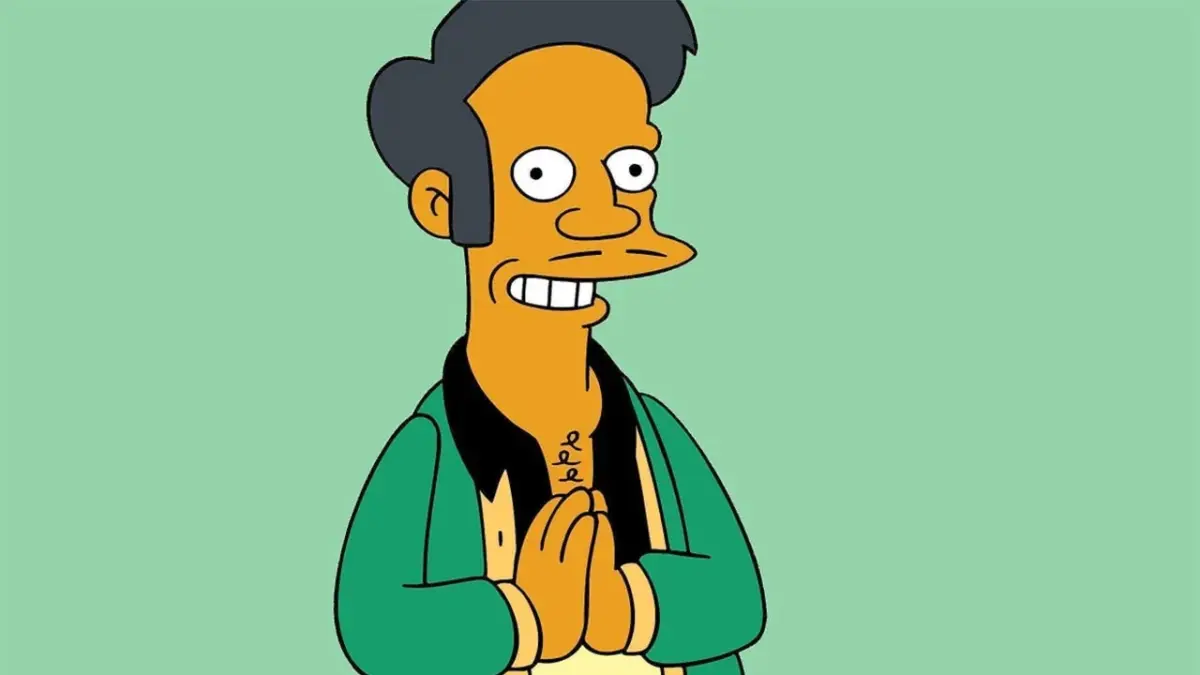
After nearly a decade of institutional quietude, one of animated television’s most culturally debated figures has officially reclaimed his voice. In Sunday night’s Season 38 episode of The Simpsons, titled "The Revengening," the beloved Kwik-E-Mart proprietor Apu Nahasapeemapetilon spoke his first lines on screen in over nine years. Veteran voice-over and on-screen actor Sunil Malhotra (Grey’s Anatomy, The Legend of Korra) stepped into the iconic role, marking a watershed moment for the long-running Fox animated staple.
Apu’s return ends an unprecedented hiatus that began following the broadcast of October 2017’s "The Serfsons." For roughly nine years, the character was relegated to background non-speaking cameos—seen visually in crowd scenes and framing shots, but entirely stripped of dialogue. This narrative purgatory was the direct result of a complex cultural reckoning sparked by comedian Hari Kondabolu’s 2017 documentary, The Problem With Apu, which critically examined how the character’s caricature impacted individuals of South Asian descent. Following the documentary and subsequent public discussions, Hank Azaria—who voiced Apu with a heavily exaggerated accent for the show’s first 29 seasons—stepped away from the role, voicing profound public remorse for his portrayal.
The meticulously planned revival of Apu was executed under a veil of intense secrecy. Producers enforced strict Non-Disclosure Agreements (NDAs) throughout the table reads and production phases to prevent leaks. According to executive producer Matt Selman and the creative team, the objective was not merely to reintroduce a classic character, but to evolve him in a manner cognizant of past missteps. Through a meta-textual Halloween narrative involving a vengeful, Daft Punk-esque antagonist unmasked as Apu, The Simpsons confronted its own controversial history head-on. This comprehensive report explores the timeline of Apu’s exile, the casting process of Sunil Malhotra, the mechanics of his dramatic return in "The Revengening," and what this pivotal creative pivot means for the future of Springfield’s most famous merchant.
Detailed Chronology: From Cultural Backlash to the Silence of Springfield
To understand the magnitude of Sunday night’s broadcast, it is essential to trace the precise historical trajectory that led to Apu’s prolonged absence from the narrative forefront of The Simpsons.
The Golden Era and the Seeds of Concern
Introduced in the Season 1 episode "The Telltale Head" (1990), Apu Nahasapeemapetilon quickly evolved from a one-note convenience store clerk into a multi-dimensional, deeply humanized Springfield resident. Episodes such as Season 5’s "Homer and Apu" and Season 7’s "Much Apu About Nothing" provided rich backstories, exploring his journey as an undocumented immigrant achieving American citizenship, his master’s degree in computer science, and his elaborate arranged marriage to Manjula.
However, as cultural sensibilities shifted across the late 1990s and 2000s, the reliance on a non-South Asian actor utilizing an exaggerated, dialect-heavy caricature grew increasingly contentious among media critics and viewers of South Asian heritage.
The Catalyst: The Problem With Apu (2017)
The cultural discourse surrounding the character crystallized in November 2017 with the release of truTV’s documentary The Problem With Apu, written and presented by comedian Hari Kondabolu. The film featured interviews with numerous prominent South Asian artists and writers—including Kal Penn, Maulik Pancholy, and Aparna Nancherla—who detailed how Apu’s portrayal had served as a frequent source of playground bullying, stereotyping, and systemic othering throughout their lives.
The documentary forced a global conversation regarding representation in American animation. While initial responses from the show’s production team drew criticism for perceived dismissiveness, the pressure steadily mounted on the network and creative staff.
Hank Azaria’s Departure and Public Remorse
Faced with mounting societal critique, Hank Azaria announced in early 2020 that he would permanently step down from voicing Apu. In subsequent interviews, including a transparent and deeply remorseful appearance on Dax Shepard’s Armchair Expert podcast in 2021, Azaria reflected on his decades-long tenure with palpable regret. He noted that part of him felt compelled to apologize personally to every individual of South Asian descent affected by the portrayal.
With Azaria’s departure, the show’s writers faced an unprecedented dilemma. Rather than instantly recasting the role amid the height of the controversy, the creative team opted for an indefinite moratorium on Apu’s dialogue. For nearly nine years, spanning from the October 2017 episode "The Serfsons" onward, Apu was rendered a silent fixture of Springfield’s background architecture—a recurring visual presence deliberately denied a voice while the production staff debated the character’s long-term viability.
Supporting Context & Metrics: The Road to "The Revengening"
The conceptualization of Apu’s return did not happen overnight. It required a unique confluence of creative audacity, internal reflection, and timing.
The Genesis of Season 38’s Turning Point
The breakthrough occurred during the planning sessions for The Simpsons Season 38. Staff writer Nick Hahan and co-executive producer Cesar Mazariegos hatched an unconventional pitch: bringing Apu back via one of the series’ signature Halloween-themed multi-segment specials.
The episode, "The Revengening," constructed a meta-narrative around the character’s long absence. In the episode’s framing plot, an individual clad in a Daft Punk-inspired Halloween costume is repeatedly and accidentally killed by various negligent residents of Springfield. A year later, the costumed survivor returns to systematically exact vengeance upon his inadvertent tormentors. When the mask finally comes off, the avenger is revealed to be none other than Apu, delivering a searing indictment to the assembled townspeople:
"I am the man you left for dead. I am the one you pretended never existed!"
This self-aware dialogue served as a direct allegory for the character’s real-world treatment by the network and writers’ room since 2017. Marge Simpson, acting as a narrative proxy for the producers, responds with an explicit apology: "Apu, we’re so sorry we left you for dead. Believe me, we wanted to do the right thing." Bart adds, "But we were so scared, and just didn’t know what to do."
A Highly Confidential Casting Process
Once the script was greenlit, the search for a new voice actor commenced under maximum operational security. Fearing leaks and pre-emptive social media firestorms, producers instituted strict Non-Disclosure Agreements for all staff, casting agents, and potential talent involved in the table reads.

Sunil Malhotra, an accomplished voice and screen veteran with credits in Grey’s Anatomy and The Legend of Korra, received the audition call through his agent. Speaking to industry reporters, Malhotra admitted that the initial notification elicited complex emotions:
"When my agent called me about a Simpsons audition, I knew exactly what role it was for, and the idea actually made my stomach sink. But admittedly, part of me was also curious. It had been eight years since Apu had spoken on the show, and it got me thinking: Did the writers’ room look different now? Could they bring him back in a way that acknowledged and apologized for past mistakes? Could I make the character my own, and reclaim him in some way? And could they achieve all of that in an unmistakably Simpsons way that didn’t disappoint fans?"
Following extensive consultations and back-and-forth discussions with the show’s executive producers, Malhotra became convinced that the creative team’s approach was grounded in authentic accountability and collaborative evolution.
Official Statements and Industry Perspective
The historic casting decision has elicited strong reactions from both the creative leadership of The Simpsons and Malhotra himself, highlighting the delicate balance between comedic tradition and modern cultural responsibility.
Executive Producer Matt Selman on Character Evolution
In statements following Sunday night’s broadcast, executive producer Matt Selman emphasized the affection the writing staff holds for the character, alongside a clear-eyed recognition of the need for structural change in how Apu is handled:
"We love this character, and wanted to bring him back in a smart, Simpsons-y way that allowed him to evolve. We’re excited by what Sunil has already brought to the role, and look forward to seeing more of Apu in the future."
By integrating meta-commentary into the script, the show’s leadership signaled that Apu would no longer be swept under the rug, nor would he return unchanged. The goal was structural integration that honors the legacy of Springfield while addressing past shortcomings transparently.
Sunil Malhotra on Reclaiming the Narrative
For Malhotra, stepping into the recording booth carried profound personal significance, bridging his professional ambitions with his identity as a South Asian creative in the American entertainment landscape:
"It was the beginning of a deeply collaborative experience that I hope is equally satisfying for longtime fans of The Simpsons and for other South Asian kids who, like me, stopped watching at some point along the way."
Malhotra further detailed the catharsis of delivering the character’s explosive reintroduction lines in the recording studio:
"I’d be lying if I didn’t say that the sweetest part of all was unleashing that righteously rage-fueled ‘I AM APU!’—on behalf of so many of us—over and over in the studio until we got it just right. I really feel like we did, and I can’t wait for fans to see more Apu."
Future Outlook: What Lies Ahead for Apu and Springfield?
The return of Apu Nahasapeemapetilon in "The Revengening" represents far more than a simple casting announcement; it is a clinical demonstration of how long-running legacy media properties can address historical missteps while attempting to reconcile with alienated segments of their audience.
Narrative Rehabilitation and Ongoing Integration
With Sunil Malhotra now officially installed as the voice of the Kwik-E-Mart owner, The Simpsons has charted a definitive path forward. Apu is no longer trapped in a state of perpetual, silent limbo. The self-referential apology issued by Marge and Bart in Sunday’s episode establishes an explicit in-universe contract with the audience: the past is acknowledged, the silence is broken, and the character is permitted to participate in the narrative once more.
However, challenges remain. The television landscape has evolved significantly since 1990, and viewers will undoubtedly scrutinize how Apu is utilized in subsequent Season 38 episodes and beyond. Will he retain his entrepreneurial spirit and complex familial dynamics, or will the writers take him in entirely novel directions? The creative team has committed to an evolution of the character, implying that future storylines will likely reflect modern comedic sensibilities and diverse writers’ room perspectives.
A Test of Fan Reception
As Sunday night’s episode continues to generate widespread discussion across social media platforms and critical review sites, the true test for The Simpsons will lie in the sustained reception of Malhotra’s performance. Early indicators suggest a wave of cautious optimism from viewers appreciative of the transparent meta-acknowledgment and the casting of an authentic South Asian voice actor to reclaim the role.
Ultimately, "The Revengening" closes a turbulent nine-year chapter in television history. By choosing accountability over permanent erasure, The Simpsons has opened the door for Apu Nahasapeemapetilon to serve customers, run his business, and speak his mind once again in the fictional town of Springfield.