Executive Overview
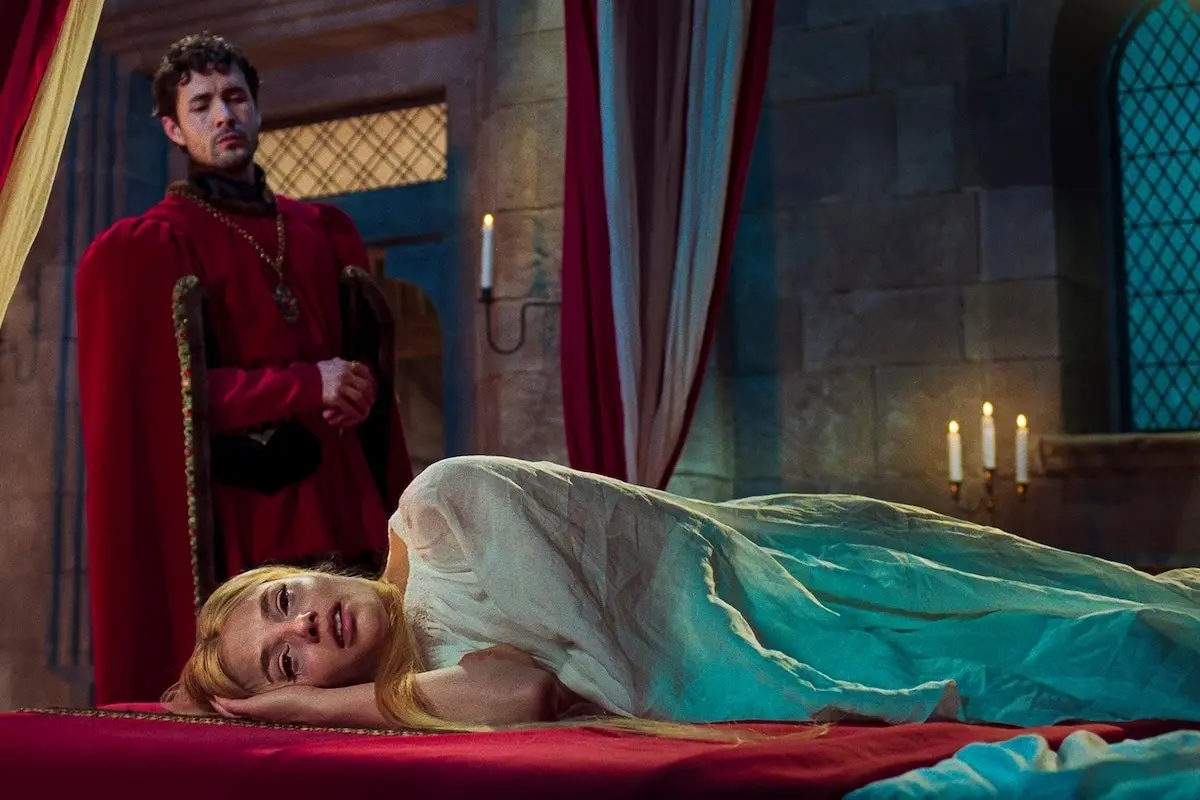
Nearly a decade after she bewitched independent cinema with her pastel-hued cult classic The Love Witch, visionary auteur Anna Biller has returned with a cinematic masterpiece that is as visually intoxicating as it is socially incendiary. Entitled The Face of Horror, Biller’s latest feature transports audiences into a meticulously rendered, hyper-stylized medieval landscape populated by caddish knights, tragic brides, and vengeance that transcends the mortal coil. Starring Jonah Hauer-King and Kristine Froseth, the film trades the 1960s aesthetic of its predecessor for sumptuous Technicolour opulence, yet retains the filmmaker’s razor-sharp cultural critique.
Based loosely on Japan’s most famous ghost story, Yotsuya Kaidan, The Face of Horror acts as a mirror to contemporary anxieties. Beneath its gorgeous set designs and Hammer melodrama nods lies a sobering thesis: the societal mechanics of the 14th century bear an alarming resemblance to the digital landscape of the 2020s. In an era marked by a resurgence of extreme online misogyny and the weaponization of men’s rights movements, Biller’s work is less a historical period piece than an urgent dispatch from the front lines of gender politics.
In this exclusive deep dive, we explore the meticulous craftsmanship behind Biller’s visual lexicon, the ideological barriers facing feminist filmmakers today, and the complex, polarizing nature of beauty as a tool of survival, coercion, and ultimate liberation.
Detailed Chronology: From The Love Witch to the Medieval Backlash
To understand the weight of The Face of Horror, one must trace the cultural trajectory forged by Biller’s 2016 breakout, The Love Witch. When The Love Witch first entered cinemas, it arrived at the precipice of a shifting cultural consciousness. Anchored by Elaine—a hypnotic heroine who utilized witchcraft and hyper-constructed glamour to bend men to her will—the film offered a subversive take on sexploitation cinema. Built upon a visual foundation pulled straight from the Thoth tarot deck and 1960s pop-culture iconography, Elaine’s quest for love resonated deeply with audiences navigating an increasingly transactional dating landscape.
In the years following its release, The Love Witch achieved genuine cult status. While indie cinephiles embraced its midnight-movie energy, a new demographic discovered the film via Generation Z TikTok, where clips of Elaine’s deadpan delivery and striking makeup racked up billions of views. Yet, despite this massive cultural footprint, a staggering ten-year gap separates The Love Witch from The Face of Horror.
When asked about the prolonged hiatus, Biller offers a candid assessment of the contemporary film industry:
"It’s sort of scary to make a feminist film and have to own it… Plus, no one really wants to make them."
The cultural landscape transformed drastically between 2016 and the present day. The initial wave of optimism surrounding the #MeToo movement has given way to an aggressive, calcified backlash. Rather than tackling modern boardrooms or contemporary dating apps, Biller realized that framing her critique within a historical context was a matter of self-preservation. By adapting a centuries-old Japanese ghost story—originally a foundational Kabuki play—into a medieval European visual framework, she hoped to insulate herself from immediate, vitriolic pushback.
Instead, the backlash arrived unabated. Detractors dismissed The Face of Horror as a campy joke, demonstrating a profound lack of empathy for the psychological torment endured by the lead character, Eleanor. The hostility directed at the film underscores Biller’s central premise: in a rapidly regressive world, simply sympathising with a woman’s systemic oppression is treated as a radical, offensive act.
Supporting Context & Metrics: The Architecture of Glamour and Misogyny
Biller’s films are celebrated not merely for their ideological stances, but for their painstaking tactile authenticity. While she famously sewed every costume by hand for The Love Witch, The Face of Horror scales up production value while maintaining an uncompromising, auteur-driven vision. The sets resemble Russian nesting dolls, framing compositions that pay homage to the rich, artificial beauty of classic studio-era melodramas.
At the heart of both films lies a rigorous examination of glamour—a term whose original Scottish etymology refers explicitly to a form of bewitchment or magic. Biller treats beauty not as a passive genetic lottery, but as a constructed, active ritual of self-defense.
The Ritual of Self-Creation
In The Love Witch, Elaine meticulously applies her iconic blue eyeshadow; in The Face of Horror, the film opens with Eleanor carefully applying lipstick and blusher. Biller explains the philosophy behind these deliberate choices:
- Rejecting the Male Gaze: When a woman constructs her own beauty rather than presenting it as "natural," she strips away the male gaze. The glamour ceases to be an object for passive consumption and becomes an autonomous work of art.
- The Currency of Youth: In both medieval settings and the modern gig-economy world, a woman’s physical appearance remains inextricably linked to her societal status. As Eleanor laments in the film, "My face and figure are my fortune." When that beauty is stripped away through disfigurement, her entire social existence is annihilated.
- Nuance in Masculinity: Unlike traditional revenge narratives that present one-dimensional villains, The Face of Horror populates its world with exceptionally charismatic, deeply complex men. Biller intentionally cast attractive, layered actors to foster audience empathy, proving that systemic misogyny is perpetuated not by cartoon monsters, but by ordinary men shaped by patriarchal conditioning.
Official Statements: Anna Biller on the State of Cinema and Empathy
In conversation, Biller is fiercely articulate about her motivations, refusing to pander to commercial sensibilities or algorithmic filmmaking trends. Below are key insights extracted from her recent discussions regarding the genesis of her cinematic philosophy:
On the Medieval Nature of Modern Misogyny:
"The way men’s rights activists behave feels very medieval to me. There’s been such an upsurge in extreme misogyny that it feels like we haven’t progressed at all… We’re living in a more misogynistic world, in a way, because even sympathising with a woman’s plight feels radical."On the Evolution of Cinematic Makeup and Eras:
"Medieval women didn’t wear very much make-up. I was going for that kind of 60s glamour for them, with a lighter pink lip and eyelashes. Of course, you can’t do eyeshadow in the medieval era, as they didn’t wear it. For The Love Witch, there was also 60s glamour, but you could go much bigger… that whole Twiggy look, Brigitte Bardot, Claudia Cardinale."On the Intended Audience:
"I make films for men, to teach men what women go through, to expand their empathy… I also make movies for women, especially young girls who are confused about this strange thing called womanhood, where you are constantly being demonised and put on a pedestal… I make films for cinephiles, because I myself am a cinephile. And lastly, I make films for myself, to learn about myself."
Future Outlook: Escaping the Algorithm in the Age of Backlash
As The Face of Horror rolls out to midnight-movie screenings and festival circuits, it stands as a testament to the resilience of independent, uncompromising art. In an entertainment ecosystem increasingly dominated by homogenized, algorithm-tested intellectual properties and risk-averse studio slates, Biller’s work represents a vital counter-movement.
The challenges facing feminist auteurs are undeniably mounting. The economic realities of financing auteur-driven projects that challenge patriarchal structures remain bleak, and the social media backlash cycle threatens to exhaust even the most hardened creators. Yet, the enduring, viral success of The Love Witch among younger generations proves that an audience starving for visual sophistication and unvarnished emotional truth does exist.
The Face of Horror forces viewers to confront uncomfortable truths about how society values women, youth, and power. By dressing her modern anxieties in medieval velvet and Technicolour blood, Anna Biller has crafted a timeless cautionary tale. As we look toward the future of independent cinema, the question is not whether the industry is ready for Biller’s unflinching gaze, but whether society has the courage to look into the mirror she has provided.