Executive Overview
In the closing months of 2026, a peculiar and intensely polarized cultural phenomenon took over the digital landscape of X (formerly Twitter). Dubbed "Anakin Skywalker Gen Z Male Rage Memes"—or more colloquially, "Anakin-Maxxing"—the trend harnesses iconic scenes, dialogue, and character arcs from George Lucas’s Star Wars prequel trilogy (The Phantom Menace, Attack of the Clones, and Revenge of the Sith).
Far from standard cinematic appreciation, this surge in memes frames Anakin Skywalker not merely as a tragic sci-fi anti-hero, but as a deeply resonant avatar for Generation Z young men navigating contemporary economic instability, cultural displacement, institutional hypocrisy, and widespread alienation.
What began as localized grievances over student debt, housing affordability, and job displacement driven by artificial intelligence quickly snowballed into a sweeping sociopolitical commentary. By mapping the rigid, dogmatic Jedi Order onto modern Western establishments—frequently personified as "Boomers" or out-of-touch bureaucratic elites—young right-leaning and dissident online communities have transformed a 20-year-old movie franchise into a complex metaphorical critique of modern life.
This report provides an exhaustive investigative overview of the trend’s origins, its rapid acceleration across social media, the ideological friction points it sparked with older generations, and its broader implications for modern political discourse.
Detailed Chronology: From Prequel Nostalgia to Political Metaphor
Early October 2026: The Spark of Economic Realism
The groundwork for the trend was laid in early October 2026, as users began repurposing Anakin Skywalker’s well-documented frustrations with the Jedi Council. The narrative spine of the prequels—a gifted, emotionally volatile young man bound by the strictures of a failing, hypocritical institution—offered a ready-made template for expressing contemporary youth frustration.
The turning point occurred on October 11, 2026, when X user @ArchitectOracle published a post pairing an image of a severely burned Anakin Skywalker post-Mustafar duel with a bulleted list of modern socio-economic trials faced by Zoomers. Highlighting insurmountable college debt, the societal disruptions of the COVID-19 pandemic, AI-driven job elimination, soaring rent-to-income ratios, and persistent generational stereotyping by older demographics, the post quickly went viral. It accumulated over 170,400 views and 16,000 likes within a fortnight, establishing a baseline meme format: matching Anakin’s catastrophic fall from grace with the grueling realities of 2020s adulthood.
Mid-October 2026: Escalation into Cultural Grievance
As the days progressed, the scope of the memes expanded from purely economic complaints to broader cultural and demographic anxieties. On October 16, user @Isaac556x45 posted an image of a crying Anakin paired with a caption lamenting the loss of physical childhood spaces, shifting economic realities, and demographic changes, specifically targeting the plight of "Gen Z men."
This post catalyzed a deeper theoretical analysis of the cinematic text. The following day, user @Con_Tomlinson quote-tweeted the post with an extensive thread arguing that Gen Z’s affinity for the prequels stems from a direct psychological identification with Anakin. The thread posited:
"A sensitive young man… who has everything taken from him… and has natural desires like fraternity, having a family, and aspiring to heroism proscribed by a sclerotic political order that refuses to acknowledge and solve problems."
This framing cast Anakin’s turn to the Dark Side not as an inherent moral failure, but as an inevitable rebellion against a sterile, hypocritical system that denied him self-determination, family, and sovereignty.
Late October 2026: Mainstream Crossover and the Matt Walsh Controversy
The meme trend crossed over into broader political commentary on October 27, 2026, when conservative commentator Matt Walsh weighed in on a viral debate regarding the artistic merits of the prequel trilogy. Replying to a user who called the films "cinematic masterpieces," Walsh asserted that the prequels featured "some of the worst acting and writing to ever be featured in a big budget Hollywood film—even worse than the original Star Wars trilogy."
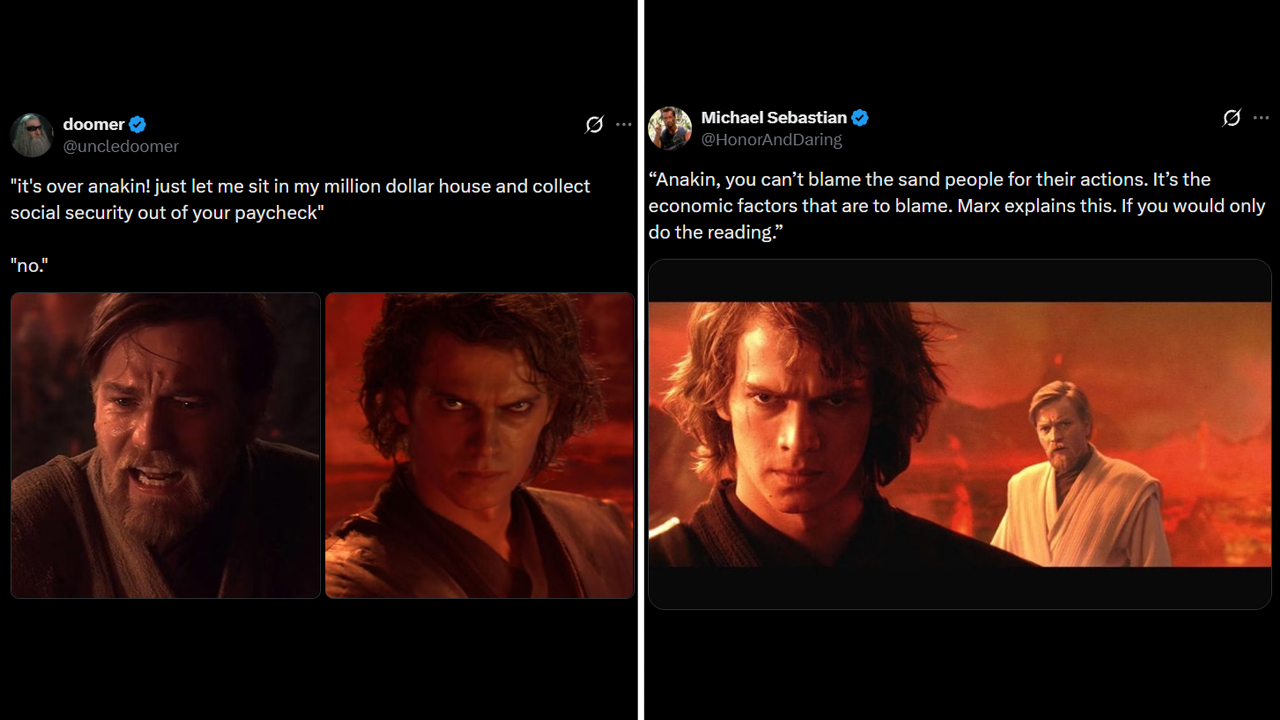
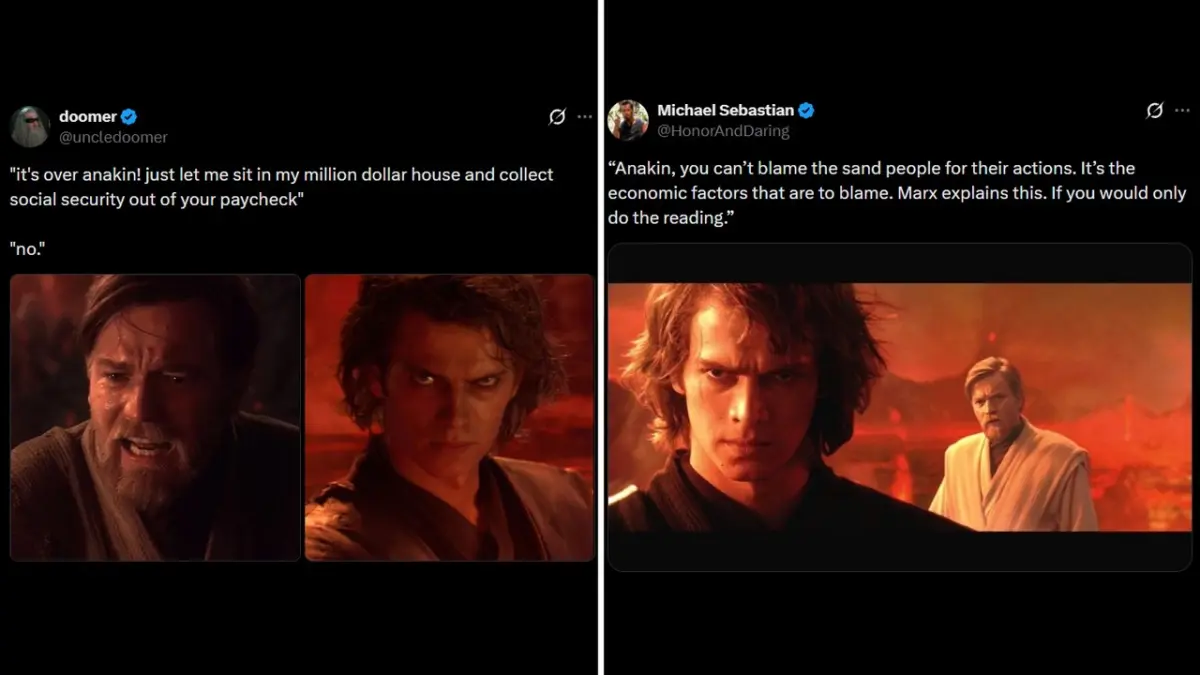
Walsh’s dismissal of the films served as gasoline for the existing meme ecosystem. Capitalizing on the irony of a prominent conservative figure critiquing the prequels, X users immediately began generating image macros and video edits casting Walsh as Jedi Master Ki-Adi-Mundi—the stoic, dismissive member of the Jedi Council who famously opposed Anakin’s training in The Phantom Menace.
The backlash effectively folded high-profile pundits into the very generational narrative the memes were constructing: older authorities figures willfully blind to the genuine grievances of the youth. The viral friction prompted digital culture outlets, such as Not The Bee, to document the phenomenon, noting how young users were actively "Anakin-maxxing" to process contemporary debates on nationalism, borders, and institutional failure.
Supporting Context & Metrics
The virality of the Anakin Skywalker meme wave is quantifiable through engagement milestones and thematic consistency across multiple viral threads:
- @ArchitectOracle (Oct 11): ~170,400 views, 16,000 likes. Focused on economic despair (debt, inflation, AI displacement).
- @Isaac556x45 (Oct 16): ~114,700 views, 3,200 likes. Focused on cultural and physical landscape changes impacting Gen Z men.
- @fool2theworld (Oct 23): ~475,000 views, 8,500 likes. Addressed the polarizing ideological interpretations of Zoomer media consumption.
- @Templarpilled (Oct 25): ~322,500 views, 24,000 likes. Utilized Greentext formatting to summarize the alienation of the modern working-class young man.
- Matt Walsh’s Critique (Oct 27): ~937,000 views, 1,000+ replies. Sparked the counter-meme wave casting commentators as the dogmatic Jedi Council.
Thematic Breakdown of the Memes
The discourse consistently mapped specific elements of the Star Wars universe onto contemporary political flashpoints:
- The Jedi Council as Boomer Bureaucracy: Representing rigid institutions that demand ideological conformity while failing to provide material stability, housing, or traditional pathways to family formation.
- The Tusken Raiders and Immigration: Used in edgy, satirical macro formats to debate modern demographic shifts, border policies, and systemic empathy imbalances.
- Anakin’s Enforced Celibacy and Control: Highlighting the Jedi prohibition on emotional attachments as an analog for modern social atomization, dating market struggles, and institutional hostility toward traditional masculinity.
Official Statements & Punditry Analysis
Cultural commentators and political analysts have offered starkly contrasting views on the meaning behind the "Anakin-Maxxing" trend.
Writing on the phenomenon, prominent online essayists and commentators like @kangminlee argued that George Lucas’s prequels inadvertently functioned as a prophetic masterpiece of right-wing sci-fi critique:
"Anakin Skywalker is the archetypal disenfranchised chud: a young man who genuinely wanted to do good, believed in justice, and trusted a system that presented itself as noble… all to have his innocence, idealism, and vulnerabilities systematically exploited by the very institutions he believed in."
Conversely, critics and mainstream observers have pointed out the darker, more cynical undertones of the trend, noting how marginalized youth subcultures frequently lean into reactionary or authoritarian aesthetics—such as Anakin’s embrace of autocratic power ("Well, if it works").
The juxtaposition between older generations who viewed A New Hope as a celebration of youthful rebellion against an evil empire, and younger generations who view the Prequels as a tragedy of institutional betrayal by an incumbent gerontocracy, highlights a profound generational schism in cultural interpretation.
Future Outlook
As the dust settles on the October 2026 meme cycle, the "Anakin Skywalker Gen Z Male Rage" trend leaves a lasting footprint on how digital native generations consume and weaponize classic cinematic media.
- The Weaponization of Nostalgia: This trend demonstrates that older franchises are no longer safe from aggressive ideological reinterpretation. As Gen Z ages into political and economic agency, foundational texts from their childhood are routinely mined for political allegories.
- Continued Generational Friction: The ease with which public figures like Matt Walsh were integrated into the lore as "Jedi Masters" proves that online subcultures can rapidly weaponize popular culture to neutralize or mock mainstream critical commentary.
- The Persistence of "Male Rage" Metaphors: Until underlying structural issues—such as housing attainability, career security in the age of automation, and cultural polarization—are adequately addressed, digital avatars of frustration like Anakin Skywalker will remain potent symbols for disaffected youth seeking a narrative framework for their grievances.