Executive Overview
Stepping far beyond the safe harbors of conventional cinema, acclaimed French actor Léa Seydoux and visionary Austrian filmmaker Marie Kreutzer have united to create Gentle Monster, a gut-wrenching, psychological drama that plunges headfirst into some of the most harrowing and taboo subjects of contemporary life. Fresh off its glowing reception at the Cannes Film Festival and its subsequent acquisition by Netflix—where it is slated for a streaming release following a theatrical run—the film challenges both its creators and its audiences to stare unflinchingly into the abyss of human unknowability.
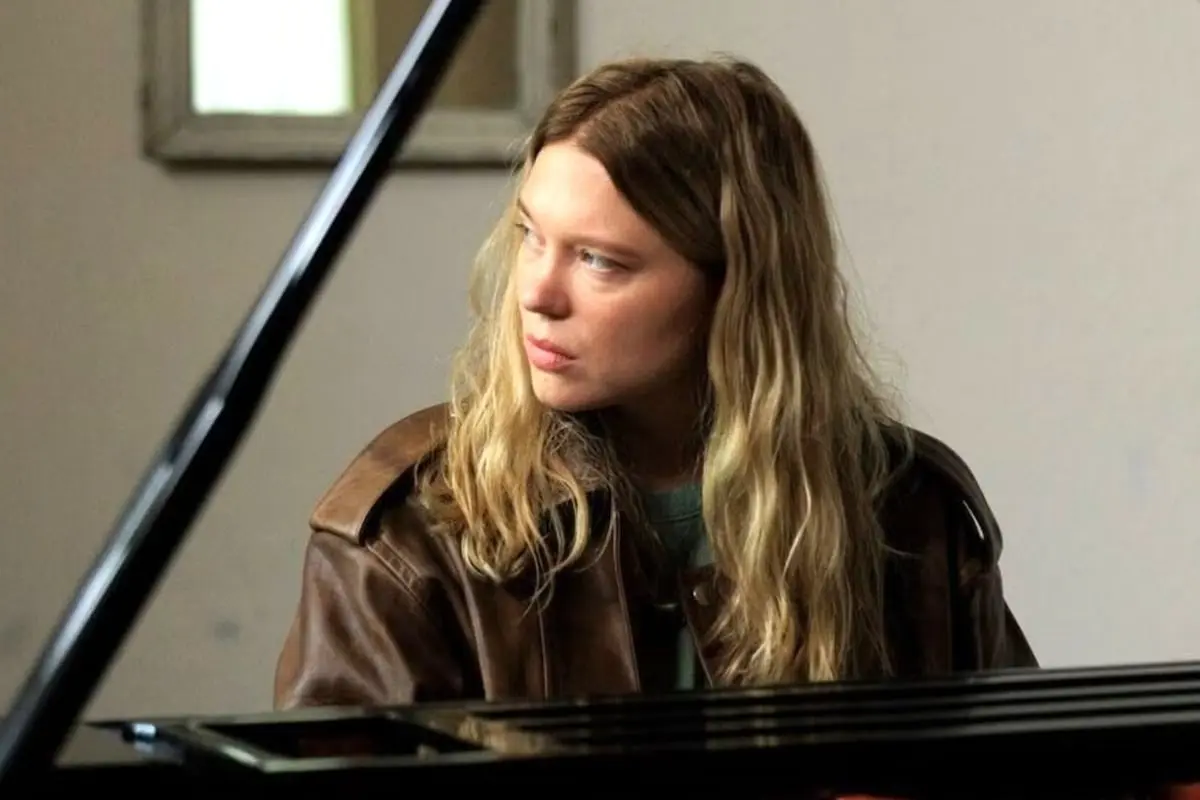
At its core, Gentle Monster examines the shattered reality of Lucy Weiss (played by Seydoux), an avant-garde pop musician whose seemingly idyllic life in Munich is violently upended when police arrive with a search warrant. Her husband, Philip (Laurence Rupp), a frustrated documentarian, is accused of possessing and distributing child sexual abuse material. As Lucy struggles to process the revelation that the man she shared her life with is a stranger, she is gripped by a terrifying paranoia regarding the safety of their young son, Johnny.
In this comprehensive interview-based feature, Seydoux and Kreutzer discuss the nerve-wracking process of bringing such difficult subject matter to life, the parallels between artistic creation and personal vulnerability, and how weathering intense public scrutiny and industry backlash during Kreutzer’s previous project, Corsage, ultimately forged an unbreakable creative resilience.
Detailed Chronology & Production Genesis
The genesis of Gentle Monster cannot be separated from the turbulent professional backdrop against which its final stages of production took place. Marie Kreutzer achieved international acclaim with her 2022 period drama Corsage, which starred Vicky Krieps as a rule-breaking, melancholic Empress Elisabeth of Austria. While Corsage collected accolades—including an acting prize for Krieps at Cannes and the top prize at the London Film Festival—its Oscar campaign in January 2023 was overshadowed by scandal when supporting actor Florian Teichtmeister was publicly charged with the possession of child pornography.
Despite calls from various corners to bury the film, Corsage remained Austria’s official Oscar submission and continued its international distribution as planned. However, the fallout left deep emotional scars on the director.
Kreutzer was already deep into the development of Gentle Monster, having secured project funding as early as 2021. When the Teichtmeister scandal broke, the director faced an unprecedented wave of public vitriol.
"At the time, I thought I couldn’t make Gentle Monster because I thought it would always be connected to him," Kreutzer reflects, sitting in the Corinthia Hotel alongside Seydoux, both sipping from Netflix-branded mugs. "I was attacked so much for having worked with him, and for not being willing to immediately delete the film from every platform. I thought it was unfair on the hundreds of other people who worked on the film. I was attacked in the press by people I don’t know, but also my colleagues. That was painful."
Rather than silencing the filmmaker, the ordeal served as a crucible for resilience. The experience left an indelible atmospheric mark on the production of Gentle Monster, even if it did not alter the script directly. In a defiant nod to the turbulence of that period, Kreutzer explicitly thanks "the haters in 2023" in the film’s end credits.
“It taught me about resilience,” Kreutzer notes. “It’s not good to worry too much about what other people think. There are no hard feelings anymore. It made me stronger. That’s why I put it in the credits.”
Supporting Context & Narrative Architecture
Gentle Monster deliberately resists easy answers. While the film strongly implies Philip’s guilt regarding his online crimes, it never confirms the details—or lack thereof—of any offline activities. Philip repeatedly claims that he is not a pedophile, insisting at one point that he acquired and sold the illegal digital files merely as a quick way to fund his new movie.
This narrative ambiguity forces the audience into the same helpless confusion experienced by Lucy. As her husband undergoes a criminal investigation, Lucy attempts to maintain her grueling schedule of avant-garde solo concerts, playing multiple pianos and a glass harmonium simultaneously while pouring her raw, unexpressed anguish into radically reworked covers of male-written love ballads, such as The Cure’s "Boys Don’t Cry."

For Seydoux, entering the psyche of a woman living in such extreme denial required inhabiting a character whose choices differed vastly from her own instincts.
"I wouldn’t have reacted like her," Seydoux remarks candidly. "I would have been much more violent."
The film expands its scope through a parallel narrative following the lead investigator, Elsa (played by Jella Haase), who attempts to decompress from the grim reality of her cases by listening to hip-hop. Yet, the central theme remains the profound unknowability of the human mind. Even Lucy’s mother (played by legendary French actor Catherine Deneuve) remains completely oblivious to her daughter’s agonizing internal crisis.
Kreutzer emphasizes that this isolation is a universal human condition rather than a cinematic contrivance:
"Lucy will never know what Philip has done, and she will maybe never know what happened, or didn’t happen, to Johnny. She also cannot read Johnny’s mind. That’s universal. It has nothing to do with being good or bad people. We are all our own universe. At the same time, Lucy will trust someone again, because life is about trust… I think."
Official Statements & Artistic Philosophy
The intersection between personal darkness and artistic expression is a recurring motif for both women. Both Seydoux and Kreutzer have built careers on challenging audiences, yet they readily admit to the sheer terror of embarking on a project as emotionally demanding as Gentle Monster.
“I think going out of your comfort zone is always good,” Kreutzer asserts. “Especially in the arts.”
Seydoux, who is internationally recognized for her roles in blockbuster franchises including Spectre, Dune: Part Two, and Mission: Impossible – Ghost Protocol, reveals a surprisingly fragile off-screen persona. When Kreutzer gently challenges the actor on whether she is merely shy, Seydoux responds quietly:
"I’m shy, and I cannot say I feel confident all the time… Sometimes I was doing those scenes and I was like, ‘My God, what am I doing?’ It’s crazy! Sometimes when you act, to find the right note, you go in directions where you’re like, ‘This is really terrible.’"
Kreutzer defends this creative volatility by channeling musician David Bowie, who famously equated artistic creation to stepping out so far into water that your feet no longer touch the bottom. “You shouldn’t be too comfortable when making art,” the director says.
This philosophy extends to the complex debate surrounding the morality of artists. When questioned on whether a dishonest person like Philip could ever truly be considered a great artist, Kreutzer draws upon her experience with her former collaborator:

"The actor I worked with, who then was convicted, he was probably one of the five best actors I’ve ever worked with. I wouldn’t say just because you’re not honest you can’t be a good artist. It’s funny, some people went the other way, and went, ‘Yeah, he’s a good liar because he’s a good actor.’ But acting is not lying. An artist can also be a bad person. There are many in history!"
Seydoux echoes this sentiment regarding the separation of artist and morality: “I don’t think an artist needs to be true to themselves.”
For Seydoux, acting has long served as a vital mechanism for channeling a lifelong melancholy—what the French describe as mal de vivre. Reflecting on her career, including the haunting final shot of Christophe Honoré’s 2008 coming-of-age drama The Beautiful Person, where the camera lingers on her face as she gazes out at the sea, Seydoux acknowledges her early struggles:
"It’s true that, as a teenager, I had this mal de vivre… It’s like a difficulty to live. As a teenager, I was very chaotic, and acting gave me a purpose in life. I wouldn’t say it healed me. I don’t think you can heal from that. But it helped me to transform this very strong melancholy."
Kreutzer summarizes the ethos of their collaboration with a poignant observation:
"When you’re an artist, you transform your pain into something beautiful."
To which Seydoux appends with a wry, self-deprecating chuckle: "All my pain!"
Future Outlook & Release Schedule
As Gentle Monster prepares to transition from festival circuit darling to global streaming phenomenon, its reception will undoubtedly test audiences’ willingness to engage with morally grey, deeply uncomfortable narratives. By refusing to offer tidy moral resolutions or comforting closure, Kreutzer and Seydoux have crafted a work designed to linger in the minds of viewers long after the credits roll.
Gentle Monster is scheduled to open in UK cinemas on October 30, before making its global streaming debut on Netflix on November 18. As the film finds its wider audience, the conversations it provokes about trust, trauma, and the resilience required to create art in an uncompromising world are only just beginning.