Executive Overview
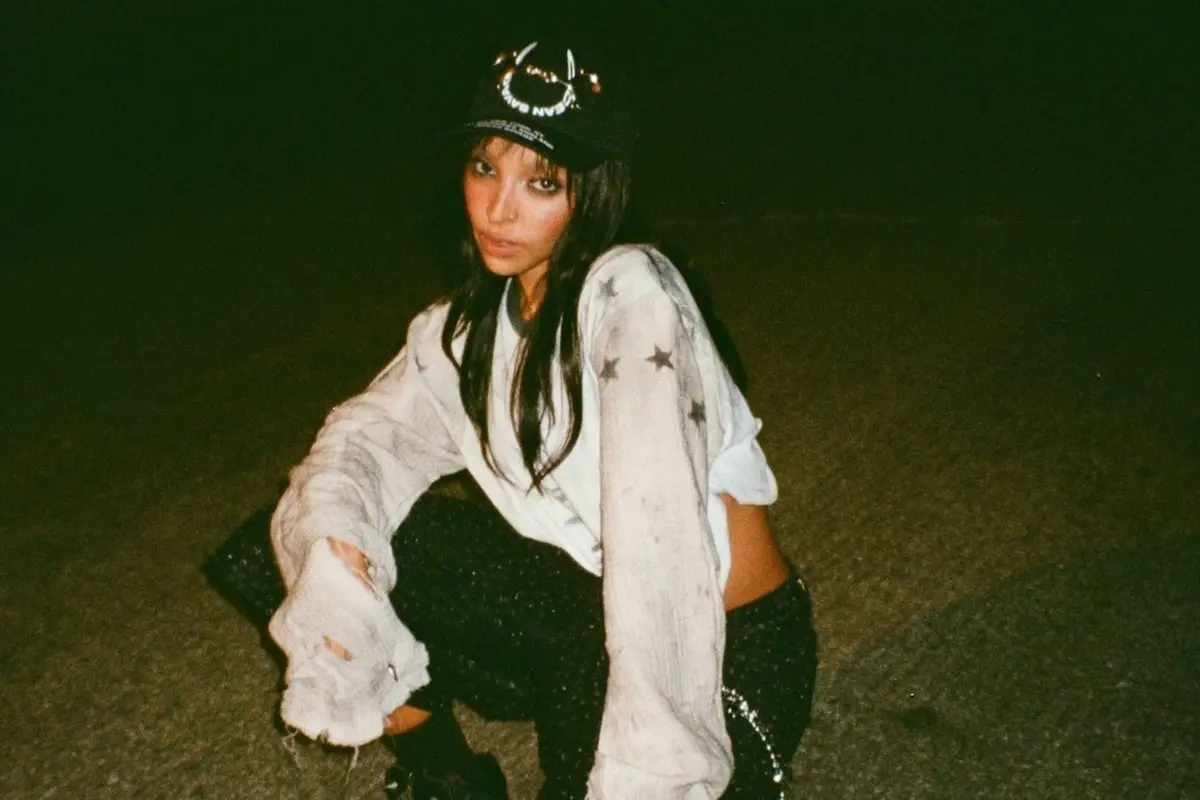
“I put the work in and I waited,” Tinashe sings on her track “Empty Stadium.” “Don’t wanna die underrated.”
It is one of many candid, unvarnished moments on her critically acclaimed album Popstar, a record that offers a rare, zoomed-out perspective on the mechanics of contemporary pop stardom itself. Tinashe is far from alone in mining her own grueling career trajectory for lyrical inspiration. Across the musical landscape, the genre is currently awash with artists deconstructing themselves, their ambitions, and their dreams. From breakout voices like Adéla to mainstream heavyweights like Zara Larsson, Charli xcx, and Ariana Grande, a myriad of pop stars are getting radically self-aware—and deeply vulnerable—in their music. They are singing directly about the inner workings of the music industry, the fickle nature of fame, and the strange reality of living life beneath a microscope. Welcome to the era of meta-pop.
This cultural pivot marks a fundamental shift in how pop music engages with its own myth-making. For decades, the dominant fantasy of pop was airtight: stars descended from the heavens fully formed, untainted by the mundane bureaucratic nightmares of record labels, streaming algorithms, or social media metrics. Today, that illusion has been shattered. Modern pop music is increasingly autobiographical in a structural sense, turning the very machine of fame inside out for public inspection.
Yet, this stylistic evolution raises vital questions about the future of commercial music. Is meta-pop an empowering vehicle for artists to reclaim their autonomy from algorithmic pigeonholing, or is it an insular, niche obsession that strips pop music of its traditional escapism? To understand this phenomenon, we must examine the intersection of digital parasociality, modern fandom culture, and the changing economics of the music industry.
Detailed Chronology: From Industry Wringer to Mainstream Triumph
To fully grasp why Tinashe has emerged as the unofficial princess of meta-pop, one must look at the turbulent trajectory of her career—a narrative that mirrors the high-stakes, unpredictable nature of the modern music business.
The RCA Years and Independent Purgatory
Tinashe’s journey to the top ten of the US Billboard 200 with Popstar is uniquely sweet precisely because she has been put through the absolute wringer of the major label system. Back in 2014, she entered the mainstream consciousness with her critically lauded debut studio album, Aquarius, released under RCA Records. At the time, she was heralded as an R&B-pop hybrid visionary poised to conquer the charts.
However, major label politics, shifting genre trends, and persistent commercial friction led to a prolonged stall. Years of shelved projects, delayed singles, and creative standoffs culminated in her publicly parting ways with RCA in 2019. Rather than fading into obscurity, Tinashe executed a daring pivot, taking complete control of her career by releasing music independently. This DIY era yielded cult-favorite projects like Songs for You and the viral TikTok sensation "Nasty," proving her tenacity.
When she finally returned to the mainstream fold via Atlantic Records to release Popstar, it wasn’t just a standard album roll-out; it was the culmination of a decade-long survival story. Until recently, online fan narratives often suggested she was destined to remain perpetually underrated. But the commercial and critical triumph of Popstar has effectively rewritten her legacy—acting, in the colorful parlance of pop stans, as her ultimate ticket out of industry purgatory.
Adéla and the First-Time Rise
While Tinashe approaches success with the hard-earned scars of a perennial runner-up, younger artists like Adéla are documenting a first-time rise with an equally diaristic lens. Moving from her hometown of Bratislava, Slovakia, to Los Angeles to audition for The Debut: Dream Academy (the grueling global talent search that birthed girl group Katseye), Adéla experienced the hyper-accelerated machinery of modern pop training firsthand.
On her 2025 single "Superscar," she takes direct aim at the systemic sexualization of young women thrust into the spotlight, singing: "Shut my lips to speak / Stick to your strategy." Like Tinashe, Adéla is anxious to dispel the myth that her success was an overnight accident. In tracks like "KGB," she pulls back the curtain on the exhausting calculus of modern ambition, singing explicitly about having "worked my whole life" and "plotting on my rise." Through these lyrics, these artists are actively stripping away the pristine lacquer of pop stardom, replacing it with the sweat, strategy, and sleepless nights required to survive.
Supporting Context & Metrics: The Social Media Monoculture and Parasocial Fame
To understand why meta-pop is exploding right now, industry experts point directly to the transformation of the media ecosystem over the last fifteen years.
Michael Cragg, author of Reach for the Stars: 1996–2006: Fame, Fallout and Pop’s Final Party, argues that the trend is a direct downstream result of the social media monoculture.
"We’re all on our phones, even if you’re a pop star," Cragg notes. "Pop stars are seeing the same things that their fans are, which brings them onto a certain level of familiarity with the wider conversation. Artists are just as obsessed with their careers as fans are, and that’s making its way into their music."
The Evolution of the Parasocial Bond
Of course, pop stars have long grappled with fame in their lyrics. Lady Gaga wrote with brilliant nuance about simultaneously craving attention and being repelled by it on 2008’s "Paparazzi," while Britney Spears defiantly labeled herself "Miss bad media karma" on her 2007 anthem "Piece of Me."
However, Dr. Lucy Bennett, a fandom expert and senior lecturer at Cardiff University, emphasizes that Britney and Gaga emerged in a fundamentally different media landscape. While 2000s tabloid culture was undeniably cruel and invasive, today’s digital environment operates on an entirely different plane of intimacy.
"Before social media, fans could still of course feel emotionally connected to celebrities, but there were fewer opportunities to encounter them directly," Dr. Bennett explains. "Social media has deeply changed this. It can make these musicians feel more accessible, familiar, and quite relatable, even though the relationship may still be one-sided and highly managed."
Dr. Bennett notes that while parasocial relationships are nothing new, today’s audiences are far more visible and active participants in producing and sustaining fame. Fans actively contribute to internet culture, shaping public narratives, spawning viral memes, and directly influencing how an artist is perceived. When fame and success become a collaborative, day-by-day negotiation between artists and their stans, it is only natural that these meta-narratives bleed directly into the songwriting process.
Official Statements & Industry Perspectives: Reclaiming Control vs. Losing the Fantasy
As meta-pop solidifies its place as a dominant commercial genre, music critics and cultural theorists are sharply divided on its long-term artistic merit.
The Argument for Autonomy
From the artist’s perspective, writing about the music industry is an act of self-preservation. In an algorithm-driven landscape where visibility can evaporate overnight, lyrics about fame serve as an anchor.
Dr. Bennett posits that these songs are often a conscious strategy to reclaim narrative control:
"Social media can create enormous visibility very quickly, but that visibility can also disappear just as quickly," she says. "There is a constant cycle of new content, new artists, new trends, and new conversations competing for audiences’ attention. I wonder if lyrics about fame can be a way for some artists to try and reclaim some control over that narrative, or challenge the assumptions audiences make about celebrities."
The Risk of Niche Insularity
Conversely, some industry veterans question whether turning the pop star’s internal monologue into a lyrical crutch ultimately limits the genre’s broad appeal. Michael Cragg remains skeptical about the artistic longevity of meta-pop.
"I don’t think the general public care about the inner workings of your contract or how you feel within the stratosphere of pop and where you sit in it," Cragg argues. "It’s a very niche pop obsession, and I think if you build your whole campaign or your whole artistry around that, it’s sort of limiting in that sense. It feels like we’ve lost the fantasy of pop music a little bit."
When pop music becomes overly preoccupied with streaming numbers, label disputes, and Twitter discourse, it risks alienating casual listeners who tune in for escapism rather than an audio-visual masterclass in media studies.
Future Outlook: Where Does Meta-Pop Go From Here?
Despite critical debates over its universal resonance, meta-pop shows zero signs of slowing down. In fact, the architects of modern pop are doubling down on self-awareness as a defining aesthetic pillar.
Take Charli xcx, an artist who has relentlessly pioneered this wave of self-referential, hyper-conscious music. Following the earth-shattering cultural phenomenon of her Brat era, Charli released The Moment, a hilarious post-Brat mockumentary that functioned as a feature-length exploration of her own psyche inside the goldfish bowl of global celebrity. Furthermore, on the track "2007" from her recent project Music, Fashion, Film, Charli looks backward with a sense of nostalgic exhaustion, singing: "Pop star in my bedroom like it’s 2007."
When an artist has dissected every single facet of their career, their industry, and their public persona, perhaps there is truly nowhere left to go except full circle—back to the bedroom where the dream first began.
As long as the lines between internet culture, fan communities, and commercial music continue to blur, meta-pop will remain a vital, if contentious, mirror reflecting the strange reality of modern fame. Whether this trend ultimately expands the boundaries of pop songwriting or shrinks it into an echo chamber of industry inside-jokes remains to be seen. But one thing is certain: the pop star of the 21st century is no longer content to just sing the song—they are going to write the press release, analyze the algorithm, and critique the contract while they do it.