Executive Overview
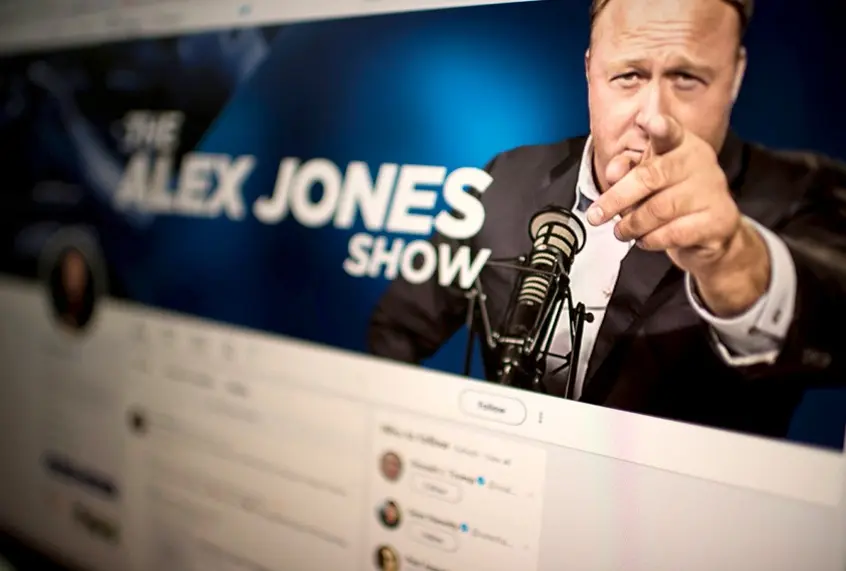
In a watershed moment for content moderation and the governance of public discourse in the digital age, Twitter broke its long-standing policy of non-intervention regarding fringe actors in August 2018. The platform announced a temporary, seven-day suspension of the two primary accounts maintained by far-right conspiracy theorist and Infowars founder Alex Jones.
This disciplinary action marked a profound, highly scrutinized reversal for the social media giant. For months, Twitter leadership—most notably CEO Jack Dorsey—had defended the platform’s decision to keep Jones online, arguing that a hands-off approach was necessary to maintain neutrality and that Jones’s previous digital output had not explicitly breached the company’s evolving terms of service.
The suspension arrived in the wake of a coordinated industry-wide crackdown. Silicon Valley tech titans, including Apple, Facebook, Pinterest, Spotify, and Google (YouTube), had already enacted sweeping bans, removing Jones and Infowars content entirely from their platforms for flagrant violations of policies prohibiting hate speech and harassment.
Twitter’s subsequent decision to issue a weeklong "timeout" thrust the company into the center of a fierce national debate concerning corporate responsibility, the limits of free speech, the obligations of private tech monopolies, and the tangible real-world harms propagated by unchecked online conspiracy theories.
Detailed Chronology: The Road to Suspension
The events leading up to Twitter’s August 15, 2018 announcement unfolded against a backdrop of mounting public pressure, escalating policy infractions, and a rapidly shifting corporate landscape across Silicon Valley.
Early August 2018: The Industry-Wide Cleanse
In the first week of August 2018, the digital ecosystem shifted dramatically. Within days of one another, major technology platforms systematically purged Alex Jones and Infowars from their networks.
- Apple removed several Infowars podcasts from its iTunes and Podcasts directories, citing violations of guidelines against objectionable material and hate speech.
- Facebook permanently removed four pages associated with Jones and Infowars, citing repeated violations of policies regarding hate speech and harassment.
- YouTube (Google) terminated the primary Infowars channel, which boasted over 2.4 million subscribers, alongside associated channels, after determining that the content violated strict anti-hate policies.
- Spotify and Pinterest swiftly followed suit, removing podcasts and boards linked to Jones’s network.
Despite this unprecedented industry alignment, Twitter remained a notable holdout. Jack Dorsey and his safety teams insisted that while Jones’s rhetoric was inflammatory and offensive, it did not explicitly cross the threshold into policy violations that warranted a permanent or temporary ban under Twitter’s existing rules.
Tuesday, August 14, 2018: The Triggering Infraction
Twitter’s resistance crumbled when Jones crossed a definitive line regarding threats of violence. Following a contentious exchange and mounting criticism over his platforming, Jones posted a video to Twitter in which he urged his supporters to get their "battle rifles" ready against various perceived adversaries, specifically calling out the mainstream media.
This explicit call to arms directly violated Twitter’s core rules and safety policies, which explicitly prohibit individuals or organizations from using or promoting violence against civilians to further their ideological or political causes. Reacting to the post, Twitter swiftly locked Jones out of his personal account, imposing a mandatory seven-day "timeout" that temporarily stripped him of his ability to tweet or engage directly with his followers.
Wednesday, August 15, 2018: Dorsey’s NBC News Interview
The day after the suspension, Twitter CEO Jack Dorsey sat down for an exclusive interview with Lester Holt on NBC Nightly News. During the broadcast, Dorsey defended both the timing of the suspension and his previous reluctance to take action against Jones.
Dorsey articulated the ideological tightrope the company had been walking, emphasizing that platform governance could not be dictated by personal whims or subjective political preferences. However, he conceded that the explicit call for physical confrontation left the company no regulatory alternative under its safety frameworks.
Hours after the interview aired, Dorsey took to Twitter to clarify his remarks, noting that the seven-day timeout was a standard enforcement mechanism rather than an expectation of immediate behavioral rehabilitation.
Supporting Context & Metrics: The Anatomy of a Conspiracy Empire
To fully understand the gravity of Twitter’s pivot, one must examine the vast infrastructure of misinformation that Alex Jones and Infowars had spent decades building, as well as the mounting external pressures that finally forced Silicon Valley’s hand.
A Legacy of Harassment and Harmful Hoaxes
Alex Jones did not emerge in a vacuum; his digital footprint spanned decades of peddling malicious falsehoods that frequently resulted in severe harassment campaigns against private citizens and public officials alike. Media analysts, researchers, and watchdog groups—such as Jared Holt of Right Wing Watch—had meticulously documented Jones’s output:
- The 9/11 "Truther" Movement: For years, Jones promoted baseless conspiracy theories claiming the September 11 terrorist attacks were "inside jobs" orchestrated by the United States government.
- Targeted Accusations of Pedophilia: Jones repeatedly launched unsubstantiated, bizarre accusations of pedophilia against a wide range of public figures and targets, including Special Counsel Robert Mueller during his investigation into Russian interference in the 2016 election.
- The Sandy Hook Massacre Denial: Perhaps most damagingly, Jones spent years telling his audience that the 2012 mass shooting at Sandy Hook Elementary School—which claimed the lives of 20 children and six staff members—was a "hoax" staged by the government using "crisis actors."
This specific campaign of denial unleashed waves of targeted harassment, death threats, and intimidation against the grieving parents of the murdered children. These actions ultimately catalyzed devastating legal consequences for Jones, including multi-million-dollar defamation lawsuits filed by Sandy Hook families in Texas and Connecticut that threatened to bankrupt Infowars.
The Pressure Cooker of Platform Accountability
By mid-2018, technology companies faced an unignorable reckoning. Civil rights organizations, advocacy groups, and progressive lawmakers argued that by offering unfettered digital megaphones to purveyors of hate speech and stochastic terrorism, social media giants were actively complicit in radicalizing users and endangering public safety.
Twitter’s persistent defense of Jones—framed around free expression absolutism—became increasingly untenable as every other major competitor demonstrated that private platforms possessed both the capability and the moral obligation to police their digital borders against malicious actors.
Official Statements and Leadership Perspectives
The public discourse surrounding the August 2018 suspension was defined by competing philosophies on free speech, corporate governance, and digital ethics.
Jack Dorsey’s Balancing Act
During his interview with NBC News, Jack Dorsey laid bare the philosophical dilemmas facing modern platform architects:
"We can’t build a service that is subjective just to the whims of what we personally believe… I feel any suspension, whether it be a permanent or a temporary one, makes someone think about their actions and their behaviors."
When pressed by Lester Holt on whether a weeklong suspension would realistically reform a figure as entrenched as Jones, Dorsey maintained a pragmatic stance on institutional enforcement:
"Whether it works within this case to change some of those behaviors and change some of those actions, I don’t know. But this is consistent with how we enforce."
Following the interview’s release, Dorsey posted a clarifying thread on his platform to contextualize his remarks on punitive timeouts:
"To clarify: I was speaking broadly about our range of enforcement actions, when asked why we timeout functionality on Twitter. I don’t assume everyone will change their actions. Enforcement gets tougher with further reported violations."
The Industry Consensus
While Twitter opted for a measured, graduated disciplinary response—relying on a temporary timeout—the collective actions of Apple, Facebook, and YouTube signaled a starkly different administrative philosophy. For those platforms, the cumulative weight of repeated hate speech violations and targeted harassment rendered rehabilitation impossible, necessitating total deplatforming.
Future Outlook: The Fallout and Long-Term Implications
The seven-day suspension of Alex Jones in August 2018 served as a crucial trial balloon for Twitter’s content moderation apparatus, casting a long shadow over the future of online governance.
The Periscope Loophole
Even as Twitter imposed its temporary ban, analysts pointed out significant structural loopholes in the company’s enforcement strategy. While Jones was locked out of his primary Twitter account, he retained access to Periscope—the live-streaming application owned and operated by Twitter.
Because Periscope operated under a distinct interface and verification framework at the time, Jones was temporarily able to utilize the platform to broadcast his commentary, making Twitter-owned infrastructure his last remaining major live-streaming refuge after being systematically expelled from YouTube and Facebook. This glaring oversight underscored the difficulties large technology conglomerates faced when attempting to enforce cohesive cross-platform policies.
A Precedent for Future Moderation
Ultimately, the August 2018 suspension served as an essential stepping stone toward more aggressive content moderation policies across the tech industry. The decision demonstrated that even platforms deeply committed to free-speech maximalism could be forced to intervene when user rhetoric crossed the line from protected political speech into direct incitement of violence.
As digital platforms continue to grapple with the proliferation of misinformation, extremism, and targeted harassment, the debate sparked by Jack Dorsey’s defense of Alex Jones remains a defining case study in the ongoing struggle to balance open expression with public safety in the twenty-first century.