Executive Overview
In the sprawling, hyper-accelerated ecosystem of contemporary internet culture, abstract slang words rarely stay confined to comment sections for long. What begins as a niche linguistic quirk on TikTok or Instagram typically follows a predictable lifecycle: it is picked up by digital natives, memeified, applied to short-form video formats, and eventually brought into the physical world.
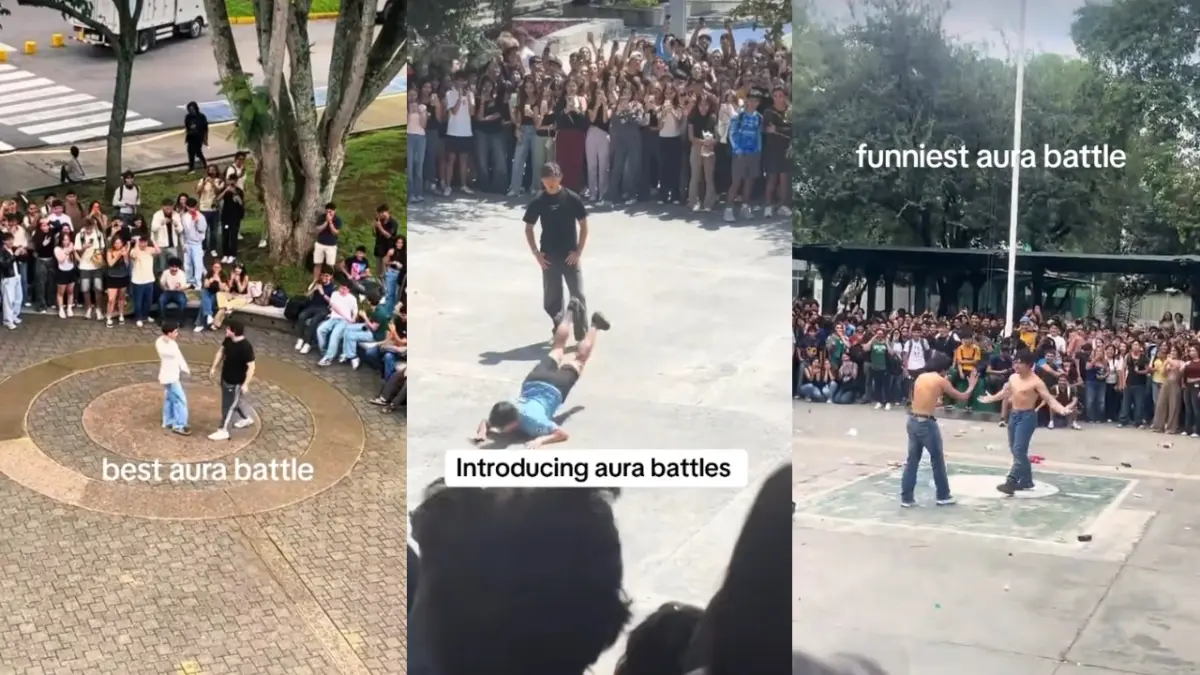
By late August 2026, internet culture reached a fascinating new inflection point with the explosive mainstream adoption of Aura Battles. Loosely organized in public spaces and heavily broadcast across social media platforms, Aura Battles represent a novel form of interactive street theater. Structurally reminiscent of traditional freestyle rap battles or street-corner dance-offs, these competitions require participants to “aura farm”—a slang term denoting the cultivation of intangible coolness, charisma, personal presence, and mysterious authority—against one another.
Rather than exchanging lyrical bars or spinning on their heads, combatants utilize carefully curated micro-performances. They strike exaggerated poses, engage in psychological "mogging" (a slang term used to describe one person outshining another through superior physical presence or posture), execute deadpan stares, and deploy iconic internet gestures.
Captured on smartphones and amplified by hyperbolic editing styles, dynamic point systems (such as +10,000 Aura or -50,000 Aura), and ironic commentary, these videos have quickly flooded feeds worldwide. What started as localized, spontaneous displays of youthful bravado has rapidly evolved into a global internet phenomenon—sparking debates about public disruption, the gamification of real-life social interactions, and the increasingly blurred boundaries between online absurdity and physical reality.
Detailed Chronology: From Digital Lexicon to Physical Arenas
To understand the sudden emergence of Aura Battles, one must trace the rapid evolution of "aura" within digital spaces. Long before public face-offs became a trending topic, internet subcultures had already weaponized the concept of "aura" as a numerical, quantifiable metric of cool. Users on TikTok and Instagram Reels frequently posted "aura checks" or documented moments of accidental embarrassment that resulted in massive "aura deficits."
However, the transition from passive online observation to active, face-to-face competition occurred organically during the late summer of 2026.
Early August 2026: The Spark of Public Confrontation
While exact origins remain murky—as is standard for grassroots internet trends born on schoolyards and city streets—the earliest widely recognized recordings began surfacing in early August 2026. A pivotal catalyst arrived on August 9th, 2026, when the Instagram page of Unitel Bolivia published a short video documenting an impromptu aura-farming exhibition.
Surrounded by an energized circle of onlookers, a young participant executed a series of calculated, deadpan maneuvers. These included the viral "67" hand gesture and the textbook "rizz face"—an expression of effortless, magnetic charm. The clip struck a chord with global audiences, crossing language barriers and amassing over 267,000 likes within three weeks. It served as a functional blueprint: gather a crowd, step into the center, and prove your metaphysical dominance through pure, unfiltered swagger.
Late August 2026: Viral Acceleration and Algorithmic Spread
Following the initial viral breakthrough, the trend snowballed throughout August 2026, transforming from isolated incidents into a coordinated wave of user-generated content.
- August 24th, 2026: TikTok user
@dymrstoreuploaded a raw, unvarnished clip capturing an urban aura battle. The video leaned heavily into the improvisational nature of the trend, capturing the raw reactions of bystanders and pulling in over 144,000 views in less than a week. - August 28th, 2026: Content creators began leaning into self-referential explanations of the trend. A prominent upload by TikToker
@aura_battle67provided a comprehensive textual breakdown of the rules, scoring mechanics, and cultural crossovers embedded within aura battles. The video quickly surpassed 76,000 views, cementing the vocabulary of the movement for newcomers. - August 30th, 2026: The scale of the productions escalated dramatically. Instagram user
uncrider_officialpublished footage of what was widely touted as one of the "biggest" organized aura battles to date. Featuring elevated production value, intense crowd participation, and high-stakes posturing, the video exploded across platforms, pulling in more than 240,000 views and 21,000 likes in a single 24-hour window.
By the final week of August, Aura Battles had officially transcended the digital realm, prompting news aggregators and internet culture commentators to document their migration from smartphone screens to physical street corners, shopping malls, and school quadrangles.
Supporting Context & Metrics: The Anatomy of an Aura Battle
To appreciate the viral resonance of Aura Battles, one must dissect the underlying ruleset and cultural grammar that govern them. Unlike traditional sports or formalized competitions, Aura Battles operate on an entirely subjective, highly ironic plane of existence.
The Core Mechanics
- The Challenger Dynamic: Two individuals (or occasionally groups, fictional characters via edits, or online creators) step forward to face off.
- The Turn-Based Execution: Competitors take turns performing micro-expressions, dramatic entrances, sudden physical freezes, or absurdly confident gestures.
- The Audience Verdict: The surrounding crowd—and by extension, the digital audience watching via short-form video platforms—acts as the ultimate arbiter, determining who maintained their composure and who suffered an "aura loss."
- Exaggerated Scoring: Editors utilize post-production text overlays, flashing numbers, and dramatic sound design (such as slowed-down phonk music or sudden bass drops) to award fabricated points like +10,000 Aura or -50,000 Aura.
Cross-Pollination with Geek and Gamer Culture
Aura Battles do not exist in a cultural vacuum; they heavily borrow from anime, gaming, and internet meme culture. Participants often channel tropes popularized by shonen anime characters (such as Jujutsu Kaisen’s Satoru Gojo or Naruto’s Kakashi Hatake), applying the unflappable confidence of animated protagonists to mundane real-world settings. This seamless blending of ironic detachment and earnest performance art is what makes the trend endlessly remixable across TikTok and Instagram.
| Metric / Indicator | Observation |
|---|---|
| Primary Platforms | TikTok, Instagram Reels, YouTube Shorts |
| Average Video Length | 15 to 45 seconds |
| Key Audio Trends | Slowed phonk, dramatic orchestral hits, deep-bass instrumental drops |
| Dominant Age Demographic | Gen Z and late Gen Alpha (Ages 14–22) |
| Primary Geographic Hubs | Urban centers across Latin America, North America, and Western Europe |
Official Statements and Cultural Reactions
As Aura Battles spilled out of smartphones and into physical public spaces, civic reactions shifted rapidly from amusement to concern. While digital audiences celebrated the creativity and unbridled absurdity of the trend, institutional figures began grappling with the logistical realities of impromptu street performances.
School administrators, local business owners, and municipal authorities have increasingly voiced apprehension over public disruptions. In late August, reports emerged from various urban school districts and suburban shopping centers where security personnel stepped in to disperse crowds gathering around impromptu battle circles.
"What starts out as harmless adolescent expression can quickly escalate into blocked thoroughfares and safety hazards," noted one municipal transit official who requested anonymity. "While we appreciate youthful creativity, transforming public escalators and subway platforms into arenas for psychological posturing creates genuine logistical challenges."
Conversely, cultural anthropologists and digital media experts view Aura Battles through a more sympathetic, sociological lens. Dr. Elena Vance, a researcher specializing in contemporary internet subcultures, argues that these battles are a natural evolution of youth socialization in a hyper-digital era.
"For generations, teenagers have used dance, fashion, and physical posturing to carve out identity spaces," Dr. Vance explains. "Aura Battles simply take the gamified metrics of social media algorithms and project them onto physical reality. It is performance art wrapped in layers of irony. The participants are fully aware of the absurdity, which is precisely why it works as social theater."
Future Outlook: Where Do Aura Battles Go From Here?
As the calendar turns past the initial wave of late-summer virality, the long-term trajectory of Aura Battles remains a subject of intense speculation among digital trend forecasters.
Several potential pathways lie ahead for the phenomenon:
- Institutionalization and Organized Leagues: Much like breakdancing transitioned from inner-city street corners to the Olympic stage, there is speculative chatter among content creators about formalizing Aura Battles into structured, sanctioned tournaments with judges, referees, and branded sponsorships.
- Algorithmic Fatigue and Saturation: Given the breakneck speed at which short-form video trends burn out, Aura Battles risk falling victim to over-saturation. As corporate brands attempt to leverage the slang for marketing campaigns, the counter-cultural appeal that initially fueled the trend may dilute.
- Hybridized Real-World Gaming: We may see the emergence of augmented reality (AR) integrations, where participants use mobile applications to track live "aura scores" via spatial computing and smartphone cameras in real-time.
Regardless of whether Aura Battles solidify themselves as a permanent fixture of youth culture or fade into the archives of digital history alongside planking and flash mobs, their impact is undeniable. They have successfully demonstrated the power of internet lexicon to reshape physical geography, proving that in the digital age, perception, confidence, and sheer theatrical presence are currencies more valuable than ever before.