Executive Overview
When Apple officially introduced its long-rumored folding device, the iPhone Duo, it marked a monumental shift in the company’s hardware design philosophy. Eager early adopters rushed to secure their devices, anticipating a revolutionary mobile experience that seamlessly bridged the gap between a standard smartphone and a compact tablet. However, the honeymoon phase for many users was quickly tempered by a surprisingly mundane accessory crisis: finding a reliable, sleek, and functional way to prop the device up on a flat surface.
The current landscape of first- and third-party desk stands, folios, and grips for the iPhone Duo leaves much to be desired. Apple’s official $129 folio case featuring a built-in kickstand has been widely criticized by early reviewers as overly expensive, structurally flimsy, and frustratingly intrusive, as its front flap obstructs the outer display during everyday quick tasks. Meanwhile, alternative solutions like MagSafe wallets that double as kickstands suffer from geometric incompatibilities, resting too high or too low on the unconventional chassis of the folding device. Compounding the issue, the third-party case market has been slow to release robust, purpose-built alternatives.
Yet, as is often the case in the dynamic ecosystem of mobile accessories, the ultimate solution was hiding in plain sight. Rather than originating from a specialized, newly rushed batch of folding-phone peripherals, the answer comes from a universally compatible, low-profile magnetic grip: the PopSocket Low-Pro.
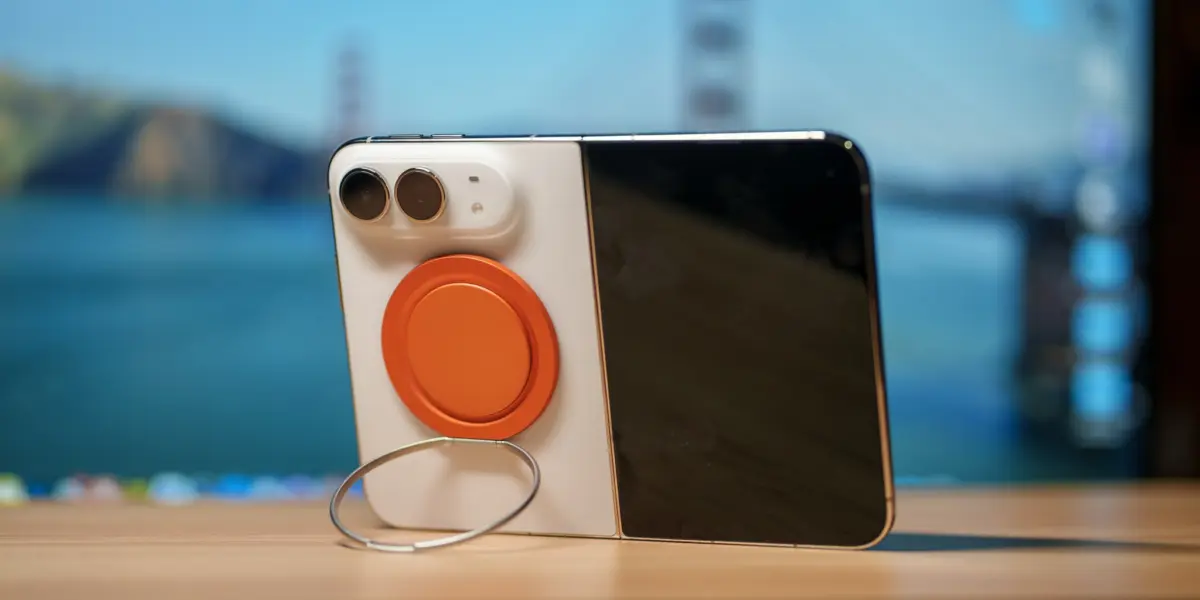
Far from being designed exclusively for the iPhone Duo, this universal MagSafe accessory addresses the core ergonomic and mechanical pain points of Apple’s folding flagship. By offering a dual-purpose flip-out ring that doubles as a sturdy kickstand—all while maintaining a footprint thinner than the phone’s camera bump—the PopSocket Low-Pro has unexpectedly emerged as the definitive quality-of-life upgrade for iPhone Duo owners who prefer to go caseless.
Detailed Chronology: The Quest for Ergonomic Perfection
The Launch and the Limitations
The rollout of the iPhone Duo generated immense consumer excitement, but it also exposed immediate gaps in the peripheral market. Historically, Apple users have enjoyed a robust ecosystem of cases, stands, and docks that integrate seamlessly with MagSafe technology. However, the unique physics of a folding device—specifically its weight distribution, dual-screen layout, and folded thickness—threw accessory makers for a loop.

In the weeks following the device’s release, consumers encountered a frustrating array of compromises:
- The Official Apple Folio: Priced at a steep $129, the first-party folio case was supposed to be the gold standard. Instead, users reported that the kickstand mechanism lacked rigidity, often collapsing under the weight of the unfolded device. Furthermore, the folio design added unnecessary bulk and frustratingly blocked full access to the outer cover screen.
- MagSafe Wallets & Kickstands: Standard magnetic wallets featuring integrated stands were designed with traditional monolithic iPhones in mind. When slapped onto the back of an iPhone Duo, their dimensions proved mismatched, throwing off the device’s balance and preventing proper alignment on desktop charging docks.
- The Third-Party Vacuum: Because manufacturing tolerances for folding devices are exceptionally tight, reputable third-party case manufacturers lagged behind, leaving consumers with a sparse selection of poorly fitting, white-label alternatives of dubious quality.
The Discovery of the Low-Profile Alternative
Frustrated by the market offerings, users began experimenting with cross-category accessories not originally intended for the folding form factor. The breakthrough came when testers began applying the PopSocket Low-Pro—a product traditionally utilized for one-handed reachability and basic tabletop propping on standard slab phones—to the rear glass panel of the iPhone Duo.
Unlike traditional, bulky PopSockets that protrude significantly and prevent flat pocketing or wireless charging alignment, the Low-Pro variant was engineered specifically for a streamlined profile. Featuring a minimalist flip-out metal ring rather than the classic accordion plastic bulb, it delivered precisely what iPhone Duo users needed: a secure grip, a landscape kickstand, and a profile slim enough to coexist with existing MagSafe mounting hardware.
Supporting Context & Metrics: Engineering the Fix
To understand why the PopSocket Low-Pro succeeds where dedicated folding-phone accessories fail, it is essential to examine the physical specifications of the iPhone Duo alongside the mechanical properties of the accessory.
The Physics of the iPhone Duo
When folded, the iPhone Duo measures a respectable 11.3mm in thickness. While an engineering marvel for a device housing two high-refresh-rate displays and a complex hinge mechanism, this measurement means the phone is already substantially thicker than a standard iPhone 17 Pro. For users who value industrial design, adding a thick, ruggedized case or a bulky folio feels counterintuitive, as it rapidly pushes the device into pocket-bulging territory.

Furthermore, when the iPhone Duo is unfolded into its tablet-like configuration, its weight distribution shifts dramatically. Reviewers noted a recurring hardware quirk: when placed on standard desktop MagSafe charging stands in landscape or portrait mode while unfolded, the lateral weight of the left display half exerts a gravitational torque that causes the phone to slowly slip, twist, or slide downward off the magnetic puck.
How the PopSocket Low-Pro Mitigates Slippage
While the PopSocket Low-Pro cannot completely defy gravity, field testing across multiple multi-device MagSafe charging setups revealed a measurable improvement in stability:
- Enhanced Friction and Mechanical Interlock: The physical presence of the ring assembly and the rubberized base texture increases frictional resistance against magnetic charging surfaces, dampening the rotational torque caused by the folding screen’s weight.
- Marginal Slippage Reduction: While minor settling can still occur over extended multi-hour viewing sessions, the stabilization is "good enough" to transform a frustrating, unusable charging experience into a reliable one. Users can now mount their unfolded devices for video calls or media consumption without constantly readjusting the alignment.
Dimensions and Aesthetics: Less is More
One of the most praised aspects of the Low-Pro accessory is its preservation of the naked-phone aesthetic. Because the iPhone Duo feels exceptional in the hand when carried raw, many owners hesitate to wrap it in plastic or leather.
The Low-Pro solves this dilemma through strict dimensional restraint:
- Protrusion Metrics: The accessory sits flush enough that it protrudes less than the device’s native camera bump.
- Tactile Transparency: When folded flat against the back of the phone, the Low-Pro is virtually imperceptible during normal palm-of-the-hand holding, eliminating the awkward finger strain associated with older collapsible socket models.
Official Pricing and Colorways
For consumers looking to adopt this workaround, the PopSocket Low-Pro is widely available through major online retailers, with tiered pricing depending on the chosen finish:

- Standard Color Options ($40):
- Navy
- Gun Metal
- Black
- Electric Fuchsia
- Teal
- Carbon Lattice
- Mint
- Tortoise
- Discounted Color Options ($36 – 10% Savings):
- Lilac
- Orange
This diverse color palette allows users to either match the accessory precisely to their specific iPhone Duo colorway or introduce a subtle, high-contrast accent piece to the rear glass panel.
Future Outlook: What This Means for the Folding Accessory Market
The unexpected triumph of a universal accessory over purpose-built folding phone peripherals highlights a broader trend in mobile technology: the accessories market often lags behind form-factor revolutions, forcing consumers to crowdsource their own ergonomic solutions.
As folding smartphones continue to mature and capture a larger market share, manufacturers of cases, mounts, and stands will undoubtedly refine their engineering. We can expect future iterations of folding-phone accessories to take cues from the Low-Pro’s design language—prioritizing ultra-slim folding metal kickstands, balanced magnetic distribution points, and case-free compatibility.
Until then, however, the PopSocket Low-Pro stands as a shining example of cross-category engineering adaptation. By solving the dual dilemmas of magnetic slip and bulky folio intrusion, it has inadvertently become the unoffical, must-have companion for early adopters of Apple’s most ambitious hardware tier to date. Whether Apple or third-party manufacturers will eventually release a dedicated desktop stand that matches the Low-Pro’s seamless integration remains to be seen, but for now, the ultimate folding-phone kickstand was hiding in plain sight all along.