Executive Overview
The global artificial intelligence revolution stands at a precipitous crossroads. For the better part of the decade, the trajectory of the AI boom has shared an almost synonymous relationship with a single entity: Nvidia. Powered by an unprecedented global demand for its high-performance graphics processing units (GPUs), the Silicon Valley titan effectively built the computational bedrock upon which modern generative AI runs. Under the visionary, high-octane leadership of co-founder and CEO Jensen Huang, Nvidia ascended to become one of the most valuable corporations on Earth, its silicon chips serving as the ultimate currency of the digital age.
However, the foundational pillars of the artificial intelligence ecosystem have just been profoundly shaken. In a convergence of dramatic political realignment and corporate upheaval—highlighted by the seismic fallout of recent midterm elections and the stunning ouster of Jensen Huang from the helm of Nvidia—the future of technological innovation, regulatory oversight, and market participation has been flipped entirely upside down.
This deep-dive investigation examines the unfolding crisis at Nvidia, the abrupt departure of its iconic leader, the intersecting pressures of a shifting geopolitical and legislative landscape, and what this monumental disruption means for the multi-trillion-dollar artificial intelligence industry. Featuring expert insights from Wall Street Journal technology reporter Robbie Whelan on a recent episode of Slate’s What Next: TBD, this report explores how the world’s most crucial chipmaker navigates an uncertain future where its foundational architecture—and its leadership—are suddenly up for grabs.
Detailed Chronology: The Anatomy of a Silicon Crisis
To understand the magnitude of the current crisis, one must trace the rapid sequence of events that dismantled the status quo in Silicon Valley and Washington, D.C. For years, Nvidia operated in a virtually unchallenged sphere of dominance. Big Tech enterprises—including Microsoft, Google, Meta, Amazon, and OpenAI—competed fiercely for allocations of Nvidia’s H100 and Blackwell chips, viewing computational supremacy as a matter of corporate survival.
The Buildup: Unprecedented Growth and Geopolitical Friction
Nvidia’s explosive growth was not without friction. As the company’s valuation soared past historic milestones, it attracted intense scrutiny from antitrust regulators across the United States, the European Union, and Asia. Furthermore, the company found itself at the epicenter of a fierce geopolitical tug-of-war between Washington and Beijing, as U.S. export controls sought to restrict China’s access to advanced AI hardware.
Jensen Huang navigated these treacherous waters with characteristic bravado, balancing diplomatic tightropes while maintaining aggressive product pipelines. Yet, beneath the veneer of unstoppable momentum, vulnerabilities were accumulating. The heavy centralization of advanced semiconductor manufacturing in Taiwan, combined with soaring domestic energy demands from AI data centers, created a complex web of systemic risks.
The Midterm Political Realignment
The first half of the shockwave hit via the political arena. The recent midterm elections delivered a dramatic shift in the balance of power within the U.S. Congress, empowering lawmakers who have made the regulation of big tech and artificial intelligence a top priority.
For months, federal oversight of AI had been characterized by cautious debate and sluggish legislative output. The new political configuration, however, signaled an immediate end to the laissez-faire approach. Bipartisan consensus began to coalesce around aggressive interventions, ranging from mandatory algorithmic transparency and copyright protections to sweeping antitrust probes into the consolidated power of AI infrastructure providers.
The Ouster of Jensen Huang
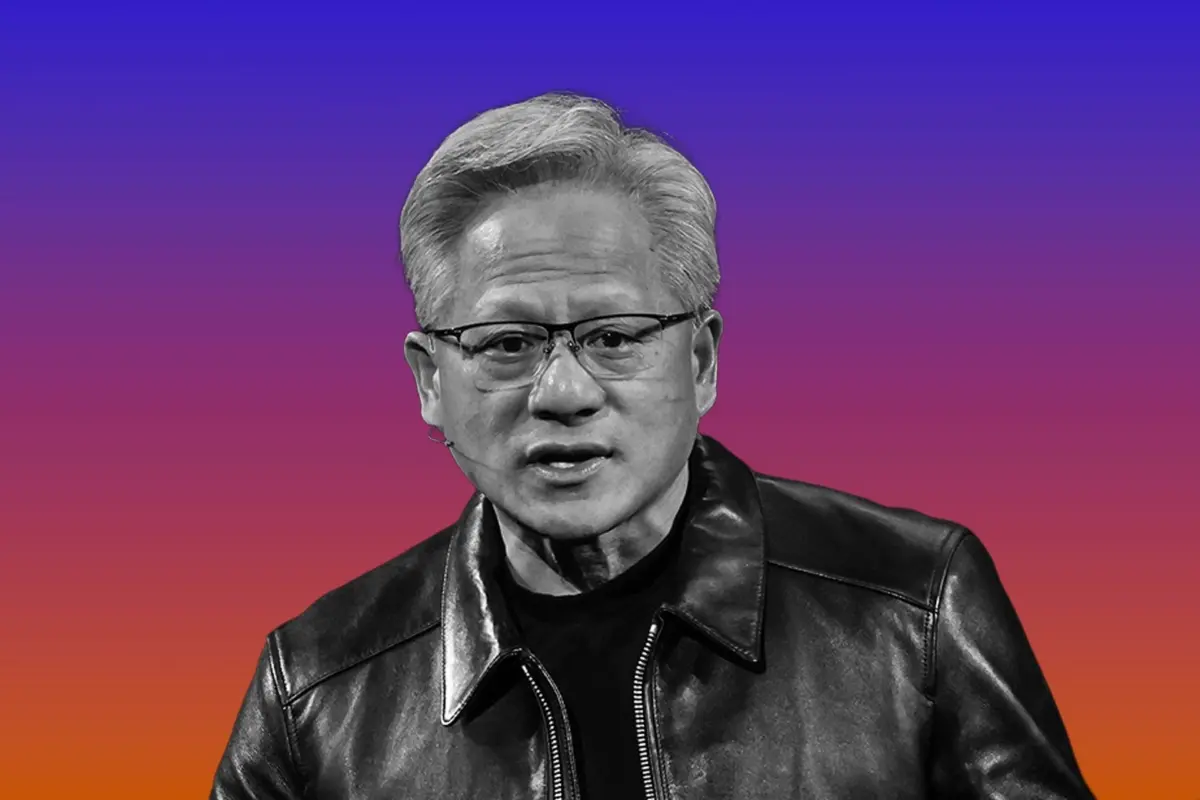
Even as the regulatory clouds gathered in Washington, an internal earthquake struck Santa Clara. In a move that sent immediate shockwaves through global financial markets and the tech community alike, Jensen Huang was ousted from his position at Nvidia.
Huang, who co-founded the company in 1993 and wore his iconic leather jacket as a symbol of his enduring reign, was more than just a CEO; he was the psychological and strategic anchor of the global AI boom. His removal—sparked by a combination of boardroom friction over strategic direction, compliance pressures regarding international trade, and shifting stakeholder priorities—abruptly severed the continuity that had defined Nvidia’s meteoric rise.
With Huang sidelined, Nvidia was left rudderless at the exact moment the broader technological and regulatory landscape was undergoing its most violent transformation in decades. The company’s board scrambled to install interim leadership, but the psychological blow to investors, partners, and employees was immediate and profound.
Supporting Context & Metrics: The Pillars of the AI Economy
To fully grasp why the upheaval at Nvidia threatens to derail the broader technological landscape, one must examine the macroeconomic and structural metrics that define the modern AI sector.
The Hardware Bottleneck
At the heart of the generative AI explosion lies a simple, unforgiving economic reality: software cannot scale without specialized hardware. Traditional central processing units (CPUs) lack the parallel processing capabilities required to train and run massive foundational models like GPT-4, Claude, and Gemini.
- Market Share Dominance: Prior to the recent leadership crisis, Nvidia commanded an estimated 80% to 90% share of the AI chip market.
- Valuation Trajectory: Nvidia’s market capitalization famously crossed the $1 trillion, $2 trillion, and briefly $3 trillion thresholds faster than any corporation in history, outstripping traditional energy and financial giants.
- Capital Expenditure (CapEx): Hyperscale cloud providers collectively committed tens of billions of dollars annually exclusively toward acquiring Nvidia hardware and building out liquid-cooled data centers.
The Regulatory Landscape
The transition in Washington following the midterms has supercharged regulatory initiatives targeting the AI stack. Key metrics and focus areas now include:
- Export Controls: The tightening net around advanced semiconductor shipments to restricted regions, which historically accounted for a vital percentage of Nvidia’s revenue base.
- Antitrust Scrutiny: Investigations by the Department of Justice (DOJ) and the Federal Trade Commission (FTC) into whether Nvidia leveraged its hardware monopoly to stifle competition in AI software ecosystems (such as its proprietary CUDA programming platform).
- Energy Consumption Oversight: Legislative proposals aimed at reining in the staggering power grid demands of AI training clusters, which threaten local energy markets and climate goals.
Speaking on What Next: TBD, tech journalist Robbie Whelan noted that the convergence of these political and corporate vectors creates an environment of total unpredictability. "Between the midterm elections and the ouster of Jensen Huang from Nvidia, the future of artificial intelligence—including how it will be regulated and who gets to participate—has been flipped upside down," Whelan explained. This dual shock strips away the predictability that tech giants relied upon when mapping out multi-year artificial intelligence roadmaps.
Official Statements and Industry Reactions
The sudden convergence of regulatory tightening and executive turbulence has prompted a wave of official responses from market leaders, policymakers, and financial analysts.
Nvidia’s Corporate Response
In the immediate wake of Jensen Huang’s departure, Nvidia’s Board of Directors released a carefully worded statement attempting to calm jittery markets and reassure enterprise partners:
"Nvidia’s technological roadmap, world-class engineering talent, and commitment to advancing accelerated computing remain unmatched. While transitions at the executive level bring inevitable questions, our foundational architecture—from our advanced silicon to our CUDA software ecosystem—continues to power the global intelligence revolution. We are fully focused on executing our strategic vision and supporting our customers through this transitional period."
Despite these assurances, industry insiders have expressed deep skepticism regarding how the company will maintain its aggressive innovation cadence without Huang’s singular, risk-tolerant leadership style.
Big Tech and Competitor Reactions
Major consumers of Nvidia’s silicon—often referred to as the hyperscalers—have responded with a mixture of public diplomacy and private urgency. Companies like Microsoft and Meta, which have invested heavily in developing custom in-house silicon (such as Microsoft’s Maia chips and Meta’s MTIA accelerators), view the chaos at Nvidia as both a cautionary tale and an opportunity.
A senior executive at a leading cloud computing firm, speaking on condition of anonymity, remarked:
"For years, our industry was locked into a single supplier dependency. When you remove a visionary like Jensen Huang while simultaneously facing a radically aggressive regulatory environment in Washington, the risk profile of relying entirely on Nvidia skyrockets. Diversification is no longer a long-term goal; it is an immediate survival strategy."
Congressional and Regulatory Statements
Lawmakers on Capitol Hill have seized upon the moment to validate their calls for stricter oversight. A bipartisan group of legislators released a joint brief emphasizing that the infrastructure of artificial intelligence is too vital to national security and economic stability to remain under the unchecked control of a single private enterprise or a monopolistic market structure.
Future Outlook: Where Does Nvidia and the AI Industry Go From Here?
As the dust begins to settle on the initial shockwaves, industry stakeholders are forced to gaze into an opaque future. The trajectory of artificial intelligence over the next decade will likely be shaped by several critical developments:
1. The Leadership Vacuum at Nvidia
Can Nvidia maintain its technological moat without Jensen Huang? Huang was famous for taking massive, multi-billion-dollar bets on unproven architectures (such as investing heavily in ray tracing and AI tensor cores years before the market demanded them). A more conservative, committee-driven leadership team may struggle to maintain the blistering pace of innovation required to stay multiple steps ahead of competitors like AMD, Intel, and custom internal silicon projects by Big Tech.
2. Democratization vs. Consolidation
The stated goals of recent legislative shifts include breaking down barriers to entry and preventing monopolistic control over AI resources. However, over-regulation could inadvertently produce the opposite effect. If compliance costs, export restrictions, and legal liabilities soar, smaller startups and academic researchers may find themselves entirely priced out of the AI race, leaving the field exclusively to cash-rich tech monopolies capable of absorbing regulatory overhead.
3. The Pivot to Alternative Architectures and Efficiency
With hardware availability threatened by political shifts and executive turmoil, the software side of AI is undergoing a radical reassessment. Researchers are placing renewed emphasis on algorithmic efficiency—developing smaller, highly optimized models that require a fraction of the computational power previously deemed necessary. The era of brute-force scaling, defined by throwing thousands of Nvidia H100s at every computational problem, may be giving way to an era of computational frugality.
4. Global Fragmentation
As U.S. regulatory frameworks tighten and geopolitical tensions persist, the global AI market risks splintering into regional blocs. Nations and corporate entities outside the Western sphere of influence will accelerate indigenous semiconductor development, bypassing Western supply chains entirely. This fragmentation could permanently alter the globalized nature of tech manufacturing and research collaboration.
Conclusion
The simultaneous ouster of Jensen Huang and the regulatory shockwaves unleashed by the midterm political realignment mark the end of the first, wild phase of the artificial intelligence boom. Nvidia, long accustomed to operating as an unassailable tech monolith, must now navigate a turbulent new era characterized by internal uncertainty, aggressive government oversight, and a fiercely competitive landscape.
For the broader AI industry, the message is unmistakable: the golden age of easy assumptions and centralized hardware dominance is over. As developers, regulators, and corporate titans grapple with this newly inverted reality, the ultimate question remains: who will successfully build the next generation of artificial intelligence when the foundational bedrock itself has been utterly rearranged?
To dive deeper into these developments, listen to the full discussion featuring Robbie Whelan on Slate’s What Next: TBD podcast, available across all major podcast platforms.