Executive Overview
At BlizzCon 2026, the halls of the convention center buzzed with a distinct electric energy. For Overwatch, a franchise that has spent a decade charting the volatile waters of live-service evolution, this year’s gathering represented both a victory lap and a definitive statement of intent. Amid major reveals—including the debut of Hero 54, the vampire-inspired support character named Doctrine, and a tantalizing first look at a suave, upcoming Omnic hero—the development team pulled back the curtain on the creative philosophy guiding the next era of the game.
Yet, even as the conversation centered on cutting-edge additions and the relentless cadence of content that has seen nearly ten characters added to the roster over the past year, foundational questions remained. Chief among them: In a game with a shifting cast of dozens, who truly represents the soul of Overwatch?
In an exclusive roundtable interview at the event, we sat down with Lead Hero Producer Kenny Hudson and Art Director Dion Rogers to address the lingering community debate over Tracer’s status as the face of the franchise. Furthermore, we dove deep into the conceptual origins of Doctrine, the intricate design pathways that bring these mechanical and mystical concepts to life, and what the roadmap looks like as the team sets its sights beyond 2026. This comprehensive report explores the past, present, and future of Blizzard’s flagship hero shooter, synthesizing developer insights, design lore, and the strategic horizon of the Overwatch universe.
Detailed Chronology: From 2016 Launch Icons to the 2026 BlizzCon Paradigm
To understand where Overwatch stands today, one must trace its visual and thematic lineage back to its origins. When the original game launched in May 2016, it arrived as a vibrant disruption to the gritty, military-style first-person shooters that dominated the market. At the very center of that colorful explosion was Lena Oxton—known to the world as Tracer.
The Genesis of a Mascot (2016–2019)
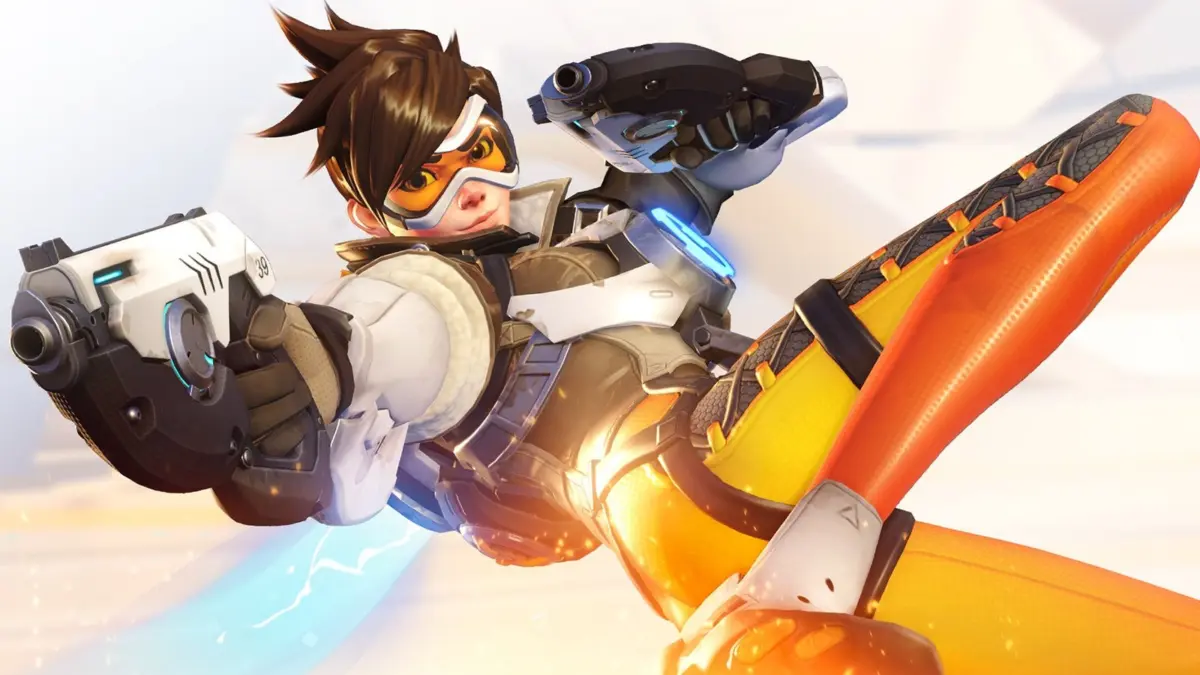
From day one, Tracer was inescapable. She adorned the game’s physical box art, spearheaded cinematic shorts, populated billboards across major metropolitan areas, and anchored promotional campaigns worldwide. Her silhouette—defined by her chronal accelerator, aviator goggles, and energetic, sprint-heavy stance—became synonymous with the burgeoning hero shooter genre. During this era, establishing a clear, singular mascot was vital for Blizzard as they built an entirely new intellectual property from the ground up. Tracer’s kinetic playstyle and optimistic, cheeky personality functioned as the primary ambassador for the Overwatch universe.
The Pivot to Ensemble Marketing (2020–2025)
As Overwatch 2 transitioned the franchise into a free-to-play, live-service model, the promotional strategy naturally evolved. With the introduction of dozens of new heroes spanning diverse cultural backgrounds, complex moral alignments, and varied tactical roles, the marketing apparatus broadened. Tracer occasionally stepped back from the absolute center stage to make room for sweeping collaborations, narrative-driven seasonal events, and cross-media promotions featuring tanks and support heroes like Kiriko, Junker Queen, and Ramattra. This shift led some sections of the community to wonder if Blizzard was quietly transitioning away from a single, definitive mascot in favor of a rotating ensemble cast.
The 2026 Renaissance and Doctrine’s Arrival
Fast-forward to BlizzCon 2026, and the narrative has shifted once more. The release of Doctrine marks a watershed moment for the game’s design philosophy—representing the culmination of years of iterative pipeline improvements. Having introduced nearly ten distinct characters over the course of the year, the development team has demonstrated an unprecedented output velocity. Doctrine’s introduction not only shakes up the competitive meta for support mains but also re-establishes the team’s willingness to lean into bold, high-concept archetypes that challenge traditional sci-fi boundaries.
Supporting Context & Metrics: The Evolution of Content Cadence
The 2026 content calendar has been nothing short of historic for the Overwatch team. Maintaining a live-service game of this scale requires a finely tuned operational machine, and the metrics coming out of Blizzard illustrate a significant scaling of production capacity.
Rapid Roster Expansion
Historically, hero releases were spaced out by many months, often leading to prolonged droughts between major meta shifts. Over the past twelve months, however, the team has pushed out nearly ten characters, culminating in Doctrine as Hero 54. This acceleration is not merely a numbers game; it represents a fundamental overhaul of the production pipeline, allowing art, narrative, and balance teams to work in tighter synchronization.
Diversifying Archetypes
The design team has systematically checked off traditional fantasy and sci-fi archetypes—the cowboy (Cassidy), the knight (Reinhardt), the ninja (Genji)—while actively seeking out spaces that remain unexplored. According to Art Director Dion Rogers and Lead Hero Producer Kenny Hudson, the key to sustaining player engagement over a decade is the willingness to introduce thematic dissonance that still honors the core sci-fi identity of the universe. Doctrine is the primary beneficiary of this philosophy, bridging the gap between gothic horror aesthetics and hard sci-fi mechanical engineering.
Official Statements: Inside the Minds of the Developers
Our sit-down conversation with Kenny Hudson and Dion Rogers offered rare, unfiltered insight into the corporate and creative ethos driving Overwatch today. When directly confronted with the community’s rumblings about Tracer’s visibility in recent major crossovers and promotional materials, the leadership team offered a response that was unequivocal.
Tracer is Still the Queen
"Tracer is still the mascot for Overwatch. Very much," Dion Rogers stated firmly. To illustrate just how deeply embedded she is in the studio’s internal culture, Rogers referenced a ubiquitous piece of studio lexicon:
“’Tracer orange’ is a quote that the team uses all the time. The little cheeto on top of the sigil is orange. She’s still that girl.”
Despite fluctuations in marketing campaigns that highlight newer heroes, Tracer remains the inviolable anchor of the brand’s visual identity. Her color palette dictates internal design signifiers, and her foundational status within the universe’s lore ensures she will never truly be usurped.
The Birth of Doctrine: Merging Sci-Fi with the Vampire Archetype
Shifting the conversation to the game’s newest roster addition, the developers detailed the fascinating genesis of Doctrine. Conceived by Lead Narrative Designer Miranda Moyer, the character was born from a deceptively simple creative prompt: What would a vampire look like in the Overwatch universe?
"We always do our best work on heroes when we get a really cool theme to rally around," Rogers explained, noting how the vampire motif immediately energized the concept, art, and kit-design teams.
Kenny Hudson expanded on the iterative process of bringing Doctrine to life, noting that the character underwent several structural evolutions before finding his identity:
"He’s still a scientist or a mechanical engineer, even his cape still feels like a lab coat from the sciency part of him… We started him off as a scientist, a typical guy, lab coat, glasses. Sometimes it takes a team saying when they see an image, ‘That’s the hero.’ He didn’t quite feel like it yet. But we took the vampire thing that Miranda mentioned, we applied that, and he actually started to feel like a hero. You can see a theme, you can see a fantasy, you can see an archetype."
Doctrine’s lore grounds him firmly in the geopolitical fabric of the Overautochthonous world. Hailing from Zimbabwe, Africa, his narrative ties directly into the syndicate led by Doomfist. Having previously worked for Doomfist’s family and assisted in the engineering of advanced cybernetic weaponry—including the warlord’s iconic gauntlet—Doctrine’s motivations for returning to the fray carry immense narrative weight. His gothic, cape-draped silhouette may evoke classic cinematic vampires, but his mechanics remain rooted in high-tech, precision-engineered support capabilities.
Future Outlook: Beyond 2026 and the Horizon of Innovation
With Doctrine serving as the ninth character of an aggressive ten-hero rollout for the year, onlookers might wonder if the development team is nearing the limits of their creative runway. Rogers and Hudson were quick to dispel any notions of slowing down.
Beyond Hitting Targets
"There’s always room for more heroes," Rogers asserted with a grin. "There’s a lot more we’re cooking."
Hudson echoed this sentiment, emphasizing that the studio’s internal benchmarks are no longer about merely keeping pace with past achievements, but redefining what the franchise can accomplish.
"It’s not so much about hitting the targets we’ve already hit, but setting new ones and seeing where we can take it. We’re really excited with all the team has learned over the last couple of years to be able to really push ourselves into new territory and evolve in new, interesting ways."
A Glimpse at Hero 55 and Beyond
The momentum established at BlizzCon 2026 shows no signs of dissipating. Alongside Doctrine, Blizzard dropped a stunning first look at Hero 55—a suave, impeccably dressed Omnic character who has already ignited fervent speculation and excitement across community forums. This upcoming addition promises to further explore the complex sociopolitical dynamics between humanity and artificial intelligence in the post-Crisis world.
Furthermore, the convention served as a broader showcase for Blizzard’s overarching portfolio. Attendees and digital spectators alike were treated to deep dives into the futures of Warcraft and Diablo, alongside rumblings and formal updates regarding upcoming titles—including the ambitious open-world StarCraft shooter slated for a 2030 release.
For Overwatch, the message delivered at BlizzCon 2026 is crystal clear: while honoring the legacy of icons like Tracer, the team is aggressively expanding the boundaries of the universe. Through daring conceptual fusions like Doctrine, tighter production pipelines, and an unyielding commitment to narrative depth, Overwatch is positioning itself not just to survive the crowded modern gaming landscape, but to continue defining it for years to come.