Executive Overview
In the fast-paced ecosystem of internet culture, viral trends often emerge from the mundane frustrations of everyday life, weaponizing irony, hyper-specific humor, and shared societal grievances. The latest phenomenon capturing the attention of social media users across the globe is the "Hope Whoever Stole My Amazon Package" meme. Emerging in mid-October 2026, this Halloween-themed format combines a universal modern annoyance—porch piracy and package theft—with absurdly niche, highly elaborate comedic setups.
At its core, the trend relies on a dependable snowclone phrasal template: "Hope whoever stole my Amazon package [X]", where "X" culminates in a deadpan, often surreal reveal of the victim’s intended Halloween costume. Accompanying these posts are screenshots of purported Amazon delivery histories showing multiple items delivered on the same day, adding a veneer of bureaucratic authenticity to an entirely fictional or exaggerated narrative.
What began as a single lighthearted post on X (formerly Twitter) quickly metastasized into a widespread creative outlet for internet users, subcultures, and fandoms. From obscure pop-culture references to inanimate objects from video games, the meme has transformed October social media feeds into a gallery of elaborate absurdism. This report provides a comprehensive examination of the trend’s origins, its rapid acceleration across digital platforms, the psychological and cultural mechanics driving its popularity, and its lasting impact on seasonal humor.
Detailed Chronology: From Porch Theft to Viral Sensation
The trajectory of the "Stolen Amazon Package" meme offers a textbook case study in how modern social media dynamics amplify user-generated comedy. While the baseline premise taps into the perennial October anxiety of securing a Halloween costume before the end of the month, the specific formatting of the trend traces back to a definitive inception point.
The Spark: October 11, 2026
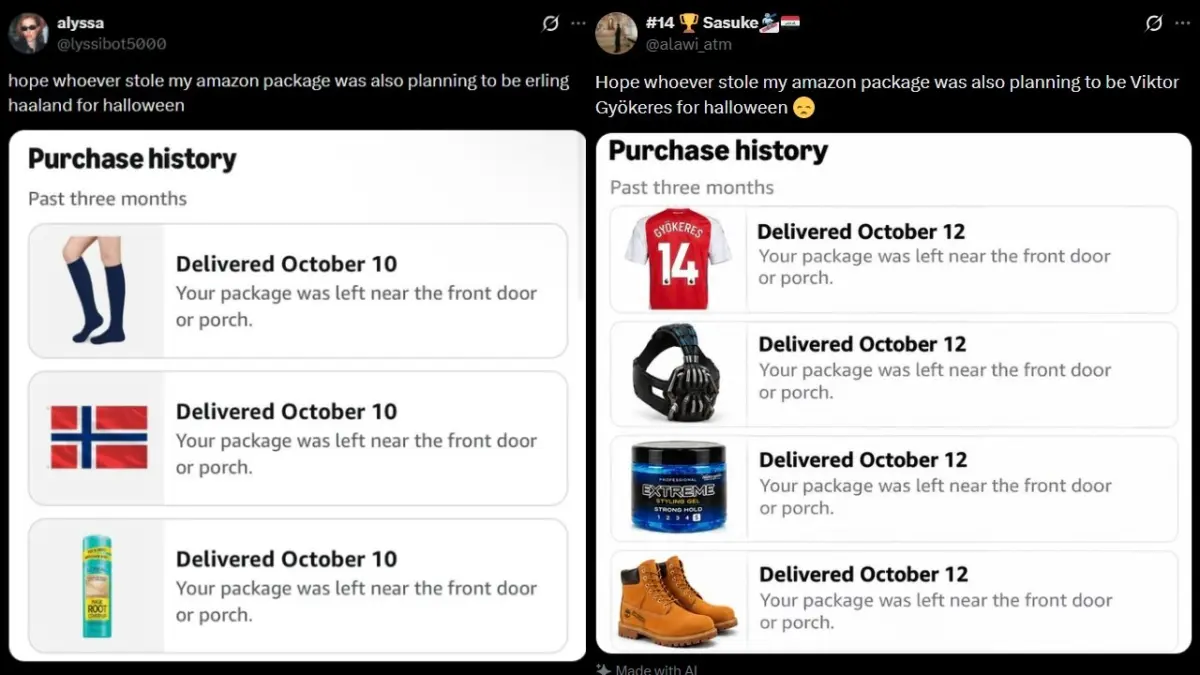
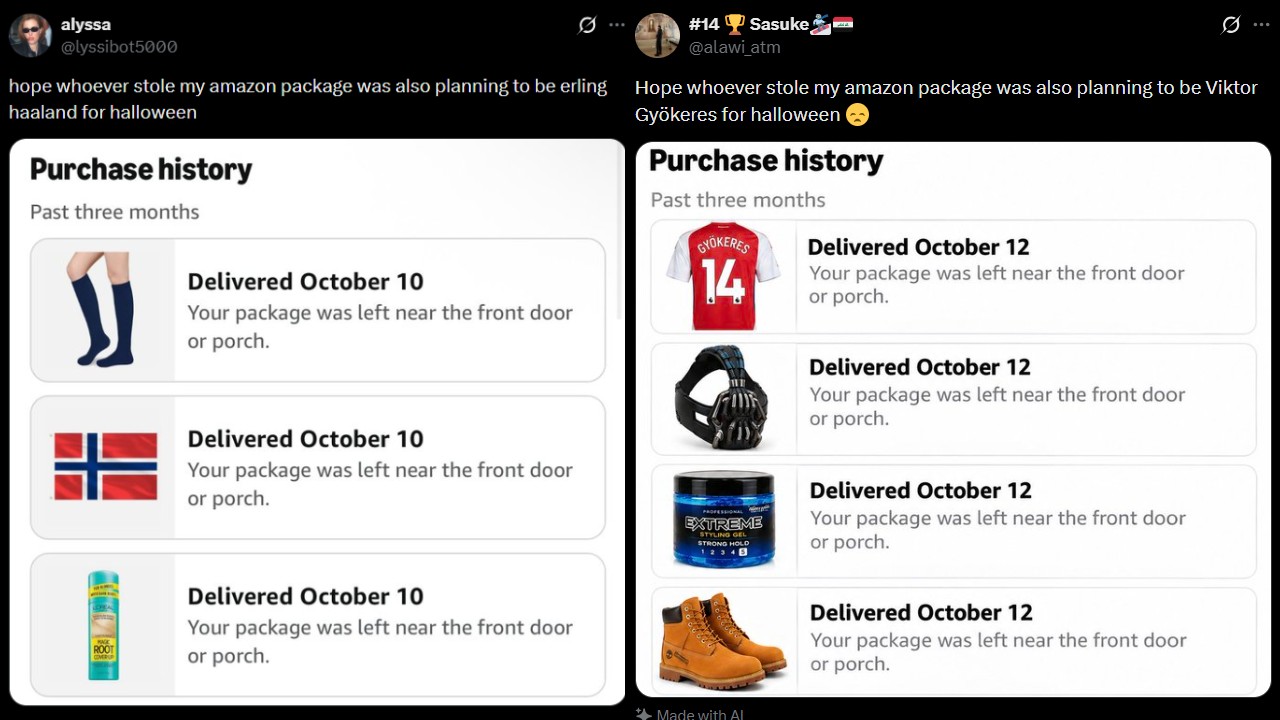
The phenomenon officially commenced on October 11, 2026, when X user @lyssibot5000 published a post that would alter the course of mid-autumn meme culture. The user shared a screenshot of their Amazon purchase history, detailing three separate deliveries marked as left near the front door or porch on October 10. The accompanying caption read:
"hope whoever stole my amazon package was also planning to be erling haaland for halloween."
The juxtaposition of a mundane e-commerce delivery log with the hyper-specific, athletic persona of Manchester City striker Erling Haaland struck an immediate chord. The post resonated broadly, transcending sports fandoms to capture the appreciation of general casual scrollers. Within five days, the post amassed over 176,000 likes and millions of impressions, proving that the template possessed high viral elasticity.
The Rapid Acceleration: October 14–16, 2026
Sensing the comedic potential of the formula, digital creators and meme accounts rapidly adopted and iterated upon the template. By mid-October, the trend had broken out of its sports-centric origins into diverse corners of internet subcultures.
- October 14, 2026: User @chaeryliv adapted the format to music pop-culture, claiming that their stolen package contained the necessary components to dress as the album cover of You Seem Pretty Sad for a Girl So in Love by Olivia Rodrigo. The post quickly gathered over 50,000 likes. Later that same day, user @0NEMORETlME pushed the envelope of absurdity by claiming their stolen items were meant to dress them up as "Why"—a reference to a viral meme featuring a woman in a plague doctor mask. This entry pulled in over 150,000 views within 48 hours.
- October 15, 2026: The gaming community joined the fray when user @SpaghettiSpace_ posted a variation claiming their stolen Amazon haul was intended to transform them into the Ascent B Site triple boxes from the tactical shooter Valorant. This self-referential gaming joke demonstrated how the template could accommodate non-human, abstract concepts. Additional variations flooded the platform, including parodies featuring Lorde’s infamous 2017 MTV Video Music Awards outfit, fictional characters like Digger Rockwell, and public figures such as tech executive Alexandr Wang.
- October 16, 2026: The breadth of the trend expanded further as users integrated deep-cut reality television references, baseball player Giancarlo Stanton, and even abstract societal states like "being a Cubs fan," cementing the format’s status as a versatile canvas for personalized irony.
Supporting Context & Metrics
While formal search interest analytics for the exact phrase remain nascent due to the rapid velocity of the trend, engagement metrics across platform reposts, quote tweets, and likes indicate massive organic reach. Individual iterations routinely crossed the threshold of tens of thousands of likes, with peak posts nearing the two-million-view mark.
The Anatomy of the Joke: Why the Format Works
- The Universal Pain Point: Porch piracy is a widespread contemporary frustration, particularly during the holiday shopping and Halloween seasons. By framing the narrative around a stolen package, the author immediately evokes sympathy and a sense of shared community outrage—only to instantly subvert that sympathy with a punchline that is entirely trivial or ridiculous.
- The Bureaucratic Aesthetic: The inclusion of the Amazon delivery confirmation screenshot ("Your package was left near the front door or porch") acts as a visual anchor. In internet culture, mundane UI (User Interface) elements lend an aura of deadpan authenticity to absurd claims. It mimics the style of real-life neighborhood complaint posts found on platforms like Nextdoor, creating a comedic bait-and-switch.
- Infinite Extensibility: Snowclone templates survive and thrive because they impose minimal structural constraints while offering maximal creative freedom. Whether a user is referencing a niche video game map geometry, an underground music album, or a professional baseball player, the underlying syntax remains identical, making it accessible for both creators and consumers.
Cultural Impact & Industry Reactions
As with many internet phenomena that reference corporate entities—in this case, Amazon—the meme has inadvertently functioned as free, organic marketing for the e-commerce giant while simultaneously highlighting consumer anxieties regarding package delivery security.
Marketing analysts note that user-generated formats leveraging recognizable brand touchpoints (such as order histories, tracking notifications, and delivery updates) often achieve higher engagement rates because the UI itself serves as an immediate visual shorthand for the audience. Viewers do not need to read the full text to understand the context; the familiar Amazon delivery layout immediately primes the brain for the joke.
Furthermore, the trend highlights the evolving nature of Halloween costume culture on social media. In an era where mainstream costumes are readily available via online retail giants, the humor has shifted toward hyper-niche, ironic, and conceptual self-expression. Dressing up as an obscure album cover, a tactical shooter map structure, or a viral reaction image reflects a digital-native understanding of irony that prioritizes inside jokes over traditional spookiness.
Future Outlook
As the calendar turns past October and the seasonal rush for Halloween costumes subsides, the specific "Stolen Amazon Package" template will likely experience a natural cooling-off period. Seasonal memes are inherently bound to their calendar milestones, and the hyper-specific focus on costume planning means the format’s shelf life is intrinsically tied to the autumn holiday cycle.
However, the structural DNA of the joke—combining a mundane, bureaucratic administrative interface (such as delivery tracking, banking statements, or receipt logs) with an absurd, highly specific punchline—is a proven comedic engine. It is highly probable that digital creators will repurpose this snowclone framework for future shopping holidays, such as Black Friday, Cyber Monday, or general end-of-year delivery rushes.
Ultimately, "Hope Whoever Stole My Amazon Package" stands out as a defining viral moment of the mid-2020s digital landscape: a testament to the internet’s ability to take a common daily annoyance and transform it into a collective, cross-fandom festival of shared absurdism.